Nergal: The Mesopotamian Harbinger of Death, War, and Destruction
Mesopotamia, the cradle of civilization, was a land deeply attuned to the cycles of life and death, creation and destruction. Within its rich pantheon of deities, few embodied the raw, terrifying power of the latter as profoundly as Nergal. Known by many names, including Erra and Irra, this formidable god reigned over death, war, and the inexorable forces of destruction, serving as both a fearsome adversary and, paradoxically, a invoked protector against malevolent spirits.
Main Facts: The God of Unchecked Fury
Nergal’s identity is multifaceted, a complex tapestry woven from regional origins, evolving theological understanding, and the stark realities of ancient life. Initially venerated as a local, likely agricultural, deity in the Babylonian city of Kutha during the Sumerian Early Dynastic I period (circa 2900-2750/2700 BCE), his influence rapidly expanded. His primary temple, known as E-meslam, bestowed upon him the epithet Meslamtaea, meaning "He Who Comes Forth from Meslam."
Over millennia, Nergal’s portfolio broadened significantly. From a god associated with the scorching summer sun that withered crops, he transformed into a universal embodiment of war, pestilence, and death. This fearsome reputation solidified by the Ur III period (circa 2112 to circa 2004 BCE), and his worship persisted through the Neo-Babylonian era (626-539 BCE), potentially even into the early Achaemenid Empire. His presence in ancient texts, including a mention in the Bible (II Kings 17:30), underscores his widespread recognition and the enduring fear he inspired. His epithets paint a vivid picture of his nature: "dunghill cock," "raging king," "furious king," "fighting cock," and "the burner"—each a testament to his untamed, destructive essence.
Chronology: From Scorching Sun to Underworld Sovereign
The evolution of Nergal’s divine persona reflects the changing socio-religious landscape of Mesopotamia. His earliest manifestations as a regional deity in Kutha suggest an initial connection to the land and its productivity. The intense, destructive power of the high summer sun, capable of parching fields and hindering harvests, was a tangible threat to early agricultural societies. It is this very power that scholars believe formed the genesis of Meslamtaea’s association with destruction. The scorching sun, an agent of nature’s fury, became personified as a divine rage, linking Nergal not just to agricultural failure but to broader concepts of war, pestilence, and death.
By the Ur III period, a pivotal era in Mesopotamian history marked by centralized administration and a standardized pantheon, Nergal had ascended to a more prominent, universal role. His local attributes had been subsumed into a broader, more terrifying identity. This transformation was crucial in providing a divine explanation for the seemingly arbitrary suffering that plagued ancient communities – from devastating wars to widespread plagues.
A significant development in Nergal’s chronology is his eventual conflation with another powerful, independently developed deity, Erra (or Irra) of Babylon. Scholar Jeremy Black highlights this convergence: "The gods Nergal and Erra were originally separate deities, but later became so closely identified as to lose their independent characters" (135). Over time, their names became interchangeable, and today, they are recognized as aspects of the same formidable god. This syncretism likely occurred as different regional cults interacted and merged, streamlining the divine landscape and consolidating the attributes of destruction and plague under a single, potent figure. The enduring worship of this combined deity through the Neo-Assyrian and Neo-Babylonian empires speaks to his deep cultural penetration and continued relevance in Mesopotamian spirituality.
Supporting Data: Iconography, Lineage, and the Dance of Chaos
Iconography and Divine Lineage
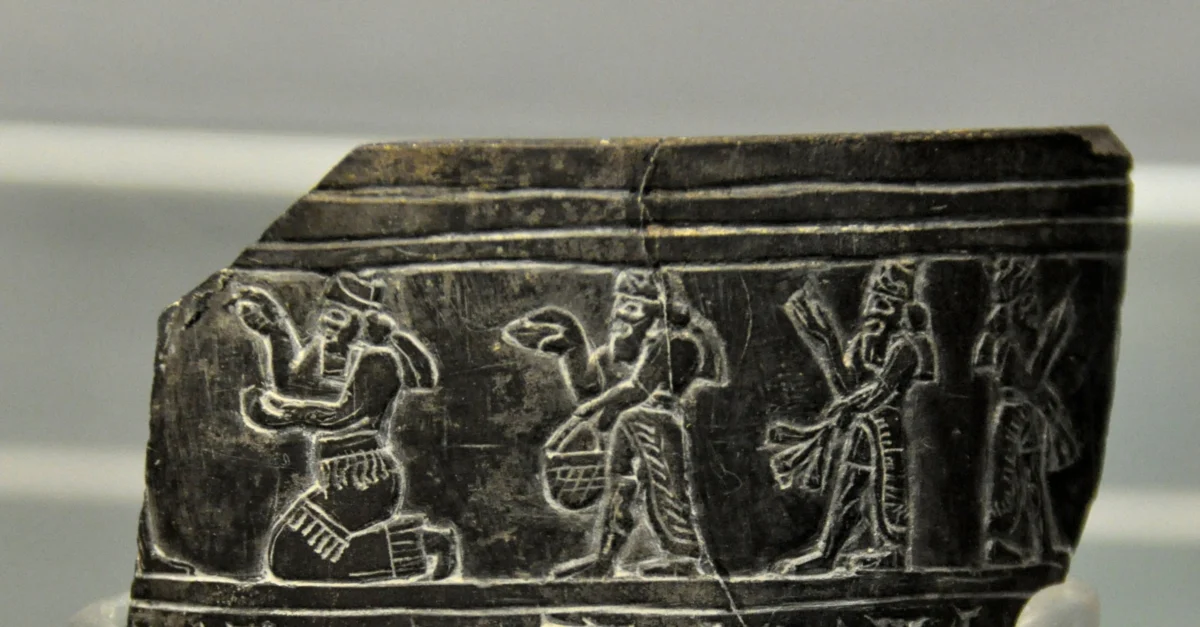
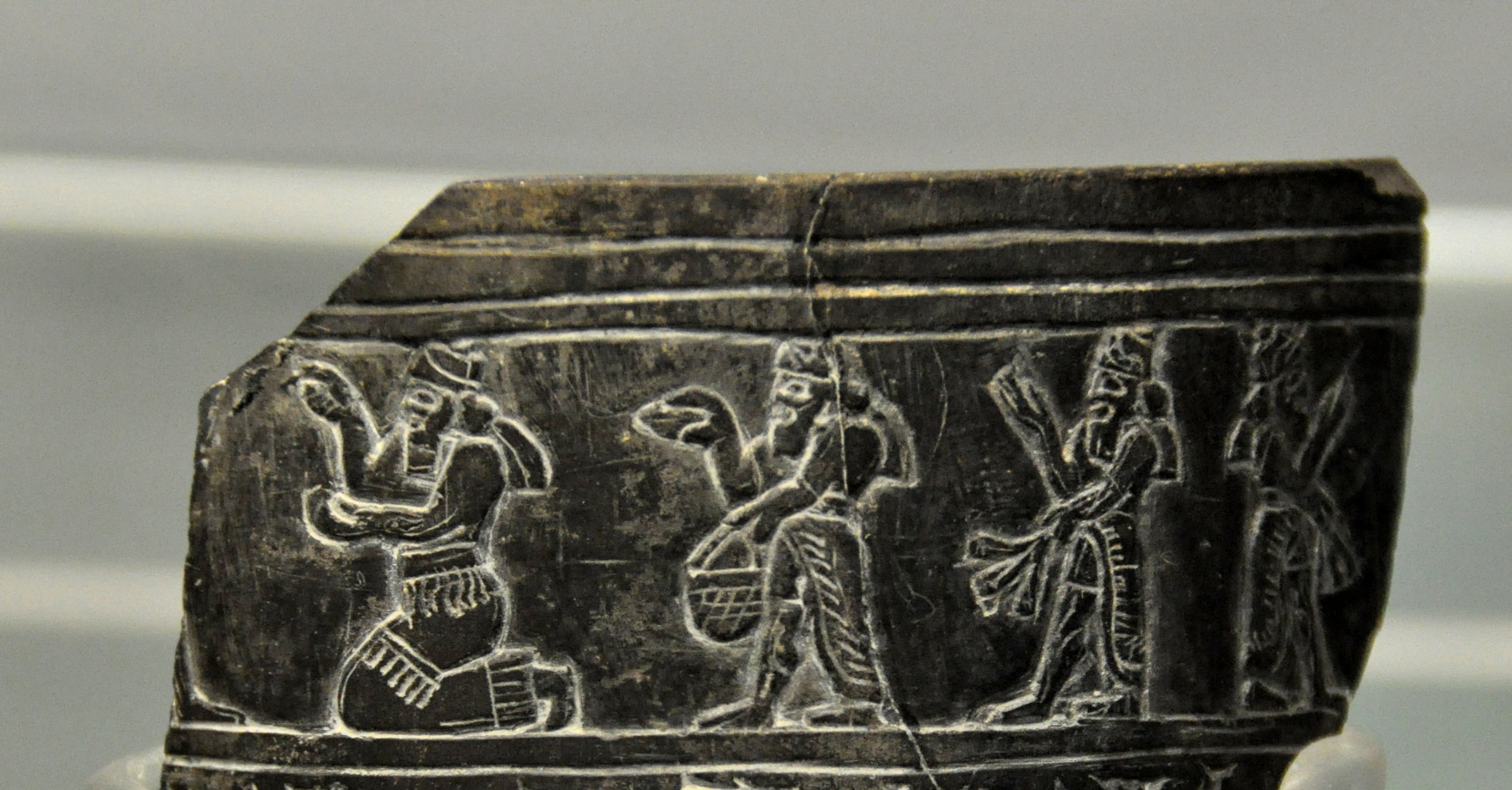
Nergal’s visual representation is as imposing as his reputation. He is typically depicted as a striding man, robed in long garments, his advancing foot crushing a prostrate human figure—a stark symbol of his overwhelming power and the inevitability of his destructive path. He wields a mace topped with a double lion’s head, an emblem of ferocious strength, and carries a scimitar, a weapon synonymous with battle and swift demise. Beyond his human form, iconography also ties him to the lion and the bull, animals revered in Mesopotamia for their immense natural and supernatural power, further emphasizing his untamed might.
His parentage, while seemingly dual, underscores his central role. He is often identified as the son of Enlil, the chief god of the Sumerian pantheon, and Ninlil. Alternatively, he is referred to as the son of Belet-ili, another name for the mother goddess Nintud/Nintur/Ninhursag, who was credited with creating humanity. This dual lineage might reflect different theological traditions or serve to connect him to both the supreme authority of the heavens (Enlil) and the very essence of mortal existence (Belet-ili), whose creations he would inevitably bring to an end. While the original article mentions "a number of wives/consorts," the lack of specific names might subtly reinforce his primary focus on destruction rather than procreation or domesticity, setting him apart from many other fertility-oriented deities. His very being symbolizes the raw, untamed, destructive force inherent in both human nature and the natural world.
Cult and Rituals: Appeasing the Destroyer
Nergal’s main cult center was Kutha, but his influence radiated outwards, leading to the construction of temples and widespread veneration across southern Mesopotamia in cities like Ur, Uruk, Lagash, Isin, Nippur, and Dilbat. He was also honored in Babylon and adopted into the Assyrian pantheon, showcasing his widespread appeal across various Mesopotamian cultures.
A particularly significant aspect of his worship was his central role in the Cult of the Dead. As the god associated with the underworld and the departed, priests would offer sacrifices to Nergal on behalf of the souls residing in the realm of Ereshkigal. This practice demonstrates a belief that even the most destructive deity could be appeased or entreated, especially when it came to the fate of the deceased. Such rituals were vital for communities grappling with mortality, offering a pathway to ensure the peaceful passage of their loved ones and to prevent their spirits from troubling the living.
The Wrath of Erra: A Narrative of Arbitrary Destruction
One of the most vivid illustrations of Nergal’s character comes from the myth The Wrath of Erra, dated to approximately 800 BCE. This narrative presents Nergal (as Erra) as a deity prone to fits of lethargy, followed by explosive, irrational violence. Scholar Stephen Bertman notes, "Even his weapons, gathering dust in storage, complain. Their rebuke rouses him from inertia and he decides, contrary to [his vizier] Ishum’s counsel, to attack Babylon" (161). This opening sets the stage for a divine temper tantrum, where destruction is driven by boredom and a craving for action, rather than justice or cosmic order.
To achieve his destructive aim, Erra employs cunning. Babylon, a city under the direct protection of the mighty god Marduk, is not easily assailed. Erra approaches Marduk, feigning a friendly visit, and criticizes Marduk’s shabby attire. Embarrassed, Marduk admits his neglect, and Erra, with false generosity, offers to guard the city while Marduk attends to his wardrobe. Once Marduk is conveniently out of the way, Erra unleashes his devastating wrath. Bertman describes the ensuing carnage: "Once again, Ishum counsels prudence, but to no avail. Young and old are put to death, fathers bury their sons, and the righteous perish together with the wicked" (161). The indiscriminate nature of the slaughter underscores Nergal’s disregard for justice or moral distinction.
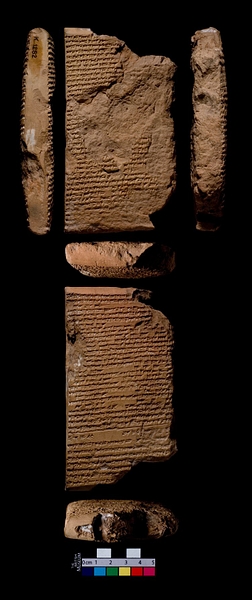
After sating his destructive urge, Erra stops the carnage, offering a prophecy of a future leader who will unify and protect the people—a stark contrast to the devastation he has just wrought. When summoned before the other gods, Erra offers no apology or logical reason for his actions. Bertman writes, "Now in the company of the other gods, Erra justifies his actions as simply an expression of the kind of god he is (‘When I get angry, I break things!’)" (161). This unapologetic declaration solidifies Nergal’s role as a force of nature, untamed even by divine counsel. The myth concludes with a paradoxical "paean of praise for Erra, god of war," suggesting an acceptance, perhaps even admiration, of his terrifying power. As Black suggests, this mythical narrative may have served to "mirror invasions of the country between the twelfth and ninth centuries BCE by tribal, nomadic peoples such as the Aramaeans or Suteans" (136), providing a divine explanation for human suffering and societal upheaval.
The Marriage of Ereshkigal and Nergal: Containing Chaos
Another pivotal myth, The Marriage of Ereshkigal and Nergal, dating from before the 15th century BCE, offers insight into divine attempts to manage Nergal’s destructive potential. Copies found among the Amarna Letters in Egypt, at the Sultantepe site in Turkey, and a comprehensive Neo-Babylonian version highlight its widespread importance. This myth features Enki, the god of wisdom and humanity’s creator, as a master manipulator working to minimize Nergal’s rampage by strategically sending him to the underworld to be bound to Ereshkigal, its formidable queen.
The story begins with a grand banquet hosted by the gods. Ereshkigal, confined to the underworld, cannot attend, and the other gods cannot descend. Enki, ever the strategist, arranges for Ereshkigal’s son, Namtar, who can traverse realms, to collect her share of the feast. At the banquet, all gods rise to honor Namtar, representing Ereshkigal, except for Nergal. This profound disrespect enrages Ereshkigal, who demands Nergal be sent to her to face death.
Enki, foreseeing these events, equips Nergal with fourteen demon escorts, two for each of the seven gates of the underworld. As Nergal descends, he strategically posts two demons at each gate, ensuring they remain open. Upon reaching Ereshkigal’s throne room, he overpowers Namtar and drags the queen of the underworld to the floor. As he raises his axe to strike, Ereshkigal pleads for her life, offering to be his wife and share her dominion. Nergal accepts, and the two embrace.
However, Nergal cannot remain permanently in the underworld; war and destruction are part of the human experience. Enki’s provision of the gate-keeping demons ensures Nergal’s ability to leave for six months of the year to roam the upper world. This myth offered a divine explanation for seasonal warfare, but more profoundly, it symbolized the gods’ efforts, particularly Enki’s wisdom, to contain the unpredictable forces of chaos embodied by Nergal, even if they could not fully eliminate them. It provided a narrative framework for why suffering was cyclical and not constant, demonstrating the gods’ goodwill despite the presence of destructive deities.
Official Responses: Scholarly Insights and Cross-Cultural Echoes
Scholarly interpretations consistently portray Nergal as the embodiment of "inflicted death," distinct from natural demise. Yagmur Heffron explains, "Nergal represents a very particular aspect of death, one that is often and rightly interpreted as inflicted death, for Nergal is also the god of plague and pestilence as well as being closely associated with warfare… In his aspect of a war god, Nergal accompanies the king into battle, delivering death to the enemy. Death brought on by Nergal also had a supernatural dimension, disease often being attributed to demonic agency in Mesopotamia" (1). This perspective illuminates how Nergal provided a theological framework for understanding catastrophic events like epidemics and military defeats, attributing them to a divine, yet often capricious, agent.
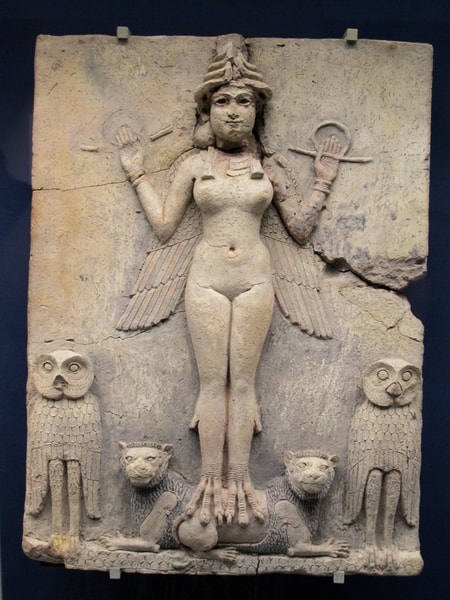
Nergal’s character also resonated across ancient cultures, giving rise to compelling parallels. He shares attributes with Ninurta, the Sumerian/Akkadian god of war and hunting, known for his prowess in battle. The Hurrian/Hittite Aplu, a god associated with plague, mirrors Nergal’s pestilential aspect, famously held responsible for the plague that devastated the Hittite lands and claimed the life of King Suppiluliuma I (1344-1322 BCE). In the Greco-Roman world, his destructive war-like nature found echoes in Ares, the Greek god of war, and his Roman counterpart, Mars. These cross-cultural similarities highlight universal human anxieties surrounding conflict, disease, and death, personified by powerful, often destructive, deities.
Despite his terrifying nature, Nergal was paradoxically invoked for protection. His immense power over death made him a potent deterrent against lesser evil spirits and demons. He was a central figure in exorcism rituals and incantations. An ancient Babylonian prayer illustrates this: "I am the priest of Ea. I am the magician of Eridu. Shamash is before me, Sin is behind me. Nergal is at my right hand, Enurta is at my left hand. When I draw near the sick man, when I lay my hand on his head, may a kindly Spirit, a kindly Guardian, stand at my side! Whether thou art evil Ghost, or evil Devil, or evil God, or evil Fiend, or sickness, or death, or a Phantom of Night, or a Wraith of the Night, or fever, or deadly pestilence, get thee gone from before me; go forth from the house" (Wallis Budge, 118). The placement of Nergal "at my right hand" among other formidable deities like Enki/Ea, Utu-Shamash, Nanna-Sin, and Enurta underscores his perceived efficacy in warding off malevolent forces, precisely because he commanded the very powers of destruction they sought to repel.
Implications: The Enduring Shadow of Chaos
Nergal’s profound impact on Mesopotamian thought lay in his ability to provide meaning for otherwise meaningless suffering. In a world where the gods were believed to have created humanity for benevolent purposes, the realities of plague, famine, and war presented a theological conundrum. Deities like Nergal offered an explanation: while the supreme gods might harbor good intentions, forces of chaos, personified by destructive deities or malevolent spirits, could interfere with their cosmic plan. This allowed people to maintain faith in the overall benevolence of the pantheon while acknowledging the harsh realities of their existence.
However, Nergal’s protective aspect was inextricably linked to his destructive power. When he manifested as Aplu, the god of plague, prayers for salvation would have been an appeal to the very source of the affliction. In such dire circumstances, Nergal was unlikely to cease his rampage until he was satisfied with the death toll, reinforcing his image as an unpredictable and unyielding force.
His enduring legacy transcends ancient Mesopotamia. Nergal’s iconography and character, particularly his association with destruction, the underworld, and fire-like epithets, found parallels in later religious traditions. Much like the Egyptian god Set, associated with chaos and the color red, Nergal’s attributes resonated with the forces of disorder that opposed divine goodwill. This made him a powerful archetype that arguably influenced the development of the Judeo-Christian vision of God’s adversary, Satan. The "dunghill cock," the "raging king" who broke things simply because it was his nature, became a primal symbol of malevolence, a harbinger of chaos that continues to echo in the collective unconscious, reminding humanity of the ever-present, untamed forces of destruction in the world.