The Pen as a Scalpel: Navigating the Evolution and Existential Shift of Political Cartooning
In an era defined by rapid-fire digital discourse and the encroaching shadow of artificial intelligence, the ancient art of the political cartoon remains a vital, albeit besieged, pillar of democratic expression. Recent profiles and projects featuring Ron Bates, Matt Wuerker, Kevin “KAL” Kallaugher, and Pedro X. Molina highlight a profession in flux—one that is simultaneously looking back at its historical foundations while grappling with a precarious future. From the local newspapers of Florida to the prestigious halls of Washington D.C.’s Hay-Adams hotel, these artists are redefining what it means to capture the "spirit of the age" through ink and irony.
Main Facts: A Tripartite View of a Changing Craft
The current landscape of political cartooning is best understood through three distinct but interconnected developments.
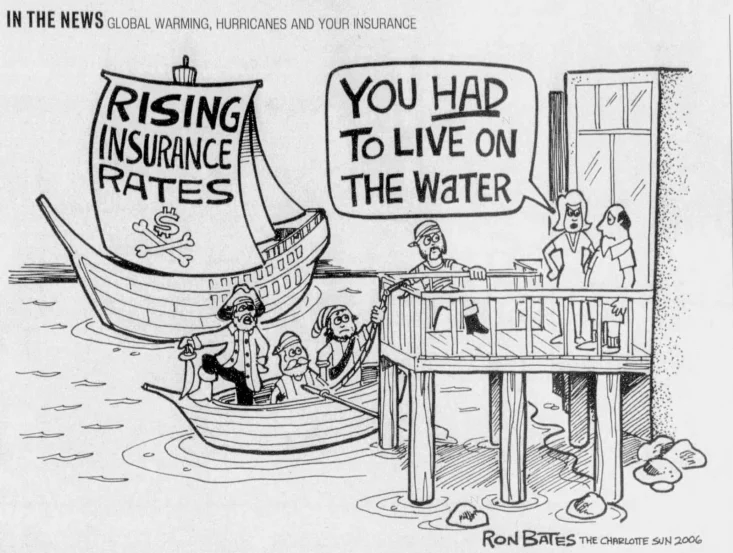
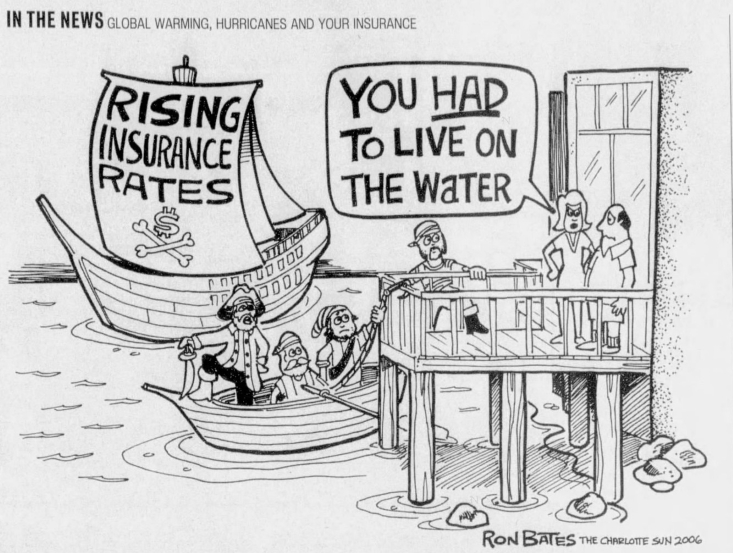
First is the retrospective of Ron Bates, a versatile artist whose 17-year tenure at The Charlotte Sun serves as a case study for the power of localized editorializing. Bates, who transitioned from mural painting and set design to the drawing board, utilized his platform to address the unique environmental and social stressors of Florida, demonstrating that the most effective satire often begins in one’s own backyard.
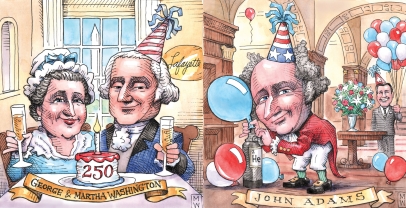
Second, the collaboration between Pulitzer Prize-winner Matt Wuerker and The Economist’s Kevin “KAL” Kallaugher for The Hay-Adams’ 250th Fourth of July celebration brings the craft back to its roots. By focusing on the Founding Fathers, these two titans of the industry explore the technical challenges of caricature and the enduring relevance of the figures who drafted the American experiment.
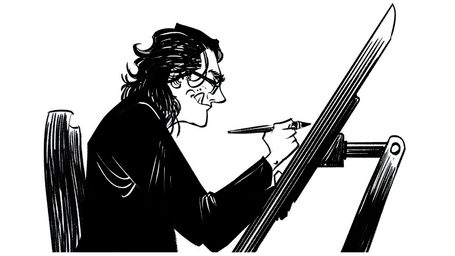
Finally, the philosophical and professional intervention by Pedro X. Molina via his illustrated essay for Tinyview provides a sober assessment of the industry’s health. Molina addresses the "triple threat" facing modern cartoonists: the collapse of traditional print media, the rise of generative AI, and the cultural expectation of free digital content. Together, these stories form a comprehensive picture of an art form that is as necessary as it is endangered.
Chronology: From the Inkwells of the 18th Century to the Digital Frontier
The lineage of the American political cartoon is a long one, a fact underscored by Wuerker and KAL’s recent focus on the late 18th century. The art form was instrumental during the American Revolution, with figures like Benjamin Franklin using woodcut illustrations—most notably the "Join, or Die" snake—to unify the colonies. This era established the "visual polemic" as a primary tool for civic engagement.
By the mid-20th century, the "Golden Age" of the editorial cartoon was in full swing, with every major metropolitan daily employing at least one staff cartoonist. This was the environment that eventually shaped artists like Ron Bates. When Bates moved to Florida in 2002, he entered a media ecosystem that was still robust enough to support localized commentary. His 17-year run, beginning shortly after his arrival, coincided with a period where local newspapers were the primary battlegrounds for community issues, such as environmental preservation and disaster recovery.
However, the turn of the millennium brought a tectonic shift. The 2000s saw the rapid decline of print advertising revenue, leading to the "great thinning" of newsrooms. This is the period Molina highlights in his essay—a time when the staff cartoonist became a luxury many publishers felt they could no longer afford. The chronology leads us to the present day: a fragmented landscape where artists must navigate a "gig economy" of Substacks, Patreons, and specialized platforms like Tinyview to sustain their practice.
Supporting Data: The Local Impact of Ron Bates and the Floridian Perspective
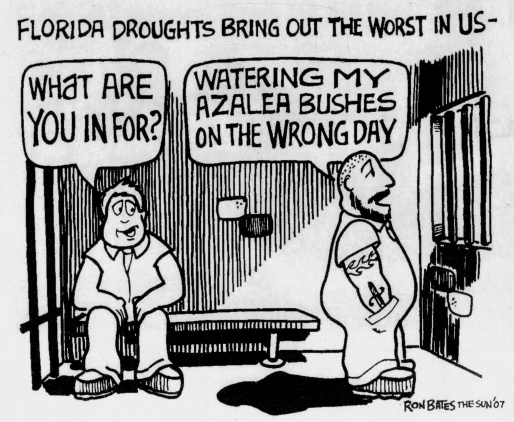
Ron Bates’ career illustrates the significant role a cartoonist plays in local advocacy. Unlike national cartoonists who focus on the "beltway" politics of Washington, Bates carved a niche by focusing on the "whimsical" and the environmental. His work for The Charlotte Sun and other Florida syndicates wasn’t just about making people laugh; it was about reflecting the lived experience of his neighbors.
Following his relocation to Port Charlotte in 2002, Bates found immediate inspiration in the natural world. Data from his tenure shows a consistent focus on state-specific concerns:
- Environmental Stewardship: Bates frequently tackled the delicate balance between Florida’s rapid development and its fragile ecosystems.
- Disaster Resilience: The aftermath of Hurricane Charley in 2004 became a pivotal moment for his work. Bates noted that the shared trauma of the storm provided a wealth of "inspiration," allowing him to use humor as a psychological balm for a community in recovery.
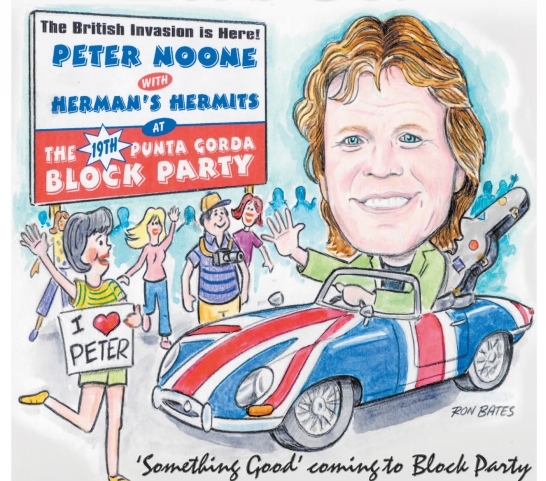
- Community Philanthropy: His work extended beyond the page into the physical world, where his watercolor and pencil collages of Punta Gorda and Gasparilla Island were utilized as fundraisers for the Kiwanis Club.
Bates’ transition from a muralist and set designer to an editorial cartoonist suggests that the craft requires a multidisciplinary eye—one that understands how to fill a massive wall and how to condense a complex political argument into a four-inch square.
Artist Perspectives: Wuerker, KAL, and the Art of Historical Caricature
When Hotel Manager Colette Marquez of The Hay-Adams tasked Matt Wuerker and Kevin Kallaugher with creating a commemorative set of coasters for the nation’s 250th anniversary, the artists were forced to confront the "visual DNA" of the Founding Fathers. Their insights provide a rare look into the technical and psychological aspects of caricature.
Matt Wuerker noted the disparity in "caricature-ability" among historical figures. He observed that while Alexander Hamilton possessed "boring features" that made him difficult to satirize effectively, others were a gift to the artist. "Ben Franklin has a very cartoonish face and is extreme with his hair and glasses," Wuerker remarked, adding that John Adams possessed "truly comical aspects to his face and hair."
Kevin “KAL” Kallaugher’s contribution highlighted the modern cartoonist’s blend of traditional artistry and digital manipulation. KAL described a process of architectural and anatomical "remixing" for his depiction of James Madison. After realizing the background needed to feature the "Top of the Hay" (the hotel’s famous rooftop), KAL kept his original rendering of Madison’s head but painted an entirely new background, merging the two digitally. This "Frankenstein" approach to illustration underscores how even when drawing figures from 250 years ago, the modern cartoonist uses 21st-century tools to achieve the perfect composition.
Official Responses and Philosophical Outlooks: Pedro X. Molina on the State of the Art
While Bates reflects on a successful career and Wuerker and KAL celebrate historical milestones, Pedro X. Molina offers what can be considered the "state of the union" for the profession. His illustrated essay for Tinyview serves as both a manifesto and a warning.
Molina identifies several existential threats:
- The Devaluation of Content: The internet has fostered a culture where users expect high-quality journalism and art for free. Molina argues that this "free content" model is unsustainable for artists who spend decades honing their craft.
- The AI Disruption: Generative AI poses a unique threat to cartoonists. While AI can mimic styles, Molina suggests it lacks the "soul" and the nuanced understanding of irony required for true satire. However, the economic temptation for publishers to use AI over human artists remains a significant concern.
- The Platform Shift: Molina views the move toward Substack, Patreon, and Tinyview not just as a trend, but as a survival necessity. He expresses pride in the craft but acknowledges that the "gatekeepers" of old (the major newspaper syndicates) are no longer the reliable partners they once were.
Molina’s response to these challenges is one of defiant professionalism. He argues that the very things making the world more complex—misinformation, political polarization, and technological alienation—are the things that make the editorial cartoonist more essential than ever.
Implications: Satire in the Age of Algorithms and Aesthetic Disruption
The stories of Bates, Wuerker, KAL, and Molina suggest several profound implications for the future of visual satire.
First, the loss of local cartoonists like Bates represents a thinning of the "civic fabric." When local issues are not reflected through the lens of satire, the community loses a vital tool for self-reflection and accountability. The "Florida Man" tropes and environmental warnings in Bates’ work served to unify a region; without such voices, local discourse often becomes more polarized and less imaginative.
Second, the Wuerker and KAL collaboration at The Hay-Adams suggests that there is still a high-prestige market for traditional caricature. However, this market is increasingly niche, moving from the daily newsprint to luxury commemorations and specialized galleries.
Finally, Molina’s essay highlights the urgent need for a new economic social contract between artists and the public. If the editorial cartoon is to survive the age of AI, it will require a conscious effort by audiences to support human creators on independent platforms. The "state of the art" is currently one of "proud precarity." The cartoonists are as skilled and passionate as ever, but the ground beneath their feet is shifting.
As we approach America’s 250th anniversary, the work of these artists reminds us that while the tools may change—from woodcuts to watercolors to Wacom tablets—the goal remains the same: to speak truth to power with a well-placed line and a bit of "mischief." The survival of this art form is not merely a matter of aesthetic preference; it is a barometer for the health of a free and open society.