In a series of recent reflections on the state of modern commerce, education, and technology, veteran columnist Mike Peterson has highlighted a growing disconnect between traditional American institutions and the evolving expectations of the 21st-century consumer. Through a lens that blends personal anecdote with sharp media criticism, the discourse explores how everything from the quality of a "cup of joe" to the academic integrity of higher education is undergoing a radical, and often polarizing, transformation.
Main Facts: A Convergence of Cultural Shifts
The current cultural dialogue is defined by three primary pillars: the commercialization of daily life, the politicization of public institutions, and the technological encroachment of Artificial Intelligence (AI) into the creative arts.
Key developments include:
The Coffee Paradox: A shift in consumer perception regarding "affordable" coffee, where traditional staples like Dunkin’ are being overshadowed by high-priced specialty brews, leading to questions about whether quality has truly declined or if consumer palates have been artificially inflated.
The "Round-Up" Controversy: The rise of point-of-sale charity solicitations has sparked a wave of misinformation regarding corporate tax benefits, despite federal laws clearly stating that such donations are tax-deductible only for the consumer, not the corporation.
Institutional Restructuring: The ongoing transformation of New College of Florida into a conservative-leaning institution has reached a new milestone with the dissolution of its original alumni association, a move the administration claims will foster "meaningful participation" but critics label as an attempt to silence dissent.
The AI Aesthetic: New research from Columbia University suggests a growing public preference for AI-generated fiction over human-authored work, a trend that challenges long-held beliefs about the unique value of human creativity.
Chronology of Institutional Change
The timeline of these cultural shifts reveals a steady progression from the late 20th-century "standardization" of American life to the fragmented, hyper-politicized environment of 2026.
The Era of Standardization (1990s–2010s)
During the late 1990s and early 2000s, brands like Dunkin’ Donuts and McDonald’s dominated the American morning ritual. As Peterson notes, McDonald’s improved its market position by enforcing stricter freshness standards—prohibiting the practice of pouring old coffee into fresh carafes. This era was defined by a quest for a "reliable" cup of coffee at a reasonable price. Simultaneously, Peterson’s own work on "Tales of Ancient Rome" for Massachusetts newspapers encountered early "identity politics" challenges, as Greek readers protested the Romanization of Hellenic myths, eventually forcing a title change to "Tales of the Ancient World."
The Rise of Corporate Social Responsibility (2010s–2020s)
The mid-2010s saw the ubiquity of "round-up" programs at grocery store checkouts. While these programs, such as those run by various cooperatives, raised millions for non-profits, they also birthed a persistent urban legend: that corporations use these pennies to offset their own tax burdens. Despite frequent debunking by tax experts, this skepticism has persisted into the current year.
The Political and Technological Pivot (2023–2026)
The most drastic shifts have occurred within the last three years. In Florida, the 2023 gubernatorial appointment of a new board of trustees at New College of Florida signaled a deliberate move to recast the "liberal arts honors college" into a "right-wing bastion." By August 2026, this transition culminated in the official disbanding of the school’s independent alumni association.
Concurrently, the rise of Large Language Models (LLMs) has shifted from a novelty to a dominant force in the literary market. The Columbia University study released in 2026 confirms that the "average" reader now finds AI-generated narratives more accessible and satisfying than human-produced literature, a phenomenon Peterson attributes to the historical prevalence of "bestselling crap."
Supporting Data and Economic Context
The Economics of the Checkout Line
A common deterrent for consumers participating in "round-up" charity drives is the belief that the retailer receives a tax deduction. However, according to the Tax Policy Center, when a customer adds a donation to their bill, the store acts merely as a conduit. The customer is the one who can technically claim the deduction on their taxes (provided they keep the receipt and itemize), while the store cannot claim the donation as its own income or as a charitable contribution.
Data from national retail cooperatives indicates that while "round-up" programs have generated over $1 million for local charities in single-region co-ops alone, the participation rate remains skewed. Observation suggests that customers making smaller purchases are statistically more likely to "round up" than those spending larger amounts, highlighting a psychological divide in consumer philanthropy.
The AI Creative Study
The Columbia University study cited by Peterson provides startling insights into modern reading habits. The research indicates that AI fiction often scores higher in "readability" and "narrative satisfaction" because the algorithms are trained on established tropes and successful commercial formulas.
This supports "Sturgeon’s Law," a concept coined by sci-fi author Theodore Sturgeon in the 1950s, which posits that "ninety percent of everything is crap." In a historical context, AI-generated work is the modern equivalent of the "penny dreadfuls" or the 19th-century works of Paul de Kock and Edward Bulwer-Lytton—writers who were commercially successful despite being panned by literary critics for their formulaic and often "bad" writing.
Official Responses and Administrative Justifications
New College of Florida
The administration of New College of Florida has defended its decision to dissolve the alumni association as a necessary step for modernization. In an official statement, the college foundation claimed the move was intended to:
"Strengthen coordination between alumni leaders and Foundation staff in support of the college’s mission… and encourage meaningful alumni participation, lifelong learning, and student engagement."
Critics and former alumni, however, argue that this is a "corporate bafflegab" approach to neutralizing an association that has been vocal in its opposition to the school’s new ideological direction. The move effectively replaces an independent body with one that is under the direct oversight of the college’s new leadership.
The Literary Community
In response to the rise of AI-written fiction, several writers’ guilds have pointed to the "soulless" nature of algorithmic analysis. Peterson highlights an AI analysis of Van Morrison’s "I Wanna Roo You" as a prime example of technology failing to grasp human nuance. While the AI can deconstruct the lyrics, it lacks the ability to understand the "very human" emotion and cultural context of the music, leading to what Peterson describes as an "illiterate, soulless examination."
Implications: The Future of Public Discourse and Art
The convergence of these trends suggests a future where the "human element" is increasingly viewed as a luxury or a nuisance.
The Erosion of Institutional Memory
The disbanding of the New College Alumni Association represents a broader trend of institutional "resetting." When organizations find their history or their veteran members at odds with new management, the solution is increasingly to dissolve the old structures entirely rather than engage in debate. This has profound implications for the concept of "open inquiry" in American higher education.
The "Good Enough" Standard of Art
If consumers continue to prefer AI-generated content because it adheres to familiar patterns, the market for "difficult" or "innovative" human art may shrink. Peterson notes that masterpieces like James Joyce’s Ulysses or Flann O’Brien’s At Swim-Two-Birds would likely cause an AI to "break down" because they defy the very patterns AI is trained to replicate. The danger lies in a cultural feedback loop where AI is trained on "crap," produces more "crap," and the public’s palate—much like the perception of a "regular cup of joe"—is permanently altered to prefer the synthetic over the authentic.
Conclusion
As 2026 progresses, the tension between traditional quality and modern efficiency continues to tighten. Whether it is the literal fire-extinguishing properties of a foam cup of Dunkin’ coffee or the metaphorical firestorm surrounding the education of Florida’s youth, the underlying theme remains the same: America is in the midst of a profound recalibration of value. In this new era, the challenge for the individual is to distinguish between the "meaningful participation" promised by corporations and the authentic, often messy, reality of human experience.
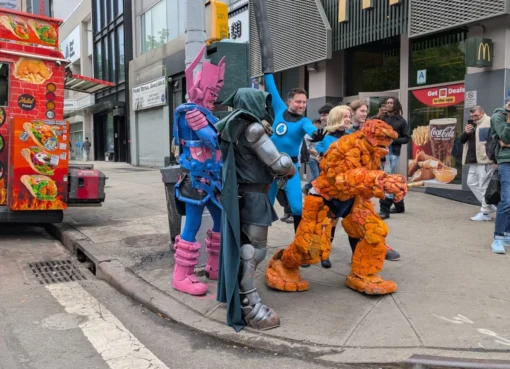
NEW YORK CITY — On a grey but resolute Monday afternoon in May 2026, the intersection of Delancey and Essex Streets in Manhattan’s Lower East Side underwent a transformation that many argue was nearly
The landscape of modern romantic comedy manga has undergone a significant transformation over the last decade. Moving away from the high-stakes melodrama of the early 2000s, contemporary readers have
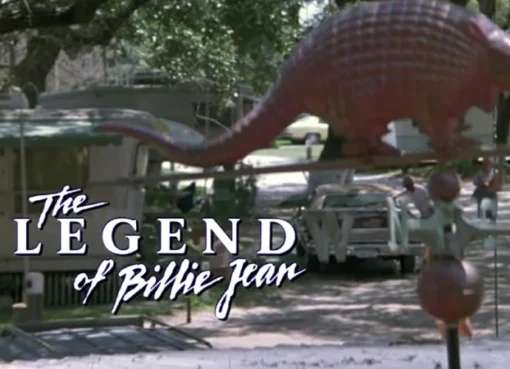
In the pantheon of 1980s cinema, certain titles serve as the pillars of the decade’s pop-culture identity. Films like The Goonies, Back to the Future, and The Breakfast Club are etched into the