The Haunting Myth: Unearthing the Problematic "Indigenous Burial Ground" Trope in North American Culture
Main Facts
In North America, the chilling claim that a supposedly haunted location rests upon an "Indian burial ground" has become a pervasive cultural touchstone. This urban legend, deeply embedded in popular culture, has been repeatedly deployed as a literary device in horror, evolving from a terrifying premise to a comedic cliché, and eventually, a widely shared meme. While seemingly innocuous, this trope carries significant historical inaccuracies and profound cultural insensitivity, actively distorting Indigenous histories, sacred practices, and the very real injustices suffered by First Peoples. Far from being a mere fictional device, its widespread acceptance reflects a complex interplay of settler guilt, colonial anxieties, and a persistent failure to acknowledge authentic Indigenous narratives. The perpetuation of this myth not only trivializes sacred sites but also paints Indigenous spiritual beliefs in a derogatory and often "demonic" light, inadvertently absolving actual perpetrators of wrongdoing by shifting blame to spectral figures.
Chronology: From Pulp Fiction to Pop Culture Phenomenon
The "Indigenous burial ground" trope, while feeling ancient, gained significant traction in the latter half of the 20th century, cementing its place in the North American psyche through a series of influential media appearances.
The Amityville Origins: A Fabricated Foundation
Often erroneously cited as the origin of the trope, Jay Anson’s 1977 bestseller, The Amityville Horror: A True Story, played a pivotal role in popularizing the concept of a cursed Indigenous site. Anson’s narrative claimed the infamous Amityville house was built not on a burial ground, but on a Shinnecock "enclosure for the sick, mad, and dying." He vividly described individuals being "penned up" at this desolate location until succumbing to exposure, their unburied remains left to rot because the Shinnecock allegedly believed the land was infested with demons. This sensationalized account, devoid of verifiable historical or archaeological backing, laid the groundwork for future appropriations.
Later that year, celebrity TV ghost hunter Hans Holzer, accompanied by medium Ethan Johnson Meyers and three others, further embellished the Amityville narrative. According to Holzer, Meyers channeled the ghost of an Indigenous chief who confessed to possessing Ronald Defeo Jr., compelling him to murder his family, including four younger siblings. This dramatic intervention effectively shifted blame from the human perpetrator to a vengeful Indigenous spirit. The 1979 Amityville Horror movie adaptation readily integrated Holzer’s unsubstantiated claims, cementing the false connection between Indigenous presence and malevolent haunting in the public imagination.
However, the Shinnecock Nation has consistently refuted these claims. Numerous statements from the Shinnecock confirm that their people never inhabited the Amityville area, which falls outside their traditional territory. Crucially, no archaeological evidence or oral history has ever supported the existence of any burial ground or "enclosure" at the site. Holzer and Meyers, in their quest for sensationalism and professional legitimacy, had successfully grafted a lesser-known, yet already circulating, Indigenous land story onto Anson’s original tale, amplifying its impact and perpetuating a harmful stereotype.
Disney’s Mass Market Introduction
Concurrently with the Amityville phenomenon, Disney theme parks unwittingly became a major vector for the trope’s dissemination. In 1979 and 1980, Big Thunder Mountain Railroad rides launched in California and Florida, respectively. While the ride’s story has evolved over decades, its core narrative centers on a runaway train traversing a haunted mine and ghost town purportedly built on Indigenous burial grounds. A 2020 Disney blogger recounted an employee claiming Indigenous spirits could be heard chanting on the ride, though the blogger herself only perceived drums. Regardless of specific details, the sheer volume of visitors exposed to this narrative—hundreds of thousands annually—solidified the "haunted burial ground" as a recognizable, if unchallenged, piece of Americana.
Stephen King and the Literary Canon
The trope achieved literary prominence with Stephen King’s 1983 novel, Pet Sematary. King not only utilized an Indigenous burial ground as a central plot device but also appropriated elements of the Algonquian Wendigo story, a powerful and complex entity from Indigenous folklore, reducing it to a mechanism for horror. The book’s subsequent film adaptation ensured its wide reach. Renee L. Berland, in The National Uncanny: Indian Ghosts and American Subjects, notes that while earlier American writers harbored an obsession with Indigenous ghosts, King’s Pet Sematary became "one of the most popular novels that has ever been published," thus enshrining the trope within mainstream horror.
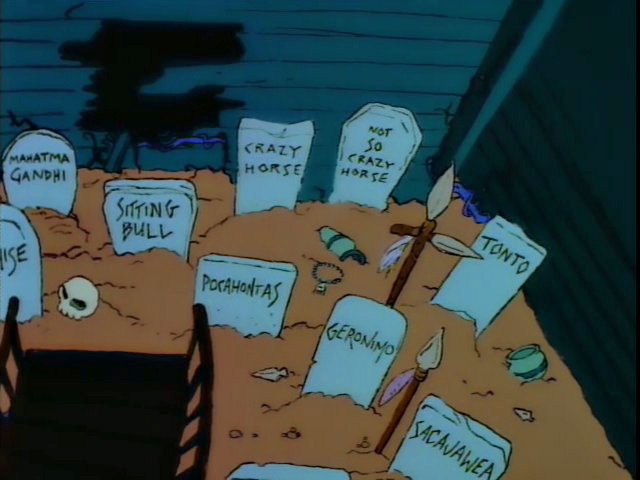
The trope’s pervasive presence is further evidenced by its appearances in other seminal works. Stanley Kubrick’s 1980 adaptation of King’s The Shining included a subtle nod, and the 1982 film Poltergeist explicitly mentioned it, albeit to state it was not the cause of the haunting, demonstrating its recognition even in negation. From iconic TV series like Buffy the Vampire Slayer and The Real Ghostbusters cartoon to numerous other shows, books, and games, the "Indigenous burial ground" has become a narrative shortcut for explaining malevolent supernatural activity. Its status as a cultural fixture is perhaps best underscored by its frequent lampooning in comedy series such as The Simpsons, Friends, South Park, Family Guy, and Parks and Recreation. As Seth Grahame-Smith’s How to Survive a Horror Movie humorously suggests, a surefire way to confirm a haunting is to ask, "Are Native Americans constantly showing up to ask, ‘What happened to our cemetery?’"
The Modern Meme and Mainstream Blame
In contemporary media, particularly ghost hunting reality television, the trope has been weaponized. Shows like Ghost Adventures frequently employ a formula that attributes "demonic" entities to Indigenous ghosts, often without any credible historical or cultural basis. This echoes Holzer’s strategy of shifting blame to "nonwhite ghosts," a tactic that has become disturbingly mainstream. The trope’s ultimate transformation into a meme was perhaps inevitable. In 2011, The Onion‘s satirical video, "Report: Economy Failing Because U.S. Built on Ancient Indian Burial Grounds," brilliantly satirized the trope’s absurd application. Panelists gravely discuss a congressional report linking national problems, including poverty, to these mythical burial grounds, with one even suggesting Republicans are portraying Obama as "soft on poltergeists" while demanding "blood offerings."
Since then, social media platforms like Twitter and Reddit have been flooded with thousands of posts and threads perpetuating the trope, often through photo memes and videos. While awareness of the trope’s problematic nature has grown thanks to articles, including Atlas Obscura‘s early non-academic critique in 2008, the original stories and memes that fueled its popularity have rarely received the same critical scrutiny.
Supporting Data: Unpacking the Roots of a Harmful Narrative
To truly understand the "Indigenous burial ground" trope, one must delve into its complex folkloric origins, separating authentic Indigenous beliefs from settler projections. The distinction between actual, sacred burial sites and the fictionalized, often sensationalized "rumored" ones is paramount. While some Indigenous communities do hold beliefs about spirits associated with specific, real ancestral grounds, the vast majority of settler-driven "haunting" narratives are rooted in fear and misconception.
Settler Guilt and the Projection of Fear
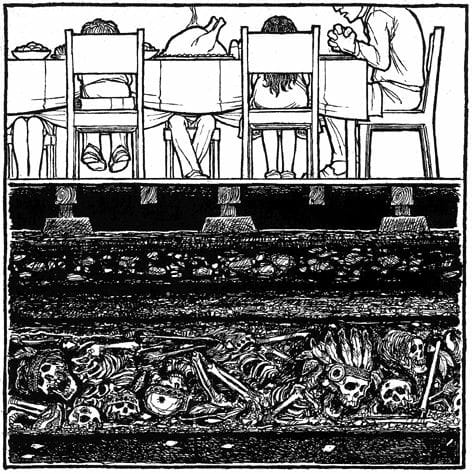
The prevalence of this trope is deeply intertwined with the concept of "Settler Guilt." A common theory regarding ghosts posits that they are the spirits of individuals who were wronged in life, sometimes even murdered, seeking justice or peace. If one accepts that North American ancestors committed horrific acts against Indigenous peoples—genocide, displacement, cultural destruction—then the subconscious discomfort of living on land acquired through such violence can manifest as a societal "haunting." This psychological burden, the reaping of benefits from stolen resources, food, and trade, creates a fertile ground for narratives that project responsibility onto the wronged. Ron Cobb’s powerful 1966 illustration in The Los Angeles Free Press, depicting a family’s Thanksgiving dinner over an Indigenous burial, vividly captures this sentiment, suggesting a collective haunting born from ancestral sins.
However, this "inferior-earthbound ghosts" perspective also reveals deep-seated Christian fears. Settler narratives often project anxieties about "uncivilized" people, contrasting them with notions of "consecrated ground" and the belief that the "name of Christ" or "Heaven" is exclusively for denominational believers. This framework positions Indigenous spirits as inherently vengeful or malevolent, incapable of peaceful rest, and thus, a threat to settler peace.
Debunking the Myths: Archaeological and Cultural Discrepancies
A critical examination reveals the frequent lack of factual basis for these widespread claims. The Shinnecock Nation’s clear statements regarding the Amityville house serve as a primary example. Further evidence emerges from local contexts, such as the author’s experience in British Columbia, Canada. For instance, the city of Victoria, a hub for ghost tourism, often cites its construction on an Indigenous burial ground as a reason for its "haunted" status. Claims of numerous burial mounds in Beacon Hill Park, Cadboro Bay, and Saltspring Island are frequently repeated. Yet, historical and archaeological records paint a different picture. Local First Nations, for millennia, utilized diverse burial practices, including cairns, raised platforms, trees, and caves near shorelines, not the mound structures typically associated with settler-conceived "burial grounds." Furthermore, early settlers often desecrated these sites, collecting Indigenous bones as "souvenirs." The assertion that Victoria, or indeed many other North American cities, was built upon a "mega burial ground" is largely unsubstantiated, diminishing the true sacredness of authentic, specific ancestral sites.
The impact of such sensationalized narratives is exemplified in Gathering of Ghosts (1989) by Robin Skelton and Jean Kozacari. In their chapter, "The Indian Inheritance," they attributed a cult’s disturbed actions near Nanaimo to "tainted land." Incorrectly identifying the territory as Kwakiutl and a "slave-body dump site," the authors stated: "It seems not unlikely that the long history of Indian raids, feasts, and ritual killings accounted in part for the way in which Brother Twelve’s initially peaceful and gentle community became disturbed… The problem was the land and its history. It was crying out for blood. The evil was in the earth itself." Like Amityville, these "facts" were untrue. Yet, Indigenous ghosts, or their "evil soil made sentient," were painted as the culprits. The particularly brutal aspect of this narrative is that Skelton was a respected university professor, lending academic weight to hateful and unsubstantiated depictions of local Indigenous peoples.
Historical Precedents of Colonial Fear
Fear of Indigenous spirits, however, predates the modern "burial ground" legend. In the 1890s, colonial newspapers frequently reflected dread as the Ghost Dance movement gained momentum across North America. This ceremonial dance, intended to raise the spirits of recently deceased tribe members for protection against settler injustices, was met with extreme fear. This fear culminated in the Wounded Knee Massacre, where the U.S. Army killed an estimated 150-300 Lakota people, predominantly women, children, and Elders. The colonists feared resurrected ghosts, yet showed no compunction about creating new ones.
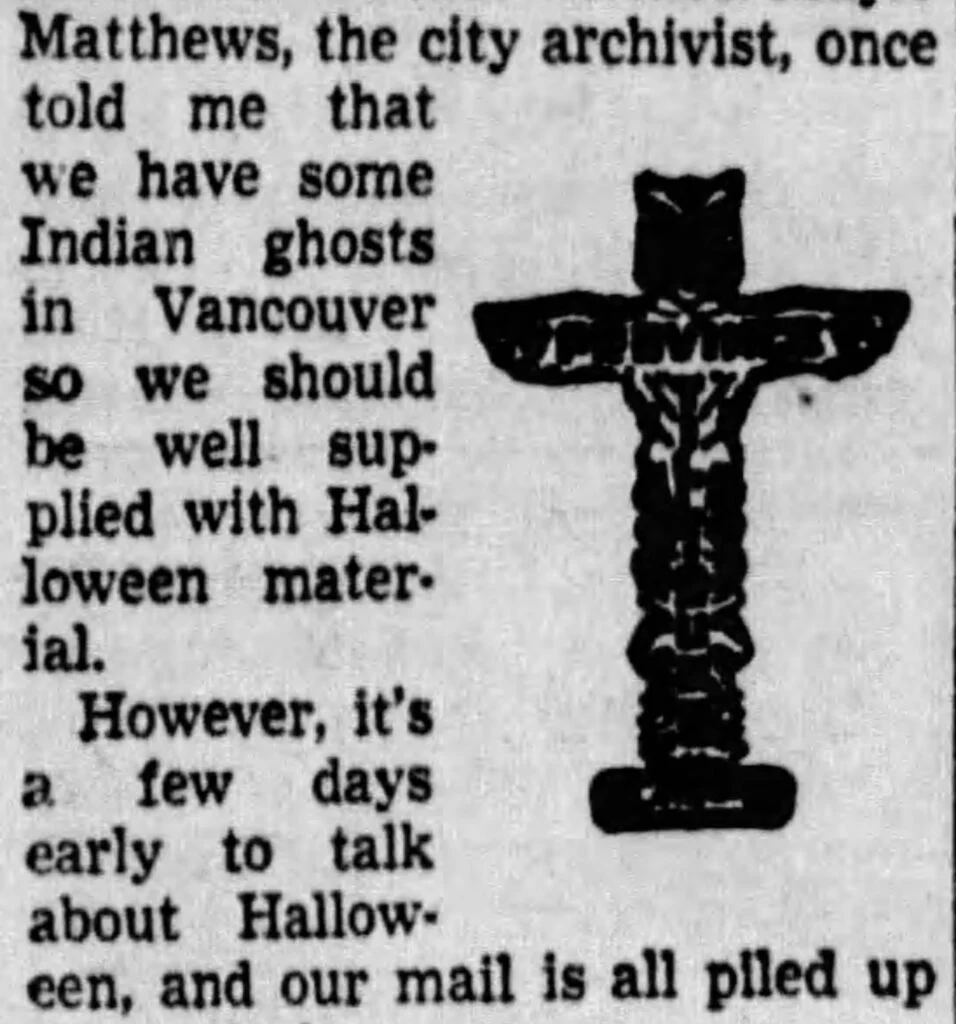
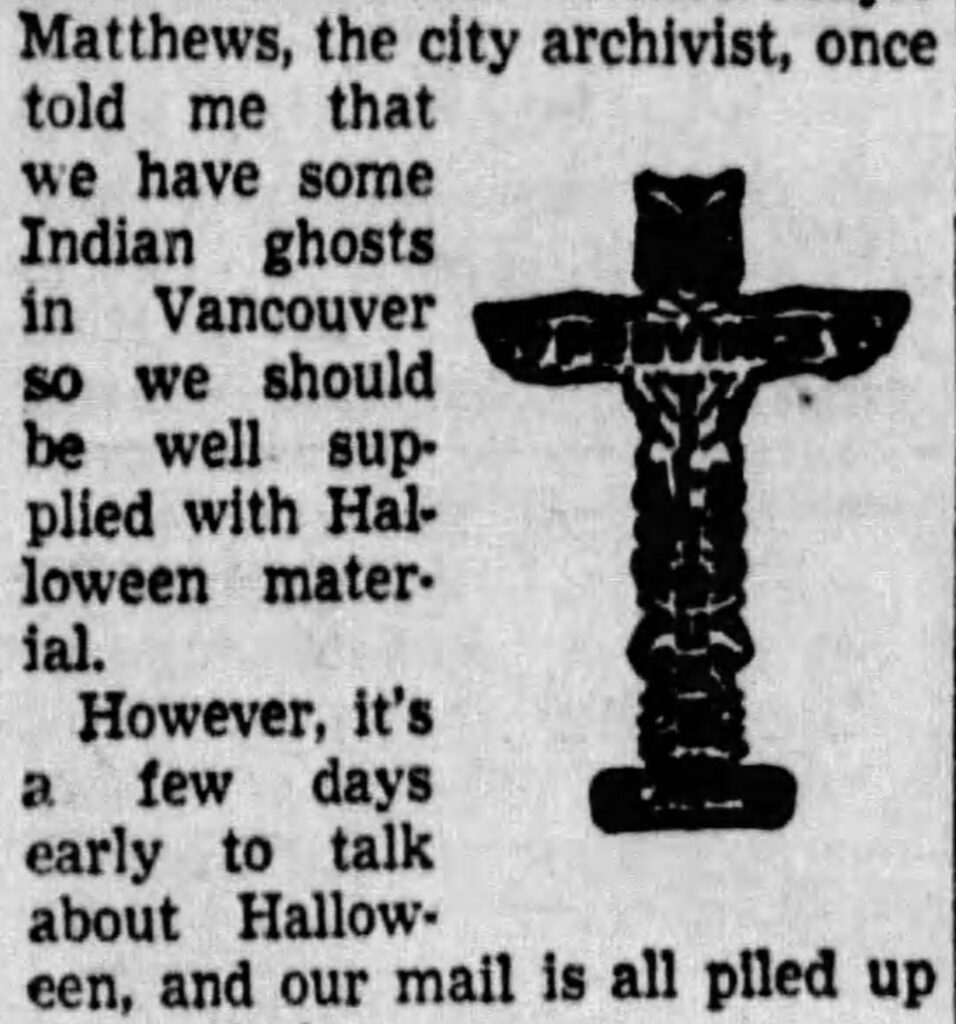
Even early Canadian reports illustrate this apprehension. The oldest documented account of an Indigenous grave causing a haunting in British Columbia, from 1924, describes seven road builders being terrorized by "whishing" sounds and rapping noises for four nights. Concluding their camp was built on the grave of a "Red Indian," they relocated. In 1940, Vancouver City Archivist Major Mathews cryptically mentioned "Indian ghosts" to a reporter, offering no elaboration, yet highlighting the concept’s existing presence in the local consciousness. A 1946 Vancouver Sun article reported a headless woman’s ghost seen near the rumoured secret grave of Tecumseh, a revered chief who united Indigenous groups against American expansion. Even pulp writer Bjarne Kirchhoff’s 1950 story, "The Ghost of Graveyard Flats," featured a wendigo haunting an Indigenous burial ground, predating King’s Pet Sematary by decades and demonstrating the trope’s earlier, albeit less mainstream, literary use.
The evolution of a Comox haunting story, from a mist-like apparition in the 1940s to "Bloody Mary" and later "Dancing Mary"—an Indigenous woman described as "young and well-stacked" in the 1960s—further illustrates how settler narratives transform and sexualize Indigenous figures, connecting them to either a grave or a massacre site without clear historical basis. These urban legends, often shared by people of European background through "friend-of-a-friend" channels, reinforce the problematic narrative of the perpetually aggrieved, potentially malevolent Indigenous spirit.
Official Responses: Reclaiming Truth and Respect
The pervasive "Indigenous burial ground" trope is not merely a harmless fiction; it actively undermines the efforts of Indigenous communities to protect their heritage, assert their sovereignty, and foster respectful understanding.
Indigenous Voices and Cultural Protocols
Indigenous communities across North America have consistently challenged these sensationalized narratives. The Shinnecock Nation’s definitive rejection of the Amityville claims is a powerful example of an Indigenous nation asserting its historical truth against colonial fabrications. It is crucial to understand that genuine Indigenous spiritual beliefs and storytelling traditions are vastly different from the caricatures presented in settler media. Many Indigenous communities have designated storytellers and knowledge keepers who are entrusted with sharing specific narratives, often with strict protocols regarding what can be shared with outsiders. Many stories are intentionally private, safeguarding sacred knowledge.
Furthermore, traditional Indigenous beliefs regarding the deceased often contrast sharply with settler horror tropes. For many Indigenous peoples, merely speaking about a deceased person can, in certain contexts, be seen as inviting their spirit, a concept far more nuanced than the Western idea of a vengeful ghost. The impact of abusive residential schools also plays a role, as children were often taught that Jesus was the only cure for "evil," displacing traditional spiritual practices and imposing a colonial religious framework that demonized Indigenous beliefs.
The very terminology used is fraught with colonial history. While "Indigenous" is now preferred, terms like "Indian" or "Native American" (which itself varies in acceptance between the U.S. and Canada) are still used, often reflecting older generations or colonial legacies. The casual and disrespectful use of "burial ground" terminology often belies a deeper issue of cultural appropriation, where sacred elements are taken out of context for entertainment or profit.
The Imperative of Respect and Accuracy
For those seeking to engage respectfully with Indigenous cultures, adherence to established protocols is paramount. The author’s experience at the University of Fairbanks in Alaska, learning from the Alutiiq Museum’s chart for recording Indigenous oral stories, highlights the importance of deferring to Indigenous experts and Elders. This commitment to respectful engagement is the only ethical path forward. The legal recognition of Indigenous cultural heritage, such as copyright protection for petroglyphs, underscores the tangible value and ownership of these narratives and artistic expressions.
Implications: Moving Beyond Stereotypes for Reconciliation
The enduring popularity of the "Indigenous burial ground" trope reveals uncomfortable truths about North American society’s relationship with its colonial past and Indigenous peoples. It highlights a pervasive ignorance and a willingness to embrace harmful stereotypes over historical accuracy and cultural respect.
Challenging the Narrative of Evil
The core question remains: why is this trope so popular, and what does it say about a mainstream culture that readily attributes malevolent hauntings to the ghosts of the very people its ancestors wronged? While "Settler Guilt" offers a partial psychological explanation, it is insufficient to justify the perpetuation of such damaging narratives. Indigenous peoples are not inherently evil or demonic. Their spiritual traditions are rich, diverse, and often embody concepts of the afterlife that are far more beautiful, holistic, and less judgmental than many settler beliefs. Reducing complex spiritual systems to a simplistic "curse" or "vengeful spirit" is a profound act of disrespect and intellectual laziness.
The false universalization of "Indigenous burial grounds" also actively harms genuine efforts at reconciliation. By fabricating ubiquitous, malevolent sites, it inadvertently delegitimizes actual sacred burial grounds and the very real crimes and injustices perpetrated against Indigenous communities. This includes everything from individual acts of violence to the systemic genocides perpetuated through institutions like the residential school system, where unmarked graves continue to be discovered, representing profound, tangible sites of injustice that demand respect and remembrance, not fictionalization.
The Path to Reconciliation: Education, Acknowledgment, and Respect
Moving forward requires a fundamental shift in perspective. It demands a commitment to education about authentic Indigenous histories, cultures, and spiritual beliefs, taught from Indigenous perspectives. It requires acknowledging the painful legacy of colonization and its ongoing impacts. This means actively challenging and dismantling harmful stereotypes like the "Indigenous burial ground" trope, which continues to dehumanize Indigenous peoples and perpetuate a narrative of fear and otherness.
Ultimately, genuine reconciliation necessitates a profound respect for Indigenous sovereignty, cultural heritage, and the sanctity of their ancestral lands and burial sites. It means listening to Indigenous voices, honoring their truths, and ensuring that their stories are told accurately and respectfully. Only by confronting these uncomfortable truths and embracing a path of education and empathy can North American society hope to move beyond the haunting myths of its past and build a future founded on mutual respect and understanding.