Tesla’s Cybercab Doors: A "Love Tap" or a Design Flaw Waiting to Happen?
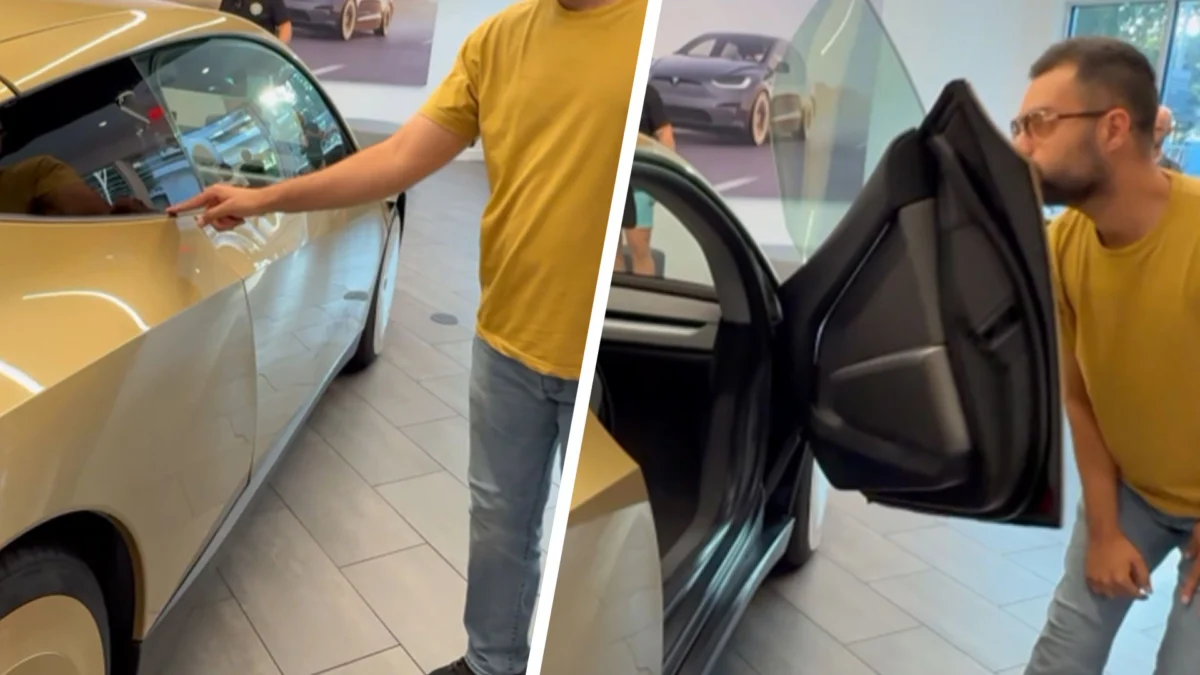
The electric vehicle pioneer, already facing scrutiny over the Cybertruck’s performance, is now under fire for a seemingly minor yet potentially irritating design oversight in its autonomous Cybercab: the doors. While proponents downplay the issue as a mere "love tap," critics raise concerns about safety, practicality, and the broader implications for public perception of autonomous vehicle design.
The Latest Controversy in Tesla’s Unconventional Design Philosophy
Tesla, a company renowned for pushing the boundaries of automotive design and technology, has once again found itself at the center of a design-related debate. Following a string of controversies surrounding its highly anticipated Cybertruck, from its polarizing aesthetic to reported performance issues, the company’s foray into the autonomous taxi service, the Cybercab, is now facing its own design criticism. While the discussion around fully autonomous vehicles without manual controls has dominated safety conversations, a more granular, yet equally vexing, issue has emerged: the operation of the Cybercab’s distinctive butterfly doors.
The core of the problem, as highlighted in recent social media discussions and demonstrated in user-generated videos, lies in the doors’ automatic opening mechanism. It appears that the Cybercab’s striking, futuristic doors, designed to evoke a high-tech, almost spaceship-like experience, may not possess adequate safeguards to prevent them from making contact with individuals standing too close to the vehicle during their opening cycle.
A Closer Look at the "Love Tap" Phenomenon
The controversy gained significant traction following a video shared on social media platform X (formerly Twitter) by user @cantworkitout. The video, timestamped September 20, 2026, showcases an individual standing near the Cybercab as its automatic butterfly doors begin to open. To the apparent surprise of the observer, the door makes contact with their person, delivering what the user describes as a "love tap."
In their accompanying post, @cantworkitout attempts to mitigate alarm, stating, "But it is just a love tap. I don’t want to make this video to dunk on the Cybercab. In fact I want everyone to know that these are just taps and you don’t really feel anything. So the Cybercab doors are definitely safe…" Despite this reassurance, the mere act of a vehicle door making physical contact with a passenger or bystander has ignited a broader discussion about its implications.
Chronology of Concern: From Concept to Real-World Observation
The Cybercab, as a concept, has always been envisioned as a futuristic autonomous vehicle, designed for urban mobility and ride-sharing services. Its design language, mirroring the angular and unconventional aesthetics of the Cybertruck, immediately set it apart from traditional taxis. The butterfly doors, a dramatic departure from conventional car doors, were a key visual element that contributed to this futuristic appeal.
However, the practicality of such a design for mass-market use, particularly in dense urban environments, was questioned from its initial unveiling. Concerns were raised about the space required for these doors to open, potentially causing obstructions in narrow streets or crowded pickup zones. The recent demonstration of the doors making contact with a person, even if described as a light tap, brings these theoretical concerns into sharp focus, providing a real-world illustration of a potential design flaw.
The sequence of events can be traced as follows:
- Initial Concept and Design Reveal: Tesla unveils the Cybercab, showcasing its radical design, including prominent butterfly doors. Public and industry observers immediately note the unconventional nature of the vehicle.
- Pre-Launch Speculation: Discussions begin regarding the practicality and safety of the Cybercab’s design, particularly its autonomous nature and unique door mechanism, in urban settings.
- Real-World Demonstration: A video emerges on social media showing the Cybercab’s butterfly doors making contact with an individual during their opening sequence.
- Public Reaction and Debate: The video sparks a wider conversation, with some users downplaying the incident as a minor inconvenience, while others express significant concerns about potential safety risks.
Supporting Data and Expert Opinions: Beyond the "Love Tap"
While the individual in the video described the contact as a "love tap" and emphasized their belief in the doors’ safety, the incident has resonated with a broader audience, prompting further analysis and commentary. The core issue is not necessarily the force of the contact itself, but the underlying principle of a moving vehicle component making unintended physical contact with a person.
The original poster suggests the issue might stem from a blind spot in the car’s camera and sensor system. However, the more fundamental concern is that the doors, as currently designed, do not appear to have a robust mechanism to detect and halt their movement when an obstruction is present. This could be a failure of the proximity sensors, an inadequate response time from the system, or a deliberate design choice to prioritize door speed over absolute obstruction avoidance.
The reactions from other social media users underscore these concerns:
- Vulnerability of Specific Groups: One user pointed out, "The taps may be soft to you, but they may not be safe for the elderly, children, or people with several conditions. Imagine those doors knocking off a pricey phone off their hands!" This highlights the critical need for universal safety considerations, acknowledging that what might be a minor inconvenience for one individual could pose a genuine risk to others.
- Inherent Unpleasantness: Another comment succinctly captured the sentiment of many: "Sure it is safe but I feel like it would still be problematic for some people. Who wants a door to ‘tap’ them when they try to get in?" This speaks to the user experience and the fundamental expectation that entering or exiting a vehicle should be a seamless and safe process, free from unexpected physical interactions.
- Broader Safety Context: The article’s author rightly contextualizes this door issue within the larger, more significant safety concerns surrounding Tesla’s self-driving technology. The history of fatal accidents involving Tesla vehicles in Autopilot mode casts a long shadow, making any perceived design flaw, however minor, a point of heightened scrutiny.
Official Responses and Tesla’s Design Ethos
As of the current reporting, there has been no explicit official statement from Tesla or Elon Musk directly addressing the Cybercab door incident. This lack of immediate comment is not entirely surprising, given Tesla’s often unconventional approach to public relations and product development. The company has historically favored iterating on its products in the real world, learning from user feedback and addressing issues post-launch.
However, this approach has also drawn criticism. The Cybertruck itself has been a prime example, with numerous reports surfacing about its performance in various conditions, from struggling with snow to concerns about its structural integrity at high speeds. These issues, coupled with past instances where Elon Musk’s promises about the Cybertruck’s capabilities (such as its ability to function as a boat) proved to be unfounded, have led to a perception of a design philosophy that sometimes prioritizes radical aesthetics and ambitious technological claims over meticulous real-world testing and refinement.
Tesla’s design ethos often appears to be rooted in challenging established norms and pushing the boundaries of what is considered possible in automotive engineering. While this has led to groundbreaking innovations, it also means that their products can sometimes be perceived as experimental, with potential teething problems. The Cybercab’s doors could be seen as another manifestation of this, where a visually striking design element might have overlooked a crucial aspect of everyday usability and safety.
Implications for Tesla and the Future of Autonomous Transport
The Cybercab door incident, while seemingly minor in isolation, carries several significant implications for Tesla and the broader landscape of autonomous vehicle development:
- Erosion of Public Trust: Each perceived design flaw, regardless of its severity, can chip away at public trust in Tesla’s ability to deliver safe and practical autonomous vehicles. In a nascent industry where safety is paramount, any misstep, however small, can be amplified and contribute to a narrative of unreliability.
- Regulatory Scrutiny: While the current issue might not trigger immediate regulatory intervention, a pattern of such design oversights could invite closer scrutiny from safety regulators. Autonomous vehicle technology is already under a microscope, and any design element that raises safety questions, even indirectly, could become a point of concern.
- User Experience and Adoption: For autonomous taxis to achieve widespread adoption, they must offer a seamless and positive user experience. A door that unexpectedly "taps" passengers, or requires a certain degree of spatial awareness to avoid contact, detracts from this ideal. It introduces an element of unpredictability and potential discomfort that could deter potential riders.
- Brand Perception: Tesla has cultivated an image of innovation and cutting-edge technology. However, persistent reports of design flaws and performance issues, as seen with the Cybertruck, can begin to tarnish this image, leading to perceptions of rushed development or a lack of attention to detail.
- The Broader Autonomous Vehicle Debate: The Cybercab door issue also feeds into the ongoing debate about the fundamental design principles of autonomous vehicles. As we move towards a future where vehicles drive themselves, every aspect of their interaction with the environment and passengers comes under scrutiny. This includes not just the driving system but also the physical interfaces and how they are designed for safety and convenience.
Ultimately, while the Cybercab’s butterfly doors might be a minor inconvenience for some, they serve as a potent reminder that even the most technologically advanced vehicles must adhere to fundamental principles of safety and user-centric design. As Tesla continues to innovate, it faces the challenge of balancing its visionary approach with the practical realities of mass-market adoption and the unwavering expectation of safety from the public. The "love tap" may be insignificant to some, but it represents a critical point of consideration in the ongoing evolution of autonomous transportation.