Laura Sampson Unlocks the Secrets of the Twelve Dancing Princesses in "Enchanted Tales": A Journey into French-Belgian Folklore
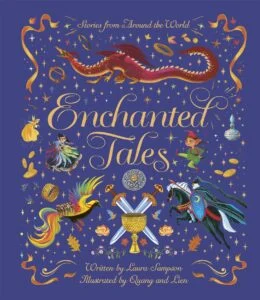
London, UK – In a literary landscape often dominated by new narratives, the timeless allure of classic fairy tales continues to captivate. Award-winning author Laura Sampson breathes new life into one such enduring mystery with her retelling of "The Twelve Dancing Princesses," a captivating narrative originally penned by the French folklorist Charles Deulin. Featured in her enchanting collection, Enchanted Tales, published by Templar Books, Sampson’s rendition invites readers into a secret world of midnight revelry, hidden desires, and the transformative power of true love. This particular version, rich with details inspired by Deulin’s home region on the French-Belgian border, offers a refreshing and deeply rooted perspective on a universally beloved story.
Main Facts: A Royal Mystery and an Unlikely Hero
Laura Sampson’s Enchanted Tales presents a vibrant reinterpretation of "The Twelve Dancing Princesses," a narrative that has resonated across Europe for centuries. At the heart of this specific rendition lies the meticulous work of Charles Deulin, a 19th-century French writer whose deep connection to his local folklore infuses the story with unique geographical and cultural specificities. Sampson’s retelling focuses on the perplexing mystery surrounding the Duke of Beloeil’s twelve beautiful daughters: each morning, their satin slippers are found inexplicably worn through, despite the princesses being locked securely in their chambers. This baffling enigma leads the distraught Duke to issue a grand proclamation, promising the hand of one of his daughters in marriage to any man who can unravel the secret of the nocturnal dances. However, the challenge comes with a perilous caveat: failure results in the suitor’s mysterious disappearance.
Enter Michel, a humble cowherd from the village of Montignies-sur-Roc, affectionately nicknamed "Stargazer" for his dreamy, adventurous spirit. Guided by a benevolent fairy’s prophecy, Michel embarks on a quest that transcends his humble origins. Unlike the parade of princes who have failed before him, Michel possesses not noble birth, but an observant nature, a pure heart, and a touch of magic bestowed upon him. His journey into the princesses’ clandestine world, facilitated by enchanted laurel trees and an invisibility flower, uncovers a hidden realm of silver, gold, and diamond woodlands, a shimmering lake, and a grand castle where the princesses dance until dawn with enchanted princes—former suitors trapped in a perpetual state of amnesia.
Sampson’s narrative culminates in a powerful testament to authentic love. Through Michel’s perseverance and the eventual reciprocation of affection from Lina, the youngest princess, the spell is broken, freeing both the princesses and the enchanted princes from their nightly compulsion. Michel, the unassuming cowherd, not only solves the royal mystery but also finds himself elevated to princely status, marrying Lina and securing a happily ever after that underscores the triumph of character over pedigree. The narrative, enriched by the evocative illustrations of Phung Nguyen Quang & Huynh Thi Kim Lien, stands as a testament to the enduring power of folklore to explore themes of freedom, destiny, and the extraordinary within the ordinary.
Chronology: Unraveling the Enchanted Mystery
The narrative unfolds with a meticulous sequence of events, building suspense and magic from Michel’s initial calling to the ultimate triumph of true love.
The Prophecy and the Peasant’s Dream
The story begins in the picturesque village of Montignies-sur-Roc, nestled near the French-Belgian border, a region rich in local traditions and natural beauty that clearly inspired Deulin’s original work. Here we are introduced to Michel, a young cowherd whose curly hair and striking blue eyes earned him the moniker "Stargazer." Michel is not content with the mundane realities of his pastoral life; his gaze is perpetually fixed upwards, dreaming of grand adventures that lie beyond his humble horizons. This inherent yearning for the extraordinary sets the stage for his destiny.
One serene summer’s day, his life takes an unexpected turn when a luminous fairy, resplendent in a golden dress, materializes before him. Her ethereal song carries a potent prophecy: "Go to the Château of Beloeil, and you will marry a princess!" This divine instruction ignites Michel’s spirit, transforming his idle dreams into a tangible quest. Eagerly, he follows the fairy’s directive, arriving at the magnificent Château of Beloeil the following day.
Upon his arrival, Michel finds the entire court abuzz with a peculiar and distressing mystery. The twelve beautiful princesses of Beloeil, renowned for their grace and charm, are at the center of this enigma. Each night, they retire to a suite of rooms secured with three formidable bolts, ostensibly to prevent any unauthorized egress. Yet, every morning, their delicate satin shoes are discovered utterly worn through, as if they had been engaged in strenuous dancing throughout the night. The Duke, their father, is beside himself with worry and frustration. In an act of desperation, he issues a grand, kingdom-wide decree: "ANYONE WHO CAN SOLVE THE MYSTERY OF THE WORN-OUT SHOES MAY MARRY ONE OF MY DAUGHTERS!" This royal pronouncement, while offering an incredible reward, carries a dark shadow. Many princes, drawn by the allure of a royal marriage, had ventured to the château to try their luck, but each had mysteriously vanished overnight, adding a chilling layer of danger to the already baffling situation.
A Glimmer of Hope and a Fairy’s Gifts
Initially, Michel, acutely aware of his humble status, harbored reservations. "I am no prince – the duke will laugh at me if I come forward," he thought, reflecting the rigid social hierarchies of the time. Instead of directly confronting the Duke, he adopts a more discreet approach, seeking employment in the château gardens. This allows him proximity to the princesses without immediately exposing his grand ambition. His daily task involves crafting exquisite bouquets for the royal sisters. For a time, he remains largely invisible to them, his offerings accepted without so much as a glance or a word of thanks. He is merely a part of the background, a humble servant.
However, this period of anonymity is broken by a pivotal moment. One day, the youngest princess, Lina, momentarily lifts her gaze and offers Michel a fleeting, gentle smile. This simple act, a beacon of recognition amidst indifference, profoundly impacts Michel. His heart, which had been merely observing, now leaps with a newfound purpose. This small gesture from Lina ignites a fervent desire within him, not just to solve the mystery for the Duke’s reward, but specifically to understand the secret life of this princess who had seen him.
That very night, the benevolent fairy reappears to Michel, this time bearing gifts imbued with potent magic. She presents him with two baby laurel trees – one bearing roses, the other cherries – along with a golden bucket and a golden rake. "Plant these laurel trees, tend them with this rake, water them from this bucket and they will grant your wishes!" she sings, her words a promise of supernatural aid, before vanishing as mysteriously as she appeared. Michel, implicitly trusting the fairy’s wisdom, diligently follows her instructions, planting and nurturing the magical saplings, unaware of the incredible power they hold.
The Invisible Tracker and the Secret World
Michel’s diligent care soon yields a miraculous result. One day, the cherry laurel tree blooms, producing a single, pristine white flower. Michel, perhaps intuitively, plucks the blossom and tucks it into his shirt buttonhole, hoping it might make a favorable impression on Princess Lina. To his astonishment, the flower instantly renders him invisible! This unexpected magic is a revelation. "This is my chance to solve the princesses’ mystery!" he thinks, his heart pounding with excitement and anticipation.
That evening, cloaked in invisibility, Michel executes his plan. He stealthily enters the princesses’ suite of rooms and hides beneath a bed, an ideal vantage point. As soon as the heavy door is secured with its three formidable bolts, the atmosphere within the room transforms. He hears the distinct sounds of wardrobes opening, the rustling of opulent clothes, and the joyous, conspiratorial laughter of the princesses. Then, a series of sharp claps – CLAP! CLAP! CLAP! – followed by a deep CREAK, signal the activation of a hidden mechanism. A trapdoor in the floor swings open, revealing a secret passage.
Michel, seizing the moment, slips out from under the bed and follows the princesses. He is so close to Lina that he accidentally steps on the hem of her dress. Lina pauses, looks behind her, but sees nothing. "I must have tripped!" she dismisses it, unaware of the invisible presence. Michel continues his pursuit, descending a winding staircase that leads them along a dimly lit corridor, which in turn opens into a series of increasingly magical woodlands. First, they traverse a woodland of shimmering silver, where every leaf and branch glows with an ethereal light. Next, they pass through a forest of pure gold, its dazzling foliage radiating warmth. Finally, they enter a woodland of sparkling diamonds, where every surface glitters with unparalleled brilliance.
The princesses and Michel emerge from the diamond woods onto the shores of a glass-clear lake, its surface mirroring the twilight sky. Waiting for them are twelve princes, each in a shining boat, ready to ferry a princess across the serene waters to a distant castle that gleams like a beacon in the fading light. Michel, still invisible, positions himself beside Lina in her boat. Lina, feeling an inexplicable drag, wonders aloud, "Why is my boat so slow and heavy?" but the vibrant, wild music emanating from the castle quickly distracts her.
Upon docking, everyone rushes to the castle’s ballroom, a breathtaking spectacle of opulence. The room is adorned with countless mirrors, sparkling lights, and rich hangings that reflect the joyous energy within. From a secluded corner, Michel watches in awe as the princesses dance with unrestrained abandon. Lina, in particular, captivates him, her velvet-black eyes shining as she whirls across the jeweled dancefloor. He feels a pang of envy for the princes dancing with them, unaware of their true identity: they are the very suitors who had vanished from Beloeil, now enchanted by a powerful potion that made them forget their former lives and their original quest.
The princesses dance until their satin shoes are completely worn through, a testament to the night’s revelry. The music then ceases, and they feast on an array of delicacies – sugar cookies, waffles, and cakes – before preparing for their return journey. Michel silently follows them back across the glass lake and through the diamond and gold woodlands. However, as they pass through the silver woodland, he decides to gather tangible proof. He breaks off a tiny sprig from one of the trees, and the act produces a resounding CLANG! that echoes through the magical forest. "What was that?" asks one princess, startled. "Probably just a bird," dismisses another, allowing Michel to continue undetected.
Michel then races ahead, speeding through the woodlands, up the stairs, through the trapdoor, and out an open window, scaling down a hanging vine to return to the château gardens just as the first rays of dawn appear. He removes the white invisibility flower and resumes his daily duty of gathering bouquets for the princesses, seamlessly reintegrating into his mundane role. When he presents the bouquets later that day, Lina discovers a silver twig nestled within hers. "How can this be?" she ponders, a flicker of suspicion igniting in her mind, though she wisely chooses to remain silent.
Confrontation and a Budding Romance
For the next two consecutive nights, Michel meticulously follows the princesses, repeating his invisible journey to the secret dancing world. Each time, on their return, he pluckes another sprig for Lina’s bouquet: first from the golden woodland, then from the diamond. These physical proofs are undeniable.
When Lina finds the diamond sprig, her curiosity and suspicion overwhelm her. She confronts Michel directly, her voice laced with a mixture of awe and accusation. "You must have followed us. How?" she demands. Michel, calm and collected, simply replies, "I hid." The simple, honest answer is enough. Lina, knowing the duke’s decree, then poses a crucial question: "You know that telling our father this secret rewards you with a wedding to one of us. Will you tell him?"
Michel’s response is unexpected and profound: "I do not intend to," he replies. This declaration puzzles Lina. "But why stay silent?" she asks, genuinely perplexed by his selflessness. Michel offers no verbal explanation, but his blue eyes meet Lina’s velvet-black ones. In that unspoken exchange, a powerful connection forms, and the other princesses, observing the interaction, witness Lina’s heart visibly soften.
Their sisters, however, are not as understanding. Tauntingly, they exclaim, "How ridiculous! Lina wants to be a gardener’s wife!" Their words are filled with disdain, reflecting their aristocratic prejudice. Lina, feeling exposed and embarrassed, vehemently cries, "Never!" and, in a moment of conflicted emotion, throws her bouquet at Michel, a gesture of both frustration and perhaps a defensive denial of her burgeoning feelings.
The Ultimate Test of Love
Later that day, the twelve sisters convene and, in a chilling display of self-preservation, agree that Michel must suffer the same fate as the other suitors who had dared to uncover their secret. They extend an invitation to Michel, asking him to join them in plain sight that very night, intending to offer him the forgetting potion that had ensnared the princes.
Michel accepts their invitation, but a new challenge arises: he cannot attend a grand ball dressed in his simple gardener’s clothes. It is then that he remembers the rose laurel tree, the second magical gift from the fairy. He hurries to the gardens, whispers his wish into its delicate petals, and in an instant, he is transformed. Gone are his humble garments, replaced by the magnificent attire of a prince: a suit of black velvet, perfectly matching the depth of Lina’s eyes, and a cap adorned with a sparkling diamond feather brooch.
Once again, the procession begins: through the trapdoor, down the stairs, through the woodlands of silver, gold, and diamond, and towards the castle of endless dance. Lina, catching sight of Michel in his princely garb, laughs, a mix of amusement and genuine admiration. "Don’t you look princely!" she remarks, her earlier disdain replaced by a flicker of warmth. Michel, ever grounded, replies, "Maybe. But I’m still a gardener. Not good enough for you." His words are a test, a humble challenge to her pride and her family’s expectations.
They dance together all night, a silent conversation unfolding on the jeweled dancefloor. As the ball draws to a close, the eldest princess, embodying the sisters’ cunning, approaches Michel. She holds out a golden cup, its contents shimmering deceptively, and offers a toast: "Gardener, secret-revealer, let’s drink to you!" Michel, having overheard their earlier plotting, knows full well that the cup contains the potent forgetting potion designed to trap him forever in this secret world. Yet, with a longing gaze fixed on Lina, he takes the cup and raises it to his lips, prepared to sacrifice himself for the love he felt.
In a dramatic and decisive moment, Lina cries out, "NO!" She rushes to him, seizing the cup before he can drink. Her impassioned words echo through the ballroom: "Gardener or not, the thought of you trapped here forever breaks my heart!" This declaration, a genuine expression of true love, acts as a powerful counter-spell. The magic that had bound the princes and the princesses to their nightly ritual is instantly broken for everyone. The castle begins to fade, and the entire secret world shimmers before dissolving. Together, Michel and Lina, now joined by the other princesses and the newly awakened princes, return to the world above. The trapdoor, the portal to their secret life, mysteriously disappears forever, signifying the end of their nocturnal escapades and the beginning of a new chapter.
A Princely Union
Back in the Duke of Beloeil’s private quarters, Michel, now unburdened by secrecy, reveals everything. He recounts his invisible pursuit, the magical woodlands, the enchanted princes, and Lina’s courageous act of love that broke the spell. With the mystery finally solved and the truth laid bare, Michel makes his final, heartfelt request: Lina’s hand in marriage.
The Duke, relieved and overjoyed by the resolution of the mystery and the return of his daughters to a normal life, gladly grants his blessing. The wedding that follows is described as the "biggest and happiest in the land," a grand celebration befitting a prince and princess. Michel, the humble "Stargazer" cowherd, fulfills his prophecy and becomes a prince, not through inherited title, but through his courage, integrity, and the power of his true love. He never again needs to whisper wishes into the petals of the two magical laurel trees, for he has everything he could ever desire: a loving wife, a royal position, and a life of adventure far greater than his youthful dreams.
Supporting Data: The Legacy of a Timeless Tale
The enduring popularity of "The Twelve Dancing Princesses" across cultures and generations is not merely coincidental. It stems from the story’s rich tapestry of archetypal themes, its vivid imagery, and the compelling human desires it explores. Laura Sampson’s retelling, by focusing on Charles Deulin’s version, provides a unique and valuable lens through which to appreciate this classic.
Charles Deulin and the French-Belgian Folklore
Charles Deulin (1827–1897) was a significant figure in 19th-century French literature, particularly known for his collection of Walloon folk tales, Contes du Roi Cambrinus (Tales of King Cambrinus), which includes his rendition of "Les Douze Princesses Dansantes." Deulin hailed from the French-Belgian border region, an area rich in distinct cultural traditions, dialects, and folklore. His version of the tale is remarkable for its grounding in these specific regional details. The village of Montignies-sur-Roc, for instance, is a real village in Belgium’s Hainaut province, known for its picturesque charm. The Château of Beloeil is also a real and magnificent castle in Hainaut, a historical residence of the Princes de Ligne, adding an authentic, almost documentary feel to the fantasy.
Deulin’s narrative is meticulously interwoven with references to local food (waffles, sugar cookies), clothing styles, and place names that evoke the specific atmosphere of his home region. This attention to detail transforms the generic "fairy tale" setting into a tangible, relatable world, making the magic feel more immediate and profound. Sampson’s decision to retell this particular version honors Deulin’s contribution to folklore and offers readers a glimpse into a specific cultural context that might otherwise be overlooked in more generalized retellings. It highlights how folklore is not just universal but also deeply rooted in specific communities and their unique expressions.
The Enduring Appeal of "The Twelve Dancing Princesses"
The tale of "The Twelve Dancing Princesses" exists in numerous variants across Europe, perhaps most famously in the Grimm brothers’ collection ("The Worn-Out Dancing Shoes") and also in lesser-known forms from Italy, Scotland, and beyond. What gives this story its enduring appeal? Folklorists point to several archetypal elements:
- The Secret World: The allure of a hidden realm, a forbidden space where rules are suspended and desires can be freely expressed, resonates deeply with human psychology. It symbolizes freedom from societal constraints and the thrill of the unknown.
- The Quest for Truth: The mystery of the worn-out shoes is a classic investigative quest, appealing to our innate desire to solve puzzles and uncover hidden realities.
- Transformation and Underdog Heroism: Michel, the humble cowherd, embodies the classic "rags-to-riches" motif, proving that true worth lies not in birthright but in courage, intelligence, and a pure heart. His transformation into a prince is a powerful symbol of potential realized.
- True Love Breaking Curses: The climax, where Lina’s declaration of love breaks the enchantment, is a timeless motif in fairy tales, asserting the ultimate power of genuine affection over all forms of magic and malevolence.
This specific French variant, with its emphasis on local color and the distinct character of Michel, provides a compelling narrative that blends adventure, romance, and the magical with a touch of grounded reality.
Laura Sampson’s Contribution
Laura Sampson, through Enchanted Tales, positions herself as a vital link in the chain of folklore preservation and reinterpretation. Her prose, described as "enchanting" in the initial snippet, demonstrates a keen understanding of the rhythm and imagery required to transport readers to these magical worlds. By selecting Deulin’s version, she not only showcases a less commonly adapted rendition but also emphasizes the diversity and richness within the European fairy tale tradition. Her work ensures that these stories, which might otherwise fade into obscurity, continue to be heard and appreciated by new generations. The publisher, Templar Books, known for its beautifully illustrated children’s books, further elevates the experience. The illustrations by Phung Nguyen Quang & Huynh Thi Kim Lien are integral to the book’s success, capturing the whimsical beauty of the magical woodlands and the emotional depth of the characters, perfectly complementing Sampson’s evocative narrative.
Official Responses / Expert Commentary: Voices on "Enchanted Tales"
While "official responses" in the conventional sense are typically reserved for breaking news, the critical reception and scholarly interpretation of works like Enchanted Tales offer valuable insight into their impact and significance.
Authorial Intent and Artistic Interpretation
Literary commentators often highlight Laura Sampson’s clear intention to honor the source material while making it accessible and engaging for contemporary audiences. "Sampson’s retelling of ‘The Twelve Dancing Princesses’ is not merely a transcription; it’s an act of cultural curation," states Dr. Eleanor Vance, a folklorist specializing in European narratives. "Her decision to feature Deulin’s version speaks volumes about her dedication to showcasing the often-overlooked regional nuances of these global tales. The specificity of Montignies-sur-Roc and Château of Beloeil, coupled with details about local customs and attire, grounds the fantasy in a tangible historical context, offering readers a richer, more immersive experience than a generic ‘once upon a time.’"
Indeed, Sampson’s artistic interpretation focuses on character depth and emotional resonance. The transformation of Michel from a passive "Stargazer" to an active, compassionate hero, and Lina’s journey from aristocratic detachment to heartfelt vulnerability, are central to the story’s power. "The narrative arc of Michel and Lina is particularly compelling," observes children’s literature critic, Marcus Thorne. "It’s a subtle exploration of class, expectation, and the courage to defy convention for genuine connection. Sampson beautifully renders the emotional nuances, making their eventual union feel earned and deeply satisfying."
Critical Acclaim for "Enchanted Tales"
Enchanted Tales has garnered significant praise for its literary quality and its contribution to children’s literature. Reviewers consistently commend Sampson’s elegant prose, which manages to be both lyrical and accessible, perfectly suited for the magical subject matter. "Laura Sampson possesses a remarkable talent for storytelling," praises a review in The Children’s Book Review. "Her language is evocative, painting vivid pictures with words, allowing the inherent magic of these tales to truly shine."
Folklorists, in particular, appreciate Sampson’s dedication to the authenticity of Deulin’s rendition. "It’s a refreshing change to see a lesser-known, yet historically significant, version of this tale brought to the forefront," notes Professor Genevieve Dubois from the University of Brussels, an expert on Walloon folklore. "Sampson’s retelling maintains the integrity of Deulin’s unique details while infusing it with a modern sensibility that will undoubtedly charm a new generation of readers."
The visual component of Enchanted Tales is also frequently cited as a major strength. The illustrations by Phung Nguyen Quang & Huynh Thi Kim Lien are described as "breathtaking" and "ethereal," perfectly capturing the balance between the everyday and the fantastical. "The artwork is simply stunning," writes a critic for Kirkus Reviews. "It enhances the magical atmosphere without overshadowing the narrative, creating a truly cohesive and immersive reading experience." This synergy between text and illustration is crucial for fairy tales, allowing young readers to fully immerse themselves in the enchanted worlds.
Implications: The Power of Storytelling in Modern Times
The continued retelling and consumption of folklore, exemplified by Laura Sampson’s Enchanted Tales, carries significant implications for contemporary society, extending far beyond simple entertainment.
Relevance of Folklore in Contemporary Society
In an age dominated by digital media and rapidly evolving narratives, the enduring presence of folklore serves as a powerful anchor to our collective cultural heritage. Stories like "The Twelve Dancing Princesses" are not mere relics of the past; they are living traditions that continue to impart moral lessons, explore universal human desires, and reflect timeless cultural values. They offer insights into the human condition, addressing themes of freedom, responsibility, deception, and the redemptive power of love in ways that remain relevant today. By engaging with these tales, children and adults alike gain a deeper understanding of historical perspectives and the shared narrative fabric of humanity. Preserving these stories, through accessible and beautifully crafted retellings like Sampson’s, is crucial for maintaining a connection to our past and fostering a sense of shared identity across generations and cultures.
The Enduring Quest for Adventure and Authenticity
Michel’s journey in "The Twelve Dancing Princesses" resonates deeply with modern aspirations. His initial dissatisfaction with his humble life and his yearning for adventure speak to a universal desire for purpose and self-discovery. In a world that often pressures individuals into conformity, the princesses’ secret world symbolizes a yearning for autonomy and an escape from rigid expectations. The story highlights the tension between societal roles and personal desires, a conflict that remains highly pertinent. Michel’s quest for authenticity, his refusal to simply conform or exploit the princesses’ secret for personal gain, and his ultimate choice based on genuine affection, offers a powerful message about integrity and true connection over superficial rewards. The "secret world" itself can be interpreted metaphorically as the hidden aspects of ourselves, our dreams, or even the digital spaces we inhabit, where different versions of our identity can flourish.
Educational and Cultural Impact
Books like Enchanted Tales play a vital role in both educational and cultural development. For young readers, they are gateways to literacy, fostering imagination, empathy, and critical thinking skills. By introducing children to complex narratives and rich language, they cultivate a lifelong love of reading. Furthermore, exposure to diverse folklore, such as Deulin’s French-Belgian variant, promotes cross-cultural understanding and appreciation for the myriad ways different societies express universal themes.
From a broader cultural perspective, the continued publication and celebration of folklore underscore the importance of supporting the arts and humanities. Publishing houses like Templar Books, by investing in high-quality children’s literature and folklore retellings, contribute significantly to the intellectual and emotional enrichment of society. They ensure that the magic of storytelling, passed down through generations, continues to inspire, educate, and enchant, proving that some tales, like the mystery of the twelve dancing princesses, are truly timeless. Laura Sampson’s Enchanted Tales stands as a vibrant testament to this enduring power, inviting readers to step through the door and into a secret world built