The Digital Tidying Phenomenon: An In-Depth Look at the Launch and Mechanics of ‘Cleaning Up!’
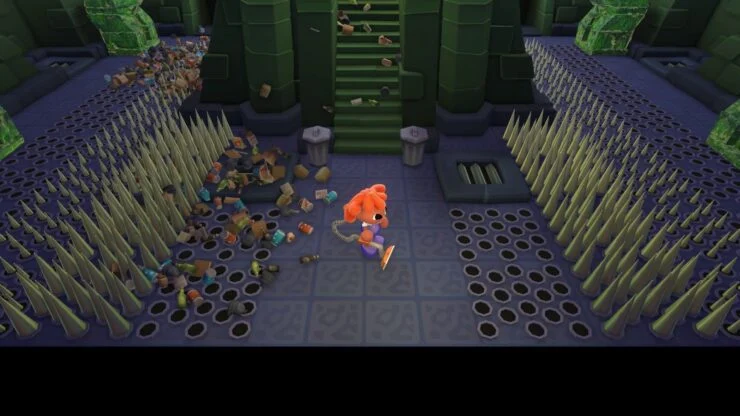
The burgeoning genre of "labor-simulation" games has found a new, whimsical contender in Cleaning Up!, a physics-based title that transforms the mundane chore of sanitation into a high-stakes, humorous adventure. Developed with an emphasis on tactile satisfaction and absurdist comedy, the game has recently made its debut on the Nintendo eShop and Steam, capturing the attention of a gaming community increasingly enamored with the "cozy" and "satisfying" subsectors of the industry.
While real-world housework is often viewed as a repetitive burden, Cleaning Up! leverages the precision of modern physics engines to turn trash disposal and floor-mopping into a rewarding loop of progression. This report examines the core mechanics, the development philosophy behind the title, and its place within the broader context of the simulation genre.
Main Facts: A New Entry in the Sanitation Simulation Genre
Cleaning Up! is a third-person, physics-centric simulation game that tasks players with restoring order to various derelict environments. Unlike traditional simulations that strive for gritty realism, Cleaning Up! adopts a vibrant, stylized aesthetic, featuring an orange-haired protagonist and a cast of eccentric NPCs.
Core Gameplay Loop
The primary objective in every level is the total eradication of filth. Players are dropped into "massively dirty" locations—ranging from abandoned cafes to haunted schools—and provided with an evolving toolkit. The game eschews the high-pressure environment of many modern titles by removing time limits. Instead, progress is tracked via specialized HUD bars at the top of the screen, each corresponding to a specific tool and type of mess.
Platform Availability and Technical Specs
The game is currently available on:
- PC (Steam): Offering higher fidelity physics and keyboard/mouse precision.
- Nintendo Switch: Tailored for handheld play, utilizing the console’s portability for "pick-up-and-play" cleaning sessions.
The game’s economy revolves around a currency system where players are paid for their cleaning services. These funds can be reinvested into two distinct paths: functional upgrades for tools (increasing capacity or power) or aesthetic customization, such as the widely discussed "frog hats" and other character accessories.
Chronology: From Concept to Global Release
The trajectory of Cleaning Up! follows the broader trend of the "satisfying" game movement, which gained significant momentum following the success of titles like PowerWash Simulator and Unpacking.
Phase 1: The Rise of "Cozy Labor"
The development of Cleaning Up! began during a period when indie developers started noticing a psychological shift in the gaming audience. There was a growing demand for games that offered a sense of "digital completionism"—the ability to take a chaotic environment and make it perfect.
Phase 2: The Indie Fan Fest Reveal
The game first garnered major public attention during the Indie Fan Fest 2026, where its official release date trailer was premiered. The trailer highlighted the game’s unique selling point: the juxtaposition of "disgusting" environments with "cute" mechanics and a self-aware AI sidekick.
Phase 3: Launch and Post-Launch Reception
Upon release, the game was praised for its low-stress environment. However, early critics and players noted a unique structural choice: the game frequently introduces complex mechanics—such as avoiding explosive packages or herding zombies—only to move on to different mechanics in subsequent levels. This "variety-first" approach has become a hallmark of the Cleaning Up! experience, keeping the gameplay from becoming stagnant.
Supporting Data: Mechanics, Tools, and Level Design
To understand the appeal of Cleaning Up!, one must analyze the technical implementation of its cleaning tools. The game uses a sophisticated physics engine to handle "trash" as individual objects with weight, friction, and collision.

The Toolset Breakdown
The game introduces its mechanics through a tiered progression system:
- The Vacuum: The foundational tool. It features a limited storage capacity, requiring players to navigate back to trash receptacles periodically. This creates a rhythmic "collect and dump" loop that governs the early game.
- The Broom: Designed specifically for "black goo." The physics engine requires players to sweep piles of liquid-like sludge into solid chunks before they can be vacuumed.
- The Mop: Used for wet messes and stains. This tool interacts with the floor textures, replacing "dirty" shaders with "clean/shiny" shaders in real-time.
- The Power Washer: A fan-favorite mechanic that allows for the restoration of furniture and the watering of environmental plants, the latter of which provides hidden score bonuses.
- The Deodorant Spray: The most abstract tool in the arsenal. It addresses "scent-based" filth, adding a layer of invisible challenge that requires players to track "stink clouds" through visual cues.
Environmental Puzzles
The game distinguishes itself from pure simulators by incorporating "hazards" that require more than just cleaning:
- Sentient Obstacles: Ghosts must be avoided or managed through specific movement patterns.
- Animal Interaction: Cats react negatively to the power washer, requiring players to be mindful of their surroundings.
- Undead Management: In certain levels, players must physically push zombies back into tombs while simultaneously mopping the floors they have soiled.
Official Responses: Design Philosophy and Humor
While the developers have remained relatively small in scale, their public communications emphasize a "joy-first" philosophy. The inclusion of a "Sponge AI-chat-bot" sidekick serves as the primary vehicle for the game’s narrative and humor.
The "Paperclip" Influence
The AI sidekick has been compared by many to Microsoft’s "Clippy" from decades past. It provides meta-commentary on the player’s performance, often making self-deprecating jokes or pointing out the absurdity of a cafe being entirely filled with garbage. According to developer statements, this character was designed to mitigate the potential loneliness of a solo cleaning game, providing a sense of camaraderie amidst the filth.
Addressing Mechanic Retention
In response to feedback regarding the "one-and-done" nature of certain mechanics (like the dangerous packages), the development team has suggested that the game is intended to be an "experimental playground" rather than a strictly escalating challenge. The goal was to ensure that players never felt "stuck" on a mechanic they disliked, allowing the "satisfaction of the clean" to remain the focal point.
Implications: The Psychology of Digital Tidying
The success of Cleaning Up! points to several significant trends in the modern gaming landscape.
1. The "Labor as Leisure" Paradox
Sociologists and gaming critics have noted the irony of players spending their free time performing digital versions of the chores they avoid in real life. The implication is that Cleaning Up! provides something real life cannot: a clear progress bar, immediate visual feedback, and a guaranteed state of "done." In a world of complex, ongoing real-world stressors, the finite nature of a dirty room in a video game offers a powerful psychological release.
2. The Evolution of Physics in Indie Games
Historically, complex physics were reserved for high-budget action titles (e.g., destructible environments in shooters). Cleaning Up! demonstrates that physics can be used just as effectively for "constructive" or "restorative" gameplay. The way a piece of trash bounces or a liquid spreads is central to the player’s enjoyment, proving that technical sophistication has a home in the "cozy" genre.
3. The Future of Sanitation Sims
As Cleaning Up! continues to find its audience, it sets a precedent for how humor and simulation can coexist. By adding "frog hats" and "zombie herding" to a cleaning game, the developers have expanded the genre’s boundaries beyond the hyper-realistic "Job Simulator" style. We are likely to see more titles that take mundane tasks and inject them with supernatural or absurdist elements to maintain player engagement.
Conclusion
Cleaning Up! is more than a simple game about trash; it is a testament to the power of satisfying loops and the human desire for order. Whether players are vacuuming up dangerous packages or mopping a haunted schoolhouse, the game provides a polished, humorous, and deeply relaxing experience. As it continues to gain traction on Steam and the Nintendo Switch, it stands as a shining (and freshly scrubbed) example of indie creativity in the simulation space.