The Architect of Fear: How Myth of Valderit’s Adaptive AI is Redefining Psychological Horror

The landscape of psychological horror in the gaming industry is undergoing a seismic shift, moving away from scripted jump-scares toward more sophisticated, reactive environments. At the forefront of this evolution is Myth of Valderit, an upcoming title that promises to transform the player’s own psyche into a weapon against them. Developed with a focus on atmosphere and atmospheric tension, the game introduces a terrifying concept: an omniscient antagonist known as "The Writer" who monitors player behavior in real-time to tailor a bespoke nightmare.
As the indie horror scene continues to flourish, Myth of Valderit stands out not just for its eerie premise, but for its technical ambition. By blending real-world folklore from the abandoned villages of Catalonia with a cutting-edge "Adaptive Horror System," the game seeks to ensure that no two playthroughs are ever truly the same.
Main Facts: A Descent into the Cursed Village
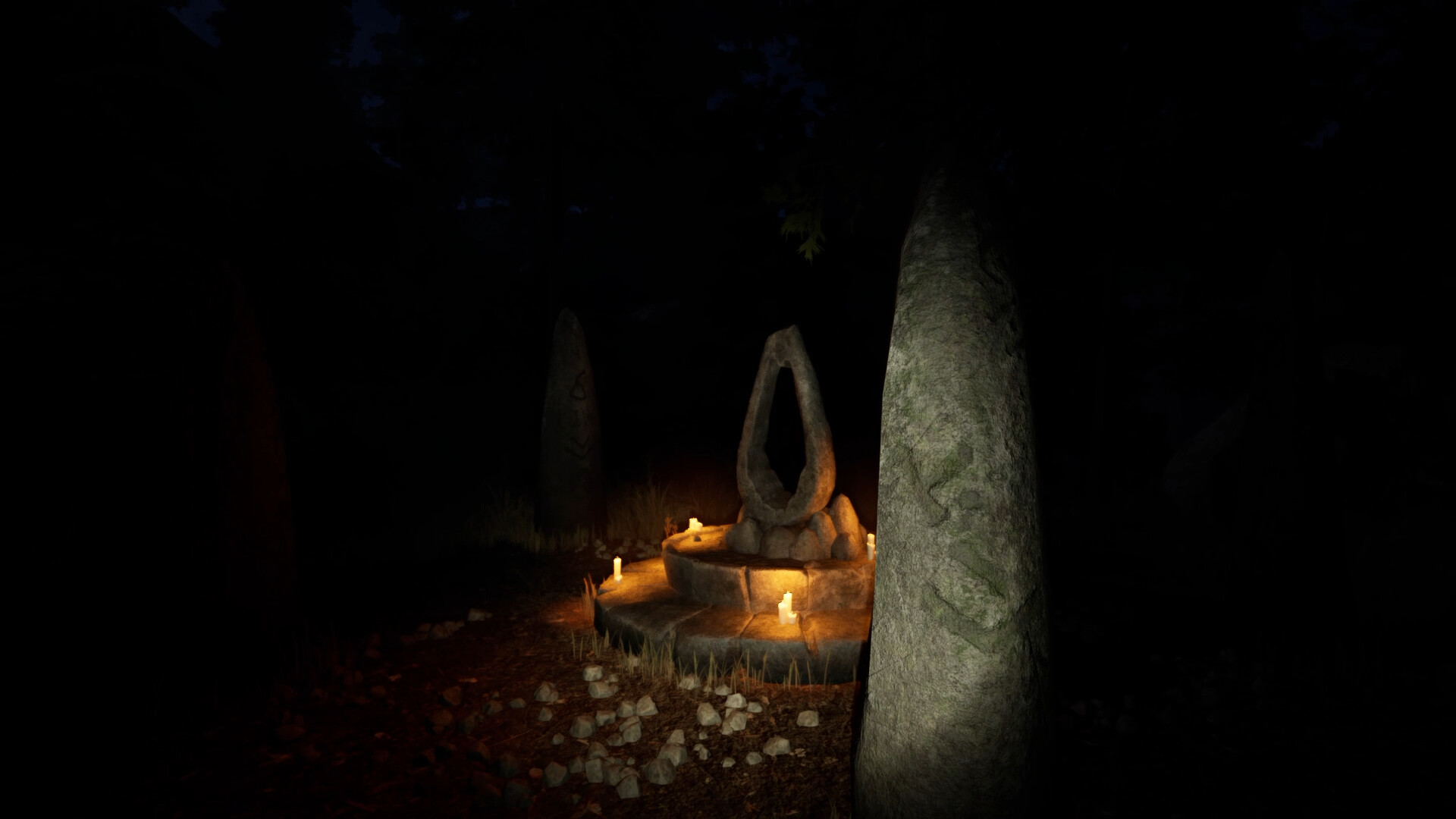
In Myth of Valderit, players step into the shoes of Nil, a protagonist whose recent streak of misfortune culminates in a harrowing supernatural encounter. While camping in a dense forest with a group of friends, the party inadvertently stumbles upon the village of Valderit. However, Valderit is no ordinary settlement; it is a cursed location that manifests in our reality only under the light of a full moon.
The core narrative tension arises when Nil wakes to find his companions missing. Alone and trapped within the confines of a village that shouldn’t exist, players must navigate a labyrinthine environment where the architecture of the world is as unstable as Nil’s mental state.
Key Features of the Experience:
- The Omniscient Narrator: "The Writer" serves as an invisible overseer, analyzing how the player interacts with the world, which items they prioritize, and how they react to specific stimuli.
- Adaptive Horror System: This backend engine modifies level design, soundscapes, and lighting on the fly. If a player shows hesitation in narrow corridors, the game may tighten the geometry; if they rely on light, the environment may succumb to an aggressive, unnatural darkness.
- Real-World Inspiration: The setting is heavily influenced by La Mussara, a real-life abandoned village in the province of Tarragona, Spain, known for its legends of disappearances and paranormal activity.
- Gameplay Loop: A mix of environmental storytelling, intricate puzzle-solving, and survival exploration.
Chronology: From Catalan Folklore to Digital Nightmare
The development of Myth of Valderit is rooted in a deep appreciation for "liminal space" horror and regional mythology. To understand the game’s trajectory, one must look at the timeline of its inspiration and its eventual reveal to the public.
The Legend of La Mussara (Pre-Development)
Long before the game was conceptualized, the village of La Mussara served as a focal point for Spanish urban legends. Abandoned in the 1950s, the ruins are often associated with stories of people stepping through "gates" into other dimensions. This historical and cultural foundation provided the developers with a rich tapestry of dread to draw from, ensuring the game felt grounded in a specific, tangible reality.
Early Development and the "Adaptive" Vision
The project began with the goal of solving a common problem in horror gaming: predictability. Traditional horror games lose their impact once a player memorizes the location of a monster or the timing of a script. The development team spent the early phases of production building the "Adaptive Horror System," focusing on data points that could be harvested from player movement and camera positioning.
Pocket Gamer Connects Barcelona (Recent Milestone)
The game reached a significant milestone recently when it was showcased at Pocket Gamer Connects Barcelona. This event allowed industry professionals and critics to experience a hands-on demo. The feedback highlighted the game’s oppressive atmosphere and the subtle ways the environment seemed to shift in response to player choices. It was here that the "The Writer" mechanic was fully detailed, showcasing how the AI moves beyond simple difficulty scaling into the realm of psychological manipulation.
The Path to Release (2024 and Beyond)
Currently, Myth of Valderit is in its final stages of refinement. The developers have opened a playtest request system on Steam, allowing a select group of users to provide data that will further "train" the AI systems before the official launch. The game is slated for a full release later this year, with anticipation building within the indie horror community.
Supporting Data: The Mechanics of the Adaptive Horror System
What sets Myth of Valderit apart from its contemporaries is the technical sophistication of its "The Writer" AI. Unlike the "Director" AI seen in games like Left 4 Dead, which manages the pacing of action and enemy spawns, The Writer is concerned with the player’s emotional state.
Behavioral Analysis
The game tracks a variety of metrics, including:
- Dwell Time: How long a player lingers in specific rooms.
- Light Management: How frequently the player uses their light source and their reaction when it flickers or fails.
- Interaction Order: Which notes or items the player examines first, suggesting what parts of the mystery they find most compelling or frightening.
- Movement Patterns: Sudden stops, erratic camera movements, or a tendency to "hug" walls are interpreted as signs of distress or caution.
Dynamic Environmental Shifts
Once the data is processed, the game implements changes through its Adaptive Horror System. This can manifest as:
- Acoustic Manipulation: If a player is sensitive to silence, the game may introduce low-frequency "brown noise" or distant, unrecognizable whispers to heighten anxiety.
- Visual Distortions: Altering the saturation of colors or the depth of field to make familiar paths look alien and threatening.
- Structural Metamorphosis: Doors that were once unlocked may vanish, or hallways may subtly elongate as the player traverses them, creating a sense of non-Euclidean geometry.
Official Responses and Initial Impressions
Early testers and attendees of the Barcelona showcase have described the experience as "visceral" and "unsettling." One journalist noted that the game feels "less like a challenge to be beaten and more like a conversation with a malevolent entity."
The developers have remained somewhat cryptic about the full extent of The Writer’s capabilities, likely to preserve the mystery for new players. However, in official statements, the team has emphasized that the goal is "personalization." They stated:
"We wanted to create a game that listens. Most horror games talk at you; they tell you when to be scared. In Myth of Valderit, the game watches you, learns what makes you uncomfortable, and then subtly rewrites the world to reflect those fears. It is a psychological mirror."
This approach has garnered significant interest on platforms like Steam, where the game’s wishlist numbers have seen a steady climb following the Barcelona event. The community response to the trailer has also been positive, with many praising the use of lighting and the "analog horror" aesthetic that permeates the village of Valderit.
Implications: The Future of AI in the Horror Genre
The release of Myth of Valderit carries broader implications for the video game industry, particularly regarding the use of AI and procedural generation.
The Death of the "Safe Zone"
By implementing an omniscient AI that can change the level design, Myth of Valderit effectively eliminates the concept of a "safe zone." In traditional horror, players often find rooms where they know the game logic won’t allow enemies to enter. If the environment itself is hostile and subject to change, the player’s sense of security is permanently eroded. This could lead to a new sub-genre of "unstable" horror games.
Ethical AI in Gaming
As AI becomes more adept at analyzing human behavior, Myth of Valderit serves as a case study for how developers can use player data to enhance immersion rather than just for monetization or difficulty balancing. It raises interesting questions about the "contract" between the player and the game: how much data should a game be allowed to collect on a player’s emotional reactions to provide a better experience?
Cultural Preservation through Digital Media
Finally, the game highlights a growing trend of using digital media to preserve and re-contextualize local folklore. By basing Valderit on La Mussara, the developers are introducing global audiences to Catalan legends, proving that hyper-local stories can have universal appeal when wrapped in the compelling mechanics of psychological horror.
As the release date approaches, the industry will be watching closely to see if "The Writer" can truly deliver on its promise of a personalized nightmare. If successful, Myth of Valderit may not just be a standout horror title of the year, but a blueprint for the future of interactive storytelling. For now, those brave enough can wishlist the title on Steam and prepare themselves for a moonlit journey into a village that knows exactly what they fear.