Blender 5.2 LTS Released
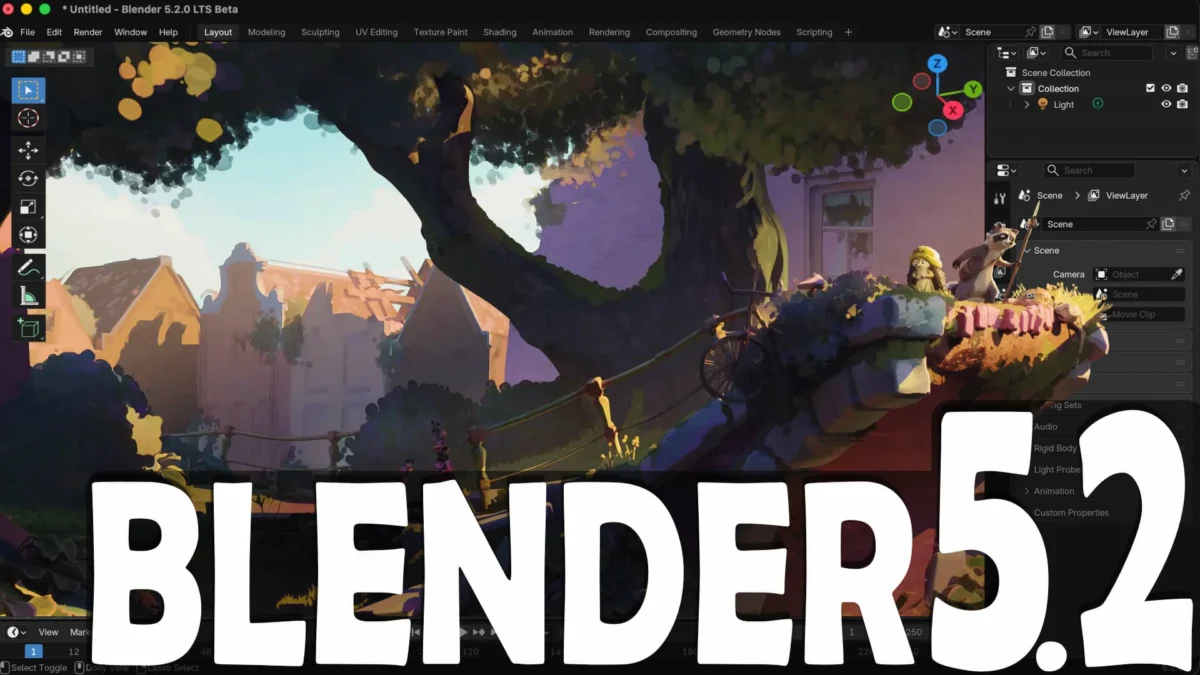
Blender Foundation Unveils Blender 5.2 LTS: A New Era of Stability and Innovation for 3D Creation
Amsterdam, Netherlands – [Insert Date of Publication] – The Blender Foundation has officially launched Blender 5.2 LTS (Long Term Support), marking a significant milestone for the open-source 3D creation suite. This latest Long Term Support release underscores the foundation’s commitment to providing a stable, robust platform for artists, animators, and developers worldwide, with an extended two-year support window for new projects. Blender 5.2 LTS is poised to empower creators with a wealth of new features and substantial enhancements across its diverse toolset, from groundbreaking physics simulations to refined modeling and compositing capabilities.
The Pillars of Stability: Understanding LTS Releases
For users undertaking significant projects or developing applications reliant on Blender, the Long Term Support designation is paramount. Unlike interim releases that might introduce rapid innovation but also potential for disruptive changes, LTS versions are meticulously curated for stability and backward compatibility. This means that projects initiated with Blender 5.2 LTS can confidently expect a predictable development path for the next two years, allowing for sustained workflow and minimizing the need for costly project migrations. This strategic approach ensures that both individual artists and large studios can invest their resources with confidence, knowing that their chosen version will remain a reliable cornerstone of their creative pipeline.
A Deep Dive into Blender 5.2 LTS: Innovations and Enhancements
Blender 5.2 LTS arrives packed with a substantial list of improvements, each designed to streamline workflows, enhance creative possibilities, and push the boundaries of what’s achievable in 3D. The release notes highlight a series of transformative updates, with several key areas receiving particular attention.
Groundbreaking Physics and Simulation Advancements
At the forefront of this release is the introduction of an experimental, node-based physics framework within Geometry Nodes. This revolutionary system promises to redefine simulation workflows, offering unprecedented flexibility and control. Powered by an XPBD (eXtendable Position Based Dynamics) solver, this new framework initially focuses on hair and cloth simulations. Artists can now leverage the power of Geometry Nodes to procedurally generate and manipulate complex cloth dynamics and intricate hair strands, opening up new avenues for realistic character animation and dynamic environmental effects. The node-based approach allows for intricate customization and iteration, enabling users to sculpt simulations with a level of detail and artistic direction previously only achievable through more cumbersome, layer-based systems.
Revolutionizing Sculpting and Modeling Workflows
The sculpting experience in Blender 5.2 LTS receives a significant boost with the Sculpting Project Tool. This entirely new brush acts as a powerful scene projection tool, functioning akin to a highly refined shrinkwrap modifier. It allows users to effortlessly project existing geometry onto target surfaces, enabling precise detailing, pattern application, and complex surface modifications with remarkable ease. This tool is expected to dramatically speed up workflows for character artists, hard-surface modelers, and anyone needing to transfer intricate details across different meshes.
Further solidifying Blender’s reputation as a top-tier modeling application, the Built-In LoopTools are now a native component of the core modeling toolset. Previously available as a popular add-on, utilities like Circle, Space, and Flatten are now seamlessly integrated. This means users can access these essential tools without the need for external installations, leading to a more unified and efficient modeling experience. The immediate availability of these time-saving tools within the main interface will undoubtedly be celebrated by the vast Blender community.
Enhancing 2D Animation and Video Production
The iconic Grease Pencil, Blender’s powerful 2D animation toolset, sees a significant upgrade with a completely redesigned Fill tool algorithm. This revamped engine promises improved efficiency and precision for 2D drawing and filling operations. Coupled with an updated brush library, the Grease Pencil is now even more conducive to rapid iteration and polished 2D animation workflows, further blurring the lines between 2D and 3D creation within a single application.
For video editors and motion graphics artists, Blender 5.2 LTS brings a paradigm shift to its Video Sequence Editor (VSE). The release now offers full Compositor support directly within the VSE. This integration means that powerful compositing effects can be applied and rendered directly within the timeline. Crucially, these sequencer effects are now offloaded to the GPU, resulting in vastly improved performance and near real-time feedback for complex video manipulations. This unification of editing and compositing workflows is a major step forward for Blender as a comprehensive video production tool.
Optimizing Rendering and Asset Management
Rendering performance and memory management are critical for any 3D artist. Blender 5.2 LTS addresses these concerns with a brand-new texture caching system for the Cycles render engine. This innovative system is designed to drastically minimize VRAM and system memory usage, allowing for the rendering of more complex scenes with larger textures without encountering memory limitations. This is particularly beneficial for artists working with high-resolution assets or on hardware with more constrained memory resources.
The Principled BSDF shader receives a notable enhancement with the introduction of Thin Wall Mode. This new option is specifically designed to accurately render translucent surfaces such as leaves, paper, and thin fabrics. By simulating how light interacts with thin materials, this mode enables photorealistic results that were previously challenging to achieve, adding a new layer of realism to digital creations.
Expanding Proceduralism and Creative Control
The power of Geometry Nodes continues to expand with the addition of a dedicated Mesh Bevel node. This node brings the highly sought-after bevel functionality into the procedural modeling domain. Users can now create dynamic, non-destructive bevels as part of their node-based workflows, offering unparalleled flexibility in creating intricate surface details and hard-surface models.
Further pushing the boundaries of audio-driven animation, a new Sample Sound node has been introduced. This node empowers artists to extract frequency and volume data from audio files directly within Blender. This opens up exciting possibilities for creating procedural animations that are dynamically driven by sound, enabling everything from pulsating visualizers to synchronized character movements.
The Geometry Nodes system itself sees further expansions, with native support for Empty objects, Geometry Bundles, and structured Lists. These additions enhance the system’s architecture, providing more robust tools for organizing, manipulating, and processing geometric data, paving the way for even more complex and sophisticated procedural setups.
Streamlining Asset Access
In a move that will be widely welcomed by the community, Blender 5.2 LTS introduces Remote Asset Libraries. This feature provides native support for browsing and downloading assets from remotely hosted libraries without ever needing to leave the Blender interface. This seamless integration simplifies asset management and collaboration, allowing artists to quickly access and utilize shared asset libraries, fostering a more connected and efficient creative ecosystem.
A Glimpse into the Future: The Chronology of Blender Development
The release of Blender 5.2 LTS is the culmination of months of intensive development, building upon the foundations laid by previous releases and incorporating community feedback. The Blender Foundation operates on a release cycle that balances rapid innovation with the need for stability.
- Early Development & Alpha Stages: Following the release of Blender 5.1, the development team began focusing on the core features that would define the 5.2 LTS branch. This involved extensive prototyping and internal testing of new physics solvers, node functionalities, and rendering optimizations.
- Beta Testing: As features matured, Blender 5.2 entered its beta phase. This period allowed a wider audience of users to test the software, identify bugs, and provide crucial feedback on usability and performance. Key features like the XPBD solver for simulations and the new Compositor integration in the VSE were heavily scrutinized during this phase.
- Release Candidates: With the core functionality stabilized, release candidates were issued, signaling that the software was nearing its final release. This stage focused on squashing any remaining critical bugs and ensuring a smooth transition for users.
- Official LTS Release: The launch of Blender 5.2 LTS marks the beginning of its two-year support cycle, during which it will receive bug fixes and critical security updates, ensuring its continued reliability for professional use.
Supporting Data and Community Impact
The development of Blender 5.2 LTS is a testament to the vibrant and active Blender community. Thousands of developers, artists, and testers contribute to its evolution. While specific metrics for community contribution to this particular release are not readily available, the sheer volume of new features and the depth of improvements are indicative of a highly engaged development process.
The emphasis on Long Term Support is particularly significant for professional studios and educational institutions. Companies that integrate Blender into their pipelines rely on predictable software environments. The two-year LTS window provides the necessary assurance for long-term project planning and investment.
Furthermore, the enhancements to performance, especially the GPU acceleration in the VSE and the memory optimizations in Cycles, are crucial for democratizing access to high-end 3D creation. Artists working with less powerful hardware will benefit immensely from these optimizations, enabling them to tackle more ambitious projects.
Official Responses and Vision for the Future
The Blender Foundation consistently emphasizes its mission to provide a free and open-source 3D creation suite accessible to everyone. Ton Roosendaal, Chairman of the Blender Foundation, often speaks about the importance of stability and continuous innovation. While a direct quote regarding the 5.2 LTS release wasn’t immediately available, past statements highlight the foundation’s commitment to empowering artists.
"Our goal is to make Blender the most powerful and accessible 3D creation tool in the world," Roosendaal has previously stated. "LTS releases are a critical part of that promise, offering a solid foundation for professionals and hobbyists alike. With 5.2 LTS, we’re not just providing stability; we’re pushing the boundaries of what’s possible with groundbreaking features that will inspire a new generation of creators."
The development team’s focus on node-based workflows, particularly within Geometry Nodes, signals a clear direction for Blender’s future. This approach emphasizes proceduralism, flexibility, and interconnectedness, allowing for increasingly complex and dynamic creations. The integration of advanced simulation techniques and real-time rendering capabilities further cements Blender’s position as a cutting-edge creative platform.
Implications for the 3D Industry
The release of Blender 5.2 LTS carries significant implications for the broader 3D industry.
- Increased Adoption in Professional Pipelines: The LTS designation and the robust feature set make Blender an even more attractive option for professional studios. The stability and extended support window reduce the perceived risk associated with adopting open-source software for mission-critical projects.
- Democratization of Advanced Features: Features like the node-based physics system and advanced sculpting tools, previously exclusive to high-end proprietary software, are now accessible within Blender’s free and open-source ecosystem. This empowers a wider range of artists and smaller studios to compete on a more even playing field.
- Innovation in Procedural Workflows: The continued expansion of Geometry Nodes, with new nodes for beveling and audio sampling, reinforces Blender’s leadership in procedural content creation. This will likely inspire new workflows and techniques across the industry.
- Enhanced Video Production Capabilities: The integration of Compositor support within the VSE, coupled with GPU acceleration, positions Blender as a formidable tool for independent filmmakers and video production houses.
- Community-Driven Development: The ongoing success of Blender underscores the power of open-source collaboration. The community’s direct impact on the software’s direction ensures that it remains relevant and responsive to the needs of its users.
Blender 5.2 LTS is more than just an incremental update; it represents a significant leap forward in Blender’s journey to become the ultimate 3D creation suite. With its focus on stability, groundbreaking new features, and continued community engagement, this release is set to empower artists and shape the future of digital content creation for years to come.