Stephen Graham Jones’s "The Buffalo Hunter Hunter" Concludes with a Haunting Examination of Guilt, Vengeance, and Ancestral Trauma
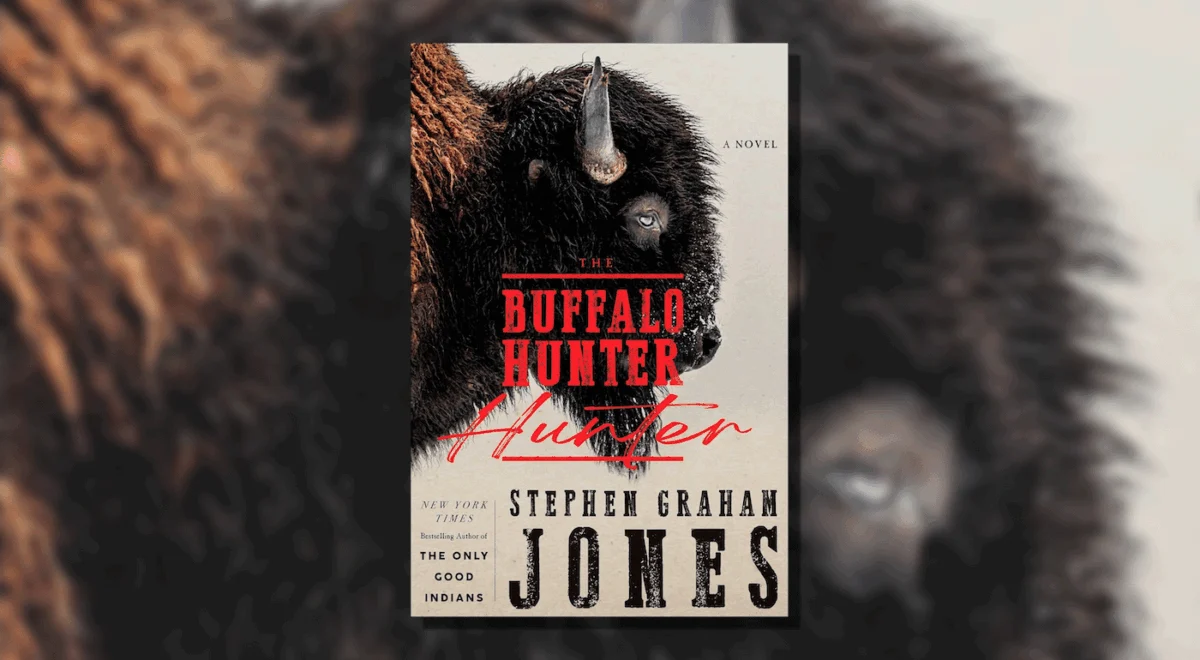
DENVER, CO – The highly acclaimed, Nebula- and Stoker-winning novel, The Buffalo Hunter Hunter by Stephen Graham Jones, has reached its chilling conclusion, leaving readers of the popular "Reading the Weird" column grappling with its profound exploration of historical trauma, supernatural vengeance, and the inescapable weight of inherited guilt. The final chapters (23-24) deliver a visceral and intellectually challenging resolution to the saga of Arthur Beaucarne and his descendant, Etsy Beaucarne, cementing the book’s place as a seminal work in contemporary weird fiction.
First published in 2025, Jones’s masterpiece has been lauded for its audacious blend of cosmic horror with a distinctly Indigenous perspective, weaving a narrative that confronts the brutal legacy of American colonialism through the lens of personal horror. The concluding pages are a masterclass in psychological and visceral terror, forcing both characters and readers to confront the unspeakable acts of the past and their lingering, monstrous repercussions.
Chronology of Despair and Reckoning
The novel’s climax unfolds across two distinct timelines, meticulously detailing the unraveling of a guilty conscience and the harrowing journey of a descendant forced to confront a monstrous inheritance.
Arthur Beaucarne’s Final Confession: June 2, 1912
The narrative first plunges back to June 2, 1912, as Arthur Beaucarne, a figure burdened by a half-century of unconfessed sin, pens his final journal entry. The scene is set with an immediate sense of encroaching doom: all the eggs in the church crack to reveal black, corrupted yolks, a grotesque omen of spiritual decay. Desperate to maintain a facade of normalcy, Arthur pre-cracks a yellow-yolked egg from the parsonage, a futile attempt to stave off the inevitable.
The Sunday mass, however, is irredeemably cursed. The purple stole of his clerical office is replaced by a buffalo robe, a potent symbol of the land and its slaughtered inhabitants reclaiming sacred space. His living parishioners are present, but they are overshadowed by a spectral congregation: the dead. Among them are Arthur’s own son and grandsons, the postmaster Clarkson, Sheriff Doyle, the Pinkerton man Dove, and, most hauntingly, all the Blackfeet slain at the Marias Massacre. These ghostly witnesses transform the church into a tribunal, a court of the damned.
Overwhelmed, Arthur flees into the sanctuary of the parsonage, but finds no respite. His parishioners, sensing his spiritual corruption, make no inquiry after him. He perceives himself as a "leper," cast out and untouchable, awaiting a supernatural judgment. He knows Good Stab, the vengeful entity, is coming for him, and that soon he will see Good Stab’s fangs, confirming the truth of what he has been told. His heart, he writes, feels "black as the prairie night," a darkness he believes has consumed him since the massacre on January 23, 1870. His pipe, a symbol of comfort and reflection, has been empty since that fateful day, signifying a profound spiritual void that no earthly pleasure could fill. Before Good Stab claims him, Arthur resolves to hide this damning journal, a final act of desperation to preserve his story, however dark.
Etsy Beaucarne’s Inheritance: January 2013
Fast forward to January 12, 2013, where Arthur’s great-great-great-granddaughter, Etsy Beaucarne, faces a different kind of judgment. A "dayworker" in Communications and Journalism, Etsy presents her transcription of Arthur’s journal to her tenure committee at the University of Wyoming. Their response is dismissive, even condescending. One committee member, keen to display academic superiority, suggests Etsy should refer to Arthur as her "tresayle," claiming the French are "so much more efficient when discussing lineage." More critically, they insinuate that the journal, far from being a historical document, is merely "fiction inspired by Stoker’s Dracula."
This rejection seals Etsy’s fate: she will not earn tenure. At 43, her academic career is effectively over, adding another layer of disappointment to her father’s final days on his deathbed in Denver.
Amidst this professional devastation, Etsy unearths crucial details about her ancestry. She discovers that Arthur’s son, Benjamin Flowers (her great-great-grandfather), was born to Ada Neismith, née Murray, a prostitute Arthur had encountered after the Marias Massacre. The surname "Flowers" originated from a nurse who misheard "Beaucarne" as "Bouquet." This misnomer passed down through generations until Ada eventually corrected Artemis, Etsy’s grandfather, thereby restoring the "Beaucarne" name to Etsy.
On her apartment balcony, in a symbolic act of defiance or despair, Etsy burns a copy of Arthur’s journal, sent to her by librarian Lydia Ackerman. As the last page ascends "like a prayer," she glimpses a figure behind a tree through the swirling snowstorm. The shock sends her lurching backward, shattering the glass sliding door. She is eerily certain: it is Arthur Beaucarne, her "tresayle" (or, more accurately, "quatrayle"), haunting her.
The terror escalates by January 20, 2013. Etsy endures a week of compounded tragedy: her cat, Taz, vanishes; her father dies, leaving behind a banker’s box of effects—family photos, unsmoked cigarettes, his wedding band, Zane Grey novels and DVDs, and a Bible containing letters from her mother, plus one unopened, ominous letter. Lydia Ackerman calls with another unsettling revelation: the buckskin wrapping of the original journal has tested positive as human skin. Ackerman also presses Etsy on the fate of the original journal—donation, auction, or personal retention? Adding to the grim sequence of events, her father’s cremains arrive.
The unopened letter, bearing the logo of the Blackfoot nation but lacking a postmark or stamp, is a chilling detail. Etsy realizes it was not for her father, but for her, delivered in person while her father lay dying. She hesitates to open it, sensing its profound and terrible significance.
Battling insomnia, Etsy relies on Benadryl, which induces "goopy" hallucinations of mice. However, what she wakes to find is no hallucination: Good Stab, now grotesquely transformed with a buffalo’s head, is tapping on her laptop. Her scream is primal, and she locks herself in her bedroom, a futile attempt at escape.
Etsy’s subsequent journal entry is a stark record of terror, devoid of the usual trappings of a will or suicide note. Good Stab, in a perverse act of "family reunion," returns Taz and presents Arthur Beaucarne, now a nachzehrer—a vampiric entity. What Arthur consumed over decades, he has become: a giant prairie dog weeping blood. Good Stab then vanishes, leaving Etsy with Arthur and his buffalo head (which she later realizes is merely a mask).
Confronted with this monstrous, weeping "Rodent of Unusual Size," Etsy grapples with an impossible choice. She senses Arthur’s existence is a hellish torment. Has Good Stab challenged her to murderously feed Arthur back to human form, or to mercifully end his suffering?
Driven by a desperate resolve, Etsy sedates Arthur with smoke from her father’s cigarettes and, along with Taz and gear from a hardware/ranch superstore, smuggles him into her Subaru. She drives through the blizzard to Blackfeet territory, Nittowsinan, arriving just in time for the anniversary of the Marias Massacre. There, she finally opens Arthur’s unopened letter—his confession, never sent, admitting his ultimate responsibility for the slaughter by persuading the scout Joe Cobell to initiate the shooting at Heavy Runner’s camp.
In a harrowing ritual of symbolic justice, Etsy "kills" Arthur using a nail gun, cable saw, and ignited spray foam. His burning body plunges off the bluff, mirroring the fate of Heavy Runner’s people. She casts his prairie dog head after it. Blackfeet riders, including Good Stab, arrive to memorialize the massacre. Etsy wishes she could tell Good Stab that she had stopped at Ackerman’s library earlier and irrevocably destroyed Arthur’s original journal by pouring her father’s alkaline cremains over its acidic pages, a final, definitive act of erasure and purification. Instead, she raises a fist over her head in a silent farewell to Arthur’s tormentor and confessor.
Good Stab does not return her salute. As he rides off with the other Blackfeet, Etsy spots a yellow hard hat hanging from his saddle, a chilling detail that reveals his mundane origins: he was the workman who originally discovered Arthur’s journal, becoming the catalyst for this generations-long reckoning. The snowstorm swallows Good Stab, and then "The Blackfeet," leaving an enduring sense of unresolved history.
Supporting Data: A Deep Dive into Thematic Resonance
Stephen Graham Jones masterfully layers his narrative with rich thematic elements, employing literary devices and cultural allusions to amplify the novel’s impact.
The Sins of the Father: Gluttony and Guilt
The recurring motif of gluttony, which Arthur Beaucarne so obsessively fretted over, is revealed to be a direct symptom of his deepest sin. His act of inciting the Marias Massacre stemmed from a primal hunger—for rations, for an end to the brutal cold and deprivation of the prairie. As a giant prairie dog, Arthur’s continued "chewing on Etsy’s couch like a poorly trained puppy" is not merely grotesque; it is a manifestation of his unresolved gluttony, a perpetual, hellish hunger. This emphasizes that his transformation is not just punishment, but a grotesque embodiment of his original transgression.
The Nuance of Language: Catachresis
The novel subtly highlights the power and pitfalls of language through the concept of "catachresis"—the misuse of a word for an almost-right one. This is exemplified by the mishearing of "Beaucarne" as "Bouquet," leading to the surname "Flowers," a linguistic misstep that obscures Etsy’s true lineage for generations. It underscores how easily truth can be distorted or lost through seemingly minor errors, mirroring the broader historical distortions surrounding the massacre itself.
Challenging Privilege: "The Degenerate Dutch"
A stark moment of self-awareness, or perhaps cynical observation, comes with the line, "I give myself permission… It’s what we white folk do." This statement, attributed to Arthur, is a biting commentary on the inherent privilege and self-justification often exercised by colonizers. It directly confronts the "degenerate Dutch" trope, turning it inward to critique the moral failings embedded within the dominant culture. This moment highlights the insidious nature of systemic injustice and the ease with which individuals rationalize their complicity.
The Power of Texts: Libronomicon
The various texts within the novel serve as potent symbols. Etsy’s father’s collection of Zane Grey westerns represents a romanticized, often false, narrative of the American frontier. Juxtaposed with this is his Bible, awkwardly repurposed as a file cabinet for personal letters. This sacrilegious use of a holy text underscores the secularization of values and the substitution of spiritual guidance with personal convenience. Arthur’s journal itself, bound in human skin and containing his confession, becomes the ultimate "libronomicon"—a book imbued with dark, transformative power.
The Architecture of Dread: Weirdbuilding
Etsy’s initial hope for Arthur’s journal was not merely historical, but a yearning for a definitive, revelatory horror akin to Lovecraft’s "The window! The window!" from Dagon. This expectation speaks to the novel’s engagement with the tropes of weird fiction, building a narrative where the mundane is infiltrated by the utterly alien and terrifying. The journal’s true horror, however, lies not in a sudden, external revelation, but in the internal, inherited monstrosity it uncovers.
The Price of Truth: Madness Takes Its Toll
The very act of committing a description of "vampiric giant prairie dogs" to paper risks being "committed" oneself. This playful yet profound observation highlights the societal discomfort with narratives that defy rational explanation. Etsy’s struggle to articulate her experiences to an "unsympathetic property manager" or to call 911 without coherent explanation would inevitably label her "hysterical," underscoring how conventional society silences or pathologizes those who encounter the truly weird.
Official Responses: Dismissal and Retribution
The novel subtly portrays "official responses" not through formal statements, but through the reactions of institutions and the actions of a vengeful entity.
The most prominent "official response" is the tenure committee’s dismissal of Etsy Beaucarne’s work. Their casual suggestion that her great-great-great-grandfather’s journal is merely "fiction inspired by Stoker’s Dracula" is more than just academic snobbery; it’s a systemic refusal to acknowledge a narrative that challenges conventional historical understanding and academic boundaries. It highlights how institutions, even those dedicated to truth, can be blind to uncomfortable or unconventional truths, especially when they intersect with issues of race, history, and the supernatural. This "official" rejection of Etsy’s scholarship forces her out of a system that would rather maintain its comfortable fictions than confront the unsettling realities unearthed by her ancestral research.
Good Stab’s actions, while supernatural, serve as a form of "official response" from the wronged. His vengeance is not random but meticulously planned, a multi-generational retribution for Arthur Beaucarne’s specific role in the Marias Massacre. By transforming Arthur into a nachzehrer—a vampiric prairie dog—Good Stab ensures an eternal, agonizing punishment that mirrors Arthur’s own historical gluttony and the collective suffering inflicted upon the Blackfeet. The revelation that Good Stab was the workman who found Arthur’s journal further solidifies his role as a meticulous agent of cosmic justice, a figure who patiently waited for the right descendant to carry out the final act of reckoning. His refusal to return Etsy’s raised fist underscores that while her personal act of vengeance might be complete, the larger historical trauma and its implications remain unresolved for him and his people.
Implications: The Enduring Tangle of History and Horror
The Buffalo Hunter Hunter concludes not with neat resolutions, but with a profound sense of the enduring tangle of sin, guilt, confession, and inadequate absolution. Stephen Graham Jones offers a powerful, uncomfortable truth: historical atrocities are not easily relegated to the past; they continue to bleed into the present, demanding acknowledgment and reckoning.
The novel’s exploration of the nachzehrer as a punishment for Arthur’s specific sins is particularly potent. As literary critics have observed, the choice of a prairie dog—a keystone species known for its highly social nature—for Arthur’s monstrous form is a cruel twist. A solitary prairie dog, forced to cannibalize its own kind to survive, embodies the ultimate emotional torture, mirroring Good Stab’s own enforced cannibalism to maintain his Blackfeet form. This ingenious form of eternal suffering highlights the novel’s deep engagement with Indigenous cosmologies and the concept of a justice that transcends conventional Western notions of hell.
Etsy Beaucarne’s journey, from an academic facing professional collapse to an unwitting participant in a supernatural vendetta, underscores the idea of collective guilt. As critics like Ruthanna Emrys have noted, Etsy, living on stolen land, becomes an embodiment of the collective responsibility for America’s genocidal campaigns against Native nations. Her act of destroying the original journal with her father’s cremains is a symbolic attempt to cleanse a stained lineage, to finally lay to rest the monstrous legacy of her ancestor. Yet, the ambiguity of the ending—Arthur’s head still snapping in the ravine, Good Stab disappearing into the storm—suggests that true absolution is elusive, and the fallout of the past month, indeed the past centuries, continues to reverberate.
The novel leaves readers with enduring questions about the nature of vengeance, the possibility of intergenerational healing, and the mechanisms through which history continues to haunt the present. Stephen Graham Jones has crafted a narrative that transcends mere horror, offering a vital and harrowing commentary on American history, Indigenous survival, and the profound, often grotesque, consequences of unaddressed guilt. Its conclusion is not an ending, but a continuation of a profound conversation, cementing The Buffalo Hunter Hunter‘s place as a powerful and unforgettable work of literature.
Next week on "Reading the Weird," we delve into Nadia Bulkin’s "Things to Know Before You Go," found in Silk and Sinew: A Collection of Folk Horror from the Asian Diaspora. Following that, the column embarks on a new longread, H. G. Wells’s classic, The Island of Dr. Moreau.