
Duchess Anne of Brittany Employs Unicorn Hunt Gambit to Defy French Pressure in Katherine Arden’s New Novel
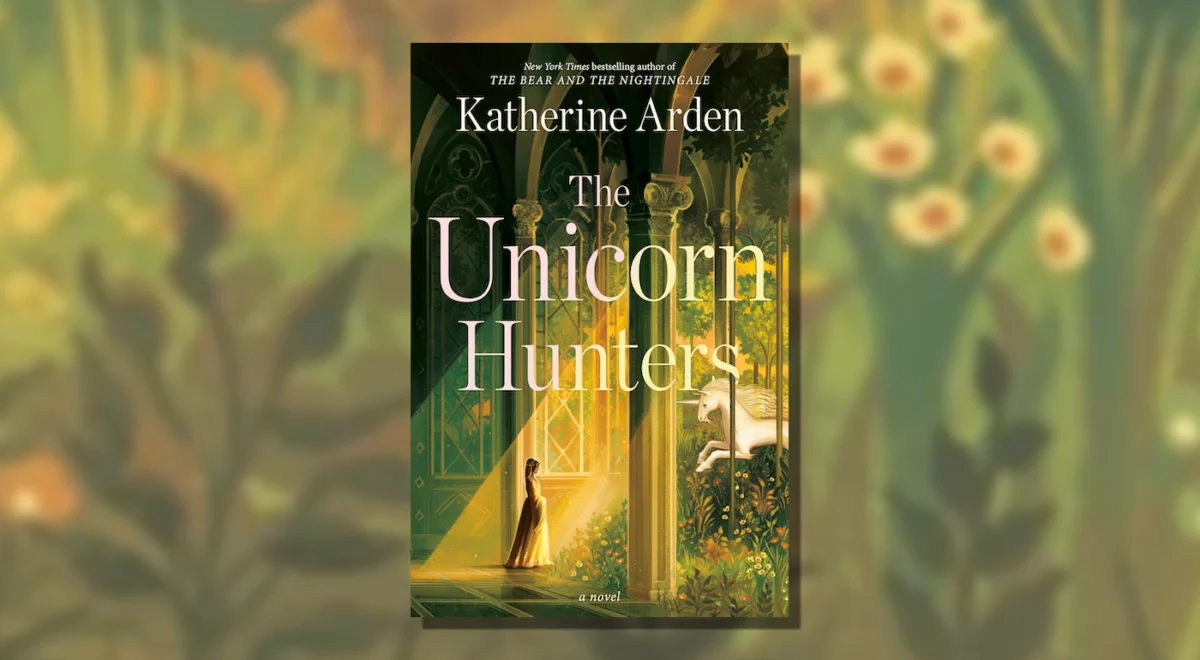
Nantes, Duchy of Brittany – In a daring move that has sent ripples through the political landscape of 15th-century Europe, Duchess Anne of Brittany has seemingly outmaneuvered a French envoy sent to finalize her marriage to King Charles of France. The young sovereign, whose realm remains under the shadow of French occupation, has proposed a grand unicorn hunt in the ancient and mystically potent Brocéliande Forest, effectively delaying critical negotiations and buying precious time for a secret alliance.
This extraordinary turn of events forms the thrilling opening of The Unicorn Hunters, the highly anticipated new historical fantasy novel by Katherine Arden, set for release on June 2nd from Del Rey. Arden, acclaimed for her ability to weave intricate historical detail with rich mythological tapestry, plunges readers into a world where political intrigue and ancient magic collide, embodied by a formidable young woman fighting for the soul of her duchy.
The Historical Confluence of Power and Magic
The narrative unfolds against a backdrop of deep-seated geopolitical tension. Brittany, a wealthy maritime duchy, has long struggled to maintain its independence from its powerful neighbor, France. The recent war, which saw the French invasion and the death of Anne’s royal father, Duke Francis, has left the duchy vulnerable and its young duchess in a precarious position.
Brittany’s Precarious Sovereignty
Anne of Brittany, barely out of childhood when her father died, inherited a realm teetering on the brink of complete annexation. As sovereign duchess of an occupied territory, her very existence is a testament to her family’s resilience, yet her title and lands remain coveted by the French crown. King Charles of France, eager to cement his conquest, intends to marry Anne, thereby absorbing Brittany into the French kingdom and ending centuries of Breton autonomy. This proposed union would place Anne’s personal freedom, her ancestral lands, and her very body "forever in the hands of her enemies," as described in the novel’s compelling synopsis.
However, Anne, a character brimming with resolve, "refuses to be the last duchess of Brittany." Her only hope lies in forging a counter-alliance, sealed by marriage to a powerful rival of the French king. This desperate "last gambit" necessitates utmost secrecy, a challenge in a world where rival courts employ diviners as sophisticated tools of espionage.
The French Hegemony
The French delegation, led by the formidable Guillaume de la Trémoille, lieutenant-general of France and architect of Brittany’s conquest, arrived in Nantes on the last Sunday of Eastertide. His mission, driven by King Charles and more acutely by the king’s shrewd elder sister and former regent, Marguerite of France, was clear: secure the marriage with "all dispatch." Marguerite, described as "the cleverest woman in Europe," held "entirely La Trémoille’s views on the danger of leaving Brittany half-conquered," explicitly instructing him to "frighten them if you must."
La Trémoille himself, weary of Breton affairs and longing for new conquests in sunny Pavia, viewed the matter with pragmatic disdain. He believed the war should have been prosecuted to its full conclusion, with Brittany’s heirs made wards of the French crown. He found Charles’s "naïve" desire to emulate Saint Louis through "virtuous kings… enlarg[ing] their holdings by good, lawful, Christian marriage" to be a cumbersome impediment to effective conquest. His impatience, however, would become an unexpected lever for Anne.
The Supernatural Undercurrents
Katherine Arden’s world is not merely a stage for historical drama; it is infused with a vibrant system of magic that plays a pivotal role in the unfolding political machinations.
The Art of Divination
Central to this magical realism is the ubiquitous practice of divination. In Arden’s Brittany, diviners are not mere fortune-tellers but essential instruments of statecraft, acting as communication channels and intelligence gatherers across the continent. These specialists, drawn from the Diviners’ Guild, employ various methods – reading the dregs of wine (oenomancy), interpreting dice, clouds, water, or candlelight. Their powers, while useful, are specific and limited. They can discern sensory details – "what color are the slippers of the Sultan in Stamboul" – but cannot determine names, numbers, or complex intentions.
This unique form of communication, where "kings and generals and ambassadors and grand seigneurs all communicated via diviner" using colored cloth squares to convey coded messages, creates a sophisticated network of information exchange. The duchess’s own court diviner, Calyx, an oenomancer, is a key figure in this system, albeit a somewhat disheveled and perpetually wine-stained one.
Brocéliande: A Haven from Scrutiny
The true linchpin of Anne’s plan, however, lies in the legendary Brocéliande Forest. This ancient woodland, deeply ingrained in Breton folklore, is rumored to have been the haunt of Merlin the Enchanter and the long-lost faerie queen. Tales abound of its mysterious nature: "the fair-folk, the korriganed, had lived long in its shadows," and "an unwary traveler might stray into the Lost Lands, only to vanish forever."
Crucially, Brocéliande possesses a unique magical property: it is "completely hostile to divination." As Calyx reluctantly confirms to Anne, while a diviner can direct their "inward sight" upon the forest, they "sees nonsense. If he persists, he goes mad." This extraordinary quality makes Brocéliande a rare blind spot in a world constantly monitored by diviners, offering Anne the perfect cover for her clandestine activities.
The Allure of the Unicorn
Adding another layer of mystique, Brocéliande is also "one of the last, best places in Christendom for men to hunt unicorns." The unicorn, "the noblest and rarest prey in Christendom," represents a symbol of purity and prestige. Hunting such a creature demands two key elements: "a virgin of high birth and unimpeachable virtue, to bait the unicorn," and "a hunt so extravagant that the mere dazzle of it would tempt the vain beast near." This detail, seemingly a piece of "pointless pageantry," becomes the irresistible bait Anne dangles before the French general.
A Masterclass in Courtly Intrigue
The excerpt showcases Anne’s burgeoning political acumen, skillfully navigating the treacherous waters of courtly diplomacy.

La Trémoille’s Mandate and Distractions
General de la Trémoille arrived at Nantes with a clear, uncompromising mandate: finalize the marriage. He was prepared to "terrify her and her council if they proved in the least resistant." His initial impression of Anne – a "mere slip of a silly child, a puppet on an all-but-bankrupt throne" – seemed to confirm his prejudices. The "sugared fruits and marchpane" served at the intimate repast only reinforced his view of a "spoiled child’s" court.
However, Anne, aided by her charismatic bastard half-brother, Henri, Baron of Avaugour, expertly played on La Trémoille’s vanity and his passion for the hunt. Henri, a man of "jousting and expensive horses and a well-cut doublet" but with "no head for statecraft," was nevertheless a loyal and effective accomplice in Anne’s theatrical display.
Anne’s Performance
Anne’s performance for La Trémoille was a masterclass in calculated naivete. She greeted him with "touching shyness," encouraged him to try delicacies with "breathlessness," and asked about his message "timidly." When the discussion of marriage arose, she trailed off, "biting her lips," appearing hesitant and easily swayed.
It was Henri who introduced the "unicorn" into the conversation, ostensibly by accident. "But not so fast, sister," he declared, "You have forgot the unicorn." Anne, feigning uneasiness, responded, "Oh…Henri…The general does not care about unicorns." This carefully orchestrated exchange piqued La Trémoille’s interest, a "great handsome knight" who "loved to hunt."
The duchess then "confidingly" explained the unicorn sighting in Brocéliande, and suggested a hunt. Henri, in a "hectoring voice," added that "even the breath of coming unchastity might ruin all," hinting that marriage discussions might jeopardize Anne’s suitability as virgin bait for the unicorn. This audacious suggestion, coupled with Anne’s "blushing even more furiously," successfully convinced La Trémoille. The general, envisioning "a living unicorn, at bay," conceded, "A small delay before negotiations begin might be possible." Anne’s offer to make the unicorn’s horn "a wedding present to the king of France" and the hide a trophy for La Trémoille sealed the deal.
The Council’s Unease and Diviner’s Confirmation
While Anne and Henri executed their plan, the ducal council, including Jean de Rieux (Anne’s guardian), Montauban (her chamberlain), and Dunois, watched with growing anxiety. They understood the immense stakes involved. De Rieux, a man of "too sober a mind," initially warned Anne against "overconfidence," fearing that France would uncover her "arrangement."
After La Trémoille’s departure, their fears were palpable. De Rieux’s bewildered question, "But—why? There are no unicorns. Or, there have been no sightings. Not these twenty years," highlighted the audacious nature of Anne’s deception.
However, Anne’s seemingly whimsical plan had a profound strategic purpose. Her immediate consultation with Calyx, her oenomancer, confirmed her theory about Brocéliande. "That is a cursed place for diviners," Calyx admitted, explaining the sensory chaos and madness that results from attempting divination within the forest. While he warned her of the dangers of "meddl[ing] with Brocéliande," invoking Merlin and the Queen of the Lost Lands, Anne remained undeterred, confident in her newfound strategic advantage.
High Stakes in the Heart of Brittany
The unfolding events in The Unicorn Hunters set the stage for a grand narrative of political survival, personal agency, and the enduring power of myth.
Brittany’s Crossroads
Anne’s audacious unicorn hunt gambit has bought her "a week or two, no more," as De Rieux observes, but for the duchess, this brief reprieve is everything. Her secret messenger from Flanders, carrying the crucial terms of her counter-alliance, is due to arrive by nightfall. The success of her entire plan hinges on this messenger’s safe arrival and the ability to execute a secret wedding within the non-divinable confines of Brocéliande. Should France discover her true intentions, Anne faces deposition, forced marriage, or worse. The duchy’s future, and her own, hangs by a thread.
The Role of Magic and Strategy
Arden masterfully demonstrates how Anne leverages both her keen intellect and the unique magical properties of her land. Her understanding of divination’s limitations and Brocéliande’s singular resistance to it is not merely incidental; it is the cornerstone of her strategy. She is not just a ruler, but a cunning strategist, willing to use elaborate deception and ancient folklore to protect her people. Her ability to project an image of demure youthfulness while harboring a fiercely independent spirit makes her a compelling protagonist.
A Fateful Hunt
The proposed unicorn hunt, far from being "pointless pageantry," is a meticulously crafted diversion. It is Anne’s cover for marrying Charles of France’s greatest rival, a move that would irrevocably alter the balance of power in Europe and secure Brittany’s independence. The hunt itself, however, carries its own risks. Brocéliande, a place where "Merlin the Enchanter was vanquished," is not merely a tactical advantage but a place of genuine, ancient peril. The implications extend beyond political maneuvering into the realm of true magic and danger.
Broader Narrative Significance
Katherine Arden’s The Unicorn Hunters promises a rich tapestry of historical intrigue and fantastical adventure. This opening excerpt establishes Anne of Brittany as a fiercely intelligent and determined young woman, facing overwhelming odds with ingenuity and courage. It highlights the intricate dance between power and deception, the subtle influence of magic on everyday life, and the enduring struggle for self-determination. As readers delve into Anne’s journey, they will witness not just the fate of a duchy, but the unfolding story of a queen who refuses to be silenced, using wit, guile, and the very magic of her land to forge her own destiny. The novel is set to deliver a captivating blend of historical drama and enchanting fantasy, making it a must-read for fans of both genres.




Leave a Comment