Red Planet, Ancient Secrets: How ‘Strange New Worlds’ Season 4 Redefines ‘Star Trek’ Lore
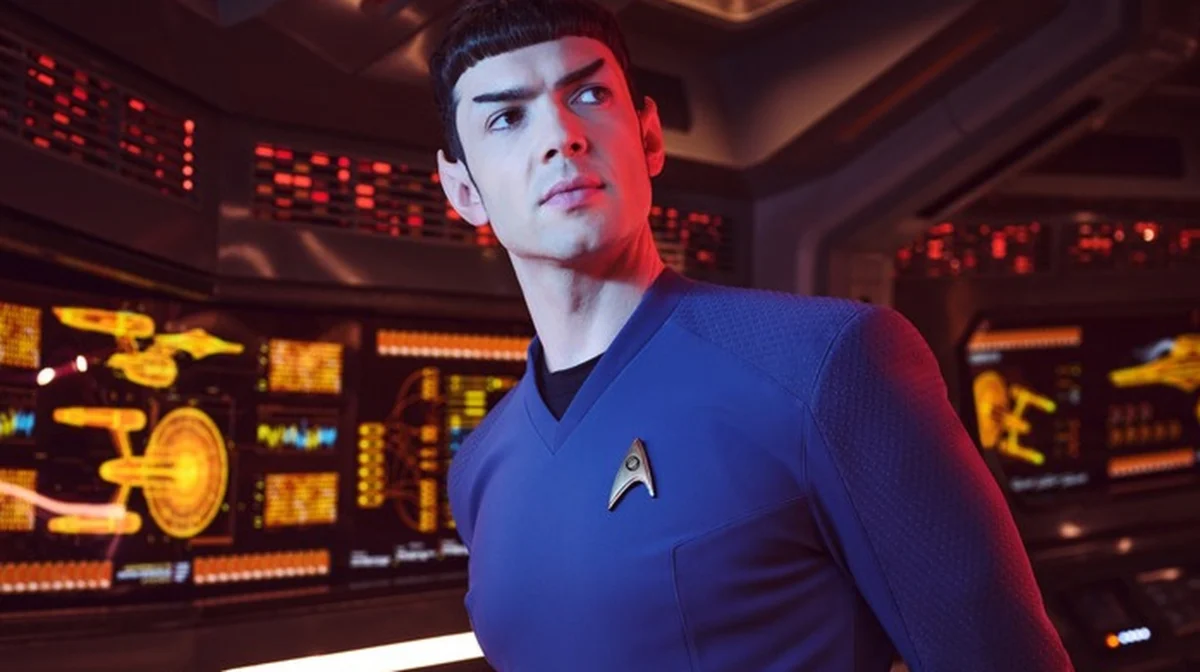
The fourth season premiere of Star Trek: Strange New Worlds, titled "Valles Marineris," has achieved something the franchise has avoided for nearly sixty years: the introduction of a native, sentient Martian race. By utilizing the classic science fiction vehicle of time travel, the series has managed to integrate the "Red Planet" into the Federation’s ancient history without contradicting the established reality of a barren Mars in the 23rd century. This bold narrative choice not only pays homage to the pulp roots of the genre but also meticulously weaves together threads from The Next Generation, Discovery, and real-world astrobiology.
Main Facts: The Revelation of the Martian Hegemony
In the Season 4 premiere, the USS Enterprise, commanded by Captain Christopher Pike (Anson Mount), is swept into an "interstellar squall"—a localized temporal anomaly—that transports the ship back 65 million years. Upon exiting the anomaly, the crew finds themselves in the familiar Sol system, but the celestial landscape is unrecognizable. Earth is in the midst of the Cretaceous-Paleogene period, teeming with dinosaur life, while Mars is a vibrant, green world with a thick atmosphere and a burgeoning civilization.
The episode introduces the Martians, a humanoid species characterized by pointed ears, slightly elongated statures, and distinctive blue forehead tattoos. Led by the militant Martian Commander (portrayed by Saffron Burrows), this race possesses advanced impulse technology but lacks the warp drive capabilities that would eventually define the Federation era.
The central conflict of "Valles Marineris" revolves around a desperate planetary defense. The Martians are locked in a genocidal war with a "ravenous insectoid" species. In a tragic turn of events, the Martian military seizes antimatter from the Enterprise to fuel a weapon of mass destruction. While the weapon successfully obliterates the insectoid homeworld, the resulting gravitational and thermal feedback shifts Mars’ orbit and strips its atmosphere, setting the stage for its transformation into the desert wasteland known to modern humanity.
Chronology: A 65-Million-Year Journey
The narrative of "Valles Marineris" unfolds through a high-stakes timeline that bridges the gap between pre-history and the 23rd century:
- The Temporal Incident: The USS Enterprise encounters a rare "interstellar squall" while patrolling the edge of the Sol system. The anomaly bypasses the ship’s temporal shielding, casting them back to 65,000,000 BCE.
- First Contact (In Reverse): Captain Pike and Science Officer Spock (Ethan Peck) identify the system as Sol but are stunned to find Mars (then known by a native name) as the primary seat of power in the sector.
- The Diplomatic Failure: Pike attempts to apply the principles of the Federation to a pre-warp civilization. He meets with the Martian Commander to offer a peaceful resolution to their conflict with the insectoid invaders. However, the Martians, driven by existential fear, view the Enterprise’s technology as a resource to be plundered rather than a model to be followed.
- The Antimatter Theft: Using a sophisticated boarding maneuver, Martian commandos extract a significant quantity of antimatter from the Enterprise’s warp core.
- The Cataclysm: The Martians deploy an antimatter-catalyzed weapon against the insectoid fleet and their nearby moon-base. The sheer scale of the energy release causes a catastrophic shift in Mars’ orbital mechanics.
- The Aftermath: As the Enterprise manages to harness the remaining energy of the dissipating squall to return to their own time, they witness the beginning of the Martian "Great Thinning"—the rapid atmospheric loss that would eventually name the Valles Marineris canyon as a permanent scar on the planet’s surface.
Supporting Data: Canonical Ties and Biological Lore
The introduction of humanoid Martians addresses one of the oldest "what-ifs" in Star Trek history. During the original development of Star Trek: The Original Series in the 1960s, Gene Roddenberry briefly considered making Spock a Martian. However, as contemporary space probes like Mariner 4 began returning images of a cratered, lifeless Mars, the decision was made to place Spock’s origins in the distant Vulcan system to maintain scientific plausibility.

The Progenitor Connection
The physical appearance of the Martians—strikingly human-like despite the millions of years separating them from the evolution of Homo sapiens—is not a mere budget-saving measure. It serves as a direct link to the Star Trek: The Next Generation episode "The Chase." In that episode, it was revealed that an ancient race known as the Progenitors seeded their DNA across the galaxy billions of years ago, ensuring that sentient life would evolve into a similar humanoid form.
By placing a Progenitor-seeded race on Mars, Strange New Worlds reinforces the lore established in Star Trek: Discovery Season 5, which centered on the hunt for Progenitor technology. The Martian race represents a "lost branch" of this genetic lineage, one that flourished and died out long before humans ever walked upright.
The Valles Marineris Scar
The episode provides a fictional geological origin for the Valles Marineris, the largest canyon system in the solar system. In reality, the canyon is over 4,000 km long and reaches depths of up to 7 km. While NASA scientists attribute its formation to tectonic cracking and volcanic activity in the Tharsis region, Strange New Worlds reimagines it as a "war wound"—a literal trench carved by the impact of orbital weaponry during the Martian-Insectoid war.
Official Responses and Production Insights
While Paramount+ has kept a tight lid on the full seasonal arc, showrunners have hinted that the Martian subplot was designed to challenge Captain Pike’s optimism.
"We wanted to explore the idea that some tragedies are fixed points in time," a production insider noted. "The Martians weren’t villains; they were a desperate people who made a choice that secured the future of the Sol system at the cost of their own existence. It forces Pike to reckon with the ‘Calculus of Fate’—the idea that the Federation only exists because a previous civilization failed to find a peaceful path."
Critics have praised Saffron Burrows’ performance as the Martian Commander, noting that she brings a "stern, Vulcan-like pragmatism" to the role, tempered by a fierce protective instinct for her world. The visual effects department has also received accolades for their depiction of "Green Mars," utilizing infrared-inspired color palettes to distinguish the ancient Martian flora from Earth’s greenery.

Implications: Panspermia and the Prime Directive
The "Valles Marineris" episode raises profound questions regarding the origins of life on Earth and the ethics of non-interference.
The Panspermia Hypothesis
The episode’s conclusion—suggesting that some Martians may have escaped the cataclysm or that their biological material may have reached Earth following the orbital shift—aligns with the real-world scientific theory of "lithopanspermia." This hypothesis suggests that life may have originated on Mars and traveled to Earth via meteorites ejected by planetary impacts.
Prominent figures like Bill Nye "The Science Guy" have often discussed this possibility. While Nye has remained a vocal critic of modern colonization efforts on Mars (viewing it as a distraction from Earth’s climate crisis), he has acknowledged that we may all be "descendants of Martians" in a microbial sense. Strange New Worlds takes this scientific curiosity and elevates it to a grand operatic tragedy.
The Burden of Knowledge
For the crew of the Enterprise, the encounter serves as a grim reminder of why the Prime Directive (General Order 1) is so vital. Pike’s attempt to intervene, however well-intentioned, provided the Martians with the tools for their own destruction. This experience is likely to haunt Pike as he moves closer to his own foretold destiny, emphasizing the theme that knowledge of the future—or the past—is a heavy burden for any captain to carry.
As Season 4 continues, fans are left to wonder if the Martian legacy will reappear. If some Martians did indeed escape into the stars, their descendants could be living anywhere in the Alpha Quadrant, perhaps under a different name, waiting for the Enterprise to discover them once again.
Star Trek: Strange New Worlds is currently available for streaming on Paramount+.