Nature Strikes Back: The Rise of Arboreal Absurdism in ‘Trees Hate You’
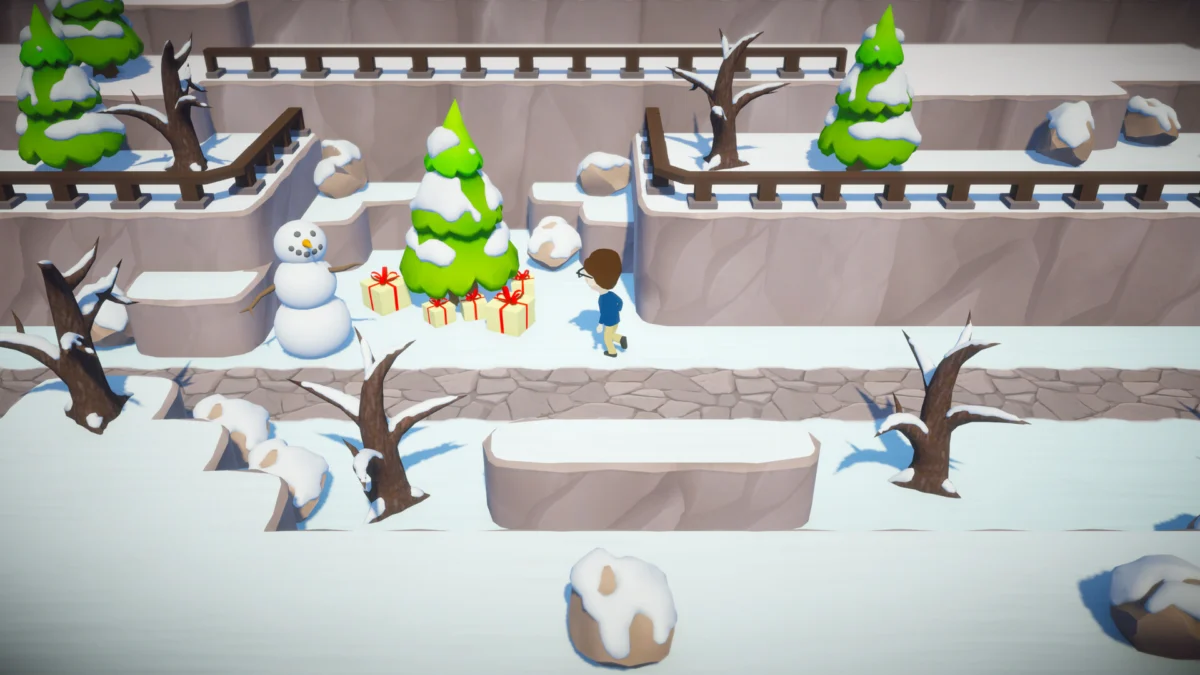
The serene image of a forest—sunlight dappling through pine needles, the gentle rustle of leaves, and the quiet solitude of a nature walk—has long been a staple of both real-world relaxation and video game world-building. However, a new indie title currently in development is looking to weaponize that tranquility. Trees Hate You, developed by indie creator TyKenn, is a subversion of the "environmental background" trope, turning the very scenery into a lethal, sentient, and hilariously vindictive antagonist.
By blending the "masocore" genre’s punishing difficulty with a surreal, slapstick sense of humor, Trees Hate You has begun to garner significant attention within the indie gaming community. The game challenges the player’s most basic instincts, transforming a simple walk home from a picnic into a high-stakes gauntlet where the flora is not just hostile, but actively manipulative.
Main Facts: A New Contender in the ‘Troll-Platformer’ Genre
Trees Hate You is a puzzle-platforming experience that relies heavily on trial-and-error mechanics, a subgenre often referred to as "troll games" or "Kaizo-style" design. The premise is deceptively simple: the player has finished a picnic and must navigate a forest to reach the safety of home. The complication arises from the forest itself; every tree is programmed to intercept, mislead, and execute the player in increasingly creative ways.
The game is currently available as a demo on itch.io, with a full release planned for Steam. Key features identified in the early build include:
- Dynamic Obstacles: Trees that move to block paths only after the player has committed to a route.
- Absurdist Weaponry: Environmental hazards that range from traditional falling branches to trees wielding firearms.
- Psychological Subversion: Design choices specifically intended to punish veteran gamers who treat trees as static, non-interactive objects.
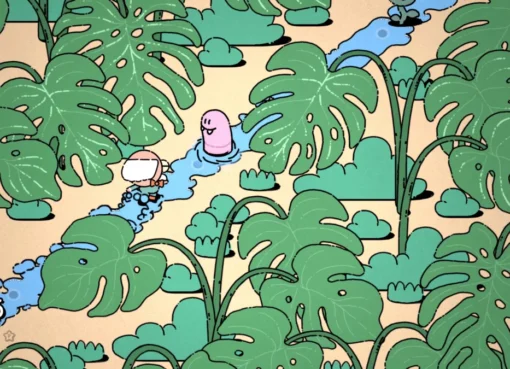
- Visual Style: A lo-fi, pixelated aesthetic that contrasts the dark humor and sudden violence of the gameplay.
While many indie games focus on environmental storytelling where the forest is a place of mystery or horror, Trees Hate You leans into the "absurd horror" of a world that has quite literally turned against the protagonist for no discernible reason.
Chronology: From Picnic to Peril
The narrative arc of Trees Hate You follows a tight, focused timeline that escalates from the mundane to the ridiculous. Understanding the chronological progression of the player experience is essential to understanding why the game resonates with its audience.
The Inciting Incident: The Post-Picnic Departure
The game begins at the conclusion of a picnic. This choice of setting is deliberate. It establishes a mood of domesticity and relaxation. The player is at their most vulnerable when they believe the "game" hasn’t truly started yet. As the player begins their trek home, the first few screens offer the illusion of a standard 2D platformer.
The First Subversion: The "Gotcha" Moment
The chronology of play typically hits its first snag within seconds. A player might see a gap between two pines and move toward it, only for the trees to slam together like a set of heavy doors. This is the "contract" the game signs with the player: nothing in the background is safe, and every visual cue is a potential lie.
Escalation: From Physical to Impossible
As the player progresses through the levels provided in the demo, the "attacks" from the forest evolve. Initially, the trees act within the realm of physical possibility—falling over or dropping branches. However, the chronology of the game quickly shifts into the surreal. Players report encounters where trees pull out handguns or extend limbs in ways that defy biology. This escalation ensures that the player can never truly "learn" the rules of the world, as the rules are constantly being rewritten to favor the trees.
The Feedback Loop: Death and Persistence
The game’s structure is a loop of death, revelation, and adaptation. Because the deaths are framed as comedic—often accompanied by exaggerated animations or unexpected sound cues—the chronology of a single session is marked by frequent restarts that feel less like failures and more like "sketch comedy" beats.
Supporting Data: Mechanics of Frustration and Humor
To understand the success of the Trees Hate You demo, one must look at the data regarding player interaction and the psychological mechanics of "masocore" games. This genre, popularized by titles like I Wanna Be The Guy and Cat Mario, relies on a specific type of engagement: the "Fair Unfairness."
The Subversion of Spatial Awareness
In traditional game design, trees are categorized as "static meshes." They provide collision and visual flavor but do not possess AI. Trees Hate You weaponizes this player assumption. Data from player playthroughs suggests that the most frequent cause of death is not a lack of mechanical skill (jumping or timing), but rather "spatial betrayal." Players assume a tree is a wall until it becomes a projectile.
The "Laughter vs. Rage" Ratio
Indie developers often track player retention through the "frustration threshold." While games like Dark Souls use difficulty to create a sense of triumph, Trees Hate You uses difficulty to create a sense of comedy. The "Supporting Data" here is found in the community response: reviews on itch.io and Steam emphasize that the "ridiculousness" of the deaths mitigates the frustration of repeating a level. By making the death a "punchline," the developer increases the player’s willingness to endure repetitive failure.
Anticipatory AI and Scripting
The game utilizes "anticipatory scripting." This is a design technique where the game monitors player inputs and triggers traps based on predicted movement. If a player hesitates, the trap may delay; if the player rushes, the trap accelerates. This creates the illusion of a sentient, spiteful forest that is "watching" the player, rather than a series of static obstacles.
Official Responses: Developer Insights and Community Impact
While the developer, TyKenn, has kept a relatively low profile, the public communications via the game’s devlogs and Steam description provide insight into the project’s philosophy.
The Developer’s Intent
In official descriptions, the developer emphasizes the "devious" nature of the forest. The goal was to create a game where the environment is the primary antagonist, rather than a monster or a villain. The developer has noted that the inspiration came from the realization that in most games, trees are the most ignored part of the map. By making them the most dangerous, the game forces a total re-evaluation of the digital space.
Community Reception
The response from the indie gaming community has been overwhelmingly positive, particularly among "variety streamers" on platforms like Twitch and YouTube. These creators often seek out "rage games" because the unexpected deaths provide high-value entertainment for their audiences. The "official response" from the player base suggests that Trees Hate You is being positioned as a "streamer-bait" title—a term that, in this context, refers to games designed to elicit visible, entertaining reactions from players.
Market Positioning
From a market perspective, Trees Hate You occupies a niche of "Comedy-Horror Platformers." It joins a lineage of games that use high difficulty not as a barrier to entry, but as a core component of the brand’s identity.
Implications: The Future of Environmental Antagonism
The emergence of Trees Hate You has several implications for the future of indie game design and the broader "man vs. nature" narrative in digital media.
The Deconstruction of "Safe Spaces"
In game design, there is often a binary between "safe zones" and "combat zones." Trees Hate You implies a future where these boundaries are blurred. If even the most basic elements of scenery can be lethal, the player’s sense of agency is diminished, replaced by a constant state of hyper-vigilance. This could lead to a new trend in horror games where the threat is not a singular monster, but the world itself.
The Democratization of "Troll" Mechanics
Previously, high-difficulty "troll" games were often unpolished or niche. However, the visual polish and clever scripting of Trees Hate You suggest that this genre is maturing. Developers are finding ways to balance "unfair" mechanics with high-quality presentation, making these games more accessible to a general audience who may have previously found the genre too punishing or "ugly."
Nature as a Malevolent Force
On a thematic level, the game reflects a growing cultural anxiety regarding the environment. While the game is a comedy, the underlying premise—that nature has "had enough" and is actively seeking to eliminate human presence—resonates with modern ecological fears. By turning a picnic (a human imposition on nature) into a survival scenario, the game taps into a primal, if exaggerated, fear of the wild.
Conclusion: A Forest Worth Fearing
Trees Hate You is more than just a challenging platformer; it is a clever deconstruction of player expectations. By taking the most overlooked aspect of game environments—the humble tree—and imbuing it with a murderous, slapstick intelligence, TyKenn has created a demo that is as frustrating as it is hilarious.
As the game moves toward a full release on Steam, it stands as a testament to the creativity of the indie scene. It proves that you don’t need a massive budget or a complex narrative to engage players; sometimes, all you need is a well-placed pine tree with a grudge and a handgun. For those brave enough to face the forest, the demo is currently available, but as the developer warns, you may never look at the trees in your own backyard the same way again.