The Architecture of the Unconscious: Decoding the Provocative Surrealism of Alfred De Angelo

The contemporary art world is often divided between the hyper-conceptual and the purely aesthetic, yet few artists manage to bridge the chasm between technical mastery and profound psychological inquiry as effectively as Alfred De Angelo. Through a body of work that functions as both a visual feast and a philosophical challenge, De Angelo has established himself as a preeminent voice in modern surrealism. His paintings do more than occupy space on a wall; they serve as threshold points—doorways into a sensual world of provocative beauty that demands a recalibration of the viewer’s perception.
Main Facts: The Visionary Landscape of Alfred De Angelo
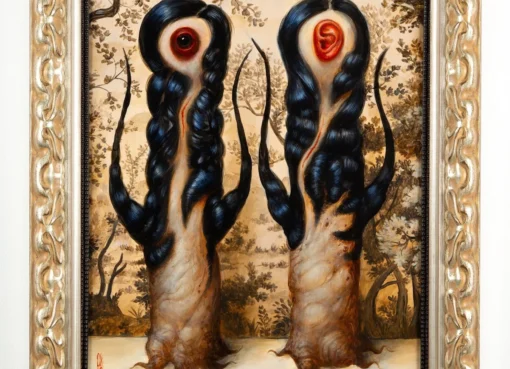
Alfred De Angelo is a painter whose work is defined by what critics describe as a "remarkable fluency and expertise." His canvases are characterized by a meticulous delineation of form, where the boundaries between the real and the imagined are blurred with surgical precision. Unlike the chaotic surrealism of the early 20th century, De Angelo’s work possesses a structured, almost architectural elegance.
His primary objective, as articulated in his professional philosophy, is to transport the viewer into a "compelling visual world." This world is not merely a fantasy; it is a distorted reflection of reality designed to lure the audience out of their "well-worn patterns of thought." By presenting images that are simultaneously beguiling and bewildering, De Angelo forces a confrontation with the limits of human understanding. The hallmark of his style is this tripartite emotional response: the permission to be amazed, the courage to be confused, and the eventual surrender to delight.
In an era where digital saturation often numbs the visual senses, De Angelo’s work stands out for its visceral impact. His paintings are noted for their "sensual" quality—a tactile richness that suggests the artist is not just painting a scene, but evokes the very atmosphere of a dream.
Chronology: From Academic Rigor to Subconscious Exploration
The evolution of Alfred De Angelo’s career is rooted in a prestigious academic foundation, providing him with the technical "vocabulary" necessary to eventually subvert traditional representation.

The Foundation: Massachusetts College of Art (BFA)
De Angelo’s journey began at the Massachusetts College of Art, where he earned his Bachelor of Fine Arts. During this period, he honed the fundamental skills of draftsmanship and composition. It was here that he began to master the "fluency" mentioned by observers of his current work. In the rigorous environment of one of America’s oldest public art colleges, De Angelo learned the rules of classical representation—knowledge that would later allow him to break those same rules with intentionality and grace.
The Refinement: Rhode Island School of Design (MFA)
Continuing his trajectory of academic excellence, De Angelo attended the world-renowned Rhode Island School of Design (RISD) for his Master of Fine Arts. RISD is historically recognized for pushing artists toward conceptual depth and innovative practice. It was likely during his time at RISD that De Angelo’s "private vocabulary of images" began to coalesce. The transition from a student of art to a master of the craft involved a deep dive into the "essential mystery of existence," moving away from the mere replication of the physical world and toward the embodiment of subjective experience.
The Mature Phase: Establishing the Surrealist Identity
Following his formal education, De Angelo moved into a prolific phase of creation, launching his digital presence through platforms like artistpainter.ws. His mature work represents a synthesis of his BFA’s technical precision and his MFA’s conceptual complexity. He has spent the subsequent years developing a style that looks "through" outward appearances, a methodology that has become his professional signature.
Supporting Data: The Mechanics of the "Private Vocabulary"
To understand the impact of De Angelo’s work, one must analyze the data of his compositions—the recurring motifs and philosophical pillars that support his surrealist framework.
The Subjectivity of Scale
De Angelo’s artist statement posits that human experiences are "localized and subjective," creating impressions on a "personal scale." This is reflected in his paintings through the use of intimate focal points. He does not often paint sprawling, anonymous epics; instead, he focuses on the "localized" moment where a specific image—be it a figure, an object, or a landscape—becomes a vessel for a universal emotion.
Technical Expertise as a Tool for Disruption
Data from art critics suggests that the "expertise" in De Angelo’s work is what makes the surrealism effective. In many amateur surrealist works, the lack of technical skill can be mistaken for "dreamlike" distortion. In De Angelo’s case, the realism is so sharp that the surreal elements become more jarring. When a viewer sees a perfectly rendered form behaving in an impossible way, the cognitive dissonance is heightened. This is the "expertise" that "never fails to impress."
The "Through" Methodology
De Angelo’s stated goal is to look "through" outward appearances. This is achieved through a layering of meaning. His paintings often feature:
- The Surface Layer: A sensually pleasing, well-composed image.
- The Provocative Layer: Elements that challenge logic or physics.
- The Essential Layer: The "mystery of existence" that remains after the viewer has processed the initial shock.
Official Responses and Contextual Positioning
The reception of De Angelo’s work within the broader surrealist community provides insight into his standing among his peers. Platforms such as Surrealism Today frequently highlight artists who push the boundaries of the genre, placing De Angelo in a lineage of creators who prioritize the human element of the subconscious.
Comparisons to Contemporary Surrealists
In the context of other modern surrealists like Christian Quintin, De Angelo’s work is often seen as more grounded in "provocative beauty." While Quintin might focus on the "memory of feeling" and the nostalgia of solitude, De Angelo focuses on the "sensual world" and the immediate, visceral reaction of the viewer.
The Human vs. The Artificial
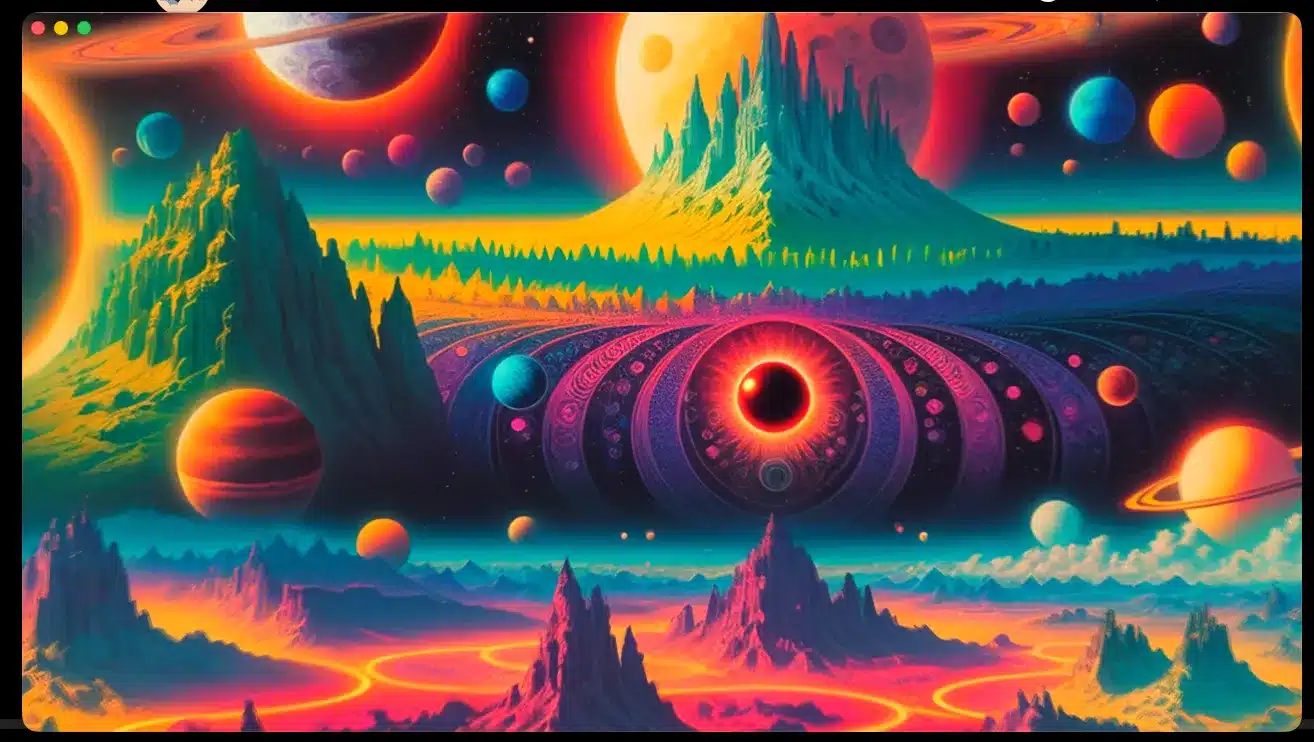
The rise of AI-generated art, such as the Infinidream.ai platform or the works of Jacob Holster, provides a stark contrast to De Angelo’s process. While AI can simulate the "bewildering" aspects of surrealism through algorithmic randomness, De Angelo’s work is praised for its "private vocabulary." Critics argue that AI lacks the "localized and subjective" experience that De Angelo cites as his primary inspiration. His paintings are seen as an "official response" to the digitization of art, asserting that the "essential mystery of existence" requires a human psyche to interpret and embody it.

Implications: The Future of Surrealism in a Fragmented World
The work of Alfred De Angelo carries significant implications for the future of the surrealist movement and the way audiences consume art in the 21st century.
Permissive Aesthetics
By giving viewers "permission to be amazed—and confused—and delighted," De Angelo is addressing a psychological need in a modern world that often demands immediate clarity and "TL;DR" summaries. His work implies that there is value in the unresolved. The implication is that art should not always provide answers; rather, it should provide better questions.
The Role of the Private Vocabulary
As global culture becomes more homogenized through social media and shared digital experiences, De Angelo’s emphasis on a "private vocabulary" is a call to return to individual subjectivity. His work suggests that the most profound art comes from a deeply personal place, yet, paradoxically, it is this very privacy that makes the work universally compelling.
Bridging the Gap to the Essential Mystery
Ultimately, De Angelo’s paintings serve as a reminder that the "essential mystery of existence" is not something to be solved, but something to be "embodied." As we move further into an age of data and artificial intelligence, the "fluency and expertise" of a human hand guided by a human soul becomes increasingly vital. De Angelo’s legacy will likely be defined by his ability to maintain the "sensual world" of painting as a relevant, provocative, and necessary doorway to the human subconscious.
For those seeking to explore this visual world further, De Angelo maintains a presence at artistpainter.ws, a digital gallery that continues to serve as a portal for those willing to step out of their well-worn patterns of thought and into the beautiful, bewildering unknown.