
The Architect of the Avant-Garde: Remembering Ted White (1938–2026)
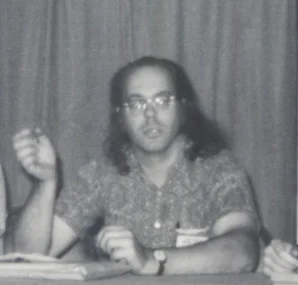
The world of speculative fiction and adult-oriented comics has lost one of its most acerbic, brilliant, and influential figures. Ted White, the Hugo Award-winning writer, editor, and critic, passed away at the age of 88. His death, confirmed via the Corflu community, marks the end of an era for the "Second Wave" of science fiction fandom and the pivotal moment when American comics transitioned into a sophisticated, adult medium.
White’s career was defined by a restless intellectual energy that refused to be confined to a single medium. Whether he was revitalizing the legendary pulps Amazing Stories and Fantastic, guiding the early, experimental years of Heavy Metal, or engaging in the fierce polemics of The Comics Journal, White remained a steadfast defender of artistic integrity over commercial compromise.
Main Facts: A Life Defined by Genre and Subversion
Ted White was born Theodore Edward White in Washington, D.C., in 1938. Over a career spanning seven decades, he established himself as a polymath of the counterculture. While many know him primarily as an editor, his contributions to the field were four-fold: as a fan-writer who helped define the "fanzine" culture; as a novelist who explored the psychological depths of science fiction; as a musician; and as a transformative editor who bridged the gap between the literary world and the visual arts.
The announcement of his passing has triggered a wave of retrospection within the industry. The Comics Journal, a publication for which White was both a contributor and a subject of intense scrutiny, recently delved into its archives to resurface a seminal 1980 interview conducted by Gary Groth. This interview, occurring just after White’s tumultuous departure from Heavy Metal, remains a foundational text for understanding the friction between art and commerce in the late 20th century.
White’s legacy is anchored by his 1968 Hugo Award for Best Fan Writer, a testament to his influence before he ever took the helm of a professional magazine. However, it was his editorial tenure at Amazing Stories (1969–1979) and his brief but explosive stint at Heavy Metal (1979–1980) that cemented his reputation as a visionary who could spot talent and nurture "the new" in a stagnant marketplace.
Chronology: From Fandom to the Vanguard
The Fandom Roots (1950s–1960s)
White entered the science fiction community not through the front door of professional publishing, but through the vibrant, mimeographed world of fandom. By the late 1950s, he was a prominent "fan-ed," contributing to and editing fanzines that debated the philosophy of the genre. His writing was characterized by a sharp wit and a refusal to suffer fools, traits that would define his professional persona. In 1968, he reached the pinnacle of this world, winning the Hugo Award for Best Fan Writer.
The Novelist and the Pulp Revitalizer (1964–1979)
While active in fandom, White was also a prolific author. His first novel, Invasion from 2500, was published in 1964 (co-written with Terry Carr under a pseudonym). He went on to write notable works such as By Furies Possessed (1970), which explored themes of alien symbiosis and human identity.
In 1969, White took over the editorship of Amazing Stories and Fantastic. At the time, these were struggling relics of the pulp era. On a shoestring budget, White performed what many considered a miracle: he moved the magazines away from reprints and toward high-quality, contemporary fiction. He introduced a "fan" sensibility to the professional magazines, including lengthy letter columns and critical essays that fostered a sense of community.
The Heavy Metal Era (1979–1980)
In 1979, White was recruited to edit Heavy Metal, the American counterpart to the French Métal Hurlant. This was a period of cultural upheaval; the magazine was at the forefront of bringing European "adult" comics—stylized, violent, erotic, and surreal—to an American audience. White’s tenure was brief, lasting only about a year, but it was during this time that he grappled with the titans of the industry, including Moebius and Neal Adams, while attempting to maintain a coherent editorial vision against a backdrop of corporate interference.
Supporting Data: The 1980 Discourse and the Heavy Metal Conflict
To understand White’s impact, one must look at the data provided by his own editorial decisions and his candid reflections in the 1980 Comics Journal interview. At Heavy Metal, White was tasked with navigating a magazine that was essentially a "license" of French material but needed an American identity.
The "Drug Culture" Influence
In his discussions with Gary Groth, White was famously transparent about the role of the 1970s counterculture in the evolution of art. He argued that the psychedelic revolution had fundamentally changed how artists like Moebius (Jean Giraud) approached the page. White saw Heavy Metal not just as a comic book, but as a sensory experience that reflected the shifting consciousness of the era. He famously noted that the "trippy" nature of the art was a deliberate rebellion against the rigid, grid-based storytelling of the Silver Age of American comics.
Editorial Friction
Data from White’s tenure shows a significant tension between his literary standards and the commercial demands of the publisher, Leonard Mogel. White pushed for more sophisticated prose and a higher standard of translation for the French stories. His departure in 1980 was a "noisy" one, characterized by a public disagreement over the direction of the magazine. He felt that the publishers were more interested in the "tits and ammo" aspect of the magazine than the avant-garde storytelling he championed.
The Moebius and Neal Adams Dynamic
White was one of the first American editors to articulate the genius of Moebius to a domestic audience, yet he was also critical of how American creators attempted to mimic that style. In his 1980 interview, he offered a nuanced critique of Neal Adams—a god of the American industry—suggesting that while Adams was a master of the form, the "Heavy Metal style" required a different kind of internal logic that many American artists, raised on superheroes, struggled to grasp.
Official Responses and Tributes
The news of White’s passing has elicited responses from across the literary and comic book spectrum. While a formal, in-depth tribute from The Comics Journal is pending, the initial reactions highlight a deep respect for his uncompromising nature.
Gary Groth, Co-founder of Fantagraphics and The Comics Journal:
While Groth and White often clashed—as two formidable intellectuals are wont to do—Groth has acknowledged White’s "formidable presence" in the industry. The decision to republish the 1980 interview serves as a tribute to White’s role as a "truth-teller" in an industry that often preferred PR-friendly platitudes.
The Corflu (Correction Fluid) Fandom Community:
The announcement on the Corflu Facebook group, a hub for traditional fanzine enthusiasts, described White as a "titan of the amateur press" and a man who "never lost his love for the printed word, no matter the medium."
Industry Historians:
Historians of the "Pro-zine" era have noted that without White’s intervention in the 1970s, magazines like Amazing Stories likely would have folded decades earlier. His ability to curate high-level fiction with almost no budget is frequently cited in academic studies of 20th-century publishing.
Implications: The Legacy of the "White Way"
Ted White’s death invites a reflection on the current state of genre editing. In an era where "content" is often prioritized over "curation," White’s career offers a blueprint for the editor-as-auteur.
The Bridge Between Media
White was one of the first to recognize that science fiction fans, comic book readers, and rock music enthusiasts were part of the same cultural demographic. By bringing his SF editorial sensibilities to Heavy Metal, he helped elevate the "graphic novel" before the term was even in common usage. He proved that comics could be as intellectually rigorous as a Hugo-winning novel.
The Importance of the Critical Voice
White’s willingness to be "difficult" is perhaps his greatest gift to the industry. By criticizing the works he edited and the publishers he worked for, he raised the bar for everyone else. He understood that for a medium to grow, it must be subjected to harsh, honest critique. His 1980 interview remains a masterclass in how to analyze the intersection of art, drugs, business, and ego.
The Future of the Archives
As The Comics Journal prepares its in-depth retrospective, the implication is clear: the history of adult comics in America cannot be written without a significant chapter on Ted White. His work serves as a reminder that the most enduring art often comes from those who are willing to burn bridges in defense of a vision.
In the coming weeks, as more peers and protégés share their stories, the full scope of White’s influence will likely come into sharper focus. From the mimeographed pages of 1950s fanzines to the glossy, surrealist spreads of Heavy Metal, Ted White didn’t just witness the evolution of speculative culture—he drove the bus, often at breakneck speeds, and never once looked back.
References and Further Reading:
- The Comics Journal #59 (October 1980): The Ted White Interview.
- Amazing Stories Editorial Archives (1969–1979).
- By Furies Possessed, by Ted White (Signet, 1970).
- The History of the Hugo Awards: 1968 Fan Categories.



Leave a Comment