WASHINGTON D.C. – May 20, 1862 – In a pivotal moment that would profoundly reshape the American landscape and its societal fabric, President Abraham Lincoln signed into law the Homestead Act. Enacted amidst the tumult of the American Civil War, this landmark legislation promised 160 acres (65 hectares) of public domain land to any citizen who had never taken up arms against the federal government. While often perceived as "free land," the act carried significant stipulations: prospective farmers were required to reside on and "improve" the land for five years before securing full legal title. Over its 124-year lifespan, the Homestead Act spurred the settlement of an astonishing 270 million acres – roughly 10% of all U.S. land – drawing hundreds of thousands of families westward and fundamentally altering the nation’s agricultural, economic, and demographic trajectory. Yet, its legacy remains complex, celebrated for democratizing land ownership but simultaneously decried for its devastating impact on Native American populations and the environment.
A Nation’s Westward Gaze and Sectional Strife
The dream of westward expansion was deeply ingrained in the American consciousness long before the nation’s founding. As early as 1763, King George III of Great Britain attempted to curb colonial ambitions by issuing a royal proclamation forbidding settlement west of the Appalachian Mountains, a measure primarily aimed at preventing conflict with the Indigenous peoples already inhabiting those lands. This restriction, among others, fueled colonial resentment and contributed to the outbreak of the American Revolution (1775-1783).
Following independence, the nascent United States quickly laid the groundwork for future expansion. The Northwest Ordinance of 1787 proved to be a monumental piece of legislation, establishing the first organized territory (the Northwest Territory) and, crucially, setting legal precedents for the systematic survey, sale, and settlement of western lands, including the process for admitting new states into the Union. This ordinance, however, also foreshadowed the violent conflicts that would characterize westward expansion, as Euro-American settlers clashed repeatedly with the Indigenous nations of the Great Lakes and Ohio Valley regions.
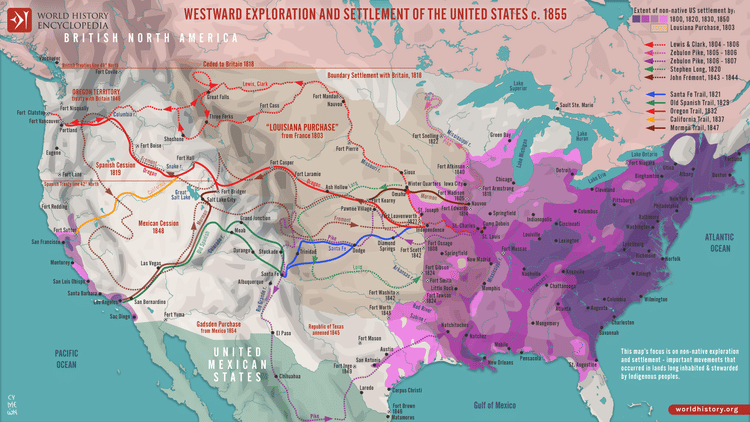
The concept of "Manifest Destiny" – the belief in America’s divinely ordained right to expand across the North American continent – gained significant traction in the mid-19th century. This ideological fervor underpinned aggressive territorial acquisitions, most notably the Mexican-American War (1845-1848) under President James K. Polk, which added a colossal 525,000 square miles to the United States. The subsequent discovery of gold in California further intensified the allure of the West, drawing a flood of fortune-seekers and permanent settlers alike.
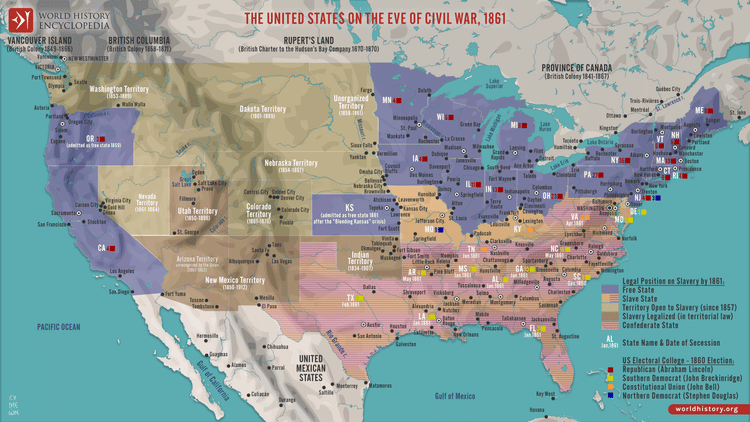
As the West became more populated, however, it became the central battleground for the nation’s most divisive issue: slavery. The slave-holding aristocracy of the Antebellum South fiercely advocated for the expansion of slavery into these new territories. The creation of new "slave states" would bolster their political power in Congress, while the vast, fertile lands promised immense profits from cotton plantations, cultivated through the brutal exploitation of enslaved labor. This vision stood in stark contrast to the emerging "free soil" movement in the North.
Northern abolitionists, alongside many who simply opposed the expansion of slavery (even if they harbored no particular love for Black people), championed the ideal of the "virtuous yeoman farmer." This figure, typically envisioned as a hardworking, self-sufficient white American man, owned his own small farm, tilled his own soil, and reaped the rewards of his labor for his family, free from the perceived moral and economic degradations of slave labor. This idealized West, populated by a myriad of small, independent farms, was fundamentally antithetical to the Southern vision of sprawling slave plantations.
During the momentous Presidential Election of 1860, the newly formed anti-slavery Republican Party incorporated a conceptual version of the Homestead Act into its platform. Their goal was clear: to offer public land to potential settlers, thereby incentivizing the establishment of small, free-labor farms before slaveholding elites could claim the land for their own purposes. Abraham Lincoln, the Republican candidate, was a vocal supporter of this idea, proclaiming in February 1861, shortly after his election, that "the wild lands of the country should be distributed so that every man should have the means and opportunity of benefiting his condition." By this point, however, several Southern slave states had already seceded from the Union, and two months later, Confederate cannons fired on Fort Sumter, plunging the nation into the American Civil War. The departure of Southern representatives from Congress ultimately removed the significant political opposition that had previously stalled homestead legislation for decades, clearing the path for its passage.
Implementation, Challenges, and Diverse Experiences
The Homestead Act, signed into law on May 20, 1862, became operational on January 1, 1863. It was open to any adult citizen, or intended citizen, who had never borne arms against the United States. The process was deceptively simple: file a claim at a local land office, pay a small registration fee (typically $10), and receive a 160-acre plot. The critical conditions were residency and "improvement" of the land for a continuous period of five years. Improvements generally included building a dwelling, cultivating crops, or making other visible enhancements to the property. After five years, if the claimant could prove these conditions through two credible witnesses and an affidavit of loyalty, the title to the property became theirs.
The act also included provisions for expediting the process, allowing claimants to "commute" their claims by paying $1.25 per acre after just six months of residency. Crucially, after the Civil War, returning Union soldiers were permitted to deduct their time served in the army from the five-year residency requirement, a significant incentive for veterans seeking new beginnings.
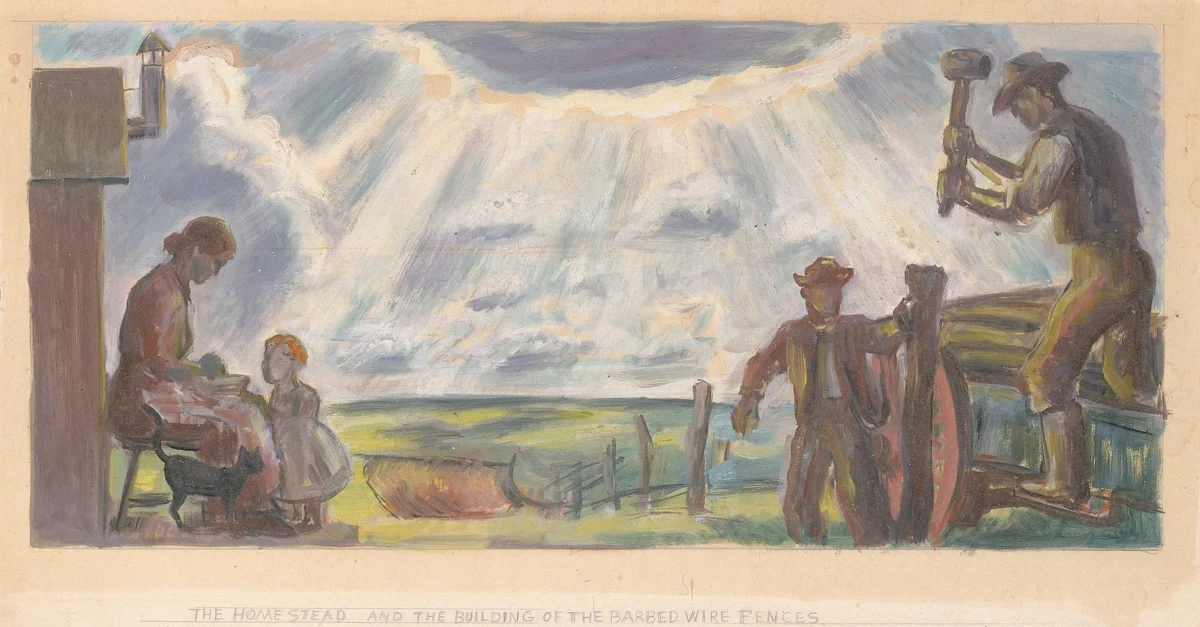
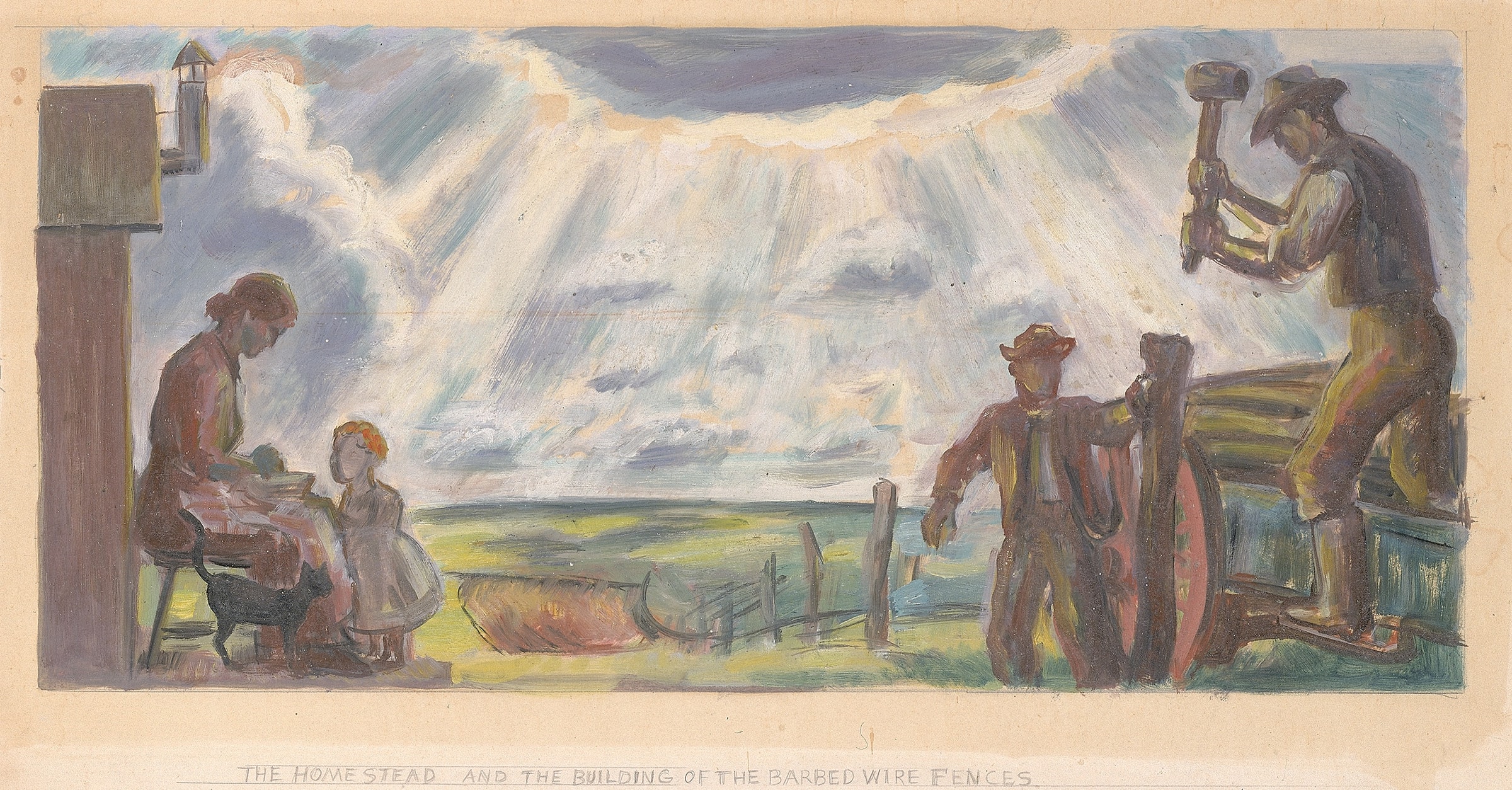
The underlying assumption of the Homestead Act, as historian Richard White notes, was that "the successful development of this tract demanded the labor of both men and women and thus the creation of a home and family." It was an invitation to build not just a farm, but a community and a life. Throughout the 1860s and 1870s, hundreds of thousands of American families, including European immigrants, African Americans (most notably the "Exodusters" who settled towns like Nicodemus, Kansas, seeking refuge from post-Reconstruction South), and even single women, filed claims and headed west.
However, the reality of homesteading was often far from the idyllic vision. While the land itself was "free," the life it demanded was fraught with immense toil, hardship, and significant financial investment. Settlers needed capital for tools, seeds, livestock, building materials, and often, transportation to reach their claims. The isolation, harsh climates, lack of water in arid regions, pest infestations, and unpredictable weather made farming a precarious venture.
Statistics reveal a varied picture of success. Richard White highlights that for every four families who succeeded in establishing farms, another six failed, often abandoning their claims, selling their rights, or opting to purchase the land outright to bypass the residency requirements. Success rates varied geographically: while two-thirds of claims in Minnesota between 1863 and 1875 proved successful, only 40% of claims filed in Kansas between 1863 and 1890 yielded a positive result. Nevertheless, even 40% in Kansas translated to 94,448 successful farms, demonstrating the sheer volume of participation.
Despite the popular image of the homesteader as the primary agent of western settlement, White’s data suggests a more nuanced reality. In the 1860s, of 615,908 new farms created, only 142,410 were established by homesteaders. The 1870s saw similar trends, with homestead entries accounting for 318,572 out of 1,348,985 new farms. It wasn’t until the 1880s that homesteaders constituted a majority of new farms, though many still faced eventual failure. These figures underscore the fact that many western settlers acquired land through other means, such as purchasing it from railroads or speculators, or through preemption rights.
Official Responses and Unintended Consequences
While the Homestead Act aimed to foster individual land ownership, its implementation was not without significant flaws and often led to unintended (or intentionally ignored) consequences.
The most profound negative impact was undoubtedly on Native American populations. The act, by design, facilitated the rapid appropriation of lands that had been, for millennia, the ancestral territories of Indigenous peoples. This influx of settlers led to widespread displacement, broken treaties, forced removals onto reservations, and violent conflicts. The arrival of homesteaders also contributed to the catastrophic decline of the buffalo population, a vital resource for many Plains tribes, and introduced unsustainable farming practices that further disrupted traditional Indigenous ways of life and ecological balances. The expansion of the United States westward was often predicated on the systematic dispossession and subjugation of Native nations.
Another significant obstacle to the yeoman farmer ideal came from large land speculators and powerful railroad companies. These entities received massive land grants from the federal government, often circumventing the spirit of the Homestead Act. Railroads, in particular, were granted vast tracts along their routes to help finance construction, which they then sold to settlers at a profit, competing directly with the "free" land offered by the Homestead Act. Speculators also exploited loopholes, using "dummy entrymen" to file multiple claims and aggregate large parcels of land, thereby undermining the act’s intent to distribute land widely to small farmers.
Over time, the limitations of the 160-acre plot, particularly in the arid and semi-arid regions west of the 100th meridian, became apparent. 160 acres was often insufficient for dryland farming or ranching. In response, Congress passed subsequent legislation, such as the Kinkaid Act of 1904 (allowing 640-acre claims in parts of Nebraska) and the Enlarged Homestead Act of 1909 (allowing 320-acre claims in certain arid areas), implicitly acknowledging the shortcomings of the original act’s one-size-fits-all approach. The Stock-Raising Homestead Act of 1916 further increased the allowable acreage for ranching purposes. These adjustments were official responses to the practical realities faced by homesteaders in diverse environments.
The Homestead Act remained in effect for 124 years, a testament to its enduring role in American land policy. It was finally repealed by the Federal Land Policy and Management Act of 1976, which stipulated a new policy for the nation’s public lands: they were generally to be "retained in Federal ownership." However, a special exception allowed homesteading to continue in Alaska until 1986, reflecting the unique challenges and opportunities of settlement in the Last Frontier.
A Lasting Legacy
The Homestead Act stands as one of the most significant pieces of legislation in U.S. history, fundamentally transforming the nation’s geography, economy, and social structure. It fostered the creation of millions of farms, fueled unprecedented demographic shifts, and contributed to the rapid development of the American West. For countless individuals and families, including immigrants from Europe, formerly enslaved African Americans, and women who were legally permitted to file claims, the act offered a rare opportunity for land ownership, economic independence, and a fresh start – a powerful symbol of American opportunity and self-reliance.
However, its legacy is undeniably a dual-edged sword. The promise of "free land" for some came at an immense and often devastating cost to others, particularly the Indigenous peoples whose lands were systematically dispossessed and whose cultures and ways of life were profoundly disrupted. The environmental impact, too, was significant, as millions of acres of prairie and wilderness were transformed into agricultural land, sometimes with unsustainable practices that led to ecological degradation.
Today, the Homestead Act remains a powerful symbol, embodying both the pioneering spirit and the historical injustices inherent in the American narrative of westward expansion. Its story is a crucial chapter in understanding the complex tapestry of the United States, a testament to the nation’s ambitions, its challenges, and the enduring impact of its land policies.
Full Transcript of the Homestead Act
The following is a full transcript of the Homestead Act, passed by the US government on 20 May 1862:
CHAP. LXXV. –An Act to secure Homesteads to actual Settlers on the Public Domain.
Be it enacted by the Senate and House of Representatives of the United States of America in Congress assembled, That any person who is the head of a family, or who has arrived at the age of twenty-one years, and is a citizen of the United States, or who shall have filed his declaration of intention to become such, as required by the naturalization laws of the United States, and who has never borne arms against the United States Government or given aid and comfort to its enemies, shall, from and after the first January, eighteen hundred and sixty-three, be entitled to enter one quarter section or a less quantity of unappropriated public lands, upon which said person may have filed a preemption claim, or which may, at the time the application is made, be subject to preemption at one dollar and twenty-five cents, or less, per acre; or eighty acres or less of such unappropriated lands, at two dollars and fifty cents per acre, to be located in a body, in conformity to the legal subdivisions of the public lands, and after the same shall have been surveyed: Provided, That any person owning and residing on land may, under the provisions of this act, enter other land lying contiguous to his or her said land, which shall not, with the land so already owned and occupied, exceed in the aggregate one hundred and sixty acres.
SEC. 2. And be it further enacted, That the person applying for the benefit of this act shall, upon application to the register of the land office in which he or she is about to make such entry, make affidavit before the said register or receiver that he or she is the head of a family, or is twenty-one years or more of age, or shall have performed service in the army or navy of the United States, and that he has never borne arms against the Government of the United States or given aid and comfort to its enemies, and that such application is made for his or her exclusive use and benefit, and that said entry is made for the purpose of actual settlement and cultivation, and not either directly or indirectly for the use or benefit of any other person or persons whomsoever; and upon filing the said affidavit with the register or receiver, and on payment of ten dollars, he or she shall thereupon be permitted to enter the quantity of land specified: Provided, however, That no certificate shall be given or patent issued therefor until the expiration of five years from the date of such entry; and if, at the expiration of such time, or at any time within two years thereafter, the person making such entry; or, if he be dead, his widow; or in case of her death, his heirs or devisee; or in case of a widow making such entry, her heirs or devisee, in case of her death; shall. prove by two credible witnesses that he, she, or they have resided upon or cultivated the same for the term of five years immediately succeeding the time of filing the affidavit aforesaid, and shall make affidavit that no part of said land has been alienated, and that he has borne rue allegiance to the Government of the United States; then, in such case, he, she, or they, if at that time a citizen of the United States, shall be entitled to a patent, as in other cases provided for by law: And provided, further, That in case of the death of both father and mother, leaving an Infant child, or children, under twenty-one years of age, the right and fee shall ensure to the benefit of said infant child or children; and the executor, administrator, or guardian may, at any time within two years after the death of the surviving parent, and in accordance with the laws of the State in which such children for the time being have their domicile, sell said land for the benefit of said infants, but for no other purpose; and the purchaser shall acquire the absolute title by the purchase, and be entitled to a patent from the United States, on payment of the office fees and sum of money herein specified.
SEC. 3. And be it further enacted, That the register of the land office shall note all such applications on the tract books and plats of, his office, and keep a register of all such entries, and make return thereof to the General Land Office, together with the proof upon which they have been founded.
SEC. 4. And be it further enacted, That no lands acquired under the provisions of this act shall in any event become liable to the satisfaction of any debt or debts contracted prior to the issuing of the patent therefor.
SEC. 5. And be it further enacted, That if, at any time after the filing of the affidavit, as required in the second section of this act, and before the expiration of the five years aforesaid, it shall be proven, after due notice to the settler, to the satisfaction of the register of the land office, that the person having filed such affidavit shall have actually changed his or her residence, or abandoned the said land for more than six months at any time, then and in that event the land so entered shall revert to the government.
SEC. 6. And be it further enacted, That no individual shall be permitted to acquire title to more than one quarter section under the provisions of this act; and that the Commissioner of the General Land Office is hereby required to prepare and issue such rules and regulations, consistent with this act, as shall be necessary and proper to carry its provisions into effect; and that the registers and receivers of the several land offices shall be entitled to receive the same compensation for any lands entered under the provisions of this act that they are now entitled to receive when the same quantity of land is entered with money, one half to be paid by the person making the application at the time of so doing, and the other half on the issue of the certificate by the person to whom it may be issued; but this shall not be construed to enlarge the maximum of compensation now prescribed by law for any register or receiver: Provided, That nothing contained in this act shall be so construed as to impair or interfere in any manner whatever with existing preemption rights: And provided, further, That all persons who may have filed their applications for a preemption right prior to the passage of this act, shall be entitled to all privileges of this act: Provided, further, That no person who has served, or may hereafter serve, for a period of not less than fourteen days in the army or navy of the United States, either regular or volunteer, under the laws thereof, during the existence of an actual war, domestic or foreign, shall be deprived of the benefits of this act on account of not having attained the age of twenty-one years.
SEC. 7. And be it further enacted, That the fifth section of the act entitled "An act in addition to an act more effectually to provide for the punishment of certain crimes against the United States, and for other purposes," approved the third of March, in the year eighteen hundred and fifty-seven, shall extend to all oaths, affirmations, and affidavits, required or authorized by this act.
SEC. 8. And be it further enacted, That nothing in this act shall be so construed as to prevent any person who has availed him or herself of the benefits of the first section of this act, from paying the minimum price, or the price to which the same may have graduated, for the quantity of land so entered at any time before the expiration of the five years, and obtaining a patent therefor from the government, as in other cases provided by law, on making proof of settlement and cultivation as provided by existing laws granting preemption rights.
Abner Doubleday, a name frequently invoked in American lore, stands as a testament to how popular narratives can overshadow historical fact. While rightfully celebrated for his distinguished service i
Main Facts The conflict known by many names – the Boer War, the Second Anglo-Boer War, the South Africa War, and for the Boers, the Second War of Freedom (1899-1902) – stands as a grim testament to th
FOR IMMEDIATE RELEASE London, UK – A groundbreaking new compendium, "Fascinating Folklore," is set to captivate enthusiasts and newcomers alike, offering an unparalleled journey into the hea