Christopher Nolan’s The Ithacan Hailed as Profound Success, Drawing Deep Parallels to Oppenheimer
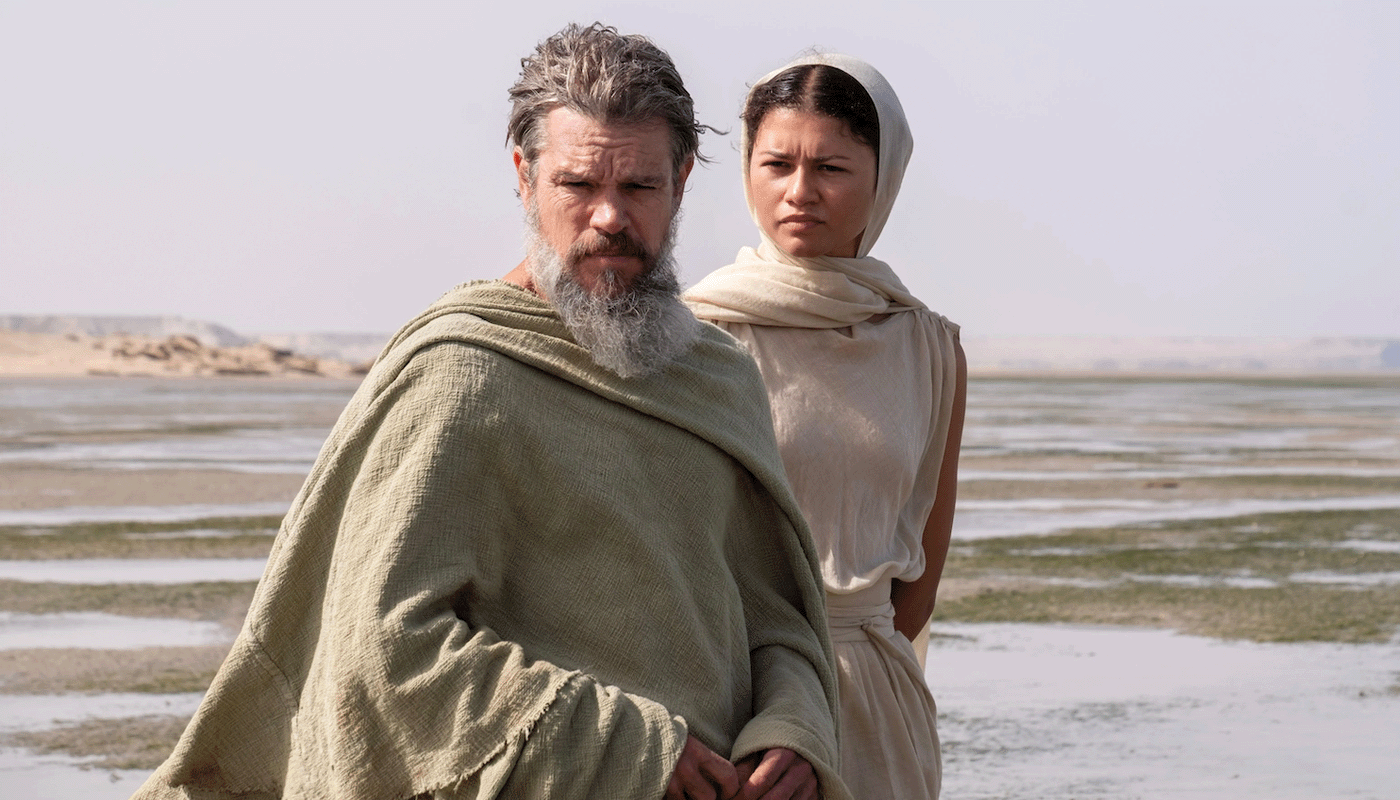
Hollywood, CA – Christopher Nolan’s latest cinematic endeavor, a bold and unexpected adaptation of Homer’s The Odyssey, tentatively titled The Ithacan, is quickly establishing itself as a critical and cultural phenomenon. Released less than a year after his Academy Award-winning Oppenheimer, the film has captivated audiences and critics alike, prompting widespread discussion about its ambitious themes, intricate structure, and profound contemporary relevance. Initial skepticism surrounding such a rapid follow-up has dissolved into near-unanimous acclaim, with many viewing The Ithacan not merely as a film, but as a deeply resonant experience, marking a significant new chapter in Nolan’s illustrious career and forming a compelling thematic companion to his atomic epic.
Nolan’s Evolving Vision: From Temporal Labyrinths to Moral Reckoning
Christopher Nolan has long been recognized for his distinctive cinematic style, characterized by complex narratives, non-linear timelines, grand-scale productions, and an intellectual ambition that challenges conventional storytelling. From the reverse chronology of Memento to the dreamscapes of Inception and the cosmic grandeur of Interstellar, his filmography has consistently explored the manipulation of time and perception, often within high-stakes, cerebral thrillers. While some of his works, such as The Dark Knight and The Prestige, garnered widespread adoration, others like The Dark Knight Rises received a more polarized reception, and Tenet, despite its technical prowess, left many grappling with its intricate plot.
A discernible shift in Nolan’s approach became evident with Dunkirk. Here, his renowned preoccupation with time was not merely a narrative device but became intrinsically linked to the subjective experience of its characters, effectively conveying the harrowing realities of war through fragmented perspectives. This marked a maturation in his craft, demonstrating a willingness to prioritize emotional impact and human vulnerability within his signature structural frameworks.
However, it was Oppenheimer that truly crystallized this evolution. Far from a typical biopic, the film transcended historical recounting to become a visceral exploration of scientific hubris, moral compromise, and the devastating, long-term consequences of human innovation. Its profound impact on viewers was widely documented, with many describing it as an immersive, almost spiritual encounter that lingered long after the credits. The film’s success, both critically and commercially, solidified Nolan’s reputation as a filmmaker capable of delivering not just spectacle, but profound intellectual and emotional depth, preparing the ground for the equally ambitious The Ithacan.
The Ithacan: A Timely Reimagining of an Ancient Epic
The announcement of The Ithacan, an adaptation of Homer’s ancient epic, so soon after Oppenheimer‘s exhaustive production, initially raised eyebrows. How could Nolan pivot so quickly, and what new insights could he bring to a story so universally known? Yet, the film has triumphantly answered these questions, proving itself a structurally and spiritually perfect successor to Oppenheimer.
Nolan’s The Ithacan distinguishes itself by deliberately emphasizing elements of the ancient narrative that resonate with striking timeliness, forging a powerful commentary on contemporary societal anxieties. This approach, while praised for its directness and relevance, has drawn some discussion regarding its potential to streamline or alter the nuances of the original text. Nevertheless, this conscious choice underscores Nolan’s intent to engage a modern audience with an enduring story.
Visually, The Ithacan continues a stylistic preference that has become a hallmark of Nolan’s work: a desaturated, often austere color palette. While some critics have playfully suggested an "undiagnosed eye condition" limiting his vision to "steel grey and ice blue," this aesthetic choice, particularly when filming the vibrant Mediterranean, has generated debate. Yet, it serves to underscore the film’s somber undertones and the heavy emotional burden carried by its characters, transforming the mythic landscape into a reflection of their internal turmoil rather than a picturesque backdrop.
The film’s narrative, true to Nolan’s style, is a masterclass in structural ingenuity. It weaves multiple perspectives and temporal shifts to gradually unveil the profound cost of war and betrayal. While the frequent invocation of "Zeus’ Law" has been noted as stylistically repetitive by some, its centrality to the story’s moral framework is undeniable, serving as a constant reminder of the divine and human covenants that are broken and upheld.
The immersive quality of the film, particularly in its intended 70mm and 35mm formats, has been widely lauded. Screenings have been characterized by an almost reverent silence from audiences, who remain engrossed for the entirety of its three-hour runtime, often lingering afterward for animated discussions—a rare sight in contemporary cinema. Ludwig Goransson’s score, a testament to his continued collaboration with Nolan, is described as haunting and unforgettable, contributing significantly to the film’s visceral impact.
The ensemble cast has garnered uniform praise for their nuanced portrayals. Matt Damon delivers a powerful performance as Odysseus, imbuing the legendary hero with a palpable sense of grief and regret, capturing the profound psychological toll of his journey. Elliot Page is singled out for a compelling turn as Sinon, a character ingeniously drawn from Virgil’s Aeneid to explore themes of cowardice, honor, and the moral ambiguities of warfare. Anne Hathaway brings a compelling depth to Penelope, foregrounding the character’s inner strength and resilience. Robert Pattinson, continuing his impressive post-blockbuster career, creates an "all-time classic conniving villain," while Samantha Morton’s performance is described as nothing short of "transcendent." Jon Bernthal’s Menelaus, depicted with an unconventional "Outer Boroughs mob boss" demeanor, and Tom Holland, in a role offering substantial dramatic scope, further enrich the tapestry of performances, alongside perfect turns from John Leguizamo and Himesh Patel. The effects, while "giant and over-the-top," ground the mythic elements in a tangible reality, leading to calls for a future Nolan horror film, particularly after the acclaimed Cyclops and Circe sequences.
Thematic Core: Consequence, Betrayal, and the Search for Trust
The true brilliance of The Ithacan lies in its audacious thematic parallel with Oppenheimer, forging a powerful diptych on the profound consequences of human action. Both films meticulously construct moments of apparent triumph, only to meticulously unravel their underlying horror and long-term devastation.
In Oppenheimer, the cinematic language meticulously guides the audience to root for the success of the Trinity Test, the ignition of the atomic bomb. The film’s pacing, editing, and score conspire to create a sense of thrilling anticipation for this technological marvel. Yet, Nolan swiftly pivots to expose the terrifying truth: the bomb was not a miracle of salvation, but a harbinger of doom, bringing immediate death, prolonged suffering, and the chilling prospect of global extinction. Oppenheimer himself, grappling with the unspeakable power unleashed, famously invoked figures from the Bhagavad Gita and John Donne’s poetry, seeking spiritual and literary frameworks to articulate the terror and awe of his creation.
The Ithacan employs a similar, devastating narrative strategy. The film opens with the Bard, played by Travis Scott, recounting the tale of the Trojan Horse, presented as a cunning stratagem and an offering to Athena. Later, through Menelaus’s harrowing first-hand account, the audience is placed inside the horse with Odysseus’s men, experiencing their claustrophobia, suffering, and desperate hope for success. The film’s immersive techniques compel viewers to desire the Trojans’ acceptance of the gift, to cheer for the Greeks’ infiltration, and to celebrate the opening of Troy’s gates. When Agamemnon stands triumphant and the Greeks roar in victory, it feels like a hard-won success. Telemachus, hearing this fable-turned-eyewitness account, weeps openly, swept up in the narrative of heroic achievement.
However, as the film progresses, the facade of victory crumbles. The audience learns of Agamemnon’s subsequent murder by his wife, who is in turn murdered by her own son, a spiraling cycle of violence stemming from Troy. Sinon’s tragic death is witnessed firsthand by Odysseus within the horse, highlighting the personal cost. Crucially, none of Odysseus’s men return home. Moreover, their actions at Troy sow seeds of destruction that spread like "radiation" across the Mediterranean, turning them into the whispered "People From The Sea," symbols of a collapsing civilization.
Odysseus’s true horror, as revealed in his own recounting to Penelope, is not merely the physical brutality of war, which Nolan largely minimizes in favor of psychological impact. It is the profound betrayal of trust—the manipulation of the Trojans’ reverence for Athena against them. This act desecrates a fundamental principle: if offerings to the gods can be murderous tricks, what meaning do prayers hold? The ambiguity surrounding Athena’s intermittent appearances to Odysseus, whether real, metaphorical, or a haunting vision, underscores this crisis of faith. Her eventual disappearance from his grasp symbolizes his unworthiness, a consequence of his sacrilegious deception.
The repercussions of this betrayal ripple throughout the film. The Sirens’ song, heard through Eurylochus’s perspective, speaks not of temptation, but of the world Odysseus helped destroy. The exploitation of "Zeus’ Law" by treacherous men, nearly leading to Telemachus’s death and Mentor’s demise, directly mirrors Odysseus’s own cunning. The film provocatively asks: how different is their treachery from his, save for its scale?
Yet, amidst this pervasive despair, The Ithacan ultimately offers a glimmer of hope. Odysseus’s final confrontation with the suitors is framed as an act of pure justice, protecting his son’s honor and avenging his wife. His subsequent exile, a self-imposed consequence, allows Telemachus to rule Ithaca as an honorable young king, untainted by his father’s past. The film concludes with Odysseus and Penelope embarking on a journey to honor the fallen, signifying a commitment to rebuilding trust and societal values, however fragile, in a crumbling world. It suggests that even in the face of overwhelming despair, small, deliberate acts of integrity can begin to restore humanity’s fractured faith.
Reception and Cultural Impact
The profound impact of The Ithacan is undeniable, manifesting in tangible audience reactions. The pervasive silence during screenings, the collective emotional responses, and the immediate, passionate discussions outside theaters underscore the film’s ability to transcend passive entertainment. It has reignited communal engagement with a 3,000-year-old story, mirroring the passion with which ancient audiences might have experienced its original tellings.
However, the film has also become a flashpoint in the ongoing "Culture Wars." A vocal, albeit numerically small, segment of online commentators has launched a concerted effort to discredit The Ithacan, propagating narratives of box office failure and a supposed decline in Nolan’s career due to perceived "wokeness." These critiques often stem from specific casting choices or interpretations of Greek myth that challenge traditional, often ideologically driven, expectations. Such backlash is consistent with broader trends of digital tribalism, where "interesting art" that dares to challenge entrenched viewpoints is often met with accusations of political correctness.
Nolan, however, appears to have crafted The Ithacan with a specific audience in mind: a generation grappling with a "toxic world." The film’s message is delivered with unwavering clarity: civilization collapses when empathy fails, when strangers are not welcomed, and when individuals refuse to take responsibility for their actions. It gently but firmly suggests that every person deserves hospitality and that betraying one’s professed values carries devastating repercussions. Nolan achieves this not through CGI excess, but through his characteristic reliance on practical effects, human actors, ancient instruments, and a visceral focus on human drama.
Conclusion: Beyond "Nolan Bro" Status
The Ithacan stands as a testament to Christopher Nolan’s artistic evolution and his enduring ability to create cinema that is both intellectually stimulating and deeply resonant. While the descriptor "Nolan bro" may not fully capture the nuanced appreciation for his diverse body of work, the overwhelming response to The Ithacan signals a new level of respect and admiration for a filmmaker who continues to push the boundaries of cinematic storytelling. The film is more than an adaptation; it is a vital meditation on time, consequence, and the enduring human struggle to rebuild trust in a world constantly teetering on the brink of despair, offering a potent, necessary message for contemporary audiences.