Unveiling the Enigma of Ravvan: The Primal Roar from the Abyss
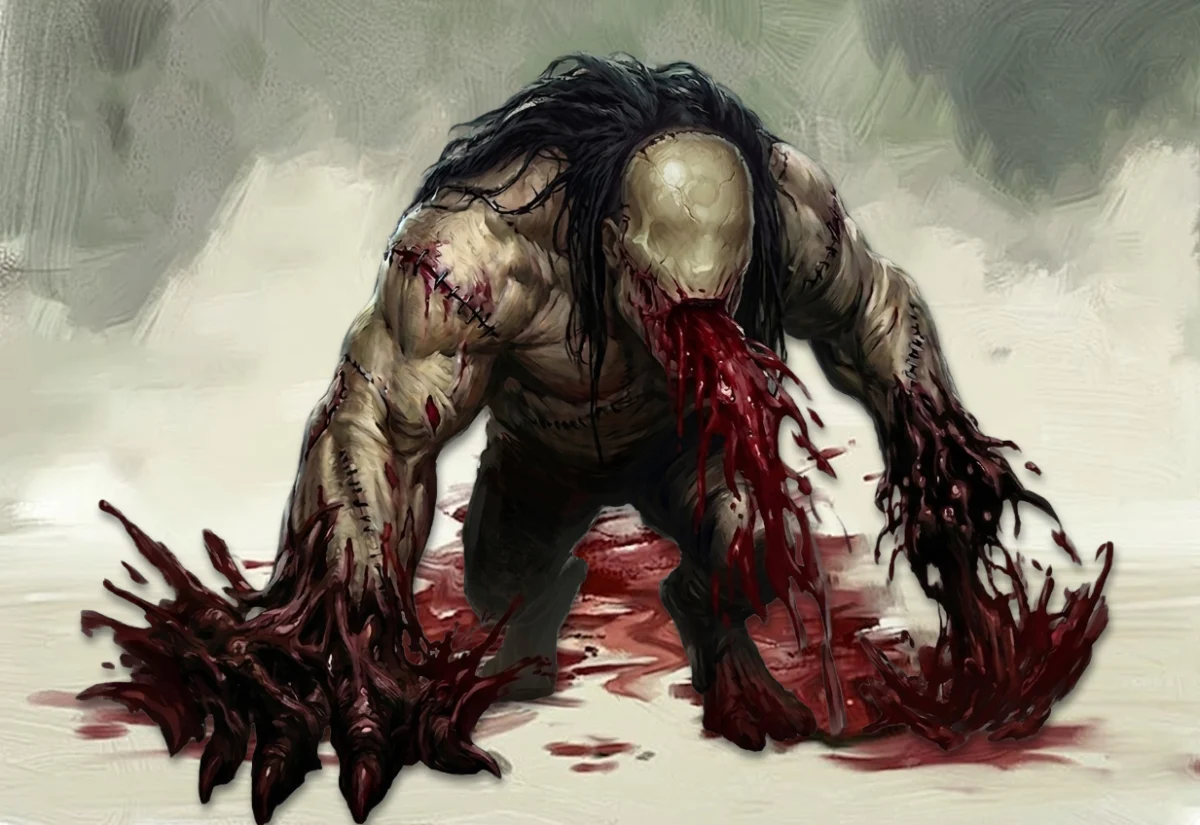
A chilling dossier compiled from ancient texts, modern investigative reports, and the harrowing testimonies of those who have glimpsed the abyss, reveals the existence – and unsettling resurgence – of Ravvan, an entity described as the very embodiment of primal rage and conquest. More than a mere myth, Ravvan appears to be a sentient force, an insidious whisper in the collective unconscious, now increasingly manifest in the physical world through a growing network of adherents and disturbing artifacts. The implications of this revelation extend far beyond a localized cult, suggesting a potential connection to a far grander, more ancient, and deeply malevolent cosmic architecture known only as the Galchutt.
Main Facts: The Beast Unbound by Whispers
Ravvan is not merely a deity; ancient lore paints him as the personification of Rage itself, the primordial Beast lurking in the shadowed heart of all sentient beings. He is the potent, unyielding lust for domination and conquest, inextricably linked to every defiant breath of life. His howls, though often unheard by the common ear, are the primeval song of discord, a dissonant symphony that subtly undermines all attempts at harmony and belies all tongues.
Despite being described as "caged by the Sleep of the Faithful" within an "eternal prison," Ravvan’s influence is far from dormant. The ancient texts speak of his rage beating relentlessly against these formless walls, much like the fervent blood of passion pulses through his veins. This ceaseless struggle manifests as "spurts of rage," where his will becomes momentarily tangible. These are the "whispers of the Beast," an insidious current that flows through what is termed "the red veils of the primal, holy fury," subtly instigating conflict and feeding the darkest impulses of humanity.
Evidence points to a burgeoning cult, dedicated to Ravvan, whose members actively seek to connect with this entity. Their core tenets revolve around a visceral communion, encapsulated in the mantra: "Let his Blood be joined to your own. Let the Beast pulse through your veins. In Ravvan there is strength. In Ravvan there is life. In Ravvan there is truth. Take of his strength. Lust of his life. Heed his truth." This doctrine suggests a desire not merely for worship, but for a profound, almost alchemical merging with Ravvan’s essence, promising immense power and a deeper understanding of existence through primal instinct.
Physical manifestations of this devotion have also surfaced. The most prominent among these is the "Idol of Ravvan," a squat, meticulously carved statue crafted from obsidian. This grotesque effigy depicts a demonic beast, complete with slavering fangs, folded, bat-like wings, serrated horns, and long, vicious claws. Its most striking feature, however, is its eyes, described as being made of "ruby blood," through which "the voice of the Beast rang true." These idols serve as focal points, conduits through which Ravvan’s whispers are amplified, seeking to "deafen the world" with his chaotic pulse.
The entity’s influence is further propagated through what is known as "The Song of Discord." This refers both to the omnipresent, subtly instigating "whispers of Ravvan" that echo "through the chambers of the blood" – implying a deep, instinctual resonance – and to a specific, unsettling prayer-chant utilized by his followers:
The blood, the hunt
The dance, the fire
Return, return, return.
This chant, repeated in hushed tones and fervent rituals, is believed to be a call, a summoning, or perhaps a means of aligning the devotee’s will with Ravvan’s insatiable hunger. Crucially, recent intelligence suggests that Ravvan is not a solitary entity but is, in fact, one of the dreaded Galchutt—an ancient, cosmic race of malevolent beings whose very existence threatens the fabric of reality. This connection elevates Ravvan from a formidable but isolated threat to a potential harbinger of a far greater, epoch-defining conflict.
A Chronology of Whispers and Rising Discord
The story of Ravvan is not one of sudden emergence, but of a slow, insidious creep, a gradual loosening of ancient bonds and a growing resonance within the world’s shadowed corners.
Ancient Chains and Lingering Echoes
The initial confinement of Ravvan, referred to as "the Sleep of the Faithful," is shrouded in the mists of antiquity. While specific dates remain elusive, scholarly consensus among esoteric historians places this event in a primordial era, possibly concurrent with the dawn of advanced civilizations. It is hypothesized that a powerful, concerted effort by a collective known only as "the Faithful"—perhaps a pantheon of benevolent deities, ancient mystics, or a forgotten order of cosmic guardians—succeeded in binding Ravvan. This act was likely born of necessity, stemming from a period of unimaginable chaos and destruction that threatened to consume early sentient life. The "eternal prison" is not a physical structure, but rather a metaphysical containment, a spiritual cage designed to sever Ravvan’s direct influence from the nascent world.
For millennia, Ravvan’s existence was relegated to myth, to the darkest corners of forgotten lore and the cautionary tales of primitive cultures. Yet, even in this state of imprisonment, his essence was never truly eradicated. The "whispers of the Beast" were always present, albeit faint, manifesting as fleeting moments of unprovoked aggression, irrational fear, or sudden, inexplicable outbreaks of violence in isolated communities. These were often dismissed as human failings, the base nature of mortals, rather than the subtle instigations of an external, malevolent force. Over centuries, these echoes are believed to have contributed to the underlying currents of conflict and distrust that have plagued all civilizations, subtly shaping the human psyche towards self-destruction.
The Modern Resurgence: Idols and Incantations
A discernible shift in Ravvan’s influence began to be documented in the last few centuries, intensifying significantly in recent decades. It is hypothesized that the "formless walls" of his prison have begun to weaken, perhaps due to a collective erosion of faith, the increasing density of sentient life, or the sheer weight of accumulated conflict and negative emotion in the world. As these metaphysical barriers attenuated, the "spurts of rage" became more frequent and potent, allowing Ravvan’s will to manifest with greater clarity.
The crafting of the "Idol of Ravvan" appears to be a relatively recent development, a calculated effort by early adherents to give focus to the increasingly distinct whispers. While the exact origin point remains unclear, archaeological fragments suggest that the earliest known idols date back no more than a few centuries, often unearthed in regions historically prone to extreme violence or cultic activity. These early cults, likely small and isolated, served as laboratories for Ravvan’s re-emergence, refining the rituals and doctrines necessary to amplify his presence.
In the contemporary era, the proliferation of these idols and the corresponding increase in cult activity have reached alarming levels. Intelligence agencies and clandestine religious orders report a surge in incidents characterized by extreme, ritualistic violence, often accompanied by the chanting of "The Song of Discord." These incidents are not limited to remote, fringe communities but are increasingly observed within urban centers, infiltrating various societal strata. The modern resurgence indicates a deliberate, coordinated effort by Ravvan’s followers—either through direct divine instruction or shared inspiration—to "deafen the world" with his chaotic pulse, signaling a critical juncture in the long, silent war against this primal entity.
Supporting Data: Manifestations of a Primal Fury
The evidence supporting Ravvan’s existence and burgeoning influence is multi-faceted, drawing from cryptic ancient texts, psychological analyses of cult members, and the disturbing characteristics of artifacts linked to his worship.
The Visceral Doctrine of Blood
At the core of Ravvan’s worship lies a profound and disturbing emphasis on blood, not merely as a symbol, but as a living, pulsating conduit to his essence. The mantra, "Let his Blood be joined to your own. Let the Beast pulse through your veins," speaks to a ritualistic communion that transcends mere symbolic reverence. Investigative reports from raids on suspected cult strongholds often detail scenes consistent with blood sacrifices, both animal and, in more extreme cases, human. While direct evidence of literal blood ingestion remains rare and heavily suppressed, the psychological profiles of apprehended cultists frequently describe an intense, almost physiological craving for violence and a disturbing connection to the sensation of fresh blood.
Psychological analyses reveal that individuals deeply immersed in Ravvan’s doctrine exhibit a marked increase in aggressive tendencies, a profound loss of empathy, and a heightened state of "primal fury." This fury is not merely anger; it is an instinctual, almost ecstatic drive towards destruction and domination, often devoid of rational thought or moral restraint. Cultists describe a sensation of immense "strength" and "life" coursing through them, an intoxicating power that overrides self-preservation and social conditioning. This "truth" promised by Ravvan appears to be a brutalist philosophy: that true existence lies in unbridled aggression and the relentless pursuit of conquest, stripping away the perceived weaknesses of compassion and morality. The frequent occurrence of unexplained, intensely violent crimes in areas where Ravvan’s whispers are reported to be strong further supports the idea of his psychological instigation, transforming latent human aggression into overt, destructive action.
The Obsidian Effigy: A Conduit of Chaos
The "Idol of Ravvan" stands as a chilling testament to the entity’s physical manifestation in the world. Described consistently across disparate findings, the statue is carved from jet-black obsidian, a material often associated with protective magic but here twisted to a malevolent purpose. Its dimensions, typically squat and heavy, lend it an unsettling, immovable presence. The depiction of the demonic beast is meticulously rendered: slavering fangs drip with implied venom, large, bat-like wings are folded menacingly, and serrated horns jut aggressively from its brow. Long, vicious claws, often tipped with what appears to be dried residue, complete the terrifying visage.
However, it is the "eyes of ruby blood" that command the most attention. These are not merely ornamental rubies; forensic analysis on recovered idols has occasionally revealed traces of organic matter within the crystalline structure, hinting at a darker, perhaps alchemical, origin. Through these eyes, devotees believe, "the voice of the Beast rang true," transforming the idol into more than just a symbol. It functions as a potent conduit, focusing and amplifying Ravvan’s "words" – his whispers – making them audible and tangible to those receptive. Reports from covert operatives describe a palpable sense of dread and unease in the presence of these idols, often accompanied by faint, discordant sounds or a disturbing feeling of being watched, suggesting their role in actively projecting Ravvan’s influence. The cult’s aim, to have Ravvan’s "pulse deafen the world" through these idols, underscores their perceived power as instruments of mass psychological manipulation and instigation.
The Anthem of Anarchy: "The Song of Discord"
The "Song of Discord" serves as both a symptom and a catalyst for Ravvan’s spreading influence. The prayer-chant itself is deceptively simple: "The blood, the hunt / The dance, the fire / Return, return, return." Yet, its rhythmic repetition, particularly during cultic gatherings, is reported to induce a trance-like state among adherents, lowering their inhibitions and amplifying their connection to Ravvan’s primal urges. Each line resonates with a specific aspect of Ravvan’s doctrine: "the blood" signifies communion and sacrifice; "the hunt" embodies conquest and predation; "the dance" represents the ecstatic, uncontrolled frenzy of battle; and "the fire" symbolizes destruction and purification through violence. The insistent "Return, return, return" is believed to be a plea for Ravvan’s full manifestation, a desire for the world to revert to a state of primal, unbridled chaos.
Beyond the ritualistic chanting, the "Song of Discord" also encompasses the subtle "whispers of Ravvan" that echo "through the chambers of the blood." This phrase implies a deep, inherent resonance within the human psyche, suggesting that Ravvan does not merely implant new desires, but rather amplifies existing, suppressed urges for violence, dominance, and destruction. These whispers are not always literal voices; they can manifest as sudden, overwhelming urges, irrational hatreds, or a pervasive sense of discontent and antagonism that fuels social unrest, political division, and even large-scale conflicts. The insidious nature of these whispers makes them incredibly difficult to combat, as they often appear to originate from within an individual’s own thoughts, blurring the lines between personal impulse and external malevolent influence.
Official Responses: Denial, Investigation, and Mounting Concern
The world’s authorities, both secular and spiritual, have grappled with the emergence of Ravvan and his cult, oscillating between outright dismissal and increasingly urgent investigation.
Scholarly Dismissal vs. Esoteric Warnings
For centuries, the concept of Ravvan was largely confined to the realm of myth and folklore. Academic institutions, adhering to empirical methodologies, categorized references to such entities as remnants of primitive superstition or allegories for human psychological states. Esoteric scholars and fringe historians, however, maintained vigilance. Groups like the clandestine Order of the Veiled Eye and the more public but often ridiculed Society for Anomalous Arcana continually warned of the cyclical nature of ancient evils and the dangers of dismissing deeply embedded lore. They meticulously cataloged the scattered references to "the Beast," "the primal fury," and "the Sleep of the Faithful," recognizing patterns that mainstream academia ignored.
These warnings were often met with skepticism, sometimes outright scorn. Official religious bodies, while acknowledging the existence of evil, often preferred to attribute unusual phenomena to demonic possession or human depravity rather than a specific, cosmic entity like Ravvan. This scholarly and institutional inertia allowed Ravvan’s influence to grow largely unchecked, as the early whispers were simply incorporated into existing narratives of human imperfection. The struggle for mainstream acceptance of Ravvan as a distinct, external threat has been a significant hurdle, delaying coordinated responses and allowing cultic activity to proliferate under the radar.
Covert Operations and Global Surveillance
As evidence mounted – inexplicable outbreaks of mass hysteria, ritualistic violence, and the discovery of the unsettling obsidian idols – official responses began to shift. Covert intelligence agencies, often operating under the guise of counter-terrorism or organized crime task forces, initiated investigations. These operations, highly compartmentalized, seek to track the spread of Ravvan’s cults, identify key figures, and understand the mechanisms of his influence. Recovered idols and cultic texts are subjected to intense scrutiny by specialized teams of linguists, cryptographers, and arcane specialists, attempting to decipher Ravvan’s true nature and vulnerabilities.
Simultaneously, certain religious organizations, particularly those with deep historical ties to ancient prophecies and demonology, have activated their own internal investigative arms. These groups often possess unique insights into metaphysical threats and are attempting to develop counter-rituals or spiritual defenses against Ravvan’s whispers. However, combating an entity that thrives on internal human desires and manifests as subtle psychological instigation presents an unprecedented challenge. Traditional methods of law enforcement or even spiritual exorcism prove difficult when the enemy is a concept, a feeling, a pervasive influence rather than a physical being. Global surveillance networks are now quietly tasked with identifying patterns of unrest, sudden shifts in public mood, and spikes in aggression that might indicate a direct surge in Ravvan’s chaotic pulse, signaling an urgent, albeit often unacknowledged, global crisis.
Implications: The Shadow of the Galchutt and a World on the Brink
The re-emergence of Ravvan, and especially his identification as a Galchutt, casts a long, chilling shadow over the future of civilization, revealing a threat far more profound than previously imagined.
Ravvan as a Harbinger of a Greater Evil
The crucial revelation that Ravvan is not merely an isolated beast god, but a member of the Galchutt, fundamentally alters the understanding of the current crisis. The Galchutt are an ancient, cosmic race, entities of pure chaos, destruction, and discord whose existence predates many known pantheons and civilizations. They are not merely evil; they embody the very principle of anti-creation, seeking to unravel the structured reality of the cosmos and return it to a state of primal, formless void. If Ravvan, the personification of rage and conquest, is but one facet of this terrifying collective, it implies a coordinated, overarching agenda.
Ravvan’s resurgence, therefore, is not an isolated incident but a potential harbinger, a signal that the greater Galchutt are stirring, their ancient prisons weakening, or their long-dormant plans coming to fruition. His "whispers" and the proliferation of his idols might be part of a grander strategy to destabilize the world, to sow enough discord and generate enough raw, negative energy to facilitate the full return of the Galchutt. The implication is dire: humanity is not simply facing a localized cult or a rogue deity, but an existential threat from entities whose goals are nothing less than the complete unmaking of reality. This elevates the conflict from a terrestrial struggle to a cosmic one, with the fate of worlds hanging in the balance.
The Threat to Civilization and the Nature of Humanity
The potential for widespread societal breakdown due to Ravvan’s influence is immense. If his whispers continue to amplify, fueling hatred, xenophobia, and aggression, the delicate balance of international relations, civil societies, and even interpersonal connections could shatter. Wars, genocides, and senseless acts of brutality would no longer be seen as isolated events but as direct manifestations of Ravvan’s expanding dominion. The promise of "strength," "life," and "truth" offered by Ravvan is a perverse mirror to humanity’s deepest desires, corrupting them into a lust for power at any cost, a life lived through domination, and a truth found in brutal self-interest.
This raises profound philosophical implications about the nature of humanity itself. Is Ravvan merely awakening an inherent, dormant darkness within the human soul, a primal beast that has always existed? Or is he instilling something alien, a corruption that fundamentally alters the human spirit? The answer is critical, as it dictates the potential for resistance. If Ravvan is merely a reflection, then the fight is an internal one, against our own flaws. If he is an external, invasive force, then the battle is against an insidious, cosmic parasite.
The long-term struggle against Ravvan and the Galchutt will not be fought solely on battlefields or in clandestine raids. It will be waged in the hearts and minds of individuals, in the decisions made by leaders, and in the collective will to resist the siren call of primal fury. The stakes are not merely physical destruction, but the very corruption of consciousness, the subjugation of free will, and the transformation of sentient life into mere conduits for universal discord. The world stands on the brink, unknowingly facing an ancient, relentless foe whose ultimate victory would mean not just the end of an era, but the unmaking of existence itself.