The Evolution of Portable Spatial Computing: Unseen Reality Unveils the URXR One
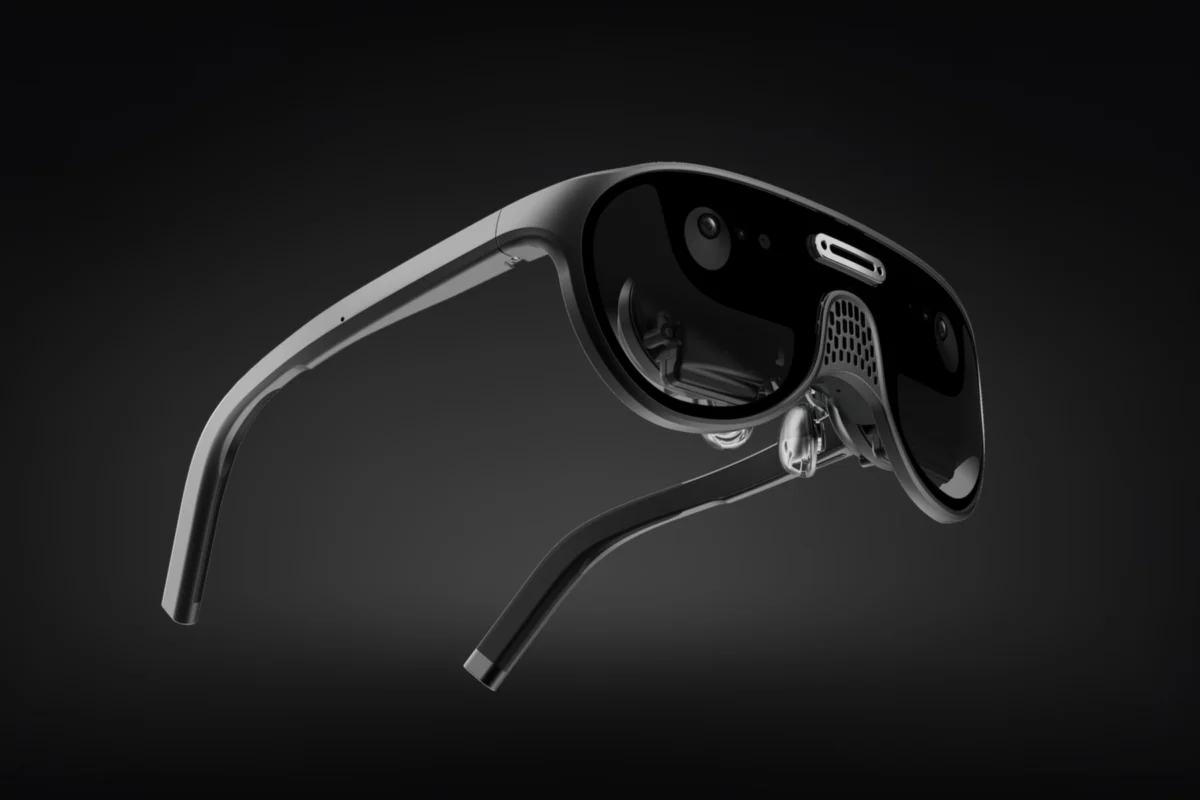
In an era where the boundaries between physical workspaces and digital environments are increasingly blurred, the demand for high-fidelity, portable display solutions has reached a fever pitch. Enter Unseen Reality, a tech firm aiming to disrupt the burgeoning Extended Reality (XR) market with its latest innovation: the URXR One. Positioned not as a traditional VR gaming headset, but as a dedicated "display-replacing" wearable, the URXR One is designed to liberate users from the confines of physical monitors, offering a massive, high-resolution virtual workspace that fits in a pocket.
As the company prepares for its official Kickstarter launch on August 4th, the tech industry is closely watching to see if this 93-gram device can deliver on the promise of true spatial computing for the masses.
Main Facts: Redefining the Display Replacement Category
The URXR One distinguishes itself from the current crop of augmented reality (AR) glasses through its fundamental architecture. While popular competitors like Xreal and Viture utilize "birdbath" optics—which reflect light from a display onto a transparent lens—the URXR One is essentially a miniaturized Virtual Reality (VR) headset utilizing high-end passthrough technology.
A New Approach to Mixed Reality
Unlike transparent AR glasses that often struggle with brightness and "ghosting" in well-lit environments, the URXR One employs a closed-back design with a dual-camera SLAM (Simultaneous Localization and Mapping) tracking system. This allows for a "Mixed Reality" (MR) experience where the outside world is digitized and projected onto internal screens with low latency. This "passthrough" approach, popularized by the Meta Quest 3 and Apple Vision Pro, ensures that virtual screens appear solid and opaque, regardless of the ambient lighting conditions.
Core Specifications at a Glance
The URXR One’s technical sheet is a testament to the rapid miniaturization of optical components:
- Weight: 93 grams (excluding cable).
- Optics: Mini pancake optics for a slim profile and reduced distortion.
- Displays: Dual 1.03-inch micro-OLED panels.
- Resolution: 2,448 x 2,064 per eye, providing approximately 36 Pixels Per Degree (PPD).
- Refresh Rate: 90 Hz for smooth motion.
- Field of View (FoV): 90-degree diagonal (80° horizontal by 56° vertical).
- Tracking: 6-Degrees of Freedom (6DOF) via onboard spatial processing and 3-Degrees of Freedom (3DOF) for stationary viewing.
Chronology: From Concept to Consumer
The journey of the URXR One is entering its most critical phase. Unseen Reality has mapped out a strategic timeline that balances community-driven funding with a long-term manufacturing and refinement cycle.
The Kickstarter Launch (August 4, 2024)
The public debut of the URXR One begins on Kickstarter. This crowdfunding phase serves a dual purpose: securing the initial capital required for mass production and gauging market interest in a high-end, display-centric wearable. Early adopters are being offered a "Super Early Bird" price of $800, a $100 discount off the projected Manufacturer’s Suggested Retail Price (MSRP) of $900.
The Development Gap (2024–2026)
One of the most notable aspects of the URXR One announcement is the projected delivery window. Shipping is currently targeted for mid-October 2026. This two-year lead time is substantial in the technology sector, suggesting that Unseen Reality is currently in the advanced prototyping stage and requires a significant window to finalize the onboard Spatial Processing Unit (SPU) and scale the manufacturing of the custom mini pancake optics.
Market Entry and Ecosystem Expansion
Following the initial shipment to backers, Unseen Reality intends to transition into a traditional retail model. The company has already hinted at a secondary ecosystem of accessories, including the URXR Power Hub, designed to bridge the gap for devices that do not natively support high-power DisplayPort output over USB-C.
Supporting Data: The Engineering Behind the Weight
To understand why the URXR One is generating buzz, one must look at the data surrounding its weight-to-performance ratio. At 93 grams, it is significantly lighter than the Meta Quest 3 (515g) and the Apple Vision Pro (600g+).
Micro-OLED and Pancake Optics
The use of 1.03-inch micro-OLEDs is the linchpin of the device’s design. Micro-OLED technology allows for incredible pixel density (36 PPD) while maintaining a tiny footprint. Because each pixel is its own light source, the URXR One can achieve "true blacks," which is essential for a display-replacement device where users might be watching films or working in dark mode.
The mini pancake optics further reduce the "z-height" of the glasses. Traditional Fresnel lenses require a certain distance between the display and the eye to focus correctly, leading to the "shoebox" shape of older VR headsets. Pancake optics fold the light path multiple times, allowing the displays to sit much closer to the user’s face.

The Power Paradox
Because the URXR One does not feature an onboard battery or a mobile chipset (like a Snapdragon XR2), it offloads the "compute" to the connected device. This design choice is what allows the headset to remain under 100 grams. However, it introduces a power challenge:
- Direct Connection: Laptops and handhelds like the Steam Deck can power the glasses directly.
- The Power Hub Solution: For smartphones and tablets with limited power output, the $69 URXR Power Hub provides a 10,000 mAh reservoir. Data provided by the company suggests this hub can sustain the glasses for three hours while simultaneously slow-charging the host device.
Official Responses and Company Vision
While Unseen Reality is a relatively new player in the spatial computing field, their messaging focuses on "ergonomic productivity." In statements accompanying the product reveal, the company emphasized that the URXR One is built for "long-term user comfort."
Focus on Traditional Content
Unlike Meta or HTC, which focus heavily on immersive 3D gaming and social VR, Unseen Reality is positioning the URXR One for "flatscreen" utility. An official spokesperson noted that the device is optimized for "spreadsheets, films, and traditional gaming." By focusing on 2D content in a 3D space, the company avoids the common pitfalls of VR—such as the lack of high-quality software—by tapping into the user’s existing library of apps on their laptop or phone.
Addressing User Comfort
The inclusion of a manual IPD (Interpupillary Distance) adjustment (58 to 68 mm) and support for custom prescription inserts reflects a commitment to hardware accessibility. Unseen Reality has stated that the dual-camera SLAM system is specifically tuned to reduce motion sickness by ensuring that virtual screens remain "pinned" to the physical environment with sub-millimeter precision.
Implications: The Future of the "Monitorless" Office
The launch of the URXR One carries significant implications for several sectors, from corporate IT to the "digital nomad" lifestyle.
1. The Death of the Physical Monitor?
For professionals who require multiple monitors—such as coders, day traders, and video editors—the URXR One offers a "virtual desk" that can expand a 13-inch laptop screen into a 200-inch multi-monitor setup. If the 36 PPD resolution is sharp enough for text legibility over several hours, it could lead to a shift in how companies outfit their remote workers, favoring lightweight wearables over bulky hardware.
2. The Portability Revolution in Gaming
Handheld gaming consoles like the Steam Deck, ASUS ROG Ally, and Lenovo Legion Go have exploded in popularity. However, their small screens remain a bottleneck for immersion. The URXR One provides a plug-and-play solution for a "theater-sized" gaming experience on a plane or train, potentially becoming the must-have accessory for the handheld gaming market.
3. The 2026 Competitive Landscape
The 2026 shipping date is the project’s greatest risk. By then, Apple will likely have released a more affordable "Vision" headset, and Meta may have perfected its "Orion" AR glasses. Unseen Reality is betting that its specific focus on display replacement and its ultra-lightweight form factor will remain a competitive niche that larger, more "general-purpose" headsets cannot fully satisfy.
4. Privacy in Public Spaces
The URXR One offers a level of privacy that physical screens cannot match. For users working with sensitive data in public areas (like airports or cafes), the ability to view "laptop-sized to 200-inch" screens that are invisible to bystanders is a significant security advantage.
Conclusion
The URXR One represents a calculated gamble by Unseen Reality. By stripping away the internal compute and battery, they have achieved a form factor that finally looks and feels like a pair of glasses rather than a piece of scuba gear. Whether the market is willing to wait until 2026 for this vision of the future remains to be seen, but for now, the URXR One stands as a compelling blueprint for the next generation of portable productivity.
As the Kickstarter goes live this August, the tech world will get its first real look at whether the "Unseen Reality" is ready to become a visible part of our daily lives.