A Cinematic Voyage Through Homer’s Odyssey: From Hollywood Spectacle to Intimate Dramas
The enduring epic of Homer’s Odyssey has captivated audiences for millennia, its tale of a hero’s arduous journey home resonating across cultures and time. This profound narrative, rich with adventure, mythological creatures, and the complexities of the human spirit, has naturally found fertile ground in the visual medium. From the grand spectacles of early Hollywood to more nuanced, character-driven interpretations, the Odyssey has been adapted for film and television countless times. This article delves into a curated selection of these adaptations, exploring their artistic choices, their fidelity to the source material, and their lasting impact on the cinematic landscape, particularly in anticipation of upcoming interpretations.
The challenge of bringing Homer’s epic to the screen is immense. How does one capture the sprawling scope of Odysseus’s ten-year struggle against the whims of the gods, the allure of mythical beings, and his desperate longing for Ithaca? It requires not only a visual flair capable of depicting divine wrath and monstrous encounters but also a profound understanding of the human element at the story’s core: the resilience, cunning, and unwavering determination of its protagonist. The choice of the actor to embody Odysseus is, therefore, paramount. They must possess a commanding presence, a "gravitas," to convey the seasoned warrior and leader, yet also a "smoldering vitality" that speaks to his enduring spirit and his capacity for both heroism and cunning.
A Hollywood Legend Embodies the Wandering King
In the mid-1950s, Hollywood found a potent candidate for this demanding role in Kirk Douglas. His portrayal of Odysseus, under the Latinized name Ulysses, in the eponymous 1954 film Ulysses, remains a significant landmark in Odyssey adaptations. While the film, as highlighted in an insightful video by Underrated Cinema, is admittedly "merciless in its excisions to Homer’s text," it still delivers on the promise of a fantastical Technicolor spectacle. Douglas, with his iconic chin and commanding screen presence, embodied the physical and emotional toll of Odysseus’s journey. The film, benefiting from the visual artistry of Harold Rosson, a veteran cinematographer known for his work on The Wizard of Oz, offers a visually arresting experience that captures the larger-than-life quality of the epic. Despite its narrative compressions, Ulysses serves as a testament to Hollywood’s early attempts to translate the grandeur of ancient mythology to the silver screen, prioritizing visual splendor and a star-powered performance.
The film’s approach, while perhaps sacrificing some of the poem’s intricate plotting and character development for the sake of cinematic pacing and visual impact, succeeded in introducing the core narrative of Odysseus’s return to a global audience. Douglas’s performance, though a product of its time, captured a certain rugged heroism that resonated with viewers, making Ulysses a memorable figure in classic cinema. The decision to employ a more streamlined narrative, focusing on key episodic encounters and the overarching goal of returning home, allowed the film to function as an accessible adventure story, even for those unfamiliar with the intricacies of Homer’s original work.
Tracing the Thread: Faithful Adaptations and Extended Narratives
For viewers seeking a more faithful and comprehensive cinematic experience of Homer’s Odyssey, the Italian miniseries L’Odissea (1968) stands out. Directed by Franco Rossi, a filmmaker who would later gain wider recognition for Quo Vadis?, this ambitious production offers a sprawling and detailed rendition of the epic. It’s crucial to distinguish this from the earlier 1911 Italian silent film, The Odyssey, which was also a remarkable achievement for its time and recently featured on Open Culture. Rossi’s miniseries, however, endeavors to capture a more complete narrative arc.
With a substantial runtime of 446 minutes, L’Odissea provides ample space to explore the myriad challenges Odysseus faces, from his encounters with the sorceress Circe and the monstrous Cyclops to his harrowing passage through the strait guarded by Scylla and Charybdis. While no adaptation can perfectly encompass every nuance of Homer’s verse, this Italian production comes remarkably close, offering a rich tapestry of the epic’s events and characters.
The casting of Bekim Fehmiu as Odysseus is a notable choice. Fehmiu, a Yugoslavian actor who experienced a brief surge in international stardom, brought a unique intensity to the role. While his performance might be a matter of personal taste, it undeniably contributed to the series’ distinctive flavor. The sheer duration of the miniseries allows for a deeper immersion into Odysseus’s world, enabling viewers to experience the full weight of his suffering, his resourcefulness, and his unwavering commitment to his family and homeland. The production’s commitment to detail, from the costumes and set designs to the portrayal of the various mythical creatures and divine interventions, further enhances its appeal to enthusiasts of classical literature and epic storytelling.
The Modern Interpretation: Star Power and Shifting Focus
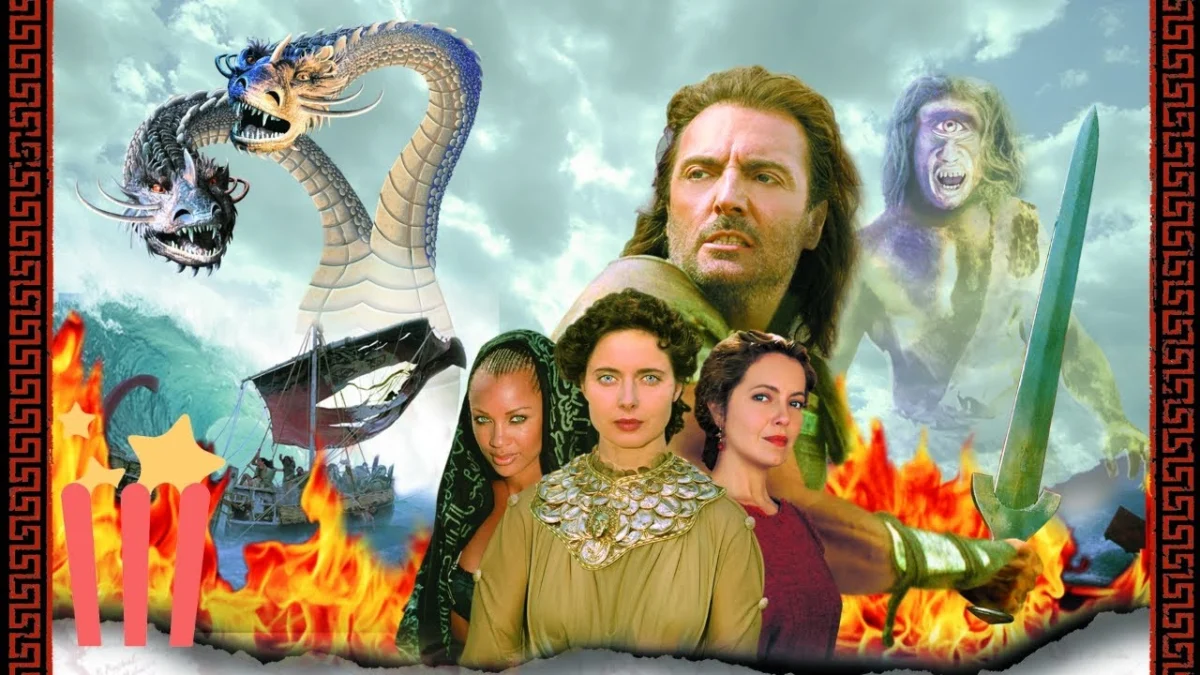
In 1997, NBC presented its own take on the epic with a miniseries simply titled Odyssey. This production boasted an impressive ensemble cast, including Armand Assante in the pivotal role of Odysseus. Assante, known for his diverse portrayals across film and television, brought a commanding presence to the titular hero. The series also featured a constellation of notable actors, such as Isabella Rossellini, Bernadette Peters, Christopher Lee, and Vanessa Williams, adding significant star power and drawing a wider audience.
Shot in the authentic Mediterranean locales, the production aimed for a sense of grandeur and historical realism. Directed by Andrei Konchalovsky, a former collaborator of Andrei Tarkovsky, the miniseries benefited from a director with a keen eye for visual storytelling. However, despite these strengths, the Odyssey of the nineties has not remained as prominently in the cultural consciousness as some other adaptations. This is perhaps attributable to its visual effects, which, while impressive for their time, may now appear somewhat dated to contemporary viewers.
The NBC miniseries, while featuring a star-studded cast and aiming for a grand production, also navigated the challenges of condensing Homer’s complex narrative for a television audience. The decision to cast established actors in supporting roles likely aimed to elevate the perceived quality and appeal of the production. The use of real Mediterranean locations undoubtedly lent an authentic backdrop to Odysseus’s arduous journey, immersing viewers in the historical and geographical context of the epic. While its visual effects might be a point of contention for modern audiences, the performances and the overall ambition of the miniseries still warrant consideration within the broader landscape of Odyssey adaptations.
Reimagining the Return: Intimacy and Character-Driven Narratives
In stark contrast to the grand visual spectacles, Pier Paolo Pasolini’s 1997 film The Return offers a profoundly intimate and character-driven interpretation of Homer’s Odyssey. Released just a year before the NBC miniseries, Pasolini’s film focuses exclusively on the latter half of the epic, dramatizing the reunion of Odysseus and Penelope. This deliberate choice shifts the narrative’s emphasis from the external adventures and monstrous encounters to the deeply human drama of reconciliation and the restoration of order.
A key aspect of The Return‘s distinctiveness lies in its minimal reliance on visual effects. Pasolini’s approach prioritizes the emotional resonance of the story, focusing on the psychological and relational dynamics between the characters. This allows for a more profound exploration of the reunion, a moment of immense emotional weight and significance in the original epic. The film’s strength lies in its ability to convey the essence of Odysseus’s homecoming through powerful performances and subtle storytelling, rather than relying on fantastical elements.
The casting of Ralph Fiennes as Odysseus and Juliette Binoche as Penelope is a testament to Pasolini’s vision. With actors of such caliber, the film can delve into the complexities of their characters’ emotions and motivations, making the reunion feel earned and deeply moving. This approach underscores the idea that even without the fantastical elements of sirens or sea monsters, the core of the Odyssey—the enduring power of love, loyalty, and the human desire for home—remains potent. Pasolini’s interpretation suggests that the true spectacle of the Odyssey lies not in the monsters faced, but in the profound human connections that anchor Odysseus’s long journey.
The Enduring Appeal of the Odyssey: Themes and Adaptational Choices
The diverse range of Odyssey adaptations reflects the multifaceted nature of Homer’s epic. Each interpretation, whether it leans towards grand spectacle or intimate character study, grapples with the core themes of homecoming, identity, perseverance, and the human relationship with the divine. The decision to include or omit certain mythological creatures, such as the Cyclops, Sirens, Scylla, and Charybdis, often serves as a barometer of the adaptation’s overall artistic intent. While many productions find it almost obligatory to feature the iconic Cyclops scene, others opt for a more restrained approach, prioritizing psychological realism over fantastical elements.
The effectiveness of an adaptation often hinges on its ability to translate the epic’s grand themes into a visually compelling and emotionally resonant narrative. The choice of lead actors plays a crucial role in this translation. The gravitas and vitality required for Odysseus are qualities that resonate differently in various performances. Similarly, the portrayal of Penelope, the steadfast wife awaiting her husband’s return, offers opportunities for nuanced character development.
The existence of these varied adaptations, from the early Hollywood epic to more contemporary, character-focused films, demonstrates the enduring power and adaptability of Homer’s Odyssey. Each generation finds new ways to engage with this timeless story, reinterpreting its themes and characters for a modern audience. As new adaptations, including those by prominent filmmakers like Christopher Nolan, are anticipated, the cinematic exploration of Odysseus’s journey continues to evolve, ensuring that this foundational work of Western literature remains a vibrant and relevant source of inspiration. The ongoing fascination with the Odyssey is a testament to its profound insights into the human condition, its universal themes of journey and return, and its boundless capacity to be reimagined for every era.
Related Content:
- Watch the First Spectacular Film Adaptation of the Odyssey (1911)
- Hear What Homer’s Odyssey Sounded Like When Sung in the Original Ancient Greek
- A Walk Through Homer’s Odyssey: A Guide to the Epic Before Seeing Christopher Nolan’s Film
- Christopher Hitchens Explains Why Homer’s Odyssey Still Matters to Our World (2000)
- The Origins of the Monsters in Homer’s Odyssey: The Cyclops, Sirens, Scylla & More
- Greek Myth Comix Presents Homer’s Iliad & Odyssey Using Stick-Man Drawings