The Sound of Infringement: London High Court Delivers Decisive Victory to Hasbro in ‘Peppa Pig’ vs. ‘Wolfoo’ Copyright Battle
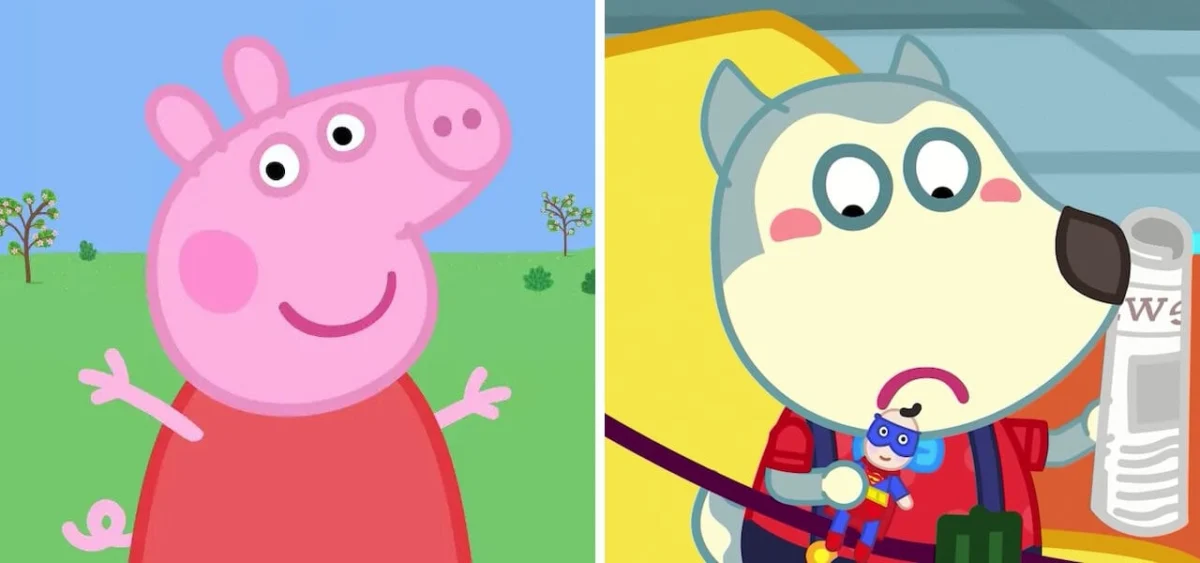
In a landmark ruling that reverberates through the global animation industry and the sprawling landscape of digital content creation, the London High Court has found in favor of Hasbro and its subsidiary Entertainment One (eOne) in their long-standing legal battle against the Vietnamese production house SConnect. The dispute, centered on the allegedly derivative nature of the popular YouTube series Wolfoo in relation to the world-renowned Peppa Pig franchise, has concluded with a stern judgment regarding "prolific" and "longstanding" copyright infringement.
The court’s decision marks a significant moment for intellectual property (IP) protection in the age of YouTube "content farms." It highlights the increasing sophistication of legal scrutiny applied to digital-first media companies that may attempt to bypass traditional creative processes by utilizing existing assets from established brands.
Main Facts: A Verdict Against Systematic Audio Appropriation
The core of the High Court’s ruling rests on the discovery that SConnect, the studio behind Wolfoo, systematically utilized audio assets belonging to the Peppa Pig franchise. While the visual similarities between the two shows—both featuring anthropomorphic animals in minimalist, brightly colored settings with preschool-centric themes—were the initial focus of public discourse, the legal hammer fell hardest on the unauthorized use of sound.
A London High Court judge has ordered the immediate removal of infringing Wolfoo videos from major online platforms, most notably YouTube. This injunction follows a forensic examination of a vast library of content produced by SConnect. The court found that the Wolfoo series repeatedly integrated audio clips taken directly from Peppa Pig, including:
- Character Voices: Specific vocalizations and distinctive tones of the main characters.
- Common Expressions: Iconic exclamations such as "Hooray!" and other signature catchphrases.
- Environmental Sound Effects: Unique audio cues that have become synonymous with the Peppa Pig brand.
The court characterized the infringement as "prolific," noting that the copying was not an isolated incident but a foundational element of the Wolfoo production strategy over several years. Of a sample of 92 English-language videos examined, every single one contained infringing audio. Furthermore, roughly 75% of the foreign-language videos analyzed also contained material misappropriated from the Peppa Pig master recordings.
Chronology: The Road to the High Court
The legal friction between the British-born pig and the Vietnamese wolf did not happen overnight. It is the culmination of years of escalating tension as Wolfoo grew from a niche YouTube channel into a global digital juggernaut.
- 2004: Peppa Pig, created by Neville Astley and Mark Baker, premieres on Channel 5 in the UK. It quickly becomes a global phenomenon, eventually reaching over 180 territories.
- 2018: SConnect launches Wolfoo on YouTube. The series, featuring a young wolf and his family, mimics the pacing, educational tone, and aesthetic style of Peppa Pig.
- 2019: Toy giant Hasbro acquires Entertainment One (eOne) for $3.8 billion, bringing the Peppa Pig IP under its corporate umbrella.
- 2020–2021: Hasbro and eOne begin monitoring the rapid rise of Wolfoo, noting similarities that go beyond mere "genre tropes." Concerns are raised regarding "passing off"—a legal concept where one product is designed to deceive consumers into thinking it is associated with another brand.
- January 2022: eOne and Astley Baker Davies officially file a lawsuit in London against SConnect. The suit alleges copyright infringement, trademark violations, and passing off. Concurrent legal actions are explored in other jurisdictions, including Russia and Vietnam.
- 2023: Hasbro sells a majority of eOne’s film and TV assets to Lionsgate but strategically retains the Peppa Pig brand, signaling its intent to protect its crown jewel.
- 2024–2026: The case moves through the discovery phase. Forensic experts are brought in to conduct spectrogram analyses of the audio tracks in Wolfoo episodes.
- July 2026: The London High Court issues its summary judgment, granting Hasbro a sweeping injunction and confirming the systematic nature of the copyright breaches.
Supporting Data: Forensic Spectrograms and the "Smoking Gun"
The turning point in the case was the move from subjective visual comparisons to objective forensic data. While SConnect argued that the visual style of Wolfoo was an original interpretation of the preschool genre, Hasbro’s legal team presented "spectrogram analysis"—a visual representation of the spectrum of frequencies of a signal as it varies with time.

By overlaying the audio frequencies of Peppa Pig episodes with those of Wolfoo, experts demonstrated an exact match in the sound waves. This provided irrefutable evidence that the audio was not merely "similar" or "inspired by," but was a direct digital copy of the original source files.
The scale of the data presented to the court was staggering:
- Sample Size: 92 English-language videos were submitted as a representative sample of SConnect’s output. 100% of these were found to contain infringing audio.
- Global Reach: The analysis extended to SConnect’s multi-language channels (including Spanish, Portuguese, and Vietnamese versions). Three-quarters of these videos were found to have retained the stolen audio tracks, even when the dialogue was dubbed.
- Persistence: Evidence showed that even after Hasbro issued initial "takedown" notices via YouTube’s Content ID system, SConnect allegedly re-uploaded infringing content to secondary channels to circumvent the strikes.
Official Responses and the Failed "Contractor Defense"
Throughout the proceedings, SConnect maintained a defense that sought to distance the company’s leadership from the infringing acts.
SConnect’s Defense:
The Vietnamese company acknowledged that Peppa Pig audio had appeared in videos produced before mid-2020. However, they blamed an "independent contractor" for the inclusion of these assets, claiming that the company’s internal management was unaware of the source of the sounds. They further argued that all content produced after 2020 utilized original, in-house audio and that any removal orders should be strictly limited to the specific videos analyzed in court.
The Court’s Rebuttal:
The High Court judge rejected these arguments. Under UK copyright law, a company remains vicariously liable for the infringing actions of its contractors if those actions are performed in the course of business. Furthermore, the judge found evidence that the infringement did not stop in 2020. The court noted that "infringing material continued to appear" well after SConnect claimed to have cleaned up its production process.
Hasbro’s Position:
Following the verdict, spokespeople for Hasbro emphasized that the legal action was necessary to protect the integrity of their creative work and the safety of the preschool audience. "The unauthorized use of our intellectual property is not just a commercial issue; it is a matter of brand trust," the company stated in a briefing. "Parents and children rely on the Peppa Pig brand for a specific quality and standard of content. We will continue to take all necessary steps to ensure our IP is not exploited by third parties."
Implications: A New Era of Global IP Enforcement
The repercussions of this ruling extend far beyond a single pig and a wolf. This case sets several vital precedents for the 21st-century media landscape.
.png)
1. The "YouTube Content Farm" Reckoning
For years, the "Wild West" of YouTube animation has seen a proliferation of shows that skirt the edges of copyright. These channels often use high-volume production models to capture the attention of children through algorithmic optimization. The Wolfoo ruling serves as a warning that "looking like" a popular brand is a legal risk, but "sounding like" one is a definitive liability.
2. Broad Jurisdictional Reach
One of the most significant aspects of the judge’s order is its geographic scope. SConnect argued that a UK court should not have the authority to dictate content availability in Vietnam or the US. However, the court granted a broad injunction covering the UK, the European Union, the United States, and Vietnam. This was justified under international copyright treaties, such as the Berne Convention, which allows for the cross-border enforcement of intellectual property rights.
3. The End of the "Rogue Employee" Excuse
The court’s refusal to accept the "independent contractor" defense reinforces corporate accountability. Companies can no longer claim ignorance of their own production pipelines. In the digital age, where assets are easily shared and manipulated, the onus is on the publisher to verify the provenance of every frame and every sound effect.
4. Financial and Operational Impact on SConnect
With billions of views across its network, SConnect faces a massive operational crisis. The requirement to remove infringing videos—many of which are their most-viewed assets—could result in millions of dollars in lost ad revenue. Furthermore, the damage to their reputation may affect future licensing and merchandising deals, which are the lifeblood of any preschool franchise.
Conclusion
The London High Court has sent a clear message: the digital frontier is not a lawless zone. As Hasbro celebrates a hard-won victory for Peppa Pig, the rest of the animation world is taking note. The era of "close-enough" imitation and asset misappropriation is facing a new level of forensic and legal accountability. For SConnect, the path forward will require a total overhaul of their creative process, proving that in the world of high-stakes animation, it takes more than a "Hooray!" to build a lasting legacy.