The Architecture of Entropy: John Wilson’s ‘The History of Concrete’ and the Art of Finding Meaning in the Mundane
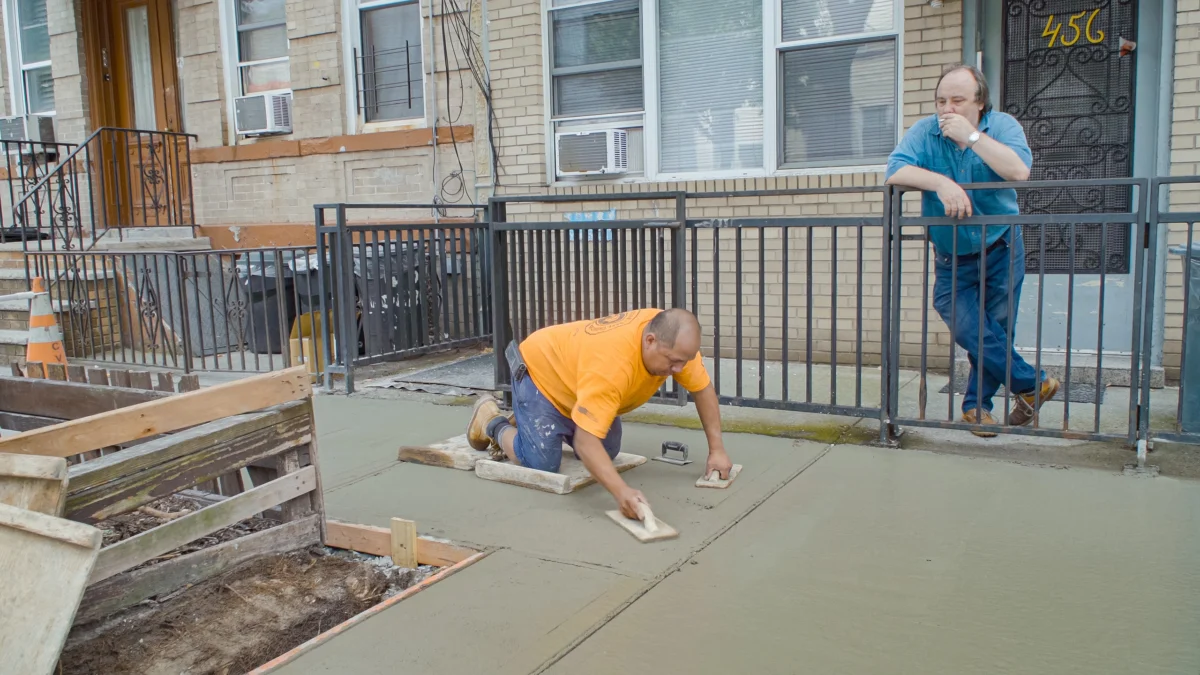
The transition from a beloved, niche television series to the high-stakes arena of feature filmmaking is a path littered with the remains of creators who lost their voice in the expansion. However, for John Wilson—the documentary filmmaker who turned obsessive urban observation into an art form with HBO’s How to With John Wilson—the leap to the silver screen feels less like a departure and more like a structural reinforcement.
His debut feature, The History of Concrete, which premiered to critical acclaim at the 2026 Sundance Film Festival, serves as a 100-minute expansion of his singular aesthetic. Distributed by Magnolia Pictures, the film is a sprawling, hilarious, and ultimately devastating meditation on why humans build things that are destined to fall apart. By using the world’s most ubiquitous building material as a focal point, Wilson constructs a narrative that bridges the gap between the trivialities of modern life and the crushing weight of existential dread.
Main Facts: A Feature-Length Evolution
John Wilson has built a career out of being a "Dantean scavenger," a filmmaker who scours the streets of New York City and beyond for the discarded, the awkward, and the accidentally poetic. The History of Concrete retains the DNA of his television work: the first-person "shaky-cam" footage, the deadpan, inquisitive voiceover, and the rapid-fire visual puns that transform mundane cityscapes into a surrealist comedy.
The film’s primary objective is ostensibly to trace the lineage of concrete—from the architectural marvels of ancient Rome to the 3D-printed Starbucks of the modern era. However, the true subject is Wilson himself. Reeling from the conclusion of his HBO series, Wilson uses the film to navigate his own "jobless uncertainty." The movie functions as a meta-commentary on the creative process, asking two parallel questions:

- What does a creator do when their foundational project ends?
- How does one find peace in a world where even the most solid structures—highways, skyscrapers, and careers—have an expiration date?
The film received a grade of A- from critics, who praised its ability to find "semi-logical associations between literally anything," ranging from the late rapper DMX to the meticulous preservation of tattooed skin.
Chronology: From the End of ‘How To’ to the Streets of Rome
The narrative arc of The History of Concrete begins in the immediate aftermath of the How to With John Wilson series finale. Wilson opens the film with a candid reflection on the "space between projects," a period defined by a lack of direction and a dwindling sense of purpose. This personal vacuum is represented visually by a phallic hot dog sign, a classic Wilson-esque nod to the absurdity of commercial iconography.
From this state of inertia, the film follows a non-linear but emotionally coherent path:
- The Landlord Era: Wilson reflects on his life as a landlord in Ridgewood, Queens, dealing with 49-cent royalty checks and the literal "flooded basements" of his past.
- The Search for Permanence: Seeking a substance that lasts longer than a television contract, Wilson turns his attention to concrete. This leads him to Rome, where he examines the Pantheon—a structure that has survived for millennia thanks to the Roman mastery of cement.
- The Modern Crumble: The film shifts to Las Vegas for a brick-laying contest and eventually to a Canadian warehouse where Hallmark Christmas movies are filmed. Here, Wilson begins to contrast the "false permanence" of modern infrastructure with the manufactured comfort of cinematic formulas.
- The Human Element: Along the way, Wilson encounters Jack Macco, a part-time rock-and-roller and tequila sampler. Macco becomes the film’s emotional anchor, representing the "push-and-pull between creation and inertia."
The film culminates in a "wildly unexpected personal revelation" involving Macco that ties the history of construction back to the core human experience of grief and loss.

Supporting Data: The 40-Year Paradox
The central tension of the film is built upon a startling engineering fact: while we view concrete as the bedrock of civilization, modern concrete typically only lasts about 40 years before it begins to degrade. Wilson uses this statistic as a metaphor for the human condition.
He populates the film with data points that highlight the intersection of the permanent and the ephemeral:
- The 3,100-Mile Race: Wilson documents the Sri Chinmoy Self-Transcendence Footrace in Brooklyn, an ultramarathon where runners circle a single city block for weeks. It is a testament to human endurance on a path of unyielding concrete.
- The GumBusters: He profiles a business dedicated to power-blasting old chewing gum off New York City sidewalks, a Sisyphean task that mirrors Wilson’s own attempts to "clean up" the chaos of his footage.
- The Preservation of the Dead: In one of the film’s more macabre detours, Wilson visits a tattoo artist who preserves the skin of the deceased. This serves as the ultimate "bid for immortality," parallel to the way people scratch their names into wet cement.
These disparate elements are woven together through Wilson’s signature editing style, which suggests a "sleeping brain straining to organize chaos into order."
Official Responses and Critical Consensus
Initial reactions from the 2026 Sundance Film Festival suggest that The History of Concrete is being viewed as a landmark in the "essay film" genre. Critics have noted that Wilson has managed to maintain his "alien kindergartner" perspective—a term used to describe his ability to look at human behavior with a mix of confusion and profound empathy—without the work feeling repetitive.

Industry Analysis:
Magnolia Pictures’ decision to release the film in theaters on September 18 reflects a growing appetite for "slow cinema" that utilizes humor to tackle heavy philosophical themes. Analysts suggest that Wilson’s work appeals to a demographic that seeks an "evidence board against meaninglessness."
Critical Reception:
Reviewers have highlighted the film’s "Dantean" quality, noting that Wilson acts as a guide through the purgatory of modern existence. The comparison to Hallmark movies is particularly noted; Wilson argues that just as Hallmark provides a "divine predictability" for its audience, his own "formula" of stringing together random clips provides a necessary shield against the "merciless world."
Implications: Building a Case Against Nihilism
The broader implications of The History of Concrete extend beyond the world of independent film. Wilson’s work suggests a new way of processing the "information overload" of the 21st century. By finding connective tissue between Kim Kardashian, public diarrhea, and ancient Roman architecture, Wilson posits that meaning is not something we find, but something we manufacture.
Key Thematic Implications:

- The Acceptance of Decay: The film forces the audience to confront the fact that even our most solid achievements are temporary. By acknowledging the 40-year lifespan of concrete, Wilson encourages an acceptance of the "transience of all things."
- The Power of the Formula: Wilson’s defense of the Hallmark Christmas movie formula serves as a poignant reminder that humans need structure—even inauthentic structure—to enjoy living in a chaotic universe.
- The Individual as Infrastructure: Through characters like Jack Macco, Wilson suggests that the real "backbone of modern infrastructure" isn’t the material we walk on, but the eccentric, grieving, and resilient people who inhabit it.
Ultimately, The History of Concrete is a self-portrait of a man trying to balance the act of letting go with the instinct to hold on. It is a film that recognizes the world is crumbling, but suggests that the act of filming the debris might be enough to keep the walls from closing in—at least for another 40 years.
Film Details:
- The History of Concrete
- Director: John Wilson
- Grade: A-
- Release Date: September 18 (Theatrical)
- Distributor: Magnolia Pictures
- Runtime: 100 Minutes