The Chilling Echo of Disbelief: How ’90s Teen Horror Explored Gaslighting and Female Resilience
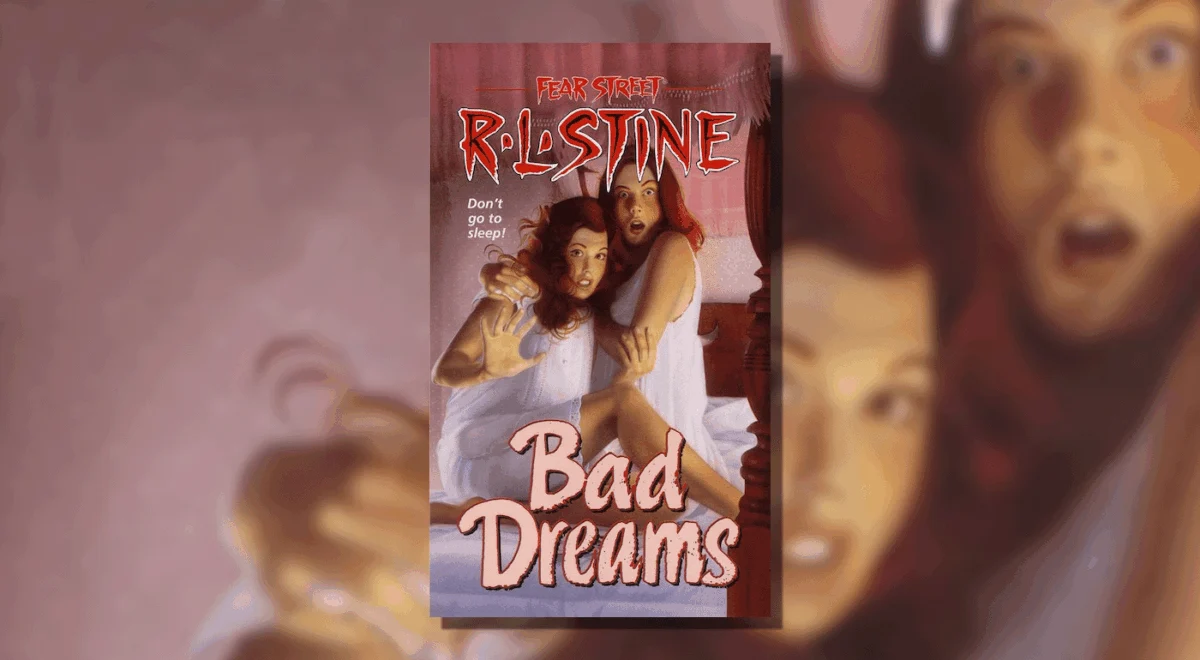
The landscape of 1990s teen horror was a vibrant, often bizarre, tapestry woven with supernatural occurrences, reanimated corpses, body-swapping antics, and even extraterrestrial meddling. Yet, amidst these fantastical threats, a more insidious terror frequently emerged: the systemic invalidation of young women’s experiences. While characters grappled with the sheer unlikeliness of ghosts or aliens, a far more chilling reality was the pervasive dismissal of their warnings, often under the guise of concern for their sanity. This profound theme of gaslighting – the act of manipulating someone into doubting their own perceptions or sanity – is powerfully explored in two seminal works of the era: Diane Hoh’s The Fever (1992) and R.L. Stine’s Fear Street entry, Bad Dreams (1994). Both novels meticulously chronicle the perilous journeys of protagonists Duffy Quinn and Maggie Travers, who, despite mounting evidence, find their cries for help met with skepticism, their fears discounted, and their mental stability questioned, ultimately placing them in mortal danger. This article delves into the narrative construction of these harrowing tales, examining how they underscored the critical importance of trusting one’s instincts in a world all too eager to silence young female voices.
Main Facts: The Perilous Price of Pervasive Doubt
In the realm of ’90s teen horror, protagonists often faced dangers that defied conventional explanation. However, the core "main fact" uniting Duffy Quinn and Maggie Travers is not merely the presence of a threat, but the universal disbelief they encounter when attempting to articulate that threat. In The Fever, Duffy, battling a debilitating illness in a seemingly innocuous hospital, begins to experience a series of terrifying near-death incidents and alarming discrepancies in her medical care. Each attempt to voice her concerns is met with condescension and dismissiveness from medical staff and even her own friends, who attribute her experiences to delirium or an overactive imagination. Similarly, in Bad Dreams, Maggie, reeling from a family tragedy and a move to a new, unsettling house, is haunted by recurring nightmares that soon bleed into her waking reality. Her increasingly desperate attempts to convey the tangible danger she faces are tragically misinterpreted by her mother as symptoms of psychological distress, leading to suggestions of therapy rather than protection from a very real, homicidal threat. Both narratives converge on the stark reality that the immediate danger to these girls is amplified by the systemic failure of those around them to listen and believe, transforming their environments into crucibles of both physical and psychological torment.
Chronology: A Descent into Disbelief and Danger
The journeys of Duffy and Maggie unfold with a chilling linearity, each incident of peril meticulously followed by a chorus of dismissal, deepening the sense of isolation and urgency.
"The Fever": A Hospital of Horrors
Duffy Quinn’s nightmare begins not with a monster, but with a mundane illness. Hospitalized at the anachronistic Twelvetrees Community Hospital for a severe flu, her weakened state ironically makes her an easier target for gaslighting.
Setting the Scene: Twelvetrees Community Hospital
Hoh masterfully crafts the hospital itself into a character of Gothic dread. Far from a beacon of modern healing, Twelvetrees is described as "A tall grim structure of worn gray stone, sparsely covered with wilting ivy, it towered menacingly over the street […] Visitors entering by the wide stone steps puzzled over the thick odor of mold and mildew. They did not realize that the building itself was gradually decaying from the dampness that began at its base and slowly but steadily made its way up the stone" (3). This decaying edifice, plagued by constant elevator malfunctions and frequent power outages—a truly terrifying prospect in a medical facility—establishes an immediate atmosphere of unease and vulnerability. This unsettling environment is further complicated by the presence of numerous high school classmates working there: Dylan as a custodian, Amy and Cynthia as volunteers, and the enigmatic new orderly, Smith. The interpersonal drama among these teens provides a deceptive veneer of normalcy, masking the sinister undercurrents within the hospital walls.
Duffy’s Ordeal Begins
From her very first night, Duffy’s fevered haze is punctuated by a terrifyingly lucid experience: an altercation in her room, complete with sounds of a struggle and a terrified plea: “No! Please don’t!” (1, emphasis original). Despite the absence of another patient in her room, her report is immediately brushed aside by staff, who condescendingly attribute it to nurses checking on her. This initial dismissal sets a dangerous precedent. As her physical condition slowly improves, the incidents escalate from auditory hallucinations to direct physical threats. A near-fatal fall down an elevator shaft, a runaway wheelchair plummeting down a steep hill, and a brutal attack in a shower room are all met with a chilling lack of accountability from the hospital. Instead, the blame is subtly shifted onto Duffy herself: she was out of her room, she might have tampered with the wheelchair, she went to the shower without permission. The narrative constructs a scenario where the victim is consistently held responsible for the failures of her environment and the malicious actions of another.
Escalating Dangers and Dismissal
The most damning evidence of medical malfeasance emerges when Duffy begins experiencing new, unsettling symptoms: nausea, dizziness, and an odd "halo effect" around lights. Overhearing a doctor’s frantic search for missing heart medication, accompanied by a warning to staff about patients exhibiting precisely these symptoms, Duffy connects the dots. Yet, when she tries to voice her suspicion that she might be receiving the wrong medication, she is met with infuriating dismissal. She is scolded as a "difficult patient" and ordered to simply comply. This pivotal moment underscores the theme of medical gaslighting, where a patient’s valid concerns about their own body and treatment are not only ignored but actively suppressed by those in authority. It is only through the clandestine help of her friend Jane, whose brother works in a lab, that Duffy’s suspicions are confirmed: she has indeed been poisoned with the missing heart medication.
The Truth Unveiled
Empowered by this concrete proof, Duffy resolves to escape. However, before she can flee, an assailant attempts to murder her in her room. Her desperate fight leads her to the hospital’s morgue, where she encounters Cynthia, the ambitious volunteer. The revelation of Cynthia as the perpetrator is a meticulously constructed twist. Driven by the fear of her burgeoning medical career being jeopardized, Cynthia had accidentally caused the death of the hospital’s wealthy benefactor, Victor Latham, by misfiling his penicillin allergy information. Duffy’s best friend, Kit, who had witnessed Cynthia with Latham’s file, was then murdered by Cynthia in Duffy’s room to silence him. His body was disposed of in a quarry, and a fabricated rumor of his departure for California was circulated—a rumor Duffy had, tragically, believed. The morgue confrontation is a brutal climax, with Duffy fighting for her life against a seemingly unassuming classmate. Her eventual triumph, blinding Cynthia with bug spray, stabbing her with a hypodermic needle, and knocking her down with a rolling shelf, is a testament to her resilience. The subsequent, belated apology from her friends – "We’re all really sorry we didn’t believe you" (184) – rings hollow, highlighting the immense cost of their collective skepticism.
"Bad Dreams": A Nightmare Made Real on Fear Street
R.L. Stine’s Bad Dreams anchors its terror in a deeply personal space: the protagonist’s mind and her new home. Maggie Travers, her sister Andrea, and their mother relocate to a house on the infamous Fear Street after the sudden death of their father. This traumatic loss becomes a fertile ground for Maggie’s subsequent psychological invalidation.
A Traumatic Move and a Troubling Bed
The move to Fear Street is fraught with tension. The sudden death of their father leaves the family financially strained, forcing them to abandon their affluent North Hills home. Maggie and Andrea’s already strained sibling relationship is exacerbated by the move, culminating in an argument over an antique canopy bed left by the previous owners. Maggie claims the bed, only to discover later from neighbors that Miranda, the girl who previously occupied the room, was brutally murdered in it. Initially, Maggie herself rationalizes her recurring nightmare of a young woman being murdered in her bed as a natural response to grief, trauma, and the unsettling new information about the house’s past.
The Nightmare Manifests
However, the line between dream and reality rapidly blurs. Maggie’s nightmares begin to manifest in horrifying real-world events. Competitors on her swim team, Dawn and Tiffany, are attacked, effectively eliminating them from an All-State competition. A knife is found plunged into Maggie’s own pillow. Her initial suspicion falls on her perpetually hostile sister, Andrea, a plausible assumption given their intense rivalry. This theory is shattered one night when Maggie awakens to find the girl from her nightmare standing over her bed, knife in hand. The chilling confirmation – a calm nod when Maggie asks, “Are you—a ghost?” (111, emphasis original) – precedes a direct attempt on her life. Maggie’s screams bring her mother, but the attacker vanishes before she arrives. The mother’s response is devastatingly telling: "Don’t worry. I’ll get you help. I’ll get you help right away, dear. We’ll find a good doctor. You’ll be okay. I know you will” (113). This immediate leap to psychological intervention, rather than an investigation into an attempted murder, leaves Maggie isolated and vulnerable, dismissing her experience as a symptom of mental illness rather than a cry for help.
Unmasking the Attacker
Determined to uncover the truth, Maggie ventures into the house’s attic, where her mother has moved the canopy bed, hoping to remove the "trigger" for Maggie’s perceived delusions. There, she confronts her attacker, who is very much alive. The "ghost" is revealed to be Gena, Miranda’s sister, who had been institutionalized for Miranda’s murder and had escaped, living undetected in the Travers’ attic. Gena, driven by a twisted sense of sibling loyalty and projection, saw in Maggie a reflection of her "mean" sister Miranda and, witnessing the animosity between Maggie and Andrea, decided Maggie too must die. The revelation that Gena had also been behind the attacks on Dawn and Tiffany, all "for" Andrea, briefly leads Maggie to suspect her sister’s complicity. However, Andrea is genuinely horrified by Gena’s confession. In a rare moment of unity and self-preservation, the sisters finally collaborate, subduing Gena by wrapping and restraining her with the bed’s canopy cloth—a climactic act of sisterly solidarity against a shared, deadly threat.
Supporting Data: The Thematic Threads of Disbelief
Beyond their individual plots, The Fever and Bad Dreams offer compelling "supporting data" for a broader analysis of ’90s teen horror and its engagement with significant social themes.
The Pervasive Pattern of Disbelief
The most striking commonality between the two novels is the systematic and often dangerous disbelief faced by the protagonists. In The Fever, Duffy’s credibility is eroded by her illness; her feverish state provides a convenient excuse for hospital staff to dismiss her increasingly desperate claims. The institutional setting exacerbates this, as her concerns challenge the competence and integrity of those in authority. Her friends, too, accept the narrative of her delirium, prioritizing comfort over critical inquiry. In Bad Dreams, Maggie’s recent trauma, the death of her father, becomes the lens through which her mother interprets her experiences. Instead of a murderous intruder, Maggie’s mother sees a child grappling with grief, manifesting in "bad dreams" and hallucinations. This parental dismissal is particularly poignant, as it comes from the very person who should be her strongest advocate and protector. Both scenarios highlight a deeply ingrained societal tendency to doubt young women, especially when their accounts are unsettling, defy easy explanation, or challenge established power structures (medical professionals, parental authority).
The Power of Female Intuition
Despite the constant invalidation, both Duffy and Maggie possess an unwavering internal conviction that something is profoundly wrong. This reliance on their "gut feelings" or intuition becomes their ultimate survival mechanism. Duffy, despite being told she’s delirious, trusts her ears and her observations about her symptoms. Maggie, even while initially doubting herself, cannot shake the feeling that her nightmares are more than just dreams. This highlights a crucial theme: the importance of trusting one’s own perception, particularly when external forces attempt to undermine it. Their eventual vindication is a powerful affirmation of female agency and the strength of internal knowing, even in the face of overwhelming external skepticism. These narratives champion the idea that a young woman’s intuition is not a symptom of hysteria but a vital tool for navigating a treacherous world.
’90s Teen Horror Tropes and Subversion
These books operate within the popular ’90s teen horror genre, often associated with the Point Horror and Fear Street lines. While they employ classic tropes—a vulnerable protagonist, a mysterious threat, a race against time—they also subvert them. The "ghost" in Bad Dreams is not supernatural but a flesh-and-blood killer, turning a seemingly paranormal threat into a psychological one. The Fever takes the familiar "hospital horror" trope and grounds it in a deeply human, rather than supernatural, evil, making the terror more relatable and, arguably, more chilling. The villains are not fantastical monsters but seemingly ordinary teenagers driven by ambition (Cynthia) or mental instability and twisted loyalty (Gena). This grounding in human malevolence, coupled with the theme of disbelief, elevates these stories beyond simple scares, imbuing them with a deeper psychological and sociological resonance relevant to their target audience. They teach that the greatest dangers often come not from the unknown, but from the refusal to acknowledge uncomfortable truths about human nature and societal biases.
Official Responses: A Systemic Failure to Protect
The "official responses" to Duffy and Maggie’s pleas are perhaps the most damning indictment within these narratives, revealing a systemic failure of care and a dangerous tendency towards invalidation.
Medical Negligence and Systemic Gaslighting in "The Fever"
In The Fever, the official responses are primarily from the medical establishment and, by extension, Duffy’s friends and family who defer to it. When Duffy reports the sounds of a struggle, nurses dismiss it as her fevered imagination or routine checks. When she nearly dies in the elevator shaft or by runaway wheelchair, the hospital deflects blame, citing her "disobedience" or "malfunctions" rather than systemic security flaws. The most egregious official response comes when Duffy identifies her new symptoms as matching those of the missing heart medication. The medical staff’s immediate reaction is not to investigate, but to scold her for being a "difficult patient" and dismiss her concerns outright, implicitly accusing her of delusion or seeking attention. This is a classic example of medical gaslighting, where a patient’s self-reported symptoms and observations are systematically discredited by medical professionals, leading to misdiagnosis, mistreatment, and severe harm. The hospital’s priority appears to be maintaining its image and authority rather than ensuring patient safety, creating an environment where a killer can operate with impunity.
Parental Dismissal and Psychological Invalidation in "Bad Dreams"
Maggie’s experience in Bad Dreams highlights a different, yet equally dangerous, form of official response: parental dismissal fueled by a desire to protect, yet manifesting as invalidation. When Maggie is almost murdered by a shadowy figure with a knife, her mother’s immediate, instinctual reaction is to seek psychological help for her daughter. The mother’s words, "I’ll get you help right away, dear. We’ll find a good doctor. You’ll be okay," while seemingly caring, are devastatingly dismissive of Maggie’s reality. There is no question, no investigation into a potential intruder, only a swift conclusion that Maggie is experiencing a psychological breakdown stemming from her father’s death. This response, while perhaps born of love and concern, effectively isolates Maggie, stripping her of credibility and leaving her vulnerable to further attacks. It underscores how easily genuine distress can be misinterpreted as mental illness, especially in young women, leading to a tragic failure of protection from those closest to them.
Implications: Beyond the Page – The Enduring Relevance of Self-Trust
The implications of The Fever and Bad Dreams extend far beyond their ’90s horror roots, offering enduring lessons about trust, perception, and societal biases.
Beyond the Page: Real-World Echoes of Disbelief
The narratives of Duffy and Maggie resonate deeply with real-world experiences, particularly for women and marginalized individuals whose accounts are frequently questioned. The pattern of dismissing symptoms as "all in your head" is a documented issue in healthcare, often leading to delayed diagnoses and poorer outcomes for women. Similarly, the societal tendency to discredit young people, especially girls, when they report uncomfortable truths, is a pervasive problem. These books, through their fictional horrors, inadvertently serve as allegories for the real-life gaslighting experienced in homes, schools, and even professional settings. They implicitly ask readers to critically examine how readily we dismiss voices that challenge our preconceived notions or that come from individuals perceived as vulnerable or unreliable.
The Enduring Message of Resilience and Self-Trust
Ultimately, both novels deliver a powerful message of resilience and the critical importance of self-trust. Duffy and Maggie, despite being repeatedly doubted, ridiculed, and pitied, refuse to be silenced. They continue to seek answers, trust their instincts, and fight for their survival. Their eventual vindication is not just a triumph over their respective antagonists, but a triumph over the insidious forces of disbelief and invalidation. They emerge not only victorious but also affirmed in their perceptions and agency. This message is particularly potent for a teen audience, encouraging them to listen to their inner voice, advocate for themselves, and challenge narratives that seek to undermine their reality.
Legacy in Teen Horror
The legacy of The Fever and Bad Dreams lies in their contribution to a subgenre of teen horror that deftly blends thrills with psychological depth. They move beyond superficial scares to explore the profound terror of being disbelieved, isolated, and rendered powerless by those who should protect you. By portraying young women who reclaim their narrative and agency in the face of overwhelming skepticism, these books solidify their place as more than just scary stories. They are cautionary tales and empowering anthems, reminding readers that in a world too often quick to question girls’ and women’s perceptions, trusting one’s own instincts is not just an act of defiance, but a fundamental act of survival. The chilling echo of their experiences serves as a timeless reminder to listen, to believe, and to never let a voice of truth be silenced.