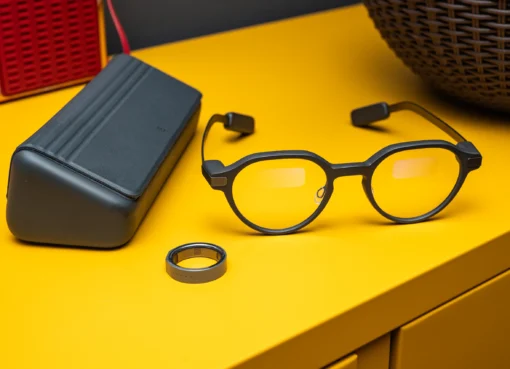
Snap Announces Major Launch Event for Next-Generation AR "Specs" in Los Angeles

Snap Inc., the parent company of the popular social media platform Snapchat, has officially announced a high-profile event dedicated to the unveiling and demonstration of its next-generation augmented reality (AR) glasses. Simply branded as "Specs," the device represents the latest leap in the company’s decade-long journey to transition from a "camera company" to a leader in spatial computing. Scheduled for September 16th in Los Angeles, California, the event is poised to be a watershed moment for the company as it seeks to redefine the relationship between humans, artificial intelligence, and the physical world.
Main Facts: A New Vision for Augmented Reality
The upcoming event, which will be headlined by Snap co-founder and CEO Evan Spiegel, aims to provide the first comprehensive, in-depth look at the capabilities of the new Specs. Unlike previous iterations of Spectacles, which often focused on content capture for the Snapchat app, this next-gen hardware is being positioned as a standalone computing platform.
Key details of the announcement include:
- Event Date: September 16th, 2024, at 4:00 PM PT.
- Location: Los Angeles, CA, with a global livestream available for remote viewers.
- Pricing: Pre-orders are currently listed at $2,195, signaling a shift toward a professional and developer-centric market.
- Availability: Initial shipping is slated for Fall 2024, targeting the United States, United Kingdom, and France.
- Hardware Architecture: The glasses feature a dual-processor system powered by Qualcomm Snapdragon technology, eliminating the need for a tethered smartphone or external compute "puck."
The event will focus on four primary pillars: AI assistance, productivity tools, entertainment, and shared experiences. Snap’s objective is to demonstrate how AR can help users "create, connect, and learn" while remaining "present" in their physical environment—a direct philosophical counterpoint to the more isolating "pass-through" VR experiences offered by competitors.
Chronology: The Evolution of Snap’s Wearable Ambitions
To understand the significance of the September 16th event, one must look at the iterative path Snap has taken over the last eight years. Snap’s hardware journey has been one of gradual sophistication, moving from novelty fashion accessories to high-end optical engineering.
2016–2019: The Camera Phase (Spectacles 1, 2, and 3)
Snap entered the hardware market in 2016 with the original Spectacles, sold through "Snapbot" vending machines. These were primarily video-capture devices that allowed users to record 10-second circular videos. While the first version was a viral sensation, subsequent versions (V2 and V3) struggled to find a mass audience. Spectacles 3, released in 2019, introduced dual cameras for depth sensing, allowing users to add 3D "Lenses" to their footage after recording, though the glasses themselves lacked an integrated display.

2021: The Leap to True AR (Spectacles 4)
In May 2021, Snap unveiled its first true AR glasses. These were not sold to the public but were distributed to select developers. They featured dual waveguide displays and a 26.3-degree diagonal field of view. While bulky and limited by a 30-minute battery life, they proved that Snap could build a standalone AR device that functioned outdoors.
2024: The Fifth and Sixth Generations
In early 2024, Snap quietly introduced its fifth-generation Specs to a broader developer circle. The upcoming "Specs" to be showcased in Los Angeles represent the culmination of these efforts—a refined sixth-generation product that integrates advanced AI and improved thermal management. This chronology illustrates Snap’s commitment to a "long game" in AR, prioritizing hardware R&D even as its core advertising business faced economic headwinds.
Supporting Data: The Technical Architecture of Specs
The $2,195 price tag is reflective of the sophisticated technology packed into the Specs’ frames. Unlike the Ray-Ban Meta glasses, which primarily focus on audio and camera capture without a visual display, Snap’s Specs are full-fledged AR computers.
Dual-Processor Strategy
One of the most significant technical hurdles in AR is managing heat and power consumption in a small form factor. Snap has addressed this by utilizing two distinct Qualcomm Snapdragon processors:
- Computer Vision Processor: A dedicated chip designed to handle spatial mapping, hand tracking, and surface detection. By offloading these "always-on" tasks to a specialized processor, Snap reduces latency and improves tracking stability.
- Application Processor: This chip runs the "Lenses" (Snap’s AR apps) and manages the operating system, UI, and connectivity.
Display and Optics
While specific resolution metrics are expected at the event, the Specs utilize advanced waveguide optics. These allow digital light to be projected onto transparent glass, enabling the user to see the real world and digital overlays simultaneously. This "see-through" capability is central to Snap’s "staying present" ethos, as it avoids the motion sickness and social isolation sometimes associated with the video-pass-through technology used in the Apple Vision Pro or Meta Quest 3.
Software Ecosystem: Lens Studio and Snap OS
Snap’s hardware is only as good as its content. The company boasts a developer ecosystem of over 300,000 creators who have built millions of Lenses. The new Specs run on a custom operating system designed for spatial interaction, moving away from the traditional 2D grid of smartphone apps toward a world where information is pinned to physical objects.

Official Responses: Evan Spiegel’s Strategic Vision
In the lead-up to the event, Snap leadership has been vocal about the role of AR in the future of human-computer interaction. Evan Spiegel has frequently argued that the "screen" is a barrier to human connection.
"The goal of Specs is to bring the power of the internet into the world around us, rather than forcing us to look down at a small screen in our hands," Spiegel noted in a recent corporate briefing. "By integrating AI and AR, we can provide users with the information they need—whether it’s a translation of a menu or a collaborative work project—without taking them out of the moment."
The company’s official statement regarding the September 16th event emphasizes that Specs are designed to help people "get things done while staying present." This messaging is a strategic jab at the "Metaverse" concept often associated with fully immersive VR. Snap is positioning itself as the "Anti-Metaverse" company, focusing on augmented reality rather than virtual reality.
Furthermore, Snap has indicated that the event will feature hands-on opportunities for attendees, suggesting a high level of confidence in the hardware’s "wearability" and "social acceptability"—two areas where previous AR glasses have struggled.
Implications: The High-Stakes Battle for the Face
The launch of the new Specs carries significant implications for the tech industry, the developer community, and the future of social media.
1. The Pivot to a Developer-First Model
By pricing the Specs at over $2,000, Snap is signaling that it is not yet chasing the mass-market consumer. Instead, it is following a strategy similar to the early days of the PC or the smartphone: get the hardware into the hands of the most creative developers first. The implication is that the "killer app" for AR has not yet been invented, and Snap is betting that its community of creators will be the ones to find it.

2. The AI-AR Synergy
The inclusion of AI assistance is a critical development. In 2024, AI has become the primary driver of tech valuations. For Snap, AR provides the "eyes" for AI. When an AI can see what the user sees through Specs, it can provide contextually relevant help—identifying plants, helping with home repairs, or providing real-time social cues. This event will likely showcase how Snap’s "My AI" chatbot integrates directly into the visual field.
3. Competition with Meta and Apple
The AR market is becoming increasingly crowded. Meta is rumored to be working on its own high-end AR glasses (codenamed "Orion"), while Apple is reportedly exploring a lighter-weight version of its Vision Pro. Snap’s advantage lies in its specialized focus. While Meta and Apple are trying to be everything to everyone, Snap is doubling down on the "social" and "creative" aspects of AR. If Snap can prove that its Specs are more comfortable and socially acceptable than the competition, it could maintain its lead in the "wearable camera" niche it carved out years ago.
4. Financial Stakes for Snap Inc.
For investors, the September 16th event is a test of Snap’s long-term viability. The company has spent billions on AR research and development. With the advertising market remaining volatile, Snap needs to prove that its hardware division can eventually become a significant revenue stream or, at the very least, a "moat" that keeps users locked into its ecosystem.
Conclusion
The September 16th Specs event in Los Angeles is more than just a product launch; it is a declaration of intent. As the tech world moves toward the post-smartphone era, Snap is betting that the future will be viewed through a pair of transparent lenses. Whether the $2,195 Specs can bridge the gap between "expensive developer toy" and "essential productivity tool" remains to be seen, but for one afternoon in September, all eyes will be on Evan Spiegel to see if Snap can finally make the dream of ubiquitous augmented reality a tangible, wearable reality.