From Coop Construction to Creative Construction: A Writer’s Vacation Yields Unexpected Parallels
Nine days of strenuous labor under the sweltering New England sun, coupled with relentless humidity, might not sound like a typical vacation. For one local author, however, this "staycation" proved to be a demanding yet ultimately rewarding endeavor. The arduous task of constructing a robust chicken coop has illuminated profound parallels between the physical act of building and the intricate process of crafting a novel, drawing inspiration from literary giants and offering a unique perspective on the writer’s craft.
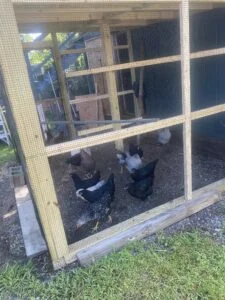
The author, a dedicated mother to a bustling flock of seventeen chickens, found herself at a crucial juncture in her feathered family’s life. With eleven young chicks having outgrown their initial indoor nursery, and then a temporary barn enclosure, the time had come for integration into the main adult flock. This transition, while necessary for the chicks’ social development, presented a significant emotional hurdle for the author, who admits to a degree of "overprotective mom" tendencies that had already delayed the move by two weeks.
"The babies needed to learn the ins and outs of chicken society and hierarchy on their own," the author explained, emphasizing that the complex social dynamics of a flock are lessons that human intervention cannot adequately provide. "It’s something their father and I can’t provide. They must learn these life lessons from older and bigger flock members."
The Angelic Matriarch: Flo’s Reign
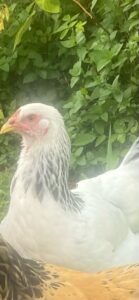
At the helm of this intricate avian society stands Flo, an angelic white Brahma hen described with a palpable sense of admiration. "Flo, an angelic white brahma with a visible glowing aura," the author mused, her description hinting at a creature of exceptional presence. "Ever seen anything like her? We haven’t, nor do we know why she glows."
Flo’s leadership is characterized by an almost innate authority. "Flo’s been a born leader since she was two days old," the author stated. While acknowledging Flo’s strictness – "no one messes with Flo" – she also highlighted the hen’s loving and fair disposition. "No unnecessary bullying allowed, but a good, hard peck here and there to keep the younglings in line is part of life." The author also referenced Biff, Flo’s second-in-command and "the muscle for the flock," who was previously featured in a post detailing the lessons learned from nursing a sick chicken.
A Strategic Approach to Integration and Construction
The decision to build a new, larger coop was a strategic one, designed to facilitate the integration of the growing number of chickens. Previously, the adult flock occupied a coop within the barn, but their outdoor space was limited to a temporary pen. This was a deliberate choice to ensure that the young chicks could acclimate to their new environment and social structure alongside the established flock, thereby mitigating potential territorial disputes from the adults.
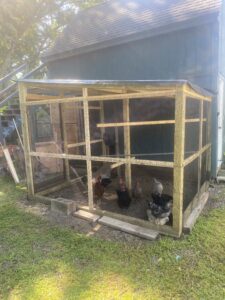
The construction project itself was undertaken during the author’s "vacation," a testament to her dedication. The newly erected coop is a substantial structure, measuring an impressive 10 feet by 8 feet with an 8-foot height. It features a dedicated chicken door that grants access to the barn, providing a private space for egg-laying. To combat the oppressive summer heat, an additional five gallons of water are kept inside the barn, contributing to a cooler microclimate.
The Literary Parallel: Building a Coop, Building a Novel
The most striking revelation from this "staycation" is the author’s profound insight into the parallels between constructing a chicken coop and writing a novel. This connection is not merely an anecdotal observation but a philosophical exploration, drawing inspiration from literary history.
"Building a chicken coop and writing a novel both require us to balance high-level creativity with rigid, technical constraints," the author asserted. "Both are parallel journeys of messy, structural creation." This sentiment echoes the words of Nobel laureate William Faulkner, who famously stated, "Writing a novel is like building a chicken coop in a high wind—you grab any board you find and nail it down fast."
This quote serves as a foundational principle for the author’s comparative analysis. The act of writing, much like constructing a coop in challenging conditions, often involves a degree of improvisation and immediate action.
Laying the Foundation: Groundwork for Story and Structure
The initial step in building the coop involved preparing a flat, level foundation to support the walls and roof. This mirrors the fundamental requirement for a strong narrative foundation in writing.
"Before laying out the 4×4 wood foundation, we needed flat, level ground to support the walls and roof," the author explained. She then drew a direct parallel to the writing process: "Some writers create an outline, others might only have a beginning, middle, and an end. Some might not even have that. Your writing process doesn’t matter, if you ensure the story has a solid foundation to support the plot." Whether through meticulous outlining or a more intuitive approach, a robust underlying structure is paramount to prevent the narrative from collapsing under its own weight.
Fortifying Against Predators: Safeguarding the Narrative
Just as trenches were dug and wire was buried to protect the flock from predators, a novel requires rigorous protection against elements that can derail its progress.
"We dug trenches and buried wire to protect our flock from predators," the author stated. The literary equivalent, she argues, is establishing "tight boundaries to keep out plot-destroying distractions, like irrelevant subplots and tangents that threaten to kill the story’s momentum." This emphasizes the need for focus and discipline in narrative construction, ensuring that every element serves the central story.
The Backbone of the Story: Posts, Beams, and Plot Points
The structural integrity of the coop relies on posts and beams that support the roof and walls. In the realm of storytelling, these are analogous to crucial plot points.
"Posts and beams support the roof and walls of the coop," the author noted. "Major plot points support the story." These pivotal moments in a narrative act as the load-bearing elements, holding the entire structure together and propelling the reader forward.
Strategic Spacing: Adding Depth and Complexity
The author highlights a specific building technique: spacing posts sixteen inches apart, as opposed to the closer spacing typical for a house. This allowed for an "aviary-style coop" and necessitated the addition of horizontal beams. This architectural choice directly correlates with the way writers introduce complexity and dynamism into their narratives.
"Rather than run posts 16 inches apart like you would for a house, we spaced them out to create an aviary style coop. To achieve this, we needed to run horizontal beams as well," she explained. The literary translation is equally insightful: "Rather than characters running straight from the start to the end, writers add setbacks, conflict, tension, character growth, and subplots." These deviations from a linear progression add richness, depth, and realism to the story, much like the added beams provide structural support and aesthetic appeal to the coop.
The "Shitty First Draft": Embracing the Messy Beginning
A practical consideration in coop design is the management of chicken waste. The author mentions the installation of "drop trays or ‘poop shelves’" under roosting bars, a necessity due to the significant amount of waste chickens produce. She then draws a provocative parallel to the often-maligned "shitty first draft" in writing.
"Some coop builders install drop trays or ‘poop shelves’ under roosting bars because chickens create an immense amount of waste. The dirt floor in our coop works the same way," the author observed. She then posed a rhetorical question: "See the parallel to a ‘shitty first draft’?"
While acknowledging that not every first draft is inherently flawed, the author embraces the reality that early drafts are often characterized by messiness and disorganization. "Though I don’t buy into the argument that every first draft sucks, most writers embrace the reality that early drafts can be messy, disorganized, or in need of a rewrite. The editing process is the literary equivalent of raking the coop floor to keep a clean environment." This analogy effectively de-stigmatizes the concept of a rough first draft, framing it as a necessary and even functional stage in the creative process, akin to managing the practicalities of a chicken coop.
Polishing the Prose: The Finishing Touches
The final stages of coop construction involved wrapping the frame and roof with vinyl-coated, metal poultry mesh, a material deemed easier to work with than traditional chicken wire. The author notes that painting, tucking the roof edges, and adding natural branches for roosts are still pending.
"Once we built the frame and roof, we wrapped the coop with vinyl-coated, metal poultry mesh. Which is so much easier to work with than chicken wire. We still need to paint, tuck the roof under the edges, and add natural branches for extra roosts. They love their new digs!"
This meticulous attention to detail in the coop’s finishing touches directly mirrors the editing and polishing phase of writing. "Writers need to edit, polish the imagery, adjust the cadence, and fix grammatical errors until the prose feels smooth and deliberate." The author also adds a disclaimer regarding the surrounding mess, acknowledging it as a "work in progress," further reinforcing the iterative nature of both building and writing.
The intentional one-foot pitch of the roof, designed to allow snow to slide off rather than accumulate in the walkway, is another example of practical design that can be translated to narrative structure. Just as a well-pitched roof prevents structural damage from the elements, a carefully structured narrative can withstand the "elements" of reader expectation and critical scrutiny.
Conclusion: A Harmonious Blend of the Practical and the Profound
The author’s "staycation" has transcended a simple home improvement project. By meticulously documenting the construction of her chicken coop, she has artfully woven a narrative that explores the fundamental principles of creation. The journey from the physical labor of building to the intellectual labor of writing reveals a shared vocabulary of structure, foundation, protection, and refinement. The experience underscores the idea that whether one is crafting a sanctuary for feathered friends or a world within the pages of a book, the underlying processes of thoughtful design and diligent execution remain remarkably consistent. The completion of the coop, a testament to resilience and careful planning, serves as a tangible metaphor for the author’s own creative endeavors, proving that even the most demanding physical tasks can yield profound insights into the art of storytelling.