Navigating the Labyrinth of Existence: A Philosopher’s Perspective on "Everyday Existentialism"

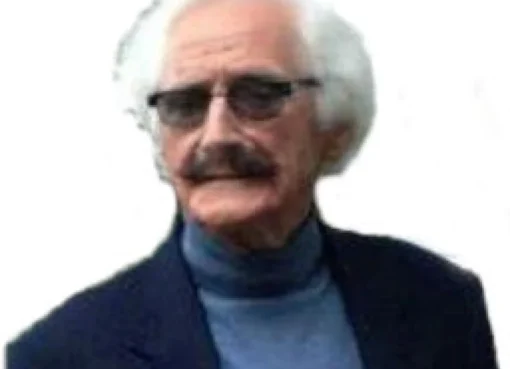
The existential weight of life’s ultimate questions can feel crushing, particularly for young minds grappling with their place in the universe. In a recent exchange that has resonated deeply with his YouTube audience, philosopher Geoffrey Klempner addresses a poignant question from a subscriber, Edie, who finds herself overwhelmed by these profound inquiries before even reaching her twenties. Klempner’s response delves into the nature of existential feelings, the limitations of our emotional responses to the unknown, and the potential for a liberating shift in perspective.
The Weight of "Why Am I Here?": A Subscriber’s Cry for Guidance
The digital realm, often a source of entertainment and fleeting information, can surprisingly become a fertile ground for profound philosophical discourse. This was precisely the case when a loyal subscriber, identifying herself as Edie, reached out to YouTube philosopher Geoffrey Klempner. Her email, imbued with a raw vulnerability, captured a sentiment shared by many navigating the tumultuous waters of early adulthood.
"I hope you do not mind me contacting you on this email," Edie began, her words reflecting a hesitant respect for Klempner’s intellectual prowess. "I watch your videos on YouTube frequently, they really fascinate me and I think you have great way of explaining things. When you talk about questioning the big questions everyday like why am I here, who am I etc. relate a lot as many do." This personal connection to Klempner’s content laid the groundwork for her central query: "My question is, does dealing with that kind of everyday existentialism get easier with time. I almost feel crushed under the weight of these questions and I’m not even 20."
Edie’s question is not merely a personal lament; it touches upon a universal human experience. The relentless pursuit of meaning, the search for identity, and the contemplation of mortality are not confined to academic circles or late-night musings. For many, these "big questions" permeate daily life, creating a palpable sense of existential pressure. Edie’s age, a mere nineteen years, amplifies the poignancy of her struggle, suggesting that the burden of existence can descend early and with significant force.
Klempner’s Counterpoint: Deconstructing the "Crushing" Feeling
Geoffrey Klempner, known for his accessible yet rigorous approach to philosophy, acknowledged Edie’s heartfelt inquiry with characteristic thoughtfulness. He embraced her coined term, "everyday existentialism," recognizing its aptness in describing the persistent, often mundane, confrontation with life’s fundamental uncertainties. While distancing himself from the traditional academic label of "existentialist," Klempner found common ground in the act of "philosophizing" – a continuous engagement with these profound questions.
His initial response to Edie’s feeling of being "crushed" was not to dismiss it, but to probe its underlying assumptions. "But my question is, Why is feeling crushed the most appropriate feeling?" he posited. This rhetorical question served as a pivot, shifting the focus from the subjective experience of the emotion to its objective justification. Klempner challenged the notion that feelings are inherently self-validating, questioning the implicit right of anyone to dictate what one "ought" to feel.
To illustrate this point, Klempner introduced a thought-provoking analogy. He compared Edie’s feeling of being crushed to a hypothetical white person feeling uncomfortable in the company of a person of color. While acknowledging that there might be various explanations for such discomfort, he argued that the core issue is the individual’s responsibility to "learn to get over" that feeling. He emphasized that this capacity for emotional regulation and transformation is a distinctly human trait, differentiating us from non-human animals.
This line of reasoning leads Klempner to a key concept within contemporary analytic philosophy: the "formal object" of feelings. He explained that, as a matter of logic, certain feelings are inherently inappropriate or nonsensical in specific contexts. The hypothetical scenario of feeling "proud of a trash can" served as a stark example. While an individual might claim to feel pride, the logical coherence of such a statement is questionable, as pride is typically associated with achievements or possessions that hold personal significance. The trash can, in this instance, lacks such a connection, rendering the expressed emotion logically incongruous.
The "Logic of Feeling": Beyond Psychology to Philosophical Inquiry
Klempner’s exploration then ventured into the historical discourse surrounding existentialism, highlighting a perceived overemphasis on specific, often negative, emotions. He listed terms commonly associated with existentialist thought: "Fear and trembling," "Anxiety," "Anguish," "Vertigo," "Nausea," and even "Hilarity." He pointed out that Edie’s feeling of being "crushed" was not on this list, yet it resonated with the overwhelming emotional responses often linked to existential contemplation.
He then invited readers to consider actual instances where one might feel "crushed" – a romantic rejection, job loss, or unexpected financial burdens. The common thread, Klempner suggested, lies in a perceived failure of expectations or a significant setback. However, he returned to his central thesis: that even in these seemingly justifiable instances, the "appropriateness" of the feeling remains open to philosophical scrutiny.
This led Klempner to propose a novel avenue of philosophical investigation, one that moves beyond psychological observation and delves into the "logic of feeling." He posited that a rigorous examination of our emotional responses to existential questions might reveal a startling truth: that there is no single, universally appropriate feeling for confronting the ultimate unknowns of existence. "The truth is, not simply that we don’t know stuff, but rather that we don’t even know how to feel about the fact that we don’t know," he concluded.
A Liberating Realization: Embracing Curiosity Over Crushing Weight
This seemingly baffling conclusion, however, is presented by Klempner not as a source of despair, but as a profound liberation. If there is no predetermined or "correct" emotional response to the existential predicament, then individuals are free from the burden of feeling a specific way. The crushing weight of these questions, he suggests, can be shed.
Instead of succumbing to despair or a sense of inadequacy, Klempner advocates for a shift towards "healthy curiosity." He argues that curiosity is an energizing force, one that fuels further exploration and learning. This aligns with his earlier playful reminder to his audience: "Philosophers should know lots of things besides philosophy." This encapsulates a broader perspective, suggesting that a well-rounded philosophical engagement involves an openness to diverse knowledge and experiences.
The Evolving Aim of Philosophy: Orientation, Not Just Knowledge
Klempner then turns his attention to the fundamental purpose of philosophy itself. He questions whether its primary aim is the acquisition of knowledge, and if so, knowledge of what? His own inclination leans towards a more practical, albeit complex, goal: to "orient ourselves towards reality, to find a course of action that is most appropriate to our recognition of the ultimate questions."
This is where Klempner suggests that contemporary philosophy may be at a crossroads. He admits that he is not aware of any philosopher who has made significant progress in this area of "orienting ourselves." He even entertains the possibility that this pursuit might transcend traditional definitions of philosophy, venturing into the realm of "a novel kind of theology." He provocatively asks, "Why not? Why should the term we use matter? It is not as if you needed to believe in God in order to be a theologian!" This bold statement challenges rigid disciplinary boundaries, suggesting that the pursuit of meaning and appropriate action in the face of existential uncertainty might require innovative frameworks and approaches.
Implications for the "Everyday Existentialist"
For Edie, and countless others who feel the "crushing weight" of existential questions, Klempner’s response offers a powerful reframing. It suggests that the struggle is not with the questions themselves, but with the assumption that there are definitive answers or predetermined emotional responses. The liberation lies in recognizing that the "logic of feeling" is not as straightforward as it might appear, and that our emotional reactions are not immutable dictates.
The implication for navigating "everyday existentialism" is to embrace the uncertainty not as a void to be filled with anxiety, but as an invitation to explore. By fostering curiosity and a willingness to question our own emotional responses, we can move away from feeling crushed and towards a more dynamic and engaged relationship with the fundamental questions of life. This journey, as Klempner suggests, might be less about finding definitive answers and more about developing a robust and appropriate way of being in the world, even as we grapple with its ultimate mysteries. The path forward, it seems, is paved not with certainty, but with the courage to question and the freedom to feel differently.