
Global Health Alarms and Political Friction: A Comprehensive Analysis of Recent Developments in Public Health, Media, and Geopolitics

Introduction: A Confluence of Crises
The global landscape is currently grappling with a multifaceted series of crises that bridge the gap between public health emergencies, legislative gridlock, and the passing of an era in broadcast media. From a lethal hantavirus outbreak on a specialized cruise ship to the contentious debate over federal spending and the death of media mogul Ted Turner, the current news cycle reflects a world in a state of "paused panic." As political cartoonists and analysts alike observe, the veneer of modern civilization is being tested by both biological threats and internal political fractures. This report synthesizes these events, examining the scientific, legislative, and cultural implications of a week defined by uncertainty.
Main Facts: The Hantavirus Outbreak and Legislative Volatility
The most pressing concern in the public health sector is a burgeoning outbreak of hantavirus linked to a cruise ship catering to international birdwatchers. To date, three fatalities have been confirmed, with health officials warning that the toll could rise as contact tracing intensifies. Unlike more common strains of the virus, the current pathogen has been identified as the "Andes variety," a rare and dangerous iteration capable of person-to-person transmission.
Simultaneously, the United States Congress is embroiled in a heated dispute over a $9 billion "clawback" bill. The legislation, championed by the current administration’s allies, seeks to redirect funds previously earmarked for foreign aid, public broadcasting, and climate initiatives toward domestic infrastructure—specifically a controversial "ballroom bunker" and security additions for the executive branch.
In the media sector, the death of Ted Turner at age 87 marks the end of the "CNN Era." Turner, who revolutionized the 24-hour news cycle, passed away at a time when the network he founded faces significant corporate restructuring and editorial shifts, sparking a broader conversation about the future of independent journalism in an age of consolidation.
Chronology of Events: From Pathogens to Politics
The Cruise Ship Incident
The timeline of the hantavirus outbreak began mid-month when a cruise vessel, traveling through exotic locales popular with ornithologists, reported several passengers with severe respiratory distress.
- Initial Discovery: Early reports suggested a localized infection, but the death of a passenger shortly after disembarking triggered an international investigation.
- Identification: By the end of the week, the CDC and WHO confirmed the presence of the Andes hantavirus.
- Contact Tracing: Authorities are currently tracking hundreds of passengers who have returned to their home countries, fearing a "silent spread" similar to the early days of the 2020 pandemic.
The Legislative Battle
The GOP-led bill to retract $9 billion in funding moved to the House floor early this week.
- The "Ballroom" Controversy: Critics point to a $1 billion allocation for a reinforced ballroom/bunker, arguing it represents a "grift" while gas prices and inflation continue to squeeze the middle class.
- The WHO Exit: This legislative movement coincides with the administration’s formal steps to distance the U.S. from the World Health Organization, a move health experts describe as "catastrophic" in the face of the new hantavirus threat.
The Passing of a Titan
Ted Turner’s health had been in decline for several years, but his death on Thursday sent shockwaves through the media industry. His career—from launching TBS to the 1980 debut of CNN—is being revisited as a benchmark for bold, risky entrepreneurship that prioritized global awareness over narrow partisan interests.
Supporting Data: Epidemiology and Economics
The scientific community is particularly alarmed by the Andes hantavirus. While most hantaviruses are contracted through direct contact with rodent excreta, the Andes strain (endemic to South America) is the only one documented to pass between humans.
- Mortality Rates: Historically, hantavirus pulmonary syndrome (HPS) has a case-fatality rate of approximately 35% to 40%. The person-to-person transmission factor of the Andes strain significantly increases the potential for a localized outbreak to become a regional epidemic.
- Public Health Funding: The proposed $9 billion clawback includes $500 million originally intended for pandemic preparedness. Analysts suggest that cutting these funds during an active outbreak is a "high-stakes gamble" with public safety.
- Economic Context: The "Ballroom Bunker" project has seen its budget swell by 40% due to "security additions." Meanwhile, public broadcasting—slated for a 100% funding cut in the new bill—serves over 95% of U.S. households, providing critical educational and emergency information.
Official Responses and Public Sentiment
The administration’s response to the hantavirus has been characterized by a reliance on unconventional medical advisors. Recent statements from the Department of Health and Human Services (HHS) have downplayed the need for WHO cooperation, with some officials even entertaining debunked theories regarding ivermectin as a treatment for viral pathogens—a move that has drawn sharp rebukes from the medical establishment.
In the legislative branch, the opposition has labeled the GOP bill a "betrayal of global responsibilities." Representative Smith noted, "If the administration can claw back money destined for foreign aid and public broadcasting to build a bunker, it shows where their priorities lie: in isolation and self-preservation rather than public service."
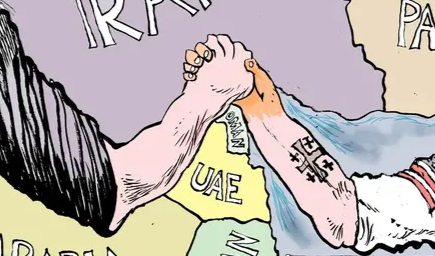
The public sentiment, captured vividly in the week’s political cartoons, reflects a sense of "Wiley Coyote" syndrome. Cartoonists like Bish and Wiley depict a leadership that has run off the cliff but refuses to look down, hoping that the "inevitable will somehow become evitable." The use of the "Crusader Cross" imagery in geopolitical cartoons regarding the Strait of Hormuz further illustrates a growing concern that the U.S. is adopting an increasingly antagonistic and "civilization-clash" posture in its foreign policy.
Implications: The Future of Global Stability
The convergence of these events suggests three major implications for the near future:

1. The Erosion of Global Health Infrastructure
By withdrawing from the WHO and cutting domestic health funding during a hantavirus outbreak, the U.S. risks becoming a "black hole" in global health surveillance. If the Andes strain gains a foothold in the domestic population, the lack of international cooperation could delay vaccine development and containment strategies, leading to a repeat of the 2020 economic and social disruptions.
2. The End of the "Information Age" as We Knew It
Ted Turner’s death symbolizes more than just the passing of a man; it represents the potential end of the 24-hour news cycle as a public utility. As CNN faces potential acquisition by conglomerates like Paramount or Skydance, there is a legitimate fear that "hard news" will be further sacrificed for "infotainment" or partisan-leaning content, leaving the public less informed during times of crisis.
3. Domestic Political Realignment
The upcoming November elections will serve as a referendum on the "Ballroom Bunker" era of spending. If the electorate views the $9 billion clawback as a misappropriation of funds, a new Congress could theoretically reverse the apportionments. However, if the current trajectory continues, the U.S. may see a permanent shift toward isolationism, characterized by fortified domestic enclaves and a withdrawal from the "enlightened" global community.
Conclusion: The "Tulip Nursery" Metaphor
As we navigate these turbulent waters, it is perhaps useful to look toward the folk traditions that once grounded society. The story of "The Tulip Nursery"—an old English fairy tale—reminds us that beauty and growth often depend on unseen care and a respect for the delicate balance of nature. When the "man who didn’t care for flowers" dug up the tulips to plant herbs for profit, nothing ever grew there again.
Today’s political and social landscape faces a similar risk. By "digging up" the bulbs of international cooperation, public broadcasting, and scientific integrity in favor of short-term political or financial gain, we may find that the fertile ground of our democracy becomes barren. Whether it is a hantavirus on a cruise ship or the loss of a media titan, the lesson remains the same: we do not exist on an island unto ourselves, and the consequences of our current choices will be felt for generations to come.


Leave a Comment