Echoes of the 1990s: Ismail Basbeth Unveils ‘Love Letters of Our Life’ Amid Shanghai Premiere
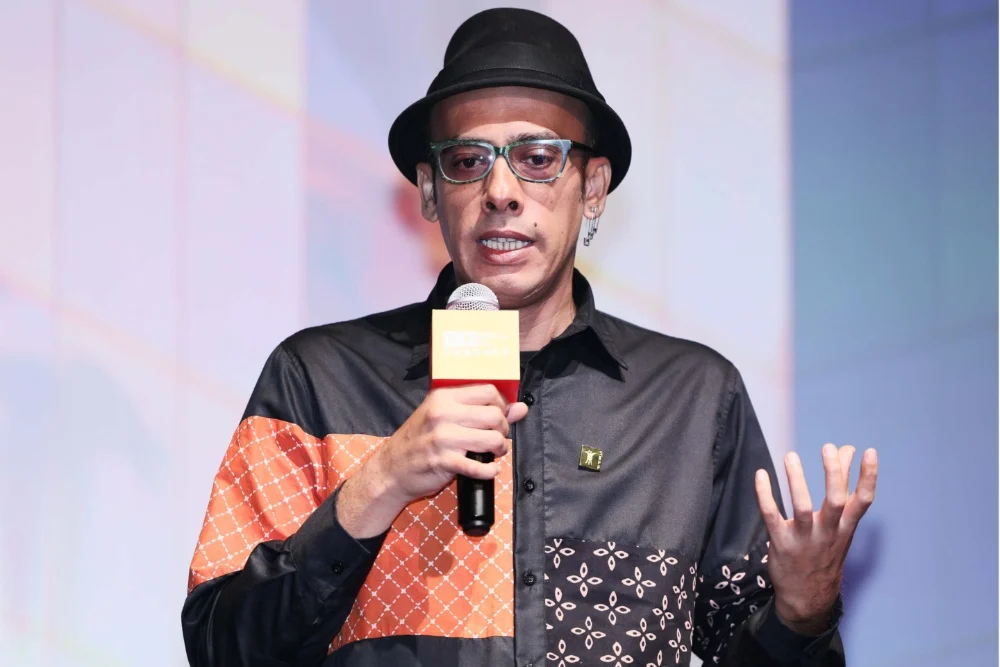
The landscape of contemporary Indonesian cinema is undergoing a profound transformation, moving beyond traditional horror and action genres to embrace deeply personal, historically resonant narratives that explore the complexities of identity and memory. At the forefront of this movement is acclaimed director Ismail Basbeth. Currently making waves at the Shanghai International Film Festival (SIFF), Basbeth has officially announced his next feature project, Love Letters of Our Life. The announcement comes at a pivotal moment for the director, whose current film, My Own Last Supper, is competing for the prestigious Golden Goblet Award in Shanghai.
Love Letters of Our Life is positioned as a nostalgic exploration of romance, heritage, and the passage of time, set against the backdrop of mid-1990s Indonesia. By weaving together the threads of a long-lost love and the specific cultural nuances of the Chinese-Indonesian diaspora, Basbeth aims to capture a zeitgeist that resonates both locally and internationally.
Main Facts: A New Chapter in Indonesian Auteur Cinema
Ismail Basbeth’s Love Letters of Our Life is more than just a romantic drama; it is a meticulously crafted period piece that seeks to recapture the "analog" essence of the 1990s. Produced by Kami Sinema, the film centers on a romance that is rekindled after a 35-year hiatus. The narrative begins in 1995, a year that serves as a cultural and technological midpoint in modern Indonesian history—a time before the ubiquity of the internet and mobile telecommunications redefined human interaction.
According to Cecile Suciadi, the Chief Operating Officer of Kami Sinema, the film is a deliberate attempt to emphasize "nostalgic romance." The lack of instant connectivity in 1995 provides the narrative with a unique tension; characters are forced to rely on physical letters, landline telephones, and the patience that defined pre-digital relationships. This "slower" pace of life is central to the film’s aesthetic and emotional core.
Furthermore, the film is deeply rooted in Indonesian pop culture, drawing significant inspiration from the 1995 hit song "Cintaku Tak Terbatas Waktu" (My Love is Timeless) by Anie Carera. This song, which dominated the airwaves during the era, serves as both a thematic anchor and a musical touchstone for the production.
A significant thematic throughline in Love Letters of Our Life—and one that mirrors Basbeth’s current festival entry, My Own Last Supper—is the exploration of Chinese-Indonesian identity. The film delves into the lives of the Chinese diaspora in Indonesia, a community with a rich, complex, and often fraught history within the archipelago. By focusing on these narratives, Basbeth joins a growing cohort of Southeast Asian filmmakers who are bringing diaspora stories to the global stage.
Chronology: From Shanghai to the Production Floor
The journey of Love Letters of Our Life is inextricably linked to the success of Basbeth’s current endeavors. The timeline of the project highlights a rapid transition from international acclaim to active production:
- June 2024: The Shanghai Premiere. Ismail Basbeth and the team from Kami Sinema arrived at the Shanghai International Film Festival for the world premiere of My Own Last Supper. The film’s inclusion in the main competition signaled a high level of international interest in Basbeth’s unique directorial voice.
- The Announcement. Amid the festival circuit, Cecile Suciadi officially unveiled the details for Love Letters of Our Life, capitalizing on the momentum generated by the Shanghai screenings. The announcement served to signal to distributors and international partners that Basbeth has a clear and immediate vision for his follow-up work.
- Pre-Production and Scripting. While Basbeth was finalizing My Own Last Supper, the foundations for the new project were already being laid. Olivia Irawan Chen, who stars in Supper, transitioned into a creative role for the new film, contributing to the scripting and creative production process. This collaborative environment has allowed for a seamless transition between projects.
- August – September 2024: Principal Photography. The production is scheduled for a swift and intensive 18-day shoot during the late summer months. This timeline suggests a highly prepared production team and a script that is contained yet emotionally expansive.
- 2025: Anticipated Release. With filming concluding in the fall of 2024, the film is expected to enter post-production with an eye toward a 2025 release, potentially returning to the festival circuit where its predecessor found such a warm reception.
Supporting Data: Contextualizing the Diaspora and the 90s Trend
The decision to focus on the Chinese-Indonesian experience is not a coincidence; it reflects a broader trend in the Asian film market. Recent data from the Chinese box office highlights a surging appetite for stories concerning the Chinese diaspora in Southeast Asia.
The film Dear You (also known as Guan Pu) recently became a runaway success in China. It chronicled the struggles of Chinese families who emigrated to Thailand following World War II and the emotional toll of the families left behind. The success of Dear You proves that there is a massive, underserved audience interested in the historical and emotional realities of the "Nanyang" (South Seas) Chinese experience.
In Indonesia, the 1990s represent a specific era of cultural transition. Economically, it was the tail end of the "New Order" regime, a period characterized by rapid development but also by strict social controls, particularly regarding the expression of Chinese culture. By setting the film in 1995, Basbeth is able to explore a time when these cultural identities were often expressed in private or through subtle cultural markers, such as pop music and family traditions.
The choice of 1995 as the setting also taps into the global "90s nostalgia" trend. In the film industry, this has manifested in a move away from high-tech blockbusters toward "low-tech" human stories. For a romance film, the absence of the internet is a powerful narrative tool. In 1995, the Indonesian internet penetration rate was less than 0.05%. Communication was an effort, making the "love letters" of the title a literal and figurative necessity for maintaining a long-distance or long-lost connection.
Official Responses: Insights from the Creative Team
The creative team behind Love Letters of Our Life views the project as a natural evolution of their previous work. Cecile Suciadi, speaking on behalf of Kami Sinema, emphasized the importance of the film’s setting and its emotional resonance.
"It’s set in 1995, so it’s not so old, but not new either," Suciadi remarked during an interview at the Shanghai festival. "Without the internet back then, it’s a bit more romantic. We want to emphasize the nostalgic romance of the period. It was a time when feelings had more room to breathe because you couldn’t just send a text message and get an instant reply."
Suciadi also touched upon the strategic importance of the Shanghai International Film Festival for Indonesian filmmakers. "We hope next year, we can still come here again," she noted, highlighting the festival as a crucial bridge between Southeast Asian creators and the vast Chinese market.
The film also represents a "reunion" for Basbeth’s core creative team. Music producer Charlie Meliala, a long-time collaborator who has scored four of Basbeth’s previous films, will return to craft the auditory landscape of Love Letters. Meliala’s ability to blend contemporary sounds with traditional Indonesian influences will be vital in reinterpreting the 1995 pop aesthetic for a modern audience.
Olivia Irawan Chen, whose performance in My Own Last Supper garnered praise, is expanding her horizons with this project. Her involvement in the scripting process indicates a move toward more holistic, artist-driven filmmaking within the Indonesian industry. By having actors involved in the writing process, Basbeth ensures that the character beats are authentic and deeply felt.
Implications: Soft Power and the Future of Indonesian Cinema
The production of Love Letters of Our Life carries several significant implications for the Indonesian film industry and its place in the global cultural hierarchy.
1. The Rise of "Niche" Narratives in the Global Market
The success of films like My Own Last Supper and the anticipation for Love Letters suggest that international audiences are no longer just looking for "exotic" locations; they are looking for specific, nuanced human experiences. By focusing on the Chinese-Indonesian diaspora, Basbeth is tapping into a universal story of migration, identity, and belonging that has a specific resonance in Asia. This "hyper-local" approach is paradoxically what makes the film globally viable.
2. Strengthening Sino-Indonesian Cultural Ties
The Shanghai International Film Festival is serving as a launchpad for Indonesian cinema into the Chinese market. As China looks to diversify its film imports beyond Hollywood, Southeast Asian films—especially those dealing with shared heritage—are becoming prime candidates for distribution. This creates a "soft power" exchange where cultural understanding is fostered through the medium of cinema.
3. The Validation of Independent Production Models
Kami Sinema’s approach—utilizing a consistent crew, focusing on character-driven stories, and maintaining relatively short, efficient shooting schedules (18 days)—proves that high-quality, festival-grade cinema does not always require massive budgets. This model is vital for the sustainability of the Indonesian film industry, allowing directors like Basbeth to remain prolific without being beholden to major studio formulas.
4. Reclaiming the Narrative of the 90s
For many Indonesians, the 1990s are often remembered through the lens of the 1998 political upheaval. However, Basbeth’s film seeks to reclaim the personal and romantic history of that decade. By focusing on the "unlimited love" of the 90s, the film offers a more layered view of Indonesian life during a time of immense change.
As Ismail Basbeth prepares to move from the red carpets of Shanghai to the production sets of Indonesia, Love Letters of Our Life stands as a testament to the power of memory. In an era of instant gratification and digital noise, Basbeth’s return to the letters and melodies of 1995 is a reminder that the most enduring stories are often the ones that take the longest to tell. Through this film, the "timeless love" popularized by Anie Carera nearly thirty years ago finds a new, cinematic heartbeat.