Strategic Realignment in VR Publishing: Beyond Frames Divests Combat Waffle Portfolio for $1 Million
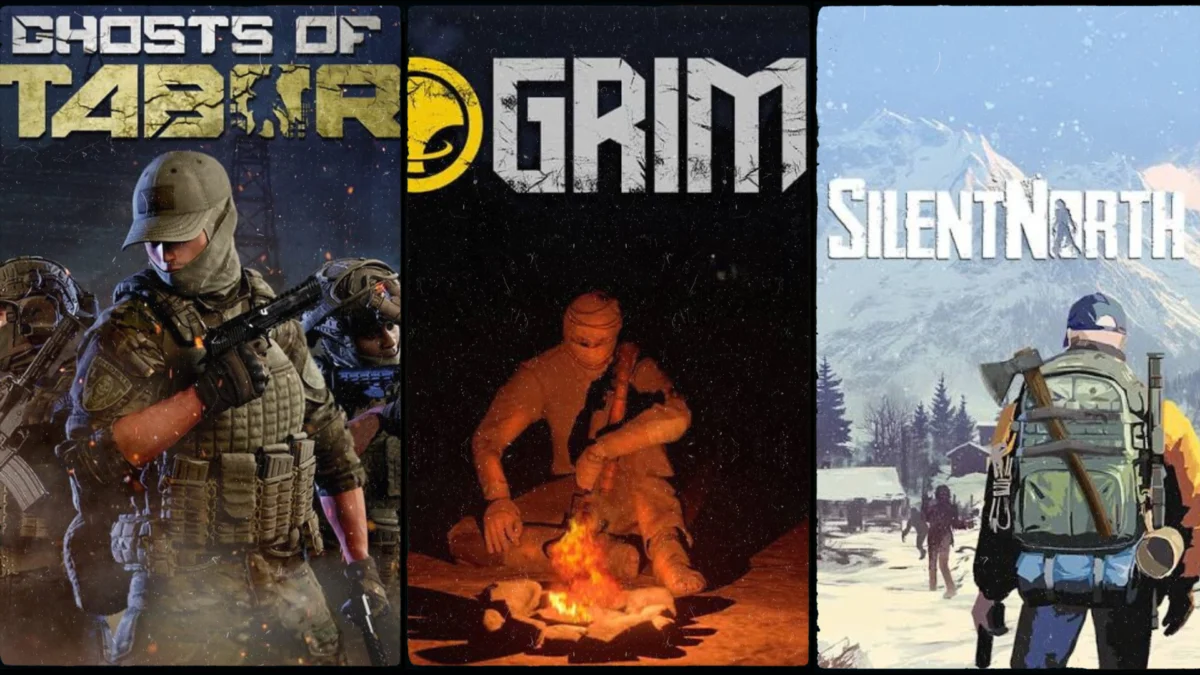
The virtual reality (VR) gaming industry, a sector often defined by its rapid shifts and high-stakes gambles, is witnessing a significant structural realignment. Beyond Frames Entertainment, a prominent figure in the VR publishing and development space, has officially announced the sale of publishing rights for three major titles developed by Combat Waffle Studios: the blockbuster extraction shooter Ghosts of Tabor, and the upcoming titles Grim and Silent North.
The transaction, valued at $1 million, marks a pivotal moment for both companies. It signals a "cashing out" strategy for Beyond Frames and a potential new chapter for Combat Waffle Studios, whose leadership has recently hinted at the complexities of developer-publisher relationships. As the VR market matures, this deal provides a case study in fiscal risk management, the volatility of independent game development, and the evolving nature of digital distribution agreements.
I. Main Facts of the Transaction
The deal involves a complete transfer of publishing rights from Beyond Frames to an undisclosed third-party entity. While the identity of the purchaser remains confidential at this stage, the financial structure of the deal has been made public through regulatory and corporate communications.
The $1 Million Valuation and Payment Structure
The $1 million purchase price is not being delivered as a single lump sum. Instead, the agreement outlines a structured four-year payment plan designed to align with projected revenue cycles:
- 2026: $300,000
- 2027: $300,000
- 2028: $250,000
- 2029: $150,000
According to Beyond Frames, this valuation is highly strategic. The company noted that the $1 million figure exceeds the expected net revenue the titles would have generated for the remainder of 2024 and matches the total forecasted revenue through 2028. By taking the money now—or securing it via a guaranteed contract—Beyond Frames is effectively mitigating the risk of "long-tail" revenue decay, which is common in the fast-paced VR hardware and software cycle.
The Titles Involved
The sale encompasses the "Combat Waffle Trilogy," which has defined a specific niche of hardcore, survival-oriented VR gaming:
- Ghosts of Tabor: A massive commercial success and the flagship title of the group. Often described as "Escape from Tarkov in VR," it has become a benchmark for the extraction shooter genre on Meta Quest and PCVR.
- Grim: A survival title currently in development/early access that seeks to bring "Rust-like" mechanics to the VR space.
- Silent North: A survival horror/action title that expands on the studio’s expertise in high-stakes, multiplayer environments.
II. Chronology of the Partnership
The relationship between Beyond Frames and Combat Waffle Studios was initially viewed as one of the most promising "power couples" in the VR industry.
- Early 2023: The partnership is first announced. Beyond Frames signs on to publish Ghosts of Tabor, providing the marketing muscle and distribution expertise needed to propel the indie title onto major storefronts.
- Mid-2023: Ghosts of Tabor experiences an explosive launch. It quickly climbs the charts on the Meta Quest Store (App Lab at the time) and Steam, proving that there is a massive appetite for "hardcore" VR shooters.
- Late 2023: Encouraged by the success of Tabor, the two companies extend their agreement. Beyond Frames signs on for two additional titles from Combat Waffle Studios—Grim and Silent North—presumably looking to create a "survival ecosystem" under their publishing banner.
- Early 2024: Internal pressures begin to surface. Despite the success of Tabor, Combat Waffle Studios announces a round of layoffs, a move that shocked the community given the game’s reported $30 million revenue milestone. This suggested that high revenue does not always equate to immediate fiscal stability in a rapidly expanding studio.
- Late 2024: Beyond Frames announces the sale of the publishing rights. Simultaneously, Combat Waffle releases Ghosts of Tabor: Legacy, notably listing the studio itself as both developer and publisher on certain storefronts, signaling the beginning of the transition.
III. Supporting Data: Financial Performance and Market Reception
To understand why Beyond Frames would sell the rights to a $30 million franchise for a seemingly modest $1 million, one must look at the data regarding game longevity and the performance of sequels.
The "Tabor" Phenomenon
Ghosts of Tabor is an outlier in the VR world. By the time it launched on PlayStation VR2, it had already generated $30 million in revenue. As of late 2024, the Legacy version of the game garnered over 1,100 ratings on the Meta Horizon Store within its first week of release. However, the VR market is notoriously "hit-driven." Beyond Frames’ internal forecasting likely suggested that while Tabor is currently profitable, the cost of maintaining servers, providing marketing support, and managing community relations for an "aging" title might eventually outweigh the diminishing returns of new sales.
The Challenge of Subsequent Titles
While Ghosts of Tabor was a runaway hit, Grim and Silent North have faced a steeper uphill battle.
- Market Saturation: The survival genre in VR has become increasingly crowded.
- User Sentiment: Based on store ratings and early access reviews, neither Grim nor Silent North has captured the cultural zeitgeist of the VR community in the same way Tabor did.
- Risk Mitigation: For a publisher, holding onto rights for two underperforming titles while relying on a single "cash cow" is a high-risk strategy. By selling the package, Beyond Frames secures a guaranteed $1 million, allowing them to pivot toward internal projects like TMNT: Empire City and Escaping Wonderland.
IV. Official Responses: A Study in "Creative Alignment"
The public statements from leadership offer a glimpse into the friction that often exists between creative studios and their financial backers.
Scott Albright’s Critique
In a candid LinkedIn post, Combat Waffle Studios CEO Scott Albright implied that the relationship with Beyond Frames had suffered from a lack of shared vision. He stated:
"Over the last few years, I’ve learned that a publishing agreement is about far more than what’s written on paper… What really matters is having a partner whose goals, communication, and vision align with your own. That’s something every independent studio should think carefully about before signing any deal."
Albright’s comments suggest that while the contract might have been legally sound, the operational reality of the partnership was likely strained. For an independent studio focused on rapid iteration and "hardcore" gameplay, a publisher’s corporate requirements or marketing strategies can sometimes feel like a hindrance rather than a help.
Beyond Frames’ Strategic Pivot
From the perspective of Beyond Frames, the sale is a move toward "leaner" operations. The company has a diverse portfolio, including Carly and the Reaperman, Outta Hand, and Mixture. By offloading the Combat Waffle titles, they reduce their exposure to the volatile "live service" shooter market and gain immediate capital to reinvest in their in-house studios.
V. Deep Dive: The Mechanics of VR Publishing Deals
To the casual observer, a $1 million sale for a $30 million franchise might seem like a "fire sale." However, understanding the mechanics of publishing deals reveals the logic behind the numbers.
The Investment vs. Recoupment Model
In a typical publishing deal, the publisher provides an upfront "Minimum Guarantee" (MG) or development funding. They then take a significant percentage of revenue—sometimes up to 100%—until their initial investment is "recouped," often with an additional 20-25% premium.
- The Storefront "Tax": Before a publisher or developer sees a cent, platforms like Meta, Steam, and Sony take a 30% cut.
- The Net Revenue Reality: If a game makes $10 million in "gross" sales, only $7 million remains after the platform cut. If the publisher is owed $2 million in recoupment, the developer’s share only begins to accumulate after that threshold is met.
Why Beyond Frames Sold
Beyond Frames likely calculated that the "Net Revenue" they would receive over the next four years (after accounting for their share and the costs of publishing) would be roughly equivalent to $1 million. By selling the rights, they receive that money as a guaranteed debt from the new buyer, rather than gambling on whether Ghosts of Tabor will remain popular or if Grim will ever turn a profit.
VI. Implications for the Future of VR Gaming
The dissolution of this partnership has several broader implications for the VR industry:
1. The Rise of Self-Publishing
Combat Waffle’s move toward self-publishing Ghosts of Tabor: Legacy reflects a growing trend among successful indie VR studios. Once a studio has a "hit" and a direct line to their community, the traditional services of a publisher (marketing, storefront placement) become less essential. Studios are increasingly choosing to retain 100% of their net revenue to fund their own development.
2. The "Extraction" Bubble
The success of Ghosts of Tabor led to a gold rush of VR extraction shooters. This deal may signal that the market is reaching a saturation point. If a major publisher is willing to part with the genre leader for a calculated exit, it suggests that the "easy growth" phase of VR extraction shooters may be concluding.
3. Financial Stability in VR
The layoffs at Combat Waffle earlier this year, despite their high revenue, serve as a cautionary tale. High-fidelity VR games are expensive to maintain. The "Games as a Service" (GaaS) model requires constant server costs and content updates. For Combat Waffle, finding a new publisher "aligned with their vision" may be a necessity to cover the overhead of their ambitious three-game roadmap.
4. Beyond Frames’ New Direction
By divesting, Beyond Frames is signaling a shift toward more curated, perhaps more "accessible" VR experiences (like the TMNT title). They are moving away from the "hardcore" survival niche, which requires intense community management and long-term live-service support, in favor of titles with more traditional development cycles.
Conclusion
The $1 million sale of the Combat Waffle publishing rights is a pragmatic move in an industry that is still finding its financial footing. For Beyond Frames, it is an exit strategy that secures future capital and reduces risk. For Combat Waffle Studios, it is a chance to reset and find a partner—or a path to independence—that matches their aggressive, community-focused development style. As the payments roll out over the next four years, the VR industry will be watching closely to see if Ghosts of Tabor can maintain its crown, or if this sale marks the peak of the studio’s influence.