Headline: From 1920s Bureaucracy to the Digital Frontier: A Retrospective Analysis of Social Evolution, Consumer Protection, and Human Connectivity

Introduction
In an era defined by rapid technological shifts and the erosion of traditional social structures, a retrospective look at the evolution of public life offers a unique vantage point on the modern condition. Drawing from over a century of political, commercial, and social history, we examine the shifting landscape of American life—from the localized duties of a 1920s Lieutenant Governor to the complex ethical dilemmas of a cashless society and the psychological demands of the digital age. This analysis explores how the mechanisms of commerce, the standards of consumer protection, and the nature of human (and animal) interaction have transformed, revealing a society in a constant state of recalibration.
Main Facts: The Intersection of History and Modernity
The core of recent socio-cultural discourse centers on the "Comic Strip of the Day" reflections by veteran journalist Mike Peterson, who has chronicled daily life since 2010. His recent observations serve as a catalyst for a broader investigation into several key areas:
- Political Utility: The changing role of state-level executives and the visibility of their daily functions.
- Commercial Ethics: The transition from high-pressure physical sales tactics to the sophisticated, often predatory, digital marketing of the 21st century.
- Data Privacy: The journey from public telephone directories to the "unlisted" era, and finally to the modern data-mining economy.
- Social Safety Nets: The impact of a cashless economy on the most vulnerable populations, specifically panhandlers and the homeless.
- Digital Mental Health: The psychological imperative to ignore "trolls" and the evolution of social etiquette in online spaces.
Chronology of Social and Commercial Evolution
The 1920s: A Formalized Bureaucracy
In 1920, the office of the New York Lieutenant Governor operated within a framework of rigid formality. While the specific partisan leanings of the era shifted between the Republican dominance of the post-WWI years and the rising Democratic influence in urban centers, the "duties" of the office were often ceremonial yet deeply embedded in the social fabric. This period represented the peak of localized governance, where the actions of a public official were chronicled in daily newsprint, providing a "peek" into a world that felt both more accessible and more structured than the modern political machine.
The Mid-20th Century: The Rise of the Sophisticated Sales Pitch
By the mid-to-late 20th century, the American economy transitioned into a "sales-first" mentality. This era saw the birth of the high-pressure seminar and the "housing development tour." These tactics relied on creating a sense of urgency—often artificial—using tools like radio broadcasts of "sold" lot numbers to manipulate prospective buyers. This period marked a shift from simple trade to psychological maneuvering, setting the stage for modern consumer skepticism.
The Late 20th Century: The Golden Age of Consumer Protection
During the 1980s and 1990s, the role of the Attorney General and consumer reporters became central to the American identity. This was an era where regulatory bodies were perceived as being "on the side of the citizens." High-profile "busts" of deceptive companies—such as those offering "grandfather clocks" that turned out to be cardboard replicas—reinforced a social contract where the state actively policed corporate malfeasance.
The 21st Century: The Digital Migration
The current era is defined by the disappearance of physical infrastructure, such as the phone book, and the rise of "computerized harassment." The transition from public data to private, monetized data has fundamentally altered the concept of the "unlisted number," moving privacy from a paid convenience to a complex digital battleground.
Supporting Data: The Cost of Progress
The evolution of these social structures is not merely anecdotal; it is reflected in the economic and psychological data of the past three decades.
The Decline of the Physical Directory
The United States Postal Service (USPS) has seen a significant shift in revenue streams due to the obsolescence of the phone book. In the late 20th century, the delivery of massive directories was a logistical staple. As these moved from doorsteps to lobby stacks, and finally to the recycling bin of history, the USPS lost a consistent source of bulk-mail revenue. Simultaneously, the rise of the "unlisted number"—which once carried a nominal fee—has been replaced by sophisticated "Do Not Call" registries, which, according to FTC data, receive millions of complaints annually despite federal oversight.

The Cashless Economy and Social Marginalization
The move toward a cashless society has had an unintended "karmic burden" on social interactions. In major metropolitan areas like Montreal or New York, the transition to credit-card-only transactions has complicated the act of direct charity. While companies like Hardee’s or McDonald’s accept digital payments, the "begging cup" remains a cash-based tool. Economic reports indicate that as cash usage drops (down to roughly 18% of all payments in some demographics), the "visibility" of the homeless often results in avoidance rather than assistance, as passersby lack the physical currency to help.
The Psychology of the "Head Tilt"
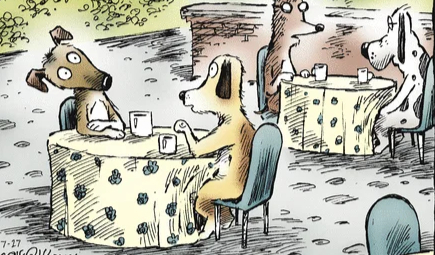
The human-animal bond remains one of the few constants in social evolution. Research into therapy dogs, such as Rhodesian Ridgebacks or Spaniels, shows that inter-species communication often bypasses neurological barriers. A notable case involves an aphasic patient in a nursing home who, after months of silence, spoke his first words to a therapy dog. This "head tilt" reaction—a canine expression of curiosity and empathy—serves as a biological counterpoint to the coldness of digital interaction.
Official Responses and Regulatory Perspectives
Consumer Protection Shifts
Historically, Attorneys General were the primary line of defense against "bad guys." In recent decades, however, the focus has shifted toward large-scale class-action lawsuits and digital privacy settlements. Regulatory experts note that while the "cardboard grandfather clock" scams of the past were easily identifiable, modern scams involve complex "troll" networks and phishing schemes that are harder to prosecute under traditional consumer law.
The USPS and Digital Transformation
The USPS has officially acknowledged the hit to revenue caused by the decline of traditional print advertising and directories. Their response has been a pivot toward package delivery and e-commerce logistics, though the loss of the "phone book era" remains a symbolic milestone in the end of localized physical data.
Mental Health Advocacy on Digital Conduct
Psychologists and digital ethicists increasingly advocate for a "shaking of the dust" approach to online harassment. The advice to "answer not a fool according to his folly" has moved from a biblical proverb to a clinical recommendation for maintaining mental health. Professionals suggest that publicizing "crank messages" or engaging with trolls only serves to "obsess over garbage," advising users to utilize "block" functions as a form of digital hygiene.

Implications: Navigating the Future
The implications of these shifts are profound, touching on the very nature of how we perceive our neighbors and our responsibilities.
The "Satiable Curiosity" Mandate
As noted through the lens of Rudyard Kipling’s "The Elephant’s Child," the trait of curiosity—while often punished in childhood—is the backbone of a functional democracy. A society that stops asking "why" a panhandler is on the street, or "how" a sales pitch is being manipulated, is a society prone to stagnation. The "journalistic instinct" must be preserved as a tool for navigating a world filled with "odd and fascinating serendipity."
The Ethics of Observation
The "Juxtaposition of the Day"—the contrast between gazing at a beautiful, unspoiled valley and walking past a suffering human being—poses the defining question of the current generation. How many times can a person "turn his head and pretend that he just doesn’t see?" The lesson of the "Montreal burger"—buying food when cash is unavailable—suggests that while the tools of charity may change, the obligation remains.
The Soul of the Machine
Finally, as we move deeper into an automated world, the importance of "keeping your soul clean" becomes paramount. Whether it is through supporting organizations like Doctors Without Borders or simply learning to read the body language of a dog, the preservation of empathy is the only defense against the "computerized harassment" of the modern age.
Conclusion

From the 1920s to the 2020s, the landscape of American life has moved from the physical to the digital, and from the localized to the global. Yet, the core challenges remain the same: distinguishing truth from a "sales pitch," protecting the vulnerable in a changing economy, and maintaining a sense of curiosity in a world that often rewards apathy. As we look back on the "grandfather clocks" and "unlisted numbers" of the past, we are reminded that the "lesson to be absorbed" is one of constant vigilance, empathy, and the wisdom to know which "dust" to shake from our sandals.