Edmond Hamilton’s ‘Starwolf’ Trilogy: A Masterclass in Evolved Space Opera
Main Facts: Reclaiming the Frontiers of Classic Science Fiction
In a bi-weekly exploration of classic science fiction and fantasy, Reactor Magazine’s "Front Lines and Frontiers" series delves into the foundational works that have shaped the genre. This installment focuses on Edmond Hamilton’s acclaimed Starwolf trilogy, an omnibus edition that encapsulates the thrilling essence of early space opera while subtly introducing narrative complexities that defy its pulp origins. Often heralded as "The World Wrecker" for his grand-scale cosmic narratives, Hamilton crafted a saga that remains a vibrant testament to adventure, exploration, and the nuanced evolution of an author’s craft.
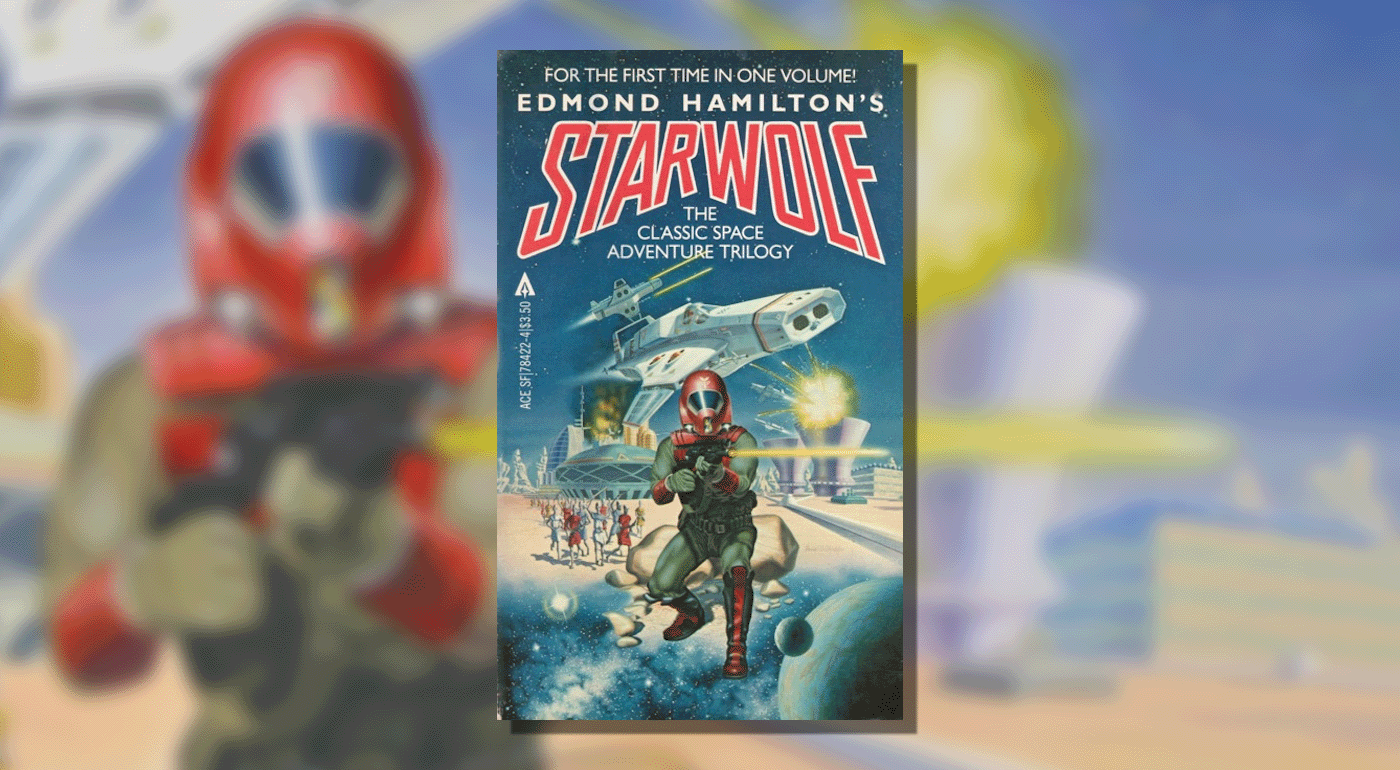
The Starwolf omnibus, originally published in paperback by Ace Books in 1982, compiles three distinct yet interconnected novels: The Weapon from Beyond (1967), The Closed Worlds (1968), and World of the Starwolves (also 1968). This collection introduces readers to Morgan Chane, a compelling protagonist whose unique upbringing among alien raiders sets him on a path through interstellar conflict and personal discovery. The trilogy is celebrated not only for its high-octane action—a hallmark of space opera—but also for its innovative twists that artfully subvert established genre clichés, injecting a refreshing originality into the proceedings. Despite the artistic merit of the collected works, the 1982 omnibus cover art, uncredited and seemingly inspired more by contemporary television shows like Battlestar Galactica than the book’s specific narrative, serves as a curious footnote, raising questions about the intersection of publishing trends and literary content.
Chronology: From Pulp Pioneer to Space Opera Maestro
Edmond Hamilton (1904-1977) stands as a colossus in the annals of science fiction, a prolific pulp writer whose career commenced before "science fiction" had firmly entered popular lexicon. His pioneering spirit defined early space opera, a subgenre he largely helped to invent and popularize. Hamilton’s creative genius gave birth to iconic characters such as Captain Future and significantly contributed to the burgeoning comic book industry through his work with DC Comics. His extensive bibliography and profound impact on the genre have been previously highlighted in various critical analyses, including several features in this very column, comparing his early Captain Future works with modern reboots, reviewing his classic novel The Star Kings, and exploring his short novels A Yank at Valhalla and City at World’s End. Many of Hamilton’s early stories, now in the public domain, are readily available for discovery via digital archives such as Project Gutenberg, offering a glimpse into the formative years of speculative fiction.
A critical aspect of Hamilton’s legacy is his remarkable evolution as a writer. Literary analysis often posits that authors, much like musicians, may have a finite period of peak creativity, producing a few seminal works early in their careers before their later output either recycles ideas or struggles to adapt. Edmond Hamilton, however, represents a powerful counter-narrative to this "writer’s entropy." His trajectory demonstrates a continuous refinement of his craft, a development widely attributed to the influence of his wife, the equally incomparable Leigh Brackett, a celebrated science fiction and fantasy author in her own right. Prior to their marriage, some of Hamilton’s fiction, while imaginative, occasionally bore the hallmarks of a writer producing for volume rather than depth. Yet, over the years, his narratives grew significantly in sophistication. Plots became more intricately woven, prose grew tighter and more evocative, and characters resonated with greater complexity and emotional conviction. The Starwolf trilogy stands as a prime example of this mature Hamilton, a series that, while firmly rooted in the classic space opera tradition, showcases a writer at the zenith of his powers, delivering fast-paced action alongside compelling narratives and deeply engaging characters.
The Starwolf saga unfolds with a rich tapestry of adventure across its three volumes:
-
I. The Weapon from Beyond (1967): The journey begins with Morgan Chane, a human orphaned on the high-gravity world of Varnan and raised among its fearsome Starwolf raiders. Facing certain death after a defensive killing, Chane escapes his homeworld, severing his ties to the Starwolves to avoid universal condemnation. He is rescued by a band of Earth mercenaries, led by the astute John Dilullo, who, despite recognizing Chane’s deception, sees his potential. Their first mission involves investigating a supposed alien superweapon discovered by the Vhol, enemies of their clients, the Kharali. Chane, leveraging his cunning, engineers an escape for a Vhol prisoner to lead the Mercs to the alleged weapon. Here, Hamilton masterfully subverts expectations: the "weapon" is not a destructive force, but a derelict exploration vessel laden with treasures from across the galaxy. The Vhol expedition leader is revealed to be a frustrated scientist, not a warmonger, struggling to convince his superiors of the artifact’s true nature. As an alien rescue vessel arrives, the Mercs are rendered helpless, mere observers to a species so advanced they deem humanity irrelevant. The book concludes not with a climactic battle, but with a profound sense of wonder and humanity’s humbled place in the cosmos, a stark departure from typical pulp narratives.
-
II. The Closed Worlds (1968): With Chane now an integral member of the Mercs and his bond with Dilullo deepening, the team returns to Earth. Their next assignment comes from the wealthy businessman James Ashton, whose brother Randall has vanished on the enigmatic "Closed Worlds." Before their departure, Chane undertakes a poignant journey to Wales, his parents’ birthplace, finding a fleeting sense of belonging. The voyage to the closed world of Arkuu provides rich character moments, humorously pitting the cautious shipmaster against the audacious pilot—a testament to Hamilton’s evolving skill in crafting relatable secondary characters. On Arkuu, government officials obstruct the Mercs’ investigation, eventually driving them off the planet. However, a coded signal of "Ashton" draws them back. Chane encounters Vreya, a strong, capable woman who becomes both an adversary and a love interest, notably depicted with agency rather than as a damsel in distress. They discover the "Free-Faring," a device allowing instantaneous spirit travel across stars, but at the cost of the user’s physical well-being. Randall Ashton is found emaciated, a victim of the device’s seductive power. Only Chane and Vreya, with their extraordinary willpower, can use the Free-Faring without succumbing. After battling fanatics determined to destroy the device and hordes of fierce humanoids known as the Nanes, the Mercs escape, leaving Vreya to harness the Free-Faring for her people, promising a potential, yet uncertain, future reunion with Chane.
-
III. World of the Starwolves (1968): The trilogy reaches its grand crescendo as Dilullo contemplates retirement, but Chane, ever ambitious, proposes one final, lucrative mission: recovering the "Singing Suns," priceless jewels stolen by the Starwolves from Achernar. The colossal reward necessitates Dilullo’s return to lead the Mercs. Posing as asteroid miners, they venture into the perilous Argo Spur, encountering eerie, telepathically charged statues that hint at ancient, slumbering threats. Their investigation leads them to the planet Mruun, where they uncover that the Singing Suns have been resold to various buyers, ultimately ending up on Qajar, a heavily defended world unknown to the Mercs. Further intelligence from the planet Rith, where they are briefly imprisoned, confirms Qajar’s impenetrable defenses, including "Lethal Worlds"—entire planets rigged with explosives. Faced with seemingly insurmountable odds, Chane devises a desperate, audacious plan: return to Varnan, his former homeworld where a death sentence awaits him, and persuade the Starwolves to plunder Qajar, with the Singing Suns as his only demand. This act underscores Chane’s profound loyalty to Dilullo and his friends. Back on Varnan, Chane navigates the treacherous politics of the Starwolf leadership, securing a temporary reprieve from his blood feud, aided by his old mentor Berkt and rekindling an old friendship with Graal. Despite the incongruity of their "cat-like" description versus the "Starwolf" moniker, the council agrees. The narrative culminates in an epic space battle, with exploding planets, missile barrages, and clashing fleets, as Chane embarks on his personal quest to reclaim the Singing Suns amidst the galactic maelstrom, bringing a thrilling and satisfying conclusion to the trilogy.
Supporting Data: The Craft of "The World Wrecker"
Edmond Hamilton’s Starwolf trilogy serves as a fascinating case study in authorial development and genre innovation. While firmly rooted in the pulpy, action-oriented tradition of space opera, Hamilton consistently elevates the material with surprising depth and thoughtful subversions.
- Genre Innovation and Subversion: Hamilton, a master of the genre, understands its conventions intimately, which allows him to play with them effectively. In The Weapon from Beyond, the expectation of a destructive alien superweapon is brilliantly upended by the discovery of an ancient exploration vessel. This shift transforms a potential battle scenario into a moment of profound cosmic awe, where humanity is confronted with its own insignificance in the face of truly advanced civilizations. This narrative choice broadens the scope of space opera beyond mere conflict, touching upon themes of discovery and existential scale.
- Character Development and Complexity: The trilogy excels in its portrayal of compelling characters who grow and evolve. Morgan Chane is not a one-dimensional hero; his internal conflict between his human heritage and Starwolf upbringing provides rich psychological depth. His journey is one of self-discovery and finding a new family among the Mercs. John Dilullo, the pragmatic mercenary leader, transcends the typical gruff mentor trope, displaying wisdom, loyalty, and a keen understanding of human nature. Vreya, introduced in The Closed Worlds, is a particularly strong female character for her era, possessing intelligence, agency, and a distinct purpose beyond simply being a romantic interest. Her decision to use the Free-Faring for her people’s benefit, rather than following Chane, highlights her independence and vision. Even secondary characters, such as the cautious shipmaster and the bold pilot in The Closed Worlds, are given humorous and distinct personalities, adding texture to the narrative.
- Thematic Richness: Beyond the thrilling chases and battles, Hamilton explores several potent themes. Identity is central to Chane’s narrative, as he grapples with his dual heritage and finds belonging. Loyalty, particularly Chane’s unwavering dedication to Dilullo, forms a core emotional anchor for the series. The dangers and allure of advanced technology are vividly portrayed through the Free-Faring device, which offers incredible power but demands immense self-control, raising questions about humanity’s capacity to wield such tools responsibly. The vastness of the universe and humanity’s often-humble place within it, as demonstrated by the alien encounter in the first book, instill a sense of wonder and perspective.
- Legacy and Influence: The Starwolf trilogy, arriving late in Hamilton’s career, showcases a writer who had honed his craft over decades. It stands as a testament to the idea that creativity can deepen and improve with experience. This series, with its compelling plots, vivid action, and surprising philosophical undertones, undoubtedly influenced subsequent generations of space opera writers, demonstrating that the genre could offer both thrilling escapism and thoughtful exploration.
Critical Assessment: A Legacy of Excitement and Wonder
From a critical standpoint, the Starwolf trilogy is lauded as a triumph of mature space opera. Reviewers and readers alike have consistently praised its engaging narrative, the seamless blend of adventure, and the insightful science fiction concepts woven throughout. The series is widely considered well-written and highly entertaining, delivering on the promise of "alarums and excursions" that define classic pulp fiction while adding layers of sophistication.
The discernible improvement in Hamilton’s writing—particularly evident in the Starwolf books—is a recurring point of critical discussion. His marriage to Leigh Brackett is frequently cited as a pivotal influence, inspiring a shift towards more meticulously constructed plots, sharper dialogue, and more nuanced character portrayals. This evolution transformed Hamilton from a prolific pulp writer into a literary craftsman capable of profound narrative depth without sacrificing the exhilarating pace that characterized his earlier work.
The enduring appeal of the Starwolf trilogy lies in its ability to transport readers to imaginative worlds, populated by memorable characters, and confronting them with thought-provoking ideas. The clever twists, such as the true nature of the "weapon from beyond" or the double-edged sword of the "Free-Faring" device, keep the narratives fresh and unpredictable. While the choice of a generic Battlestar Galactica-esque cover for the 1982 omnibus might be seen as a minor misstep in marketing, it does little to diminish the quality of the stories contained within. The trilogy represents a high point in Hamilton’s extensive career, showcasing a writer who, far from fading, was concluding his long professional journey with a resounding bang.
Implications: The Enduring Resonance of Space Opera’s Golden Age
Edmond Hamilton’s Starwolf trilogy holds significant implications for the understanding of science fiction history and authorial development. Firstly, it reinforces Hamilton’s status as an indispensable foundational figure in space opera, demonstrating that his contributions extended beyond simply defining the genre; he actively refined and elevated it throughout his career. His journey serves as a powerful reminder that literary growth is not always linear and can be profoundly shaped by personal and professional influences, such as his partnership with Leigh Brackett.
Secondly, the trilogy underscores the enduring appeal and flexibility of classic science fiction. These stories, penned over half a century ago, continue to resonate with contemporary audiences due to their timeless themes of identity, loyalty, exploration, and humanity’s place in the universe. They exemplify how "pulp adventure" can transcend its origins to offer rich, engaging narratives that stand the test of time, proving that exciting plots and vivid worlds are not mutually exclusive with thematic depth.
Finally, the Starwolf series encourages a broader appreciation for authors whose careers show a marked improvement over time. In an industry often focused on immediate impact, Hamilton’s trajectory champions the idea of sustained artistic development. His legacy inspires a re-examination of other classic authors, inviting readers and critics to consider the full arc of a writer’s output and the often-unseen factors that contribute to their maturation. The Starwolf trilogy thus stands not just as a thrilling space adventure, but as a compelling argument for the perpetual evolution of creativity and the timeless power of well-crafted storytelling in the vast frontiers of the imagination.