William N. Copley’s Audacious "X-Rated" Series Takes Center Stage at Galerie Max Hetzler
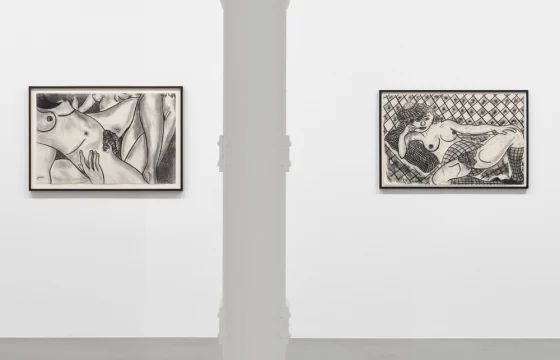
Berlin, Germany – Galerie Max Hetzler is proud to present X-Rated (1972–1974), a captivating solo exhibition showcasing a pivotal body of work by the enigmatic artist William N. Copley. This marks the fourth presentation of Copley’s oeuvre at the renowned Berlin gallery, offering a deep dive into a period of audacious artistic exploration that continues to resonate with contemporary audiences. The exhibition will be on view through April 22, 2026, providing ample opportunity for art enthusiasts to engage with Copley’s provocative and intellectually stimulating creations.
The exhibition focuses on Copley’s seminal "X-Rated" series, a collection of paintings and works on paper created between 1972 and 1975. This series, first unveiled in 1974 at the New York Cultural Center, represents a bold and unflinching confrontation with eroticism, sexual politics, and the very nature of pleasure. Sourced from imagery found in adult magazines of the era, Copley aimed to transcend mere titillation, seeking instead to "break through the barrier of pornography into the area of joy," as he himself articulated. In a decade where explicit content was still legally restricted in the United States, Copley’s clandestine acquisition of "adult magazines" became the genesis for a body of work that is as intellectually rigorous as it is visually arresting.
A Painter’s Unconventional Genesis: From Literature to the Surrealist Avant-Garde
William N. Copley’s journey into the art world was far from conventional. Before he picked up a paintbrush, his ambitions lay firmly in the realm of literature. This literary inclination would profoundly shape his artistic practice, imbuing his paintings with a narrative depth and conceptual complexity that set him apart. In the late 1940s, Copley, alongside his brother-in-law, the artist John Ployardt, co-founded and operated Copley Galleries in Beverly Hills. This pioneering venture was dedicated to showcasing the works of exiled Surrealists, bringing Copley into direct and intimate contact with luminaries such as Man Ray, Max Ernst, and Marcel Duchamp. This immersion in the Surrealist milieu, coupled with his interactions with influential dealer Alexander Iolas, ignited his nascent artistic aspirations and provided crucial encouragement to pursue his own creative path.
It was around the closure of Copley Galleries that he adopted the distinctive moniker "CPLY," a signature that would become synonymous with his unique artistic vision. His inaugural exhibition, held at a Los Angeles bookstore in 1951, preceded his significant move to France, a relocation that would further shape his artistic development and expose him to a vibrant European art scene.
Surrealist Echoes and Pop Art Sensibilities: The CPLY Aesthetic
Though a generation younger than the core Surrealist movement, Copley’s work is deeply interwoven with its conceptual and personal underpinnings. The movement’s emphasis on the subconscious, dreams, and the liberation of the imagination resonated profoundly with him. His signature style, characterized by bold black outlines and a distinctively self-taught figurative approach, often draws comparisons to the aesthetics of comic strips and Pop Art. However, Copley’s engagement with these visual languages was far more nuanced than mere appropriation. He approached painting with a literary sensibility, employing narrative strategies that not only embodied Surrealist principles but also served as the engine for the structural evolution of his compositions.
Like many Surrealists, Copley recognized the intrinsic value of humor, psychology, and eroticism as fundamental elements of the creative process. Yet, his exploration of overtly sexual subjects ventured beyond the often playful and suggestive eroticism favored by his contemporaries. Copley delved into the raw, unfiltered aspects of human sexuality, challenging societal norms and pushing the boundaries of artistic representation. This willingness to confront taboo subjects with candor and artistic intelligence became a hallmark of his practice, particularly evident in the "X-Rated" series.
The "X-Rated" Series: A Bold Exploration of Eroticism and Joy
The heart of the Galerie Max Hetzler exhibition lies in Copley’s "X-Rated" series, a collection of works created between 1972 and 1975 that represent a singular and audacious chapter in his oeuvre. These pieces, born from an era when the visual landscape of explicit content was far more restricted, represent Copley’s deliberate effort to dissect and reframe societal perceptions of sexuality. He sought to move beyond the sensationalism often associated with pornography, aiming instead to uncover a deeper, more joyful dimension of human experience.
Copley’s methodology involved meticulously sourcing imagery from adult magazines of the time. These were not merely passive observations; he actively engaged with this material, using it as a springboard for inventive figurative and narrative paintings that delved into the complexities of eroticism, the dynamics of sexual politics, and the universal pursuit of pleasure. The resulting works are characterized by a remarkable range of emotional and tonal expression. Some, like The Seven Year Itch (1973), exude a tender intimacy, while others, such as Viridiana (1973), burst with an exuberant, almost Dionysian energy. Almost invariably, a pervasive and often disarming humor underscores these explorations, preventing the subject matter from becoming overly didactic or prurient.
Copley’s own words illuminate his intent: "That’s what makes sex so much fun: since nobody really understands it, the possibilities for originality are endless." This belief in the inherent mystery and boundless potential of human sexuality fueled his artistic endeavors, allowing him to create works that are both provocative and profoundly insightful.
The Artist’s Process: From Sketch to Canvas
Copley’s artistic process was characterized by a rigorous, yet fluid, approach to composition. He typically employed a two-stage preparatory drawing system before embarking on a painting. The initial stage involved small-scale studies, where he would meticulously sketch out the fundamental ideas and compositional elements. This was followed by a larger, more developed version, where he would refine the composition, introduce significant changes, and heighten the overall pictorial dynamism of the work. This iterative process allowed him to explore various possibilities and ensure that the final painting possessed a carefully orchestrated visual impact.
The exhibition thoughtfully showcases this developmental journey by presenting multiple pairings of preparatory drawings alongside their corresponding completed paintings. This juxtaposition offers viewers a unique opportunity to witness Copley’s artistic evolution firsthand, revealing the subtle shifts in line, form, and composition that ultimately led to the final artwork. For instance, the pairing of the drawing Calcutta (1973) with its painted counterpart Untitled (1973) provides a compelling insight into his meticulous refinement process. The resulting paintings, despite their careful planning, retain a deliberately "slapdash" style, with figures rendered with a loose, gestural quality rather than with hyper-realistic precision. This approach contributes to the paintings’ vibrant energy and their direct, unpretentious appeal.
Visual Language and Critical Reception: A Fusion of Art and Eroticism
The "X-Rated" paintings are characterized by their striking visual language. Scenes depicting copulations and orgies are set against vivid, brightly colored backgrounds animated by bold, geometric patterns. This deliberate aesthetic choice, as critic James R. Mellow observed, renders the scenes "almost ‘too artful to be libidinous, let alone lascivious’." This sophisticated treatment of the background elements, combined with the contorted, entwined bodies rendered with attenuated limbs and schematic outlines, has led critics to draw parallels between Copley and the work of Henri Matisse. Both artists shared a fascination with the expressive potential of line and form, and a desire to imbue their figures with a sense of dynamic movement.
However, where traditional depictions of the nude and sexual imagery in art history often relied on suggestion, idealization, and a degree of veiled modesty, Copley presents the sexual act directly, leaving little to the viewer’s imagination. This unvarnished directness, coupled with his distinctive stylistic choices, creates a powerful tension between the explicit subject matter and the highly stylized artistic execution.
Adding another layer of complexity to his work, Copley often borrowed titles from iconic Hollywood movies. Titles such as Les Quatre Cent Coups (The 400 Blows), The Exorcist, or Tobacco Road serve to temper the potential shock of the pornographic image through a lens of comic playfulness and pop cultural sensibility. While the cinematic narratives rarely align explicitly with the visual content of the paintings, these borrowed titles initiate a cascade of associations for the viewer, prompting contemplation and a more nuanced engagement with the artwork. The very title of the series, "X-Rated," further reinforces this connection to the film industry, referencing the classification term used in the US until the 1990s for films deemed suitable only for adults.
The 1974 exhibition of the "X-Rated" series at the New York Cultural Center, under the direction of the progressive curator Mario Amaya, met with a notably positive critical response, despite a disclaimer that warned some visitors might find the subject matter offensive. Art in America writer Peter Schjeldahl hailed the presentation as a "uniformly gorgeous exhibition," recognizing it as "a highly satisfying development in Copley’s work." This acclaim underscores Copley’s ability to navigate controversial subject matter with artistic integrity and a profound understanding of visual aesthetics.
Legacy and Enduring Relevance: Challenging Norms in an Uncensored World
The "X-Rated" series stands as a singular and deliberately distinct chapter within William N. Copley’s extensive oeuvre, a body of work that consciously diverged from the prevailing artistic currents of the early 1970s. Even in today’s ostensibly uncensored and image-saturated world, Copley’s suggestive canvases retain a potent subversive charge. His art challenges the notion of artistic neutrality, actively rejecting moralistic constraints in favor of a direct, uninhibited exploration of human experience.
By masterfully merging high art with eroticism, Copley consistently questioned conservative norms and pushed the boundaries of acceptable artistic discourse. His legacy lies not only in his distinctive visual style and his audacious subject matter but also in his unwavering commitment to exploring the multifaceted nature of human desire and pleasure. The exhibition at Galerie Max Hetzler offers a timely opportunity to revisit and re-evaluate this groundbreaking body of work, celebrating Copley’s enduring contribution to the discourse on art, sexuality, and the pursuit of unadulterated joy.