Revisiting History: Unearthing the Crucial Contributions of Women in Science and Technology
The term "revisionist history" often carries a negative connotation, conjuring images of distorted narratives and deliberate obfuscation. However, a closer examination reveals that the periodic revision of our historical understanding is not only inevitable but essential. As new evidence emerges and societal perspectives evolve, our comprehension of the past must adapt. This process of historical revision, far from being regressive, enriches our knowledge, challenges ingrained prejudices, and ultimately leads to more accurate, engaging, and impactful scholarship. This ongoing endeavor has illuminated the significant, and often previously overlooked, contributions of marginalized individuals to scientific and technological advancements. From the "human computers" at NASA, whose vital work was dramatized in the film Hidden Figures, to the thousands of women who toiled at Bletchley Park deciphering complex Nazi codes during World War II, history is being rewritten to reflect a more inclusive and truthful account of human ingenuity. Similarly, the remarkable scientific contributions of film star Hedy Lamarr, instrumental in the development of technologies underpinning Wi-Fi and Bluetooth, might have remained obscure without the dedicated research of historians like Richard Rhodes. These examples, among countless others, offer a more complete and compelling narrative of scientific and technological history, serving as powerful inspirations for women and girls aspiring to enter these fields, particularly in an era where relatable role models have historically been scarce.
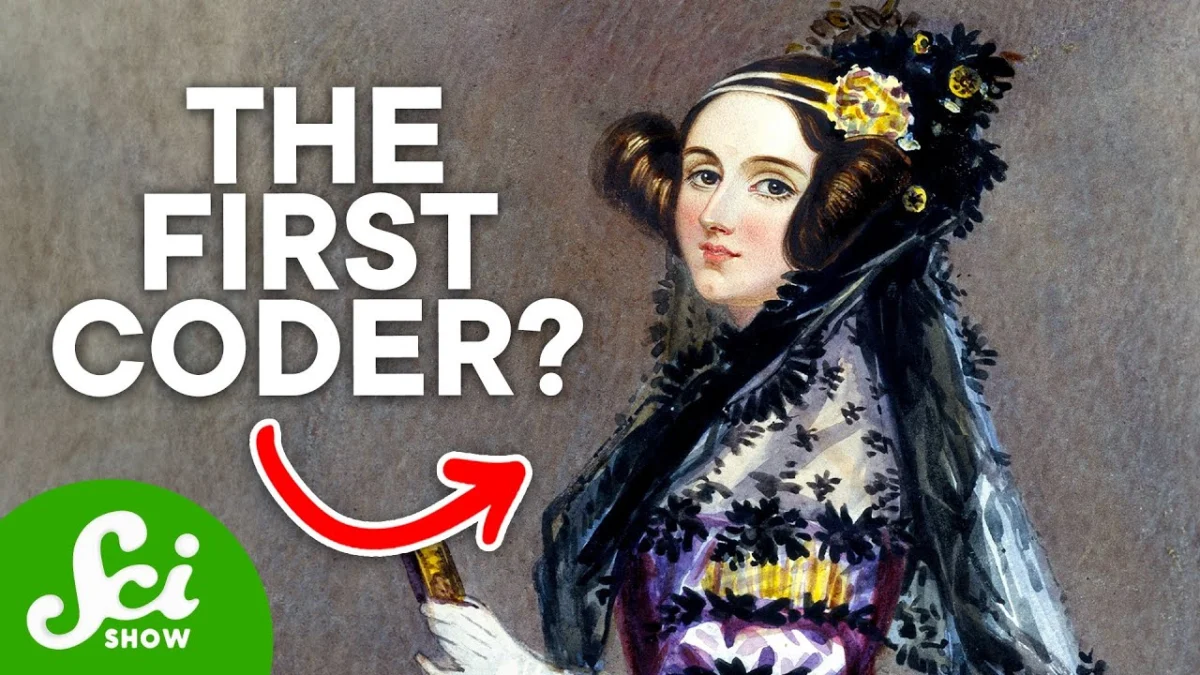
This exploration delves into the life and work of Ada Lovelace, the daughter of the Romantic poet Lord Byron, a figure increasingly recognized for her foundational role in the history of computing. While often celebrated for writing what is considered the first computer program, her legacy has been a subject of historical debate, with some viewing her as a pivotal hero in computing’s genesis and others as a figure whose importance has been overstated.
The Genesis of a Pioneer: Ada Lovelace’s Early Life and Education
Born Augusta Ada Byron in 1815, Ada Lovelace’s upbringing was significantly shaped by her mother, Anne Isabella Milbanke, Lady Byron. Driven by a desire to counteract any perceived "poetic madness" inherited from her estranged husband, Lord Byron, Lady Byron rigorously educated Ada in mathematics and logic from a young age. This unconventional, yet rigorous, academic foundation set the stage for Ada’s later intellectual pursuits.
Her introduction to the world of mechanical computation came through her association with Charles Babbage, a brilliant mathematician and inventor. Babbage was then developing his groundbreaking Difference Engine, a complex mechanical calculator designed to automate the production of mathematical tables. This intricate, hand-cranked contraption, comprising thousands of brass parts, captured Ada’s imagination and ignited her profound interest in the potential of mechanical computation. Babbage recognized and encouraged Ada’s intellectual prowess, fostering her engagement with his ambitious projects.
The Analytical Engine and the Dawn of the Algorithm
Babbage’s ambition extended beyond the Difference Engine. He conceived of a far more sophisticated machine, the Analytical Engine, a design that laid the theoretical groundwork for modern computers. Unlike its predecessor, the Analytical Engine was envisioned as a general-purpose computing machine, capable of executing a wide range of operations based on a programmable sequence.
The pivotal moment in Ada Lovelace’s recognition came through her translation of an article by Italian mathematician Luigi Menabrea about the Analytical Engine. Commissioned by Babbage in 1842, Ada not only translated the French text into English but also appended a series of extensive "Notes" that would become the source of her enduring fame. These notes, which more than tripled the length of the original article, demonstrated a profound understanding of the Analytical Engine’s capabilities that, in many ways, surpassed even Babbage’s own immediate vision.
Lovelace’s Notes: Foresight into the Digital Age
Ada Lovelace’s "Notes" were not merely an exposition of Babbage’s invention; they were a visionary leap into the future of computation. Through meticulous analysis of Babbage’s correspondence and the engine’s design, Ada demonstrated a remarkable ability to extrapolate its potential beyond mere number crunching. She understood that the Analytical Engine, with its capacity for programmed sequences, could manipulate not just numbers but any symbols that could be represented.
In Note G, often cited as the first computer program, Lovelace outlined an algorithm for the Analytical Engine to compute Bernoulli numbers. This detailed step-by-step process, designed to be executed by the machine, is widely regarded as the first instance of a computer program being written. Her foresight extended to the concept of a general-purpose computer, a machine capable of performing a vast array of tasks based on instructions. As the San Diego Supercomputer Center’s Women in Science project notes, Lovelace "rightly saw [the Analytical Engine] as what we would call a general-purpose computer." She envisioned its application in "developing and tabulating any function whatsoever," recognizing that the engine was "the material expression of any indefinite function of any degree of generality and complexity."
Her notes also presciently touched upon the potential for computers to generate music and art, a concept far ahead of her time. This profound insight into the abstract and creative capabilities of computing cemented her legacy as a visionary in the field.
The Historical Debate and Reassessment
Despite the significance of her contributions, Ada Lovelace’s place in history has been a subject of ongoing discussion and reevaluation. Some historians have viewed her primarily as an eloquent exponent of Babbage’s ideas, while others, like mathematician Stephen Wolfram, have championed her as a more independent and innovative thinker.
Wolfram, after immersing himself in original documents and correspondence, concluded that while Ada built upon Babbage and Menabrea’s work, she was "clearly in charge" of extrapolating the Analytical Engine’s possibilities. He noted that she felt compelled to consult Babbage, believing she was "first and foremost explaining Babbage’s work," yet her own intellectual contributions were substantial. Babbage himself acknowledged the quality of her work, reportedly telling her, "you should have written an original paper." Michael Faraday, a prominent scientist of the era, lauded her as the "rising star of Science."
However, the societal constraints of the Victorian era also played a role in her story. As a woman, Ada was denied access to the Royal Society’s library, a privilege reserved for men. Furthermore, her promising career was tragically cut short by a severe health crisis. She died of cancer at the young age of 36, and for a period, her groundbreaking work faded into relative obscurity.
The Enduring Impact and Modern Relevance
The re-examination of historical narratives, particularly concerning women in science and technology, has brought Ada Lovelace’s pioneering contributions back into sharp focus. Her work on the Analytical Engine anticipated many of the fundamental principles that underpin modern computing. The concept of a programmable machine, the idea of algorithms, and the recognition of computing’s potential for creative applications are all seeds sown by her intellectual labor.
The resurgence of interest in Lovelace’s life and work is not merely an academic exercise. It serves a crucial purpose in inspiring future generations, particularly young women, who may have historically lacked visible role models in STEM fields. By unearthing and celebrating the achievements of figures like Ada Lovelace, we provide tangible evidence of women’s capacity for groundbreaking scientific and technological innovation, encouraging them to pursue their own ambitions in these vital areas.
The ongoing efforts to "revise" history by including these previously marginalized voices are essential for creating a more accurate, equitable, and inspiring understanding of our collective past and future. Ada Lovelace’s story, once relegated to the footnotes of computing history, now stands as a testament to the power of intellect, foresight, and the enduring importance of inclusive historical scholarship. Her legacy continues to resonate, reminding us that the foundations of our digital world were laid by minds that dared to dream beyond the limitations of their time, and that acknowledging these contributions is vital for fostering a more innovative and equitable future.