The Evolution of the Digital Deck: Silberheim ECG and the Shift Toward Player-Driven Narratives
The landscape of digital collectible card games (CCGs) has long been dominated by established titans and a rigid adherence to the "live-service" model. However, a new contender from the German indie scene is aiming to disrupt the status quo. Developed by Beyond Worlds GmbH, Silberheim Evolving Card Game (ECG) represents a significant departure from traditional genre tropes. By introducing a system where cards, world lore, and player accounts evolve in real-time based on individual agency, the title seeks to redefine what it means to "own" a digital collection.
Following a high-profile showcase at the Summer Game Fest 2026, Silberheim ECG has moved into a critical phase of its development. With a Steam release scheduled for later this year, the game is currently undergoing rigorous beta testing, inviting players to shape a world that promises to grow alongside them.
Main Facts: Defining the "Evolving Card Game"
The core differentiator of Silberheim is its self-appointed classification as an "Evolving Card Game" (ECG). While the CCG market—led by titles like Hearthstone and Magic: The Gathering Arena—typically relies on static card libraries that are updated through seasonal expansions, Silberheim introduces a dynamic layer of customization that is unique to each user.
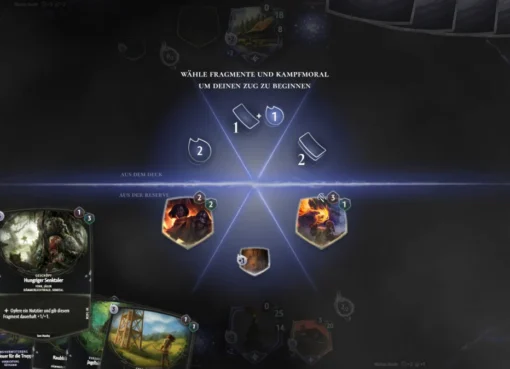
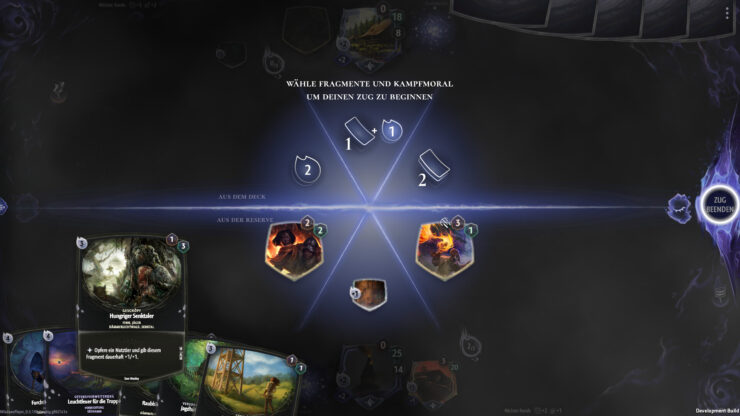
In Silberheim, cards are not merely static tools; they are "memory fragments" that evolve based on a player’s specific actions and playstyle. This evolution is not a universal power creep where every player’s card reaches the same final form. Instead, the process is individual and tailored. If a player favors defensive maneuvers, their cards may develop traits that reward resilience; if they prefer aggressive, high-risk strategies, the cards evolve to facilitate that approach.
Beyond the cards themselves, this evolutionary mechanic extends to the player’s account and the overarching game world. This means that the "lore" of the game is not a fixed narrative delivered by the developers, but a living history influenced by the collective and individual decisions of the player base. The game’s setting, the planet Midoa, serves as a canvas for this experimental storytelling.
Chronology: From Concept to Summer Game Fest 2026
The journey of Silberheim ECG began within the halls of Beyond Worlds GmbH, a studio dedicated to creating deep, lore-heavy experiences. The development team recognized a growing fatigue within the CCG community regarding "Pay-to-Win" (P2W) mechanics and the lack of true permanence in digital collections.
- Initial Development & World Building: Before a single card was coded, Beyond Worlds established the world of Isdraia on the planet Midoa. This foundation included the publication of a novel and several spin-off lore articles, ensuring that the game would launch with a "pre-existing" history for players to interact with.
- The Alpha Phase: Early testing focused on the "two-phase" combat system, a complex mechanic designed to prevent the "early-game snowball" effect common in many card games.
- Summer Game Fest 2026: Silberheim was featured prominently in the German Indie Showcase. This event served as the global "coming out" party for the game, where the team teased a massive content update for the current beta and confirmed a 2026 Steam release window.
- The Current Beta: Following the showcase, the game opened its doors to a wider audience through a free-to-play beta. This phase is currently active, allowing the developers to gather telemetry on card evolution patterns and balance the intricate "Defiance" mechanic.
- The Road to Steam: The remainder of 2026 is dedicated to polishing the user interface, finalizing the "Play-to-Win" economic model, and preparing for the official launch on PC.
Supporting Data: The Mechanics of Midoa
To understand the complexity of Silberheim ECG, one must look at the data-driven design of its factions and combat phases. The game currently features several distinct factions, each with a unique strategic identity:
- The Goblins: Likely focusing on swarm tactics and resource manipulation.
- The Fenn: A mysterious race whose gameplay mechanics are rumored to involve high-synergy combos.
- The Humans of Morgathal: A warlike faction characterized by high-durability units and direct combat bonuses.
- Wild Beasts and Animals: Neutral or specialized factions that provide utility and unpredictable "primal" power.
The Two-Phase Combat System
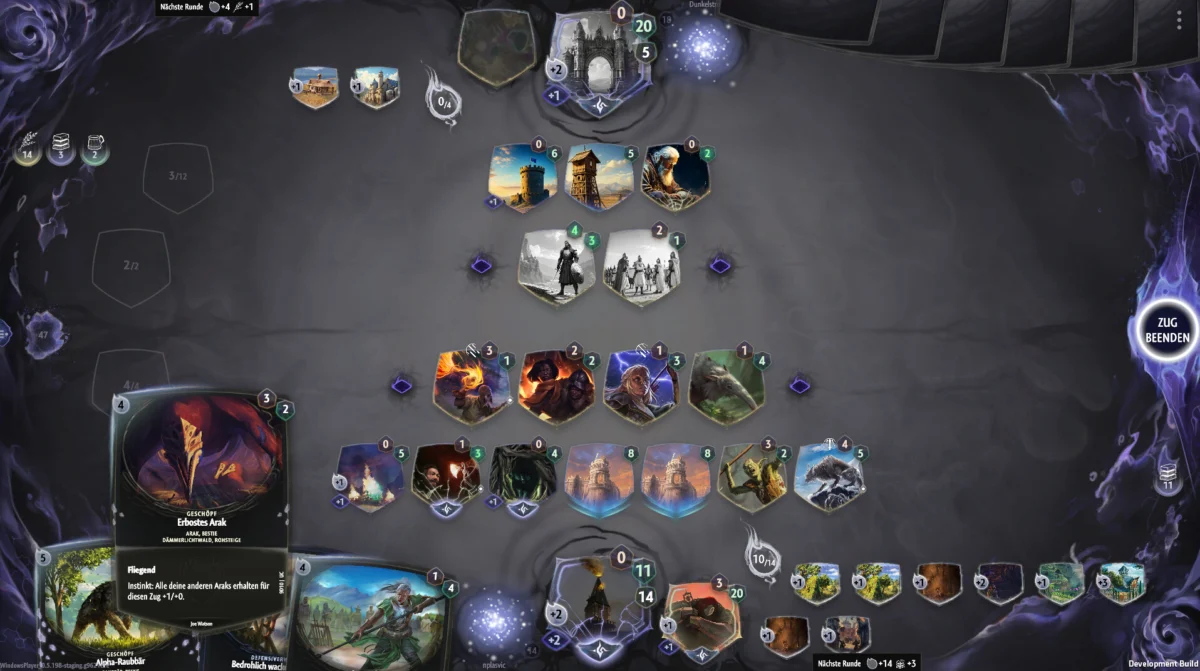
Standard CCGs usually end when a player’s health reaches zero. Silberheim complicates this by splitting the match into two distinct objectives. First, players must focus on destroying the opponent’s Fortress. This initial phase requires deck-building that balances siege capabilities with defense.
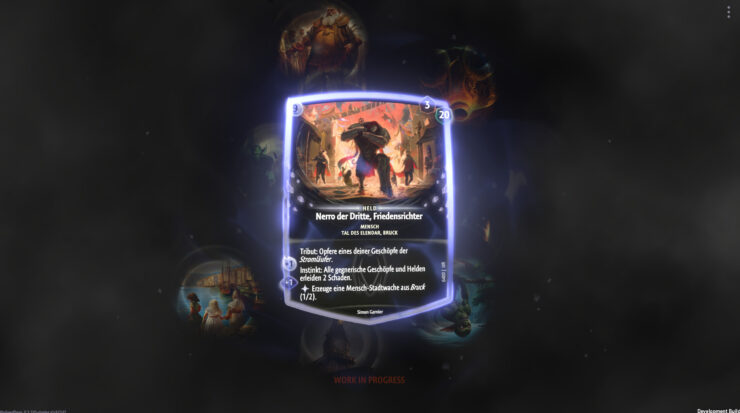
Once the Fortress falls, the "Endgame" begins. A powerful Hero enters the battlefield. This Hero acts as a final boss for the player’s opponent, possessing abilities that can completely flip the board state. Victory is only achieved once the Hero is defeated. This structure ensures that matches remain tense until the final card is played, as a player who loses their Fortress can still stage a comeback if their Hero is sufficiently evolved.
The "Defiance" Mechanic
One of the most praised features in early beta reports is the Defiance mechanic. In many competitive card games, a "bad draw" in the first three turns can lead to an inevitable loss. Defiance is a balancing tool designed to provide the disadvantaged player with a window of opportunity to stabilize, preventing matches from being decided in the opening minutes. While the exact mathematical triggers for Defiance remain part of the game’s proprietary "evolution" engine, it is intended to reward strategic patience over raw luck.
Official Responses: The Beyond Worlds Philosophy
In a series of statements released through their sponsored communication channels, Beyond Worlds GmbH has emphasized that Silberheim is a "community-first" project. The studio’s lead designers have been vocal about their disdain for predatory monetization.
"We believe that a game about evolution should be about the player’s journey, not the size of their wallet," a representative for Beyond Worlds stated. This philosophy is baked into the "Play-to-Win" model. Unlike its competitors, Silberheim is designed as a one-time purchase. There are no booster packs to buy with real money that offer competitive advantages. Every card evolution and every "memory fragment" must be earned through gameplay.
Furthermore, the developers have highlighted the importance of the "Chamber of Souls" narrative. Players begin as disembodied souls, using memory fragments (cards) from past lives to fight for the right to be reborn on Midoa. This narrative justification for the card game format is intended to deepen the immersion, making the player feel like a participant in the world’s cycle of reincarnation rather than just a person playing a game.
Beyond Worlds has also confirmed that they are actively monitoring the beta feedback to adjust the "mystery" of card evolution. The studio aims to keep the exact triggers for certain evolutions hidden to encourage community exploration and "theory-crafting," creating a sense of wonder that has largely disappeared from the data-mined world of modern gaming.
Implications: A New Standard for the Indie CCG?
The emergence of Silberheim ECG has several implications for the gaming industry and the CCG genre at large.
1. Challenging the Live-Service Hegemony
By opting for a one-time purchase model, Beyond Worlds is taking a massive financial risk. Most modern CCGs rely on the "whale" model—a small percentage of players spending thousands of dollars on randomized packs. If Silberheim succeeds commercially, it could provide a blueprint for other indie developers to create sustainable card games without relying on exploitative mechanics.
2. Digital Ownership and Individuality
In a typical CCG, every "Gold Tier" card is identical to every other player’s "Gold Tier" card. Silberheim’s individual evolution model creates a sense of "digital provenance." A player’s deck becomes a unique artifact of their specific history in the game. This could pave the way for more personalized gaming experiences where "my version" of a character is fundamentally different from "your version."
3. The Convergence of Media
The integration of a novel, lore articles, and spin-offs from the outset suggests a "transmedia" approach to indie development. Beyond Worlds isn’t just selling a game; they are selling an IP. This strategy, usually reserved for AAA studios like Riot Games or Blizzard, indicates a high level of ambition for the Silberheim brand.
4. Player-Led Narrative
The claim that player actions influence the lore of Isdraia is perhaps the most ambitious promise of the ECG format. If successfully implemented, it would mean that the "meta-story" of the game evolves based on who wins major tournaments or how the community interacts with specific factions. This turns the player base into a collective of co-authors, a concept that could revolutionize community engagement in competitive gaming.
Conclusion
Silberheim Evolving Card Game stands at a crossroads of innovation and tradition. While it utilizes the familiar tropes of fantasy races and card-based combat, its "Evolving" core and "Play-to-Win" philosophy represent a bold challenge to the industry’s current trajectory. As the game moves toward its late 2026 release on Steam, the eyes of the indie community are on Beyond Worlds GmbH. Whether Silberheim will truly evolve the genre or remain a niche experiment depends on the strength of its community and the depth of the mysteries hidden within the planet Midoa. For now, the beta remains open, offering a glimpse into a world where the cards in your hand are as alive as the soul playing them.