The Invisible Architect of 1984: Reevaluating the Legacy of Eileen O’Shaughnessy Blair
The literary world has long been captivated by the myth of the solitary genius, the isolated writer struggling against the world to produce a masterpiece. For decades, Eric Blair—better known by his pen name, George Orwell—stood as the quintessential example of this trope. However, a recent surge in biographical scholarship and creative reinterpretations is dismantling this narrative, revealing that the "Orwell" brand was less a solo act and more a profound collaboration. At the heart of this revisionist history is Eileen O’Shaughnessy Blair, a woman whose intellectual rigour, political bravery, and editorial acumen were foundational to the works that defined the 20th century.
From new graphic novels to exhaustive collections of her private correspondence, the contemporary literary landscape is finally reckoning with the woman who was much more than just "Mrs. Orwell."
Main Facts: The Emergence of Eileen Blair from the Shadows
Eileen O’Shaughnessy Blair was a formidable intellectual in her own right long before she met the man who would become the world’s most famous political satirist. A graduate of Oxford University—where she was one of the first women to earn a degree and studied under the tutelage of J.R.R. Tolkien—Eileen was a woman of action and intellect.
The current resurgence of interest in her life is anchored by several key publications:
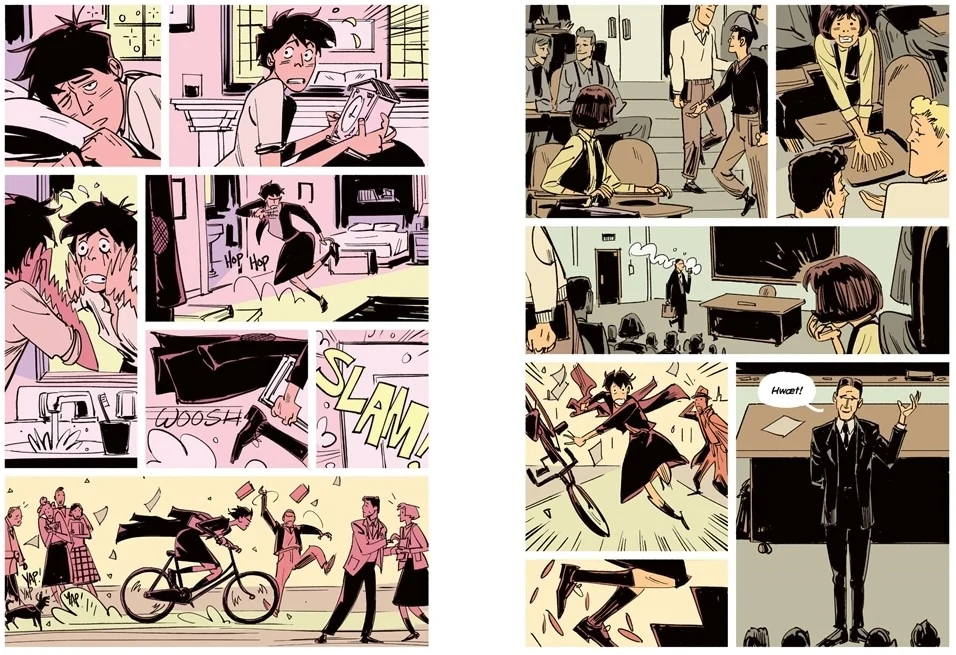
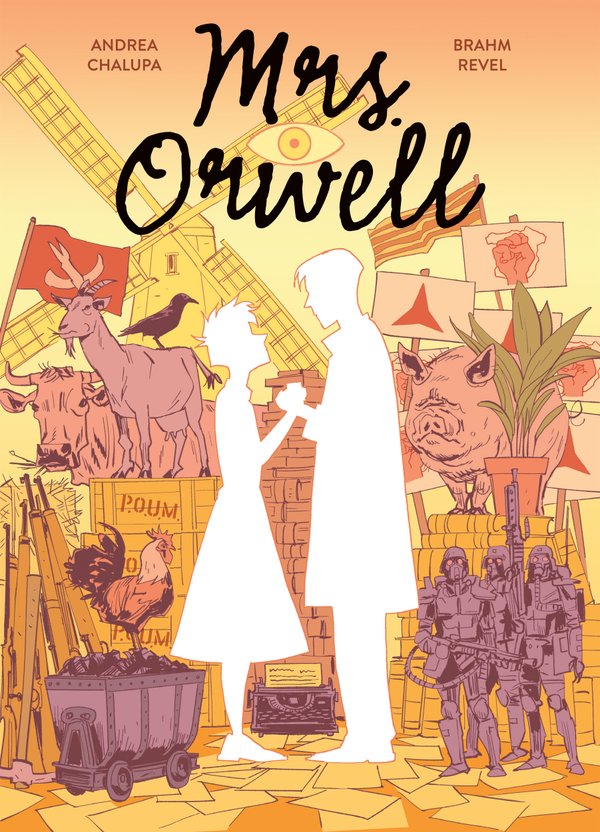
- "Mrs. Orwell" (2026): A graphic novel by Andrea Chalupa and Brahm Revel that dramatizes her life as the "drummer and business manager" of the Orwell brand.
- "Eileen: The Making of George Orwell" (2020): A seminal biography by Sylvia Topp that first argued for Eileen’s essential role in Orwell’s literary evolution.
- "Wifedom: Mrs. Orwell’s Invisible Life" (2023): Anna Funder’s provocative feminist critique that examines the erasure of Eileen’s labor from the historical record.
- "In Her Own Words" (2026): A comprehensive collection of Eileen’s letters, edited by Angela Smith and Sylvia Topp, providing the first unmediated look at her personality and wit.
These works collectively argue that without Eileen, Animal Farm might never have been an allegory, and Nineteen Eighty-Four might not have carried its iconic title or its chilling emotional depth.
Chronology: A Life of Intellectual Pursuit and Political Peril
To understand Eileen’s influence, one must trace the trajectory of a life that was as eventful as it was tragically short.
The Oxford Years and Early Career (1905–1934)
Born in 1905, Eileen O’Shaughnessy broke traditional gender barriers early. At Oxford, she demonstrated a sharp linguistic mind. Following her studies, she resisted the domestic sphere, working as a typist and showing an early streak of labor activism by organizing her colleagues against an abusive employer. She eventually established her own typing firm, showcasing an entrepreneurial spirit that would later be diverted into managing her husband’s chaotic career.
Marriage and the Crucible of Spain (1936–1937)
Eileen married Eric Blair in 1936. Their union coincided almost exactly with the outbreak of the Spanish Civil War. While Orwell fought on the front lines with the POUM (Workers’ Party of Marxist Unification) militia, Eileen moved to Barcelona to work for the Independent Labour Party (ILP). Her role was far from clerical; she managed supplies, handled logistics for thirty-one militiamen, and navigated the increasingly treacherous waters of Soviet-backed internal purges. When the Communist secret police began arresting anti-Stalinist leftists, it was Eileen’s quick thinking and poise that allowed the couple to escape Spain just ahead of certain imprisonment or execution.
The War Years and "Animal Farm" (1939–1945)
During World War II, Eileen worked for the Ministry of Food and in the censorship department, experiences that mirrored Orwell’s own time at the BBC and provided the "grey" atmosphere of Nineteen Eighty-Four. Scholars now believe it was Eileen who suggested that Orwell’s critique of Stalinism take the form of an animal fable, drawing on her own creative sensibilities.
Tragic End (1945)
In 1945, at the age of thirty-nine, Eileen died during a hysterectomy. She had recently adopted a son, Richard, and was looking forward to a life in the Scottish Hebrides. Orwell was in Europe as a war correspondent at the time of her death, a fact that remains a point of contention among biographers regarding his perceived negligence as a husband.
Supporting Data: Literary Influence and Creative Collaboration
The argument that George Orwell was a "band name" is supported by significant stylistic shifts in his work following his marriage.
Editorial and Substantive Contributions
Before Eileen, Orwell’s novels like Keep the Aspidistra Flying were often seen as clunky or overly didactic. After their marriage, his prose became more muscular and his structures more sophisticated. Eileen did more than type; she edited his manuscripts, managed his contracts with publishers (including the pivotal The Road to Wigan Pier), and reconstructed the complex chronology for Homage to Catalonia when Orwell’s notes were lost or disorganized.
The "1984" Connection
One of the most striking pieces of evidence for Eileen’s intellectual DNA in Orwell’s work is the title of his final masterpiece. Two decades before the novel was published, Eileen wrote a poem titled "End of the Century, 1984." The poem explored themes of state control and the loss of individual identity, suggesting that the seeds of Orwell’s dystopian vision were planted by Eileen long before he put pen to paper on the island of Jura.
The Visual Narrative of "Mrs. Orwell"
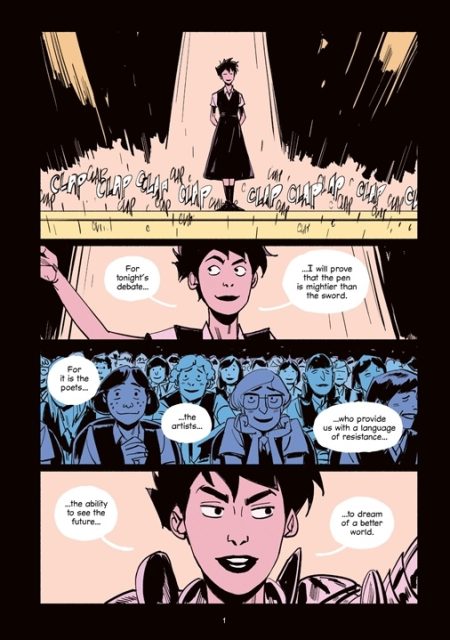
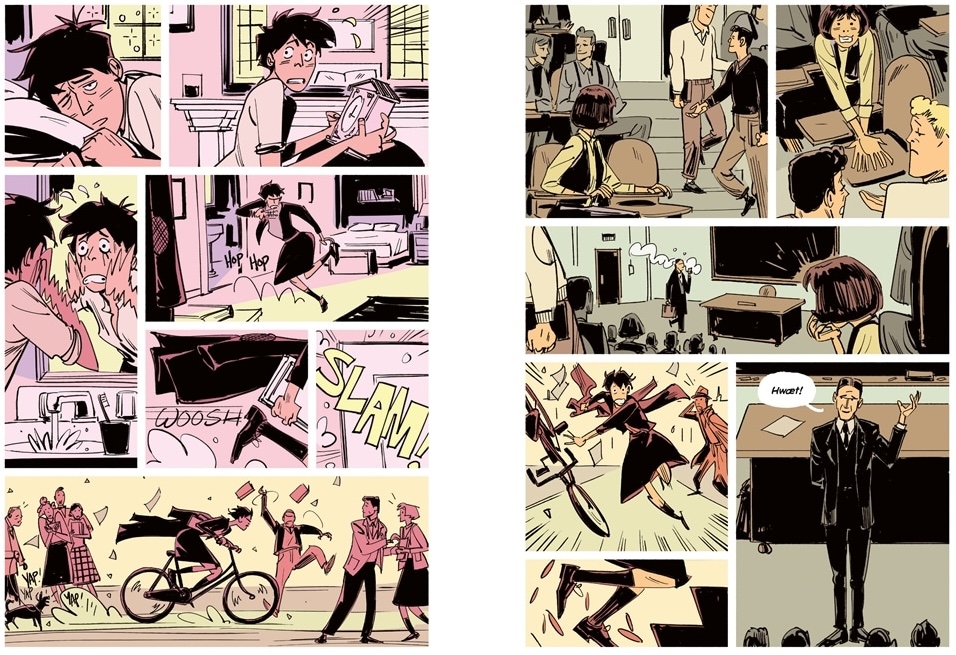
In the graphic novel Mrs. Orwell, Andrea Chalupa and Brahm Revel utilize a cinematic aesthetic to bring this collaboration to life. Revel’s art, reminiscent of the "Love and Rockets" style, portrays Eileen as a dynamic, stylish figure. While the book takes poetic liberties—such as presenting the couple in a more "Hollywood" light than their gaunt, real-life counterparts—it succeeds in making the case for Eileen as the "North Star" of Orwell’s political awakening.
Official Responses: Critical and Scholarly Reception
The "Eileen Revival" has met with a mix of acclaim and debate within the literary community.
The Biographical Divide
Sylvia Topp’s Eileen is widely regarded as the gold standard for factual research, though some critics find its exhaustive 421-page detail a "long march." In contrast, Anna Funder’s Wifedom has been more polarizing. Funder, a lawyer by training, treats the biography as an indictment of Orwell. She argues that Orwell’s "disappointed homosexuality" and his patriarchal blindness led him to exploit Eileen’s labor while rendering her invisible in his diaries. While some scholars praise Funder for her "systematic assembly of evidence," others, like critic Kristian Williams, suggest she occasionally dismisses relevant evidence to sustain her "grudge" against the author.
The Voice of the Subject
The 2026 publication of In Her Own Words has been received as a necessary corrective to the interpretive biases of other biographers. By presenting Eileen’s letters directly to the public, the book allows her wit and agency to shine through. Angela Smith and Sylvia Topp’s commentary in this volume is noted for being more nuanced than earlier efforts, moving away from the "aggrieved spouse" narrative toward a portrait of a woman who was a willing and vital partner in a shared intellectual project.
Implications: Beyond the "Solitary Genius"
The re-examination of Eileen Blair’s life has implications that reach far beyond the niche of Orwell studies. It challenges the fundamental way history records the contributions of women in the shadows of famous men.
The Myth of Individualism
Eileen’s story serves as a reminder that no work of genius is produced in a vacuum. The "Orwellian" perspective was not the result of one man’s brooding; it was forged in the conversations, shared dangers, and mutual edits of a partnership. To acknowledge Eileen is not to diminish George Orwell, but to humanize him and to recognize that intellectual labor is often a communal effort.
Gender Politics in Biography
The struggle to define Eileen—as a hero, a victim, or a collaborator—reflects our own modern anxieties about gender and domesticity. As noted by contemporary critics, we may view Eileen’s sacrifice of her own career to support her husband’s as "admirable, regrettable, or reprehensible," but it was a historical reality that shaped the literature we value today.
Conclusion: A Measure of Recognition
As we move further into the 21st century, the name "Orwell" is becoming inseparable from the name "O’Shaughnessy." Whether through the sharp, stylized panels of a graphic novel or the intimate lines of her personal letters, Eileen Blair is finally being recognized not just as a wife, but as a primary architect of the political conscience of the modern age. Her life, though cut short at thirty-nine, was a testament to the fact that truth-telling is a dangerous, collaborative, and essential pursuit.