Horror Writers Association Expels Trustee Following Controversial Pro-AI Column
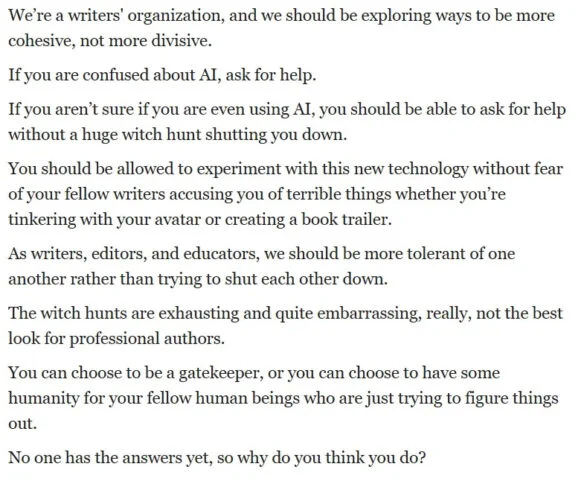
The intersection of generative artificial intelligence and the creative arts has reached a new boiling point within the literary community. In a move that has sent shockwaves through the publishing world, the Horror Writers Association (HWA) has officially removed Sèphera Girón from her position as a Trustee on its Board of Trustees. The expulsion follows the publication of a highly contentious opinion piece authored by Girón in the August 2026 edition of the HWA Member Newsletter, in which she championed the use of generative AI and disparaged critics of the technology.
The incident has reignited a fierce debate over the role of professional guilds in protecting human creators and the ethical boundaries of technological integration in storytelling.
Main Facts of the Dismissal
The Horror Writers Association, a premier international organization dedicated to promoting horror and dark fantasy literature, took the rare and decisive step of ousting a sitting board member following an internal and external outcry. The catalyst was Girón’s "In the Trenches" column, a regular feature in the organization’s monthly newsletter.
In the piece, Girón characterized authors who oppose the proliferation of Large Language Models (LLMs) and generative AI as "Luddites" and "gatekeepers." More controversially, she drew comparisons between the environmental and resource-heavy expansion of AI data centers and the historical struggles of Indigenous peoples over water rights—a comparison that the HWA Board later characterized as deeply offensive and a violation of the organization’s commitment to diverse voices.
The HWA Board of Trustees issued an immediate statement distancing the organization from Girón’s views, citing a failure to uphold the standards of care and support expected of elected leadership. The board also admitted to a significant lapse in its internal vetting processes, as the column was published without prior oversight by the executive leadership.

Chronology of the Controversy
The timeline of the scandal reflects the speed at which digital discourse can impact the governance of professional organizations in the modern era.
- Early August 2026: The August installment of the HWA Member Newsletter is distributed to the organization’s global membership. While primarily a member-only resource, the newsletter is also accessible via public archives.
- August 5, 2026: Screencaps of the "In the Trenches" column begin circulating on social media platforms, including Bluesky, Threads, and Facebook. High-profile authors, including Hailey Piper and Chuck Wendig, signal-boost the content, expressing outrage at the pro-AI stance appearing under the HWA banner.
- Midday, August 5, 2026: A wave of current and former HWA members voice their disapproval. Some members publicly threaten to let their memberships lapse, while others demand an immediate retraction and the resignation of the author.
- Evening, August 5, 2026: The HWA Board of Trustees convenes an emergency session. After reviewing the material and the membership’s response, the board votes to remove Girón from her position as Trustee, effective immediately.
- Late Evening, August 5, 2026: The HWA publishes an official statement on its social media channels and website, apologizing for the "hurt" caused by the column and announcing a total review of its newsletter submission procedures.
Analyzing the Controversial Content: Supporting Data
To understand the severity of the HWA’s response, one must look at the specific rhetoric employed in the "In the Trenches" column. Girón’s arguments rested on several pillars that the creative community found fundamentally incompatible with the mission of a writers’ guild.
The "Luddite" Fallacy
Girón compared the current anxiety over generative AI to historical shifts such as the move from horse-and-buggy to the automobile, or the transition from film to digital photography. She argued that AI is an inevitable evolution and that those resisting it are simply "afraid of the new." This argument, however, was met with sharp criticism from authors who point out that AI does not function as a tool for the creator, but rather as a replacement of the creator.
The Indigenous Rights Comparison
Perhaps the most damaging aspect of the column was the comparison of AI data center proliferation to Indigenous water rights. The HWA leadership and its members viewed this as a trivialization of systemic, historical, and ongoing struggles faced by Indigenous communities. By equating the corporate expansion of tech infrastructure with the "ways and rights" of marginalized peoples, the column was seen as violating the HWA’s core tenets of inclusivity and the promotion of diverse perspectives.
The "Universal Adoption" Argument
Girón suggested that because writers use tools like spellcheck or digital search engines—which utilize basic forms of machine learning—they are hypocritical for opposing generative AI. This "false equivalency" was a major point of contention, as critics argued there is a categorical difference between a tool that assists in refining a human’s work and a system that generates content by scraping the copyrighted work of millions of authors without consent or compensation.

Official Responses and Board Statement
The HWA’s official statement was notable for its lack of ambiguity. The board made it clear that Girón’s views were not only personal but were in direct opposition to the established policies of the organization.
"The HWA Board firmly and resoundingly rejects the opinion piece of Trustee Sèphera Girón," the statement read. "This piece does not meet the standards of care and support to which we hold ourselves as elected members of this writer’s organization. We regret that it was published in our newsletter without proper vetting."
The board emphasized that the HWA has a "robust artificial intelligence policy" developed through input from all levels of membership. This policy is centered on "protecting a culture of labor compensation in the arts." By removing Girón, the board sought to reaffirm its commitment to protecting the economic and intellectual property rights of its members.
The statement concluded with a direct apology: "As the leadership of the Horror Writers Association, we sincerely apologize for the hurt that these words have caused… We have always been an organization meant to protect writers and that is what we will continue to stand for."
Community Backlash and Author Reactions
The response from the broader horror and speculative fiction community was swift and largely supportive of the board’s decision, though many remained critical of how the piece was allowed to be published in the first place.

Chuck Wendig: "You Are the Tool"
Bestselling author Chuck Wendig published a scathing rebuttal on his blog, Terribleminds. Wendig dismantled the "AI as a tool" argument, stating: "Prompting your way to art or to writing is not the same as having a new tool that allows you to make art… It’s not allowing you to do the work. You’re allowing it to do the work. Which is to say, you’re the tool." Wendig also mocked the "Mister Gotcha" style of argument that equates using a smartphone with supporting the wholesale theft of creative labor.
Michael Patrick Hicks: A History of Friction
Author Michael Patrick Hicks provided context for the outrage, noting that the HWA has had a rocky history with the AI issue. He recalled previous instances where membership felt the leadership was "willfully and woefully ill-equipped" to handle the threat of LLMs. Hicks noted that while the removal of Girón was a positive step, it followed years of "apologia and obfuscations" from various levels of leadership regarding the piracy perpetrated by tech giants like Meta and Anthropic.
Mark Allen: The Line Between Tool and Cheat
On Facebook, author Mark Allen articulated the distinction that many in the guild hold: the difference between assistive technology and generative theft. "When it comes to the writing profession… if someone uses generative AI to conceptualize, plot, and then generate for them something that they claim is a literary work… they are neither a writer nor an author. They’re cheats. They’re hacks."
Broader Implications for the Creative Industry
The expulsion of Sèphera Girón is more than an internal HR matter for a niche writers’ group; it is a microcosm of the existential struggle currently facing all creative professions.
The Erosion of Trust in Professional Guilds
For professional organizations like the HWA, the Science Fiction and Fantasy Writers Association (SFWA), and the Authors Guild, the AI debate is a test of utility. If these organizations cannot or will not protect the sanctity of human authorship, their value to the membership diminishes. The HWA’s swift action suggests a realization that the "middle ground" on generative AI is rapidly disappearing.

The "Soylent Green" Problem
As Chuck Wendig pointed out, the primary grievance of the creative community is that generative AI is trained on their "stolen" work. This creates a parasitic relationship where the technology uses the collective output of human history to create a product designed to replace the very people who provided the training data. This "cannibalization" of the industry remains the central ethical hurdle that tech proponents have yet to adequately address.
The Vetting Crisis in Digital Publishing
The HWA’s admission of a vetting failure highlights a growing problem in organizational communication. As newsletters and social media feeds become the primary way guilds communicate with their members, the lack of editorial oversight can lead to catastrophic PR failures. The HWA’s promise to "review all newsletter submission procedures" is a move that other professional organizations will likely emulate to avoid similar internal fractures.
In the end, the removal of a trustee over a pro-AI stance marks a definitive line in the sand. For the Horror Writers Association, and perhaps for the industry at large, the "trenches" of the AI war are no longer a place for neutral observation, but a battleground for the survival of the human creator.