The Prophet and the Predator: Ray Bradbury’s Critique of Action Cinema

In the pantheon of 20th-century literature, few figures loom as large as Ray Bradbury. A master of science fiction, fantasy, and dystopian horror, Bradbury’s works—most notably Fahrenheit 451, The Martian Chronicles, and The Illustrated Man—have become staples of the American canon. His narratives often explored the delicate intersection of human emotion and technological advancement, frequently warning of a future where intellectual depth is sacrificed at the altar of mindless entertainment.
It is perhaps unsurprising, then, that when the legendary author turned his critical gaze toward the blockbuster cinema of the 1980s, he found it lacking. In a rediscovered 1991 interview, Bradbury shared his candid, somewhat paradoxical thoughts on John McTiernan’s 1987 classic Predator. While he praised the film’s technical execution, his assessment of its intellectual value was scathing. This clash between a literary titan and a cornerstone of action cinema offers a profound look at the evolving definition of "substance" in science fiction.
Main Facts: A "Beautifully Made" Void
The core of the controversy lies in a 1991 interview for The Cable Guide, where Bradbury was paired with another literary heavyweight, Kurt Vonnegut. During the conversation, Bradbury addressed the state of television and film, using Predator as a primary example of modern media’s shortcomings.
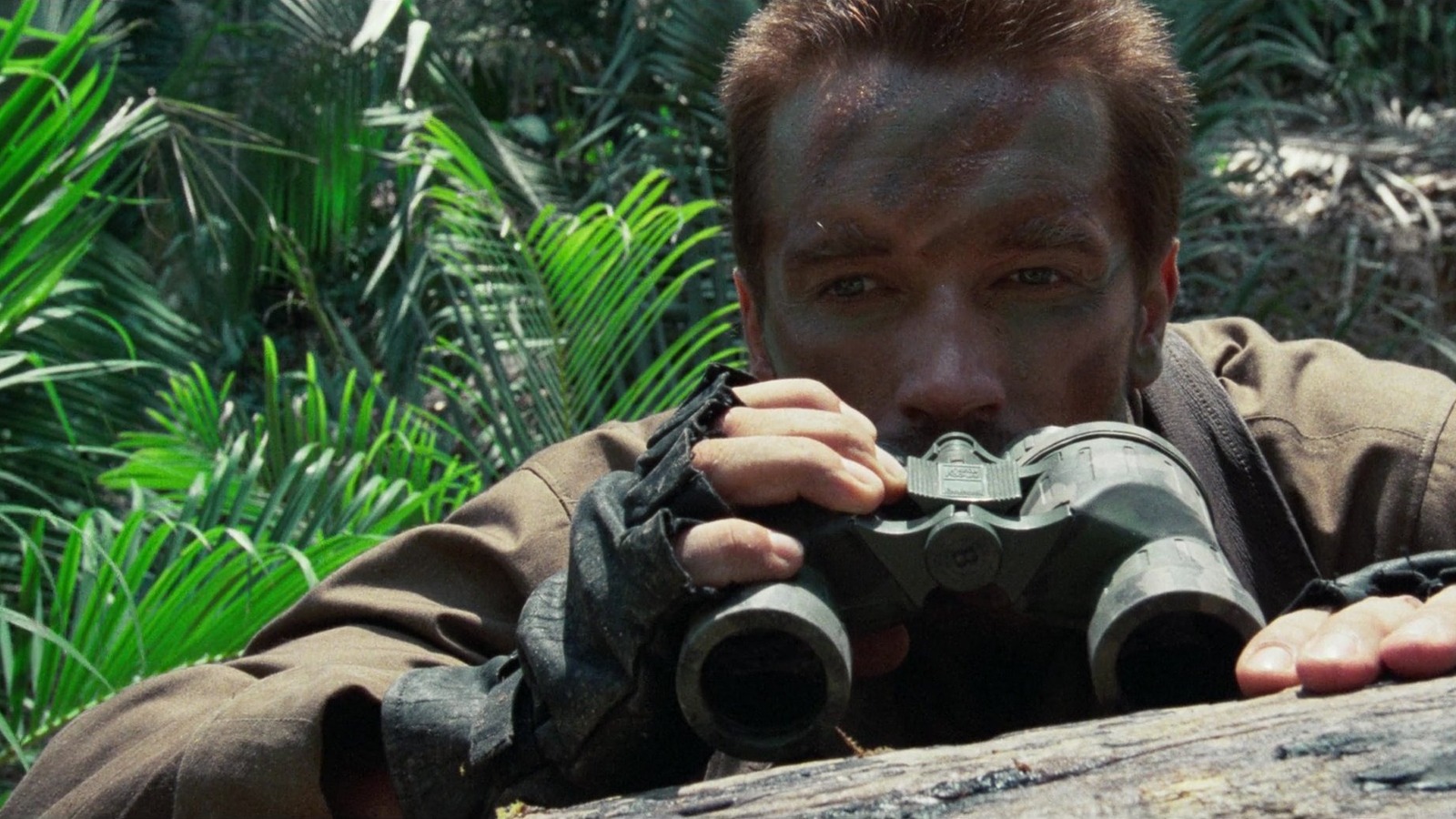
Bradbury’s critique was twofold. First, he dismissed the film as "empty-headed trash," asserting that it lacked "philosophical concepts" or meaningful ideas. To Bradbury, the spectacle of men being hunted and killed by an extraterrestrial visitor was a repetitive exercise in violence that "doesn’t mean anything."
However, Bradbury’s dismissal was tempered by a surprising compliment: he admitted the film was "beautifully made." This backhanded praise suggests that while Bradbury recognized the craft of director John McTiernan and the prowess of the special effects teams, he viewed the technical brilliance as a mask for a narrative vacuum. For a writer who spent his career building worlds out of metaphors and social commentary, Predator represented the triumph of style over substance.
Chronology: From Dystopian Prophecy to 1991 Critique
To understand why Bradbury was so dismissive of Predator, one must look at the trajectory of his career and his long-standing skepticism toward visual media.
The 1950s: The Birth of a Media Skeptic
In 1953, Bradbury published Fahrenheit 451. The novel depicts a society where "firemen" burn books to prevent the spread of independent thought. Crucially, Bradbury’s dystopia wasn’t created by a government coup; it was the result of a populace that chose short-form, sensory-driven media over the difficult, reflective nature of reading. He predicted "parlor walls"—giant screens that replaced human interaction—and "seashells" (primitive earbuds) that kept the public in a state of constant, shallow distraction.
The 1980s: The Rise of the Reagan-Era Blockbuster
By the time Predator was released in 1987, the Hollywood landscape had shifted toward high-concept, high-octane action films. Led by stars like Arnold Schwarzenegger and Sylvester Stallone, these movies emphasized physical prowess and military might. To Bradbury, this era likely felt like the realization of his Fahrenheit 451 fears: a culture obsessed with "quickly consumed video clips" and explosive spectacle.
1991: The Interview
When Bradbury sat down for The Cable Guide interview in 1991, he was 71 years old. He had recently seen his own work, The Martian Chronicles, adapted into a television miniseries in 1980—a project he famously loathed for its lack of imagination. His frustration with Predator was not just about one movie; it was a culmination of decades spent watching the "trash" of television and film dilute the intellectual rigor of the science fiction genre.
Supporting Data: The Craft vs. The Concept
Bradbury’s admission that Predator was "beautifully made" is supported by the film’s enduring legacy in the technical departments of Hollywood.
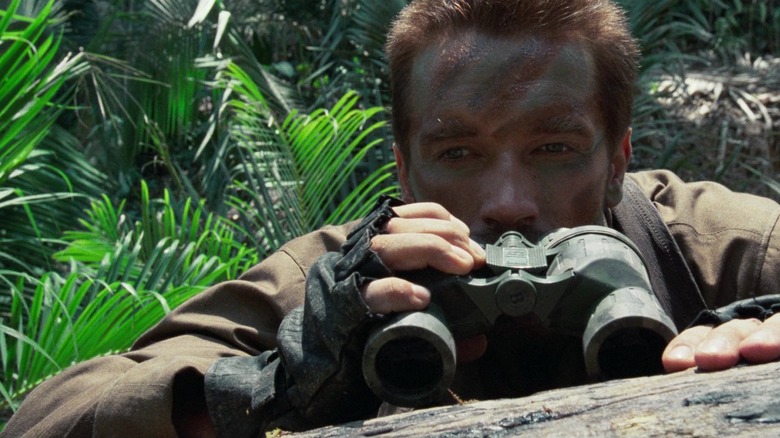
- Direction: John McTiernan, who would go on to direct Die Hard, utilized innovative pacing and suspense techniques, blending the war genre with sci-fi horror.
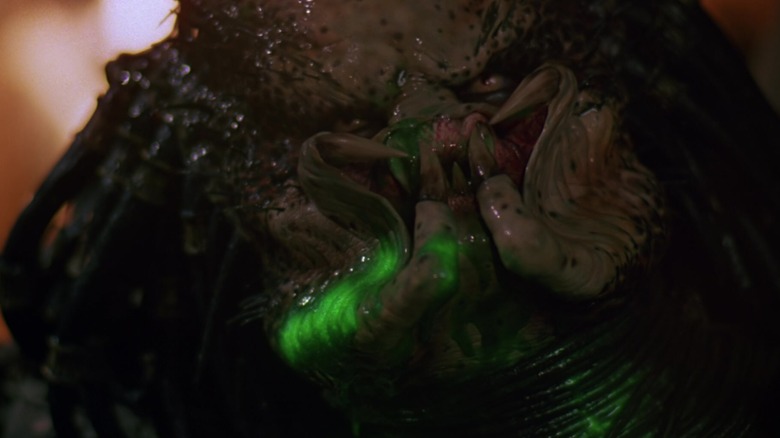
- Special Effects: The creature design by Stan Winston—featuring the iconic mandibles suggested by James Cameron—remains a benchmark in practical effects. The "shimmer" effect used for the Predator’s cloaking device was a groundbreaking use of optical distortion.
- Performance: The cast consisted of legitimate "tough guys," including former military personnel and professional athletes, lending a sense of physical authenticity to the paramilitary team.
Despite these achievements, Bradbury’s data point remained the "idea." In his view, a movie with a $15 million budget and cutting-edge effects was still "empty" if it didn’t challenge the viewer’s worldview. He contrasted this with educational programming, citing the PBS series Nova and early CNN newscasts as rare examples of television that served a constructive purpose.
Official Responses and Critical Rebuttals
While Bradbury is a giant of the field, modern film scholars and fans have often pushed back against his "no ideas" assessment. In the decades since its release, Predator has been re-evaluated as a film rich with subtext—ideas that Bradbury, perhaps blinded by his distaste for the medium, may have overlooked.
The Deconstruction of Masculinity
Many critics argue that Predator is a direct satire of 1980s hyper-masculinity. The first act of the film features "sweaty, muscle-bound, foul-mouthed murderers" who brag about their prowess. However, the arrival of the alien turns these "sexual tyrannosaurs" into terrified prey. The film suggests that outsized masculine bluster and heavy weaponry are useless against a superior, invisible force. By the end, Schwarzenegger’s character, Dutch, must strip away his technology and return to a primitive state to survive, effectively "de-powering" the traditional action hero.
The Vietnam Allegory
Another common interpretation is that Predator serves as a post-Vietnam War power fantasy gone wrong. Set in a Central American jungle, the film mirrors the American experience in Vietnam: a high-tech, overconfident military force being picked off by a hidden enemy that knows the terrain better than they do. The "monster in the woods" becomes a metaphor for the trauma and futility of jungle warfare, suggesting that American patriotic confidence is an insufficient shield against the realities of combat.
The Genre-Bending Narrative
While Bradbury saw "nothing new," genre theorists point out that Predator was revolutionary for its mid-movie pivot. It begins as a standard "men-on-a-mission" military flick and abruptly transforms into a slasher movie. This subversion of audience expectations was, in itself, a sophisticated narrative "idea" that challenged the conventions of the time.
Implications: The Legacy of the "Intellectual" Gap
The disagreement between Ray Bradbury’s perspective and the modern appreciation of Predator highlights a significant divide in how we consume science fiction.
The Evolution of Sci-Fi
Bradbury belonged to the "Golden Age" and "New Wave" of science fiction, where the "Idea" (capital I) was paramount. For him, sci-fi was a laboratory for social, political, and philosophical inquiry. The "blockbuster" era of the 80s shifted the focus toward "visceral" sci-fi—stories told through movement, tension, and visual metaphor rather than overt dialogue or prose.
The Death of the "Intellectual" Neighbor?
Bradbury’s fear in Fahrenheit 451 was that people would lose the ability to find meaning in anything but a screen. In 1991, he saw Predator as a symptom of that decline. Today, in an era of 15-second TikToks and algorithmic content, Bradbury’s warnings feel more relevant than ever. However, the irony is that Predator—the very film he called "trash"—is now defended by cinephiles as a work of "elevated" genre filmmaking compared to the modern landscape of CGI-heavy franchise sequels.
Final Thoughts
Ray Bradbury’s harsh words for Predator serve as a reminder of the high standards held by the architects of the science fiction genre. While he may have been too quick to dismiss the thematic depth hidden beneath the film’s "muscles and explosions," his critique challenges creators to ensure that beauty is never a substitute for thought. Whether Predator is "empty-headed trash" or a "subversive masterpiece" remains a matter of perspective, but the conversation itself proves that the film, contrary to Bradbury’s belief, continues to generate ideas decades after its release.