Natasha Pulley Unveils "The Salt King": A Gripping Apocalyptic Fantasy Where Ancient Myth Meets Global Catastrophe
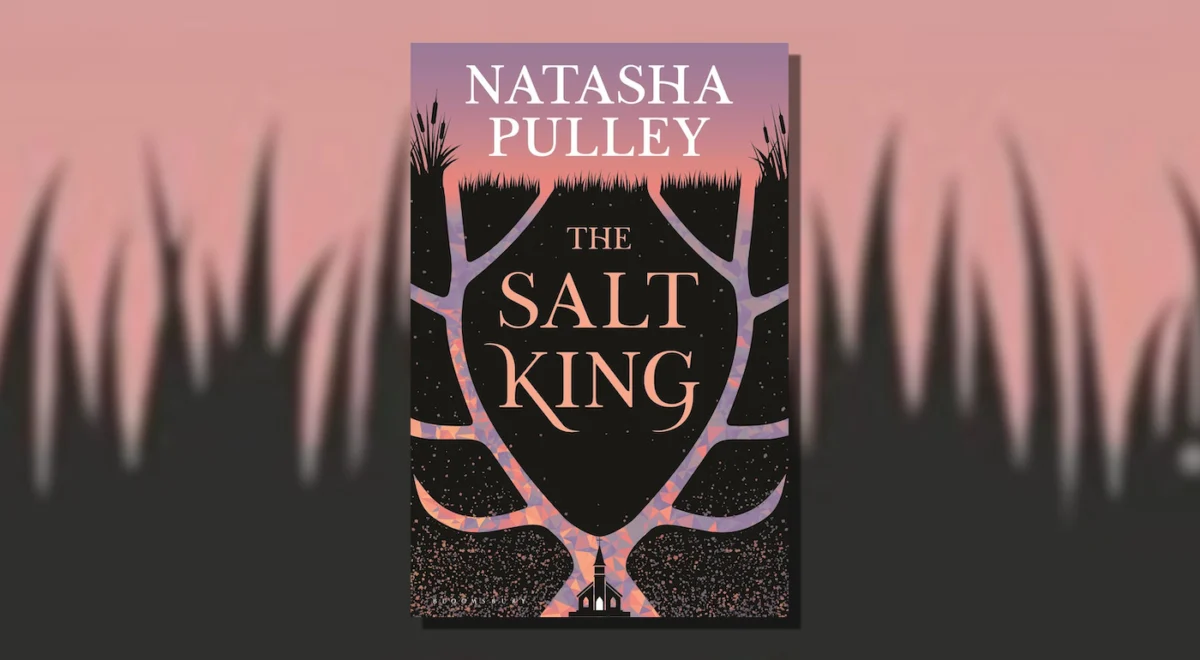
London, UK – [Date of Publication] – Bloomsbury Publishing is set to unleash a compelling new vision of the apocalypse with Natasha Pulley’s latest novel, The Salt King, arriving on August 18th. Described as an apocalyptic fantasy that delves deep into the intricate tapestry of belief, religion, and the enduring power of myth, the novel promises a thrilling and thought-provoking journey into a world teetering on the brink of an unprecedented, salt-infused doom. At its heart lies a reluctant Jesuit priest, Avelyn Brocken, forced to confront the very mythology he abandoned years ago as a global catastrophe unfolds, threatening to turn humanity into crystalline relics.
Pulley, known for her unique blend of historical settings and speculative fiction, crafts a narrative that is both intimately personal and staggeringly global. The Salt King challenges readers to question the boundaries between science and superstition, offering a potent reflection on how humanity grapples with existential threats that defy conventional understanding. Early insights suggest a novel rich in atmospheric detail, psychological depth, and a creeping sense of dread that culminates in a truly original vision of the end times.
The Looming Threat: Main Facts Unveiled
The Salt King centers on Father Avelyn Brocken, a Jesuit priest whose past is as enigmatic as the unfolding crisis. Born into a mining family in Hreodwater, a small, fiercely isolated salt town nestled within the Fens of England, Avelyn fled his home at the tender age of sixteen. His departure was a deliberate rejection of the local mythology surrounding the "Salt King"—a revered, yet terrifying, god of the mine—and the deeply ingrained beliefs that had tragically claimed his entire family. His new life in Rome, steeped in theological study and the rigorous discipline of the Jesuit order, was a conscious effort to bury the spectral whispers of Hreodwater.
However, the past has a way of resurfacing, especially when the world begins to unravel. The catalyst for Avelyn’s reluctant return is a perplexing and horrifying incident: a fellow priest, miraculously healed after a visit to Hreodwater, subsequently suffers a macabre transformation, literally turning to salt. This impossible event draws the attention of the Vatican, which dispatches Avelyn – the only man with a personal connection to the mysterious town – to investigate.
Upon his arrival, Avelyn finds Hreodwater steeped in its ancient ways, yet also grappling with new, unsettling phenomena. He encounters Jericho, the town’s gentle doctor, who reveals that the priest’s transformation is not an isolated case. Jericho has observed a disturbing pattern of both strange cures and equally strange dangers, all linked to a peculiar substance the locals call "salt light." This eerie, amber-violet luminescence emanating from the salt mines is more than just a local oddity; it is the harbinger of a global cataclysm.
As Avelyn and Jericho reluctantly form an alliance, their initial investigation rapidly escalates into a desperate race against time. The "salt light" is not confined to the isolated Fens; reports of its terrifying effects begin to surface from across the globe, painting a picture of an apocalypse unlike any conceived before. Humanity faces a threat that blurs the lines between natural phenomenon, ancient curse, and divine judgment, forcing Avelyn to confront his deepest convictions and determine where his faith truly lies amidst the spreading desolation.
Chronology of a Crystalline Apocalypse
The narrative of The Salt King unfolds with a relentless pace, intertwining Avelyn’s personal journey of reckoning with the accelerating global crisis.
Avelyn’s Forced Homecoming
Avelyn’s return to Hreodwater is marked by an immediate immersion into a world he had desperately tried to forget. The very act of paying for a borrowed horse forces him to relearn the peculiar system of "crystal Hreod coins," a tangible reminder of the town’s profound isolation and self-sufficiency. This initial disorientation is a prelude to a more profound shock: in the paddock, he witnesses horses licking a standing stone of red halite, a rock that unmistakably bears the fossilized contours of a human form – the chilling image from a video he had seen.
This encounter introduces him to the "salt light" firsthand. Unlike anything captured on camera, the halite pillar glows with an unearthly, eerie amber-violet light, radiating outwards in an uneven halo. This light, unseen by outsiders and dismissed by scholars as mere metaphor, is vibrantly real to Avelyn, igniting a dormant sensory perception. The salt itself is searingly hot, not merely warm from animal contact, challenging his scientific understanding. His futile attempts to photograph the glow underscore the phenomenon’s defiance of modern technology, leaving him to ponder how he will possibly explain this to the Vatican. The sensory assault – the smell of hay and horses – temporarily transports him back to his sixteen-year-old self, a witch’s apprentice on the cusp of earning his mask, forcing a jarring mental re-adjustment to his current identity as a Jesuit priest from Rome.
The Spreading Anomalies
As Avelyn delves deeper, the strange nature of Hreodwater becomes even more pronounced. He encounters extreme microclimates, exemplified by a clear line on the path where his side is merely gravel and thick mud, while the other side is enveloped in a sudden, magnificent blizzard of inches-thick snow. This stark contrast highlights the town’s supernatural anomalies, blurring the lines between natural phenomena and something far more arcane. His internal monologue, a battle between his Roman, rational self and the "Hreodwater Avelyn" whispering ancient warnings, reveals the profound psychological toll of his return.
The journey continues through reed-waving fens and persistent fog, illuminated only by the salt light. A mass exodus of rats, frantically swimming out of the water and scrambling onto the fen, signals a more intense manifestation of the "salt light" near the minehead, brighter than Avelyn has ever witnessed. This unnerving event foreshadows the growing urgency and danger.
Encounters with the Past
His path leads him to Redspear, the ferryman, a woman who has seemingly existed since Avelyn’s childhood. Redspear, who doubles as a farmer and brings her pigs along for their "evening constitutional," recognizes Avelyn immediately, greeting him in Hreod, a language he hasn’t spoken in years but which returns to him with startling ease. Her ominous pronouncement, "I thought the King would wake sooner," confirms Avelyn’s deepest fears about the ancient deity and its connection to the current events. The water itself, quartz-clear and devoid of life due to its salinity, reveals millennia of offerings – coins, knives, armor, even a crown – glinting in the dissolved salt light, hinting at the long history of the Salt King’s influence.
Redspear’s dismissive view of the "Outside" as "nothing there" underscores Hreodwater’s profound isolation and its residents’ insular worldview, a perspective Avelyn finds himself slowly, unsettlingly re-adopting. This journey culminates in his arrival at Hreodwater itself, a collection of sharp, tall halite structures emerging from the fog. The town, with its dim lights and spiral road, evokes a "terrible swell of homecoming," a feeling likened to Eve returning to the gates of Eden. This profound emotional resonance is coupled with a deep-seated fear: not of the place, but of the person he becomes within its grasp. His destination, the mysterious abbey of An El, glimpsed through the mist, is met with a somber antler sign from Redspear, further solidifying the link between the Salt King, the abbey, and the impending doom.

Global Escalation
While Avelyn grapples with his personal and local struggles, the crisis expands exponentially on a global scale. The "salt light" is no longer a localized phenomenon. Reports flood in from diverse corners of the world, each more alarming than the last:
- Dead Sea Archaeological Dig: Electrical devices froth with salt, hinting at a fundamental disruption of natural and technological processes.
- Russian Salt Mine: A KGB officer discovers the horrifying sight of five tourists, their bodies eerily transformed into pillars of salt, echoing the fate of Avelyn’s fellow priest.
- Wieliczska Salt Works, Poland: One of the world’s most ancient and iconic salt mines, Wieliczska goes completely dark. All communication is lost, and terrifying rumors of total annihilation begin to circulate, suggesting a complete and devastating takeover by the "salt light."
These widespread incidents paint a chilling picture of an apocalypse that is both rapid and insidious, turning the very substance of life into an agent of destruction. The world faces an enemy that is elemental, mythological, and seemingly unstoppable.
Supporting Data: Themes and World-Building
The Salt King promises a rich tapestry of thematic exploration and intricate world-building, elevating it beyond a mere disaster narrative.
The Clash of Belief Systems
Central to the novel is the profound tension between ancient, localized mythology and formalized, global religion, alongside the challenges posed by scientific inquiry. Avelyn, a Jesuit priest armed with a master’s degree in theology, embodies this conflict. His Roman training and rational mind are constantly at odds with the visceral, inexplicable phenomena of Hreodwater and the resurfacing beliefs in the Salt King. The "salt light" itself acts as a potent symbol of this clash: it is a physical reality that defies scientific explanation, cannot be recorded by technology, yet carries immense power within the framework of Hreodwater’s mythology. Pulley masterfully uses this to question how we define truth when confronted with the truly extraordinary. Is the Salt King merely a myth, or a literal, awakening entity?
The Power of Place and Identity
Hreodwater is more than a setting; it is a character unto itself, profoundly shaping those who live within its briny embrace. Its isolation, unique language (Hreod, with its peculiar emphasis on cardinal directions), and extreme microclimates create an environment that is both wondrous and terrifying. The town’s structures, made of hard halite, defy natural erosion, embodying its enduring, almost eternal, quality. Avelyn’s struggle to reconcile his Roman identity with his Hreodwater past underscores the indelible mark our origins leave on us. The novel suggests that places can not only change our eyes but also fundamentally alter our minds, blurring the lines of who we believe ourselves to be. His fear is not of Hreodwater, but of the self he reverts to within its influence.
A Unique Apocalyptic Vision
Pulley offers a refreshingly original take on the apocalyptic genre. Instead of zombies or nuclear fallout, the world faces a "salt light" contagion that transforms living beings into crystalline forms. This unique mechanism of destruction taps into primal fears and the symbolic significance of salt – a preservative, a purifier, but also a destructive force that renders land barren. The slow, creeping horror of people turning to salt, coupled with the global scale of the threat, creates a sense of profound helplessness and dread. The involvement of organizations like the Vatican and the KGB hints at the geopolitical and spiritual ramifications of such an unprecedented event.
Sensory Immersion and Psychological Depth
The excerpt showcases Pulley’s ability to create a deeply immersive experience through vivid sensory details: the creaking of boots on marsh grass, the eerie amber-violet glow of the salt light, the smell of hay and horses, the "ember-glowing" ruby shards of salt. These details ground the fantastical elements in a palpable reality. Furthermore, the novel promises considerable psychological depth, exploring Avelyn’s internal monologue, his struggle with memory and perception, and his ultimate crisis of faith. His loss of taste, a subtle but persistent detail, could symbolize a deeper emotional or spiritual numbness that Hreodwater’s strange vitality begins to reawaken.
Official Responses and Anticipated Impact
Bloomsbury Publishing has expressed immense enthusiasm for The Salt King, positioning it as a standout release for the year. "Natasha Pulley has crafted a novel that is utterly unique and profoundly timely," states a representative from Bloomsbury. "She masterfully blends intricate world-building with deep philosophical questions, delivering an apocalyptic narrative that will stay with readers long after the final page. The Salt King is not just a fantasy novel; it’s a meditation on belief, identity, and humanity’s resilience in the face of the unknown."
While specific critical reviews are pending the August 18th release, industry insiders are anticipating a strong reception. Pulley’s previous works have garnered praise for their imaginative premises and compelling prose, and The Salt King appears poised to continue this trend. Readers can expect a narrative that is both intellectually stimulating and viscerally thrilling, appealing to fans of literary fantasy, speculative fiction, and suspense. The novel’s blend of historical and mythological elements with a contemporary global threat is expected to resonate widely, sparking discussions about science, faith, and the stories we tell ourselves to make sense of the world.
Implications: Faith, Survival, and the Human Condition
The Salt King promises to be more than just an apocalyptic thrill ride; it is a profound exploration of the human condition under extreme duress. The "salt light" apocalypse forces characters, and by extension readers, to confront fundamental questions:
- The Nature of Faith: Avelyn’s journey challenges the very foundation of his Jesuit faith. When miracles are intertwined with destruction, and ancient gods seemingly awaken, how does one reconcile theological dogma with empirical observation? His internal struggle reflects a universal human quest for meaning when faced with overwhelming, inexplicable forces.
- Adaptation and Survival: As cities fall and communications cease, the novel will likely explore the diverse ways humanity attempts to adapt or resist the spreading salt. From scientific investigation to religious fervor, from desperate flight to resigned acceptance, the story will paint a broad picture of human responses to existential crisis.
- The Price of Knowledge: The novel hints at the idea that "it’s better to know than not know," even if that knowledge is terrifying. Avelyn’s initial escape from Hreodwater was an attempt to forget, but his return forces him to embrace a knowledge that is both painful and vital for survival.
- Reconciling Past and Present: Avelyn’s personal narrative of returning to his roots and confronting the specters of his youth mirrors the global crisis. Can humanity overcome a threat rooted in ancient myth using modern means, or must it reconnect with forgotten wisdom?
As The Salt King by Natasha Pulley makes its debut, it stands as a testament to the enduring power of storytelling to explore our deepest fears and most profound beliefs. With its intricate world, compelling protagonist, and a truly original vision of the apocalypse, this novel invites readers to embark on an unforgettable journey where the mundane becomes miraculous, and the mythic becomes horrifyingly real. Prepare to question everything you thought you knew when the Salt King awakens.
The Salt King will be available from Bloomsbury on August 18th. Readers are encouraged to pre-order their copies and prepare for an apocalyptic experience unlike any other.