The Resurgence of the Underground: A Comprehensive Review of Cram Comics #5
By Doris Sutherland
Published: July 30, 2026
In an era increasingly dominated by corporate-owned intellectual properties and the sanitization of mainstream graphic literature, the arrival of Cram Comics #5 serves as a potent reminder of the medium’s countercultural roots. Edited by Andrew Alexander, this latest installment of the anthology series reaffirms its commitment to the "not-what-the-corporations-have-to-offer" ethos. Through a curated selection of nine short stories, the anthology explores a theme that is as evocative as it is melancholic: "Something Strong For When The Love Is Gone."
The issue is a testament to the diversity of the modern independent scene, blending the aesthetics of 1960s underground "comix" with the fragmented, post-ironic sensibilities of the 2020s. From the visceral depictions of grief to the absurdist explorations of digital culture, Cram Comics #5 offers a kaleidoscopic view of what remains when the foundational pillar of love—romantic, platonic, or creative—crumbles.
Main Facts: The Composition of an Underground Anthology
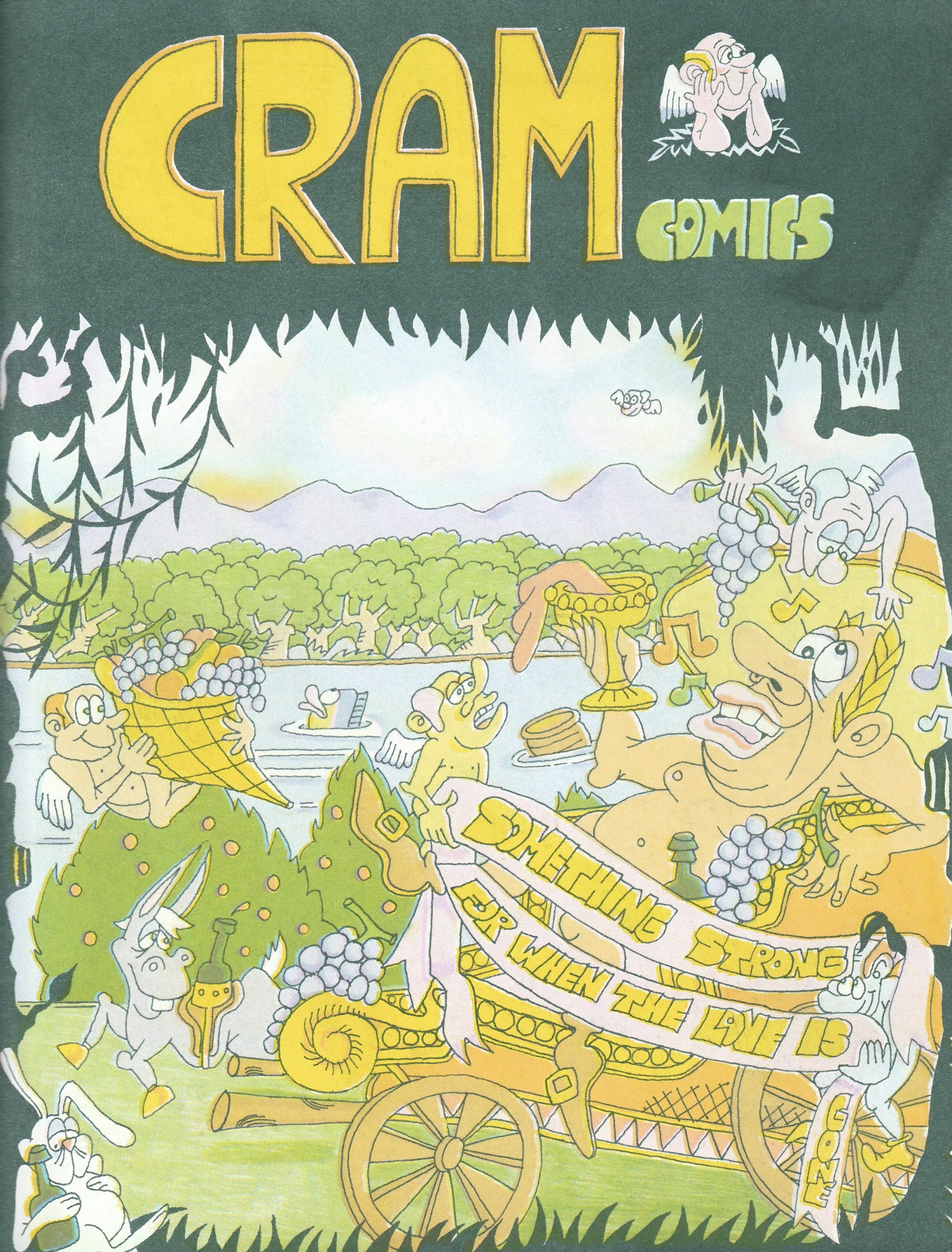
Cram Comics #5 distinguishes itself immediately through its visual identity. The cover art, provided by Lillian Ansell, sets a deceptive tone. Featuring a nude Bacchus singing in a drunken, pastoral slouch, the style pays direct homage to the loose, rubbery cartooning of the 1960s underground. However, the banner held aloft by cupids—bearing the issue’s subtitle—hints at a much darker interior.
Key Specifications:
- Editor: Andrew Alexander
- Theme: "Something Strong For When The Love Is Gone"
- Contributors: Swayam Parekh, Anand, Médar de la Cruz, Médar Serrata, Nate Doyle, Michael D. Kennedy, James Collier, Sam Szabo, Syd Madia, and Cameron Arthur.
- Format: Multi-artist anthology featuring slice-of-life, surrealism, and experimental layouts.
- Aesthetic: A bridge between 1968 counterculture and 2026 post-digital aesthetics.
The anthology functions as a thematic inquiry. Rather than focusing solely on the "loss" of love, the contributors focus on the "something strong" that replaces it—be it bitterness, obsession, escapism, or a descent into the surreal.
Chronology: The Narrative Arc of Disillusionment
The sequencing of Cram Comics #5 is deliberate, guiding the reader through various stages of emotional erosion. Editor Andrew Alexander has structured the issue to oscillate between the grounded and the fantastic, ensuring that the reader remains off-balance.
The Domestic and the Social (The Opening Salvos)
The issue begins with Swayam Parekh’s "Shabana, I Hate Tears." This single-page entry serves as a tonal primer. It utilizes a whimsical drawing style—complete with a literal halo over a mother’s head—to mask a biting story of social resentment. The narrative centers on a gift of embroidered napkins that goes unacknowledged, triggering a disproportionate rage. It establishes the "something strong" as a corrosive, petty bitterness.
This is followed by Anand’s "The River Keeps on Flowing," which moves the setting to India. This eight-page story traces the life of a young man who seeks refuge in cinematic melodramas to escape his romantic failures. The chronology of his life leads to an arranged marriage that lacks the "happily ever after" of the films he adores, providing a sobering look at how real life refuses to adhere to the scripts of our imagination.
The Middle Act: Escalation and Abstraction
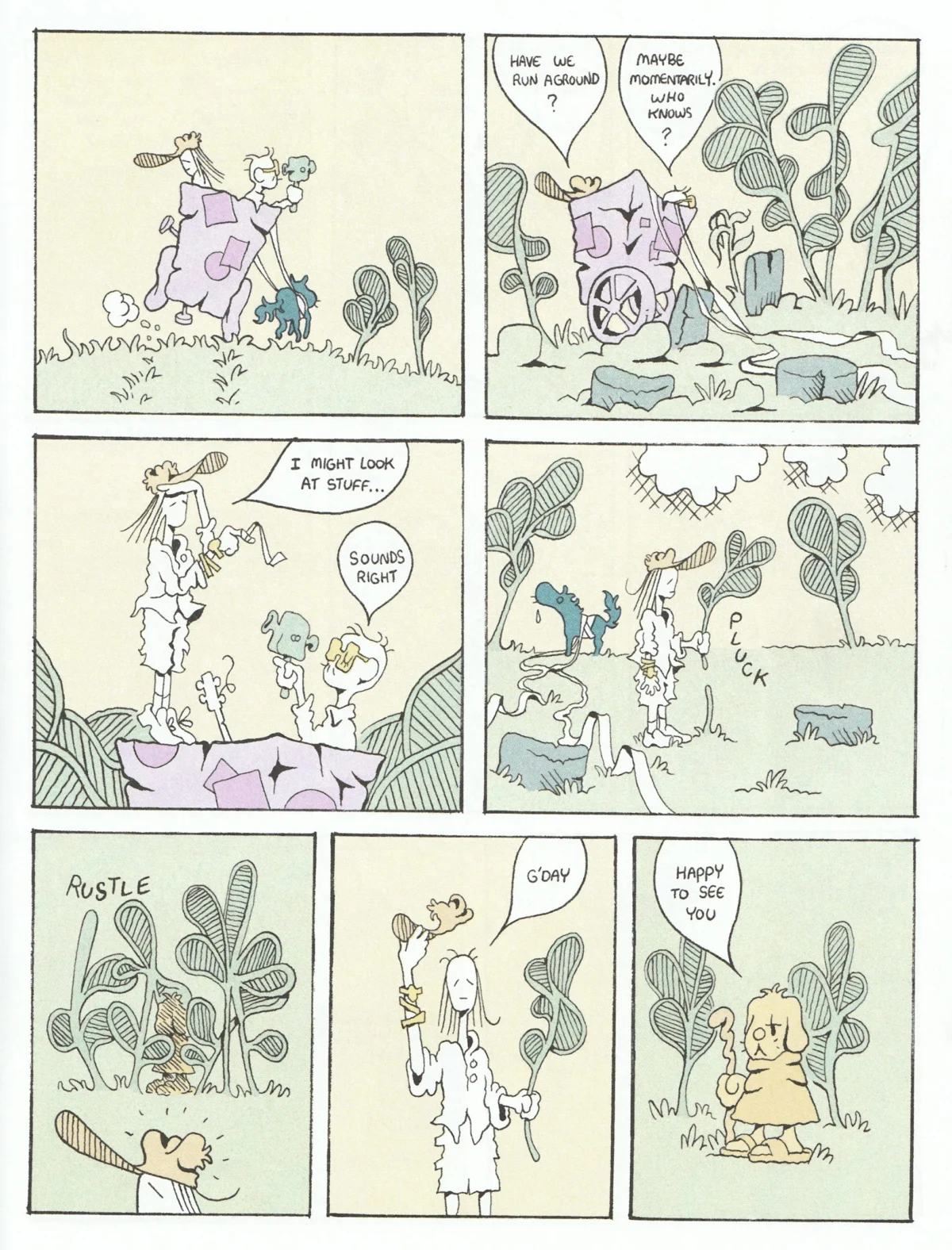
As the anthology progresses, the stories become more structurally complex. Médar de la Cruz and Médar Serrata’s "Fixing It" uses twelve pages to detail a mundane bathroom repair. This segment acts as a psychological thriller within a domestic space, where a leaky tap becomes a proxy for a failing marriage.
The transition into the abstract begins with Nate Doyle’s "Earthing." Breaking away from traditional panels, Doyle uses poetic captions and free-flowing imagery to depict grief as a series of physical tortures. This marks the midpoint of the issue, where the "lost love" is no longer a person or a social status, but a catalyst for total psychological deconstruction.
The Conclusion: Surrealism and Consequence
The final third of the book leans heavily into the "weird." From Michael D. Kennedy’s dialogue-free "Jumbie’s Muse" to the "skibidi" inflected bunkers of Sam Szabo’s work, the anthology moves toward a "post-ironic, pre-apocalyptic" finale. The issue closes with Cameron Arthur’s "Sacred Heart," a story of a prison guard that ties the collection back to the physical world, reminding the reader that even in the most mundane roles, the absence of love can have life-and-death consequences.
Supporting Data: A Deep Dive into Key Contributions
To understand the impact of Cram Comics #5, one must analyze the specific artistic choices that define its standout entries.
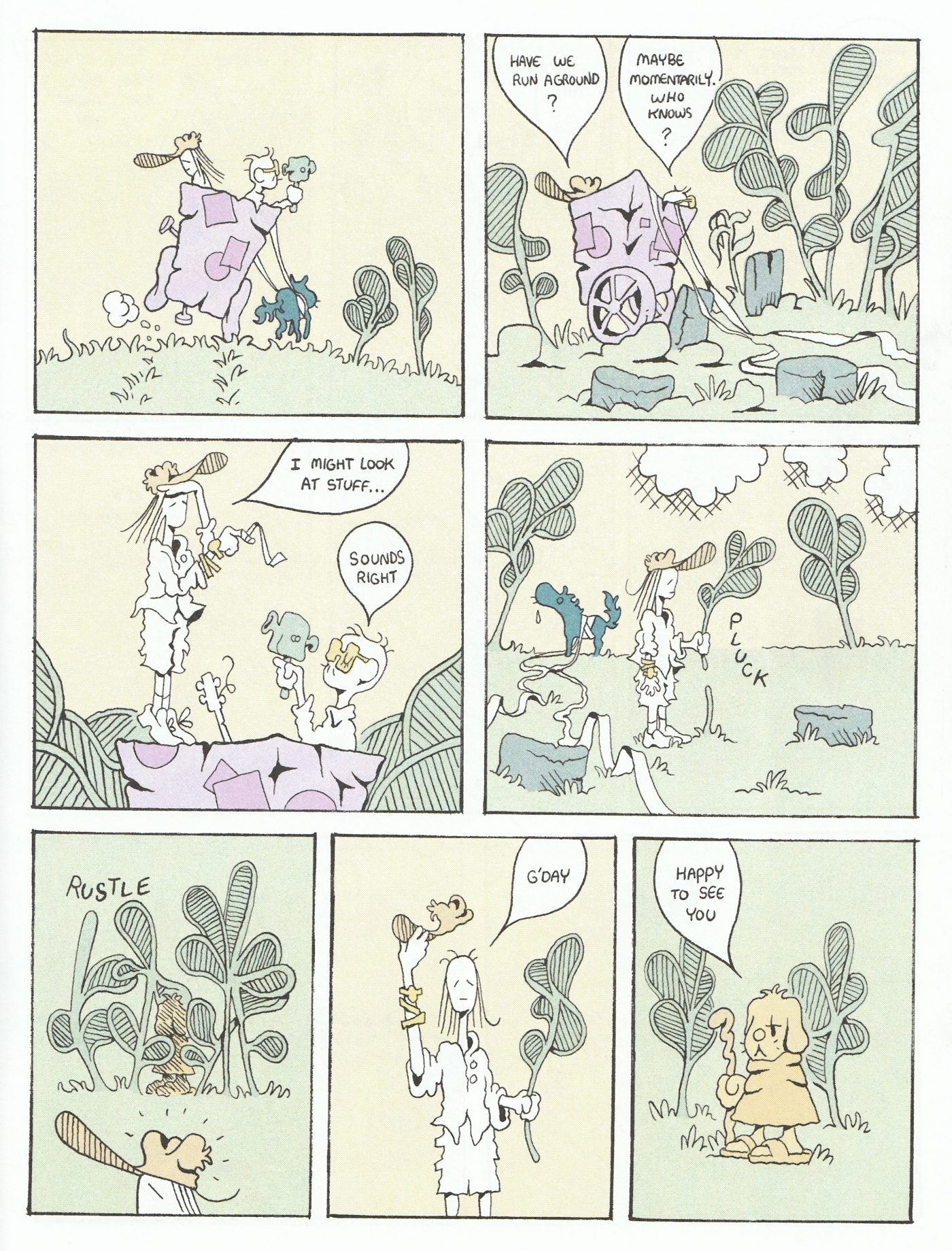
The Metaphor of the Leak: "Fixing It"
In "Fixing It," de la Cruz and Serrata achieve a rare feat in short-form comics: the creation of genuine tension through technical frustration. The narrative stretches the "plausible situation" to its breaking point. The father’s struggle with tools and valves is rendered with a grit that makes the reader feel the rising water. The "supporting data" of the story lies in the dialogue of the wife, whose laughter at her husband’s struggle reveals the "strained marriage" subtext. It is a masterclass in using a physical crisis to illustrate an emotional one.
Visual Symbolism in "Jumbie’s Muse"
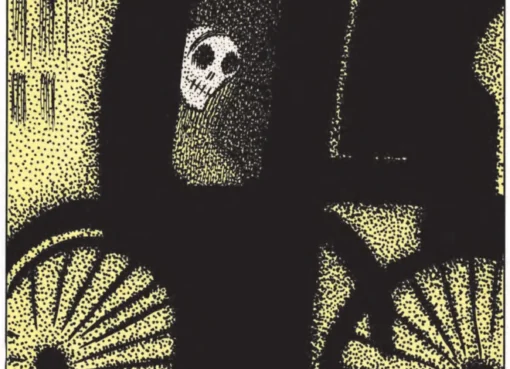
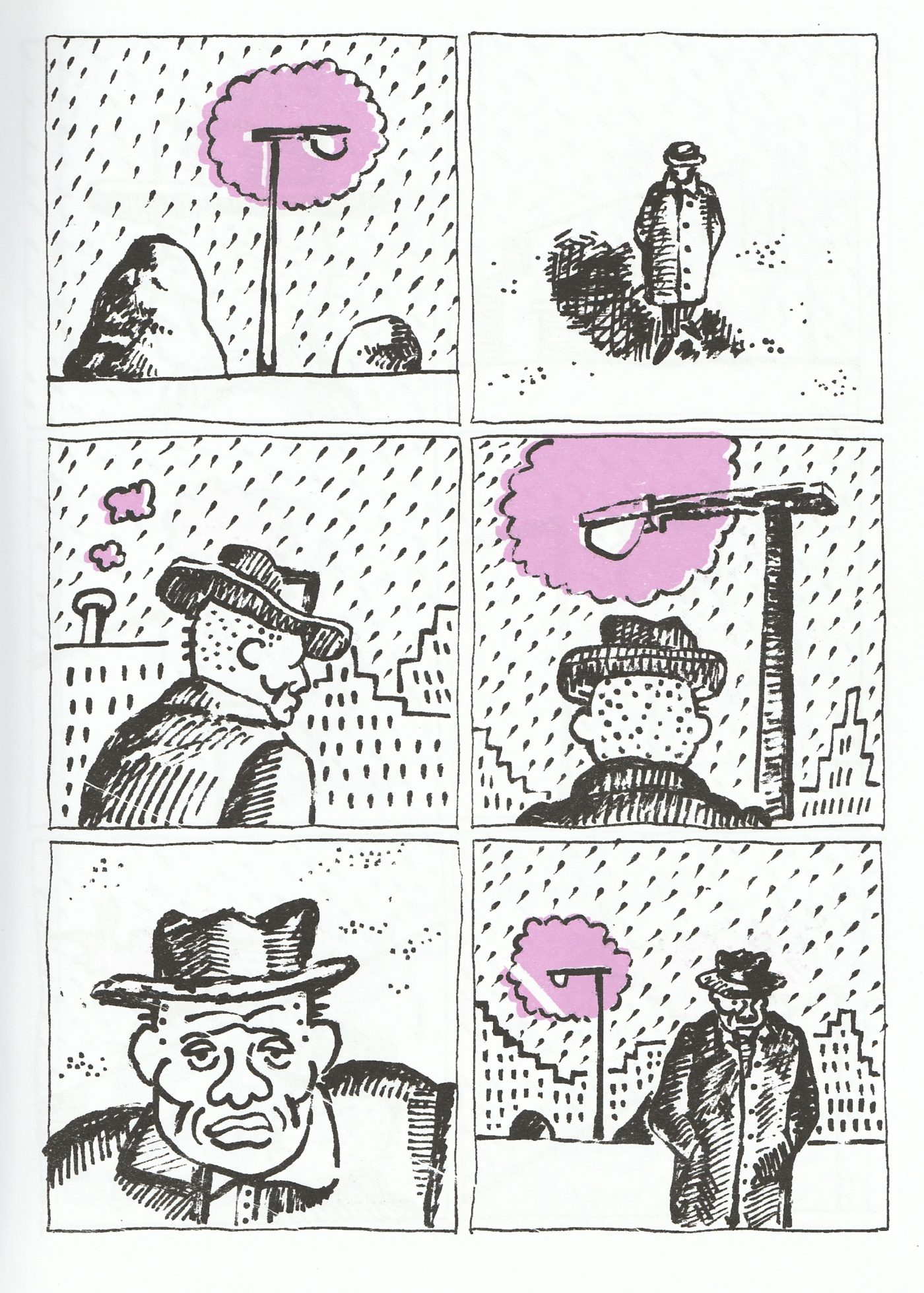
Michael D. Kennedy’s "Jumbie’s Muse" is the issue’s most visually striking silent narrative. The use of a shapeshifting pink cloud to represent inspiration—and its eventual transformation into a human shape—serves as a metaphor for the parasitic nature of art. The black-and-white cityscape provides a stark contrast to the pink "muse," emphasizing the isolation of the artist who has lost his "love" for the craft and is now merely surviving it.
The Digital Vernacular: "The Enlightened Transsexual"
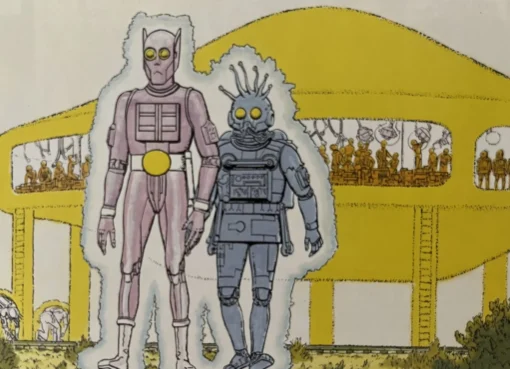
Sam Szabo’s "The Enlightened Transsexual in: The Electric Kool-Aid Acid Testosterone Blocker" provides the most contemporary "data" on the state of the underground. By blending references to 1960s literature (Tom Wolfe) with 2026 internet slang ("skibidi blajah," "puppygirl heteropessimism"), Szabo captures the "post-ironic" age. The characters—one "normal," one a tri-breasted, rainbow-skinned entity—exist in a nuclear bunker, suggesting that the "something strong" needed when love is gone is a thick layer of irony and digital noise.
Official Responses: Critical Reception and Aesthetic Context
While the "official" world of corporate publishing often ignores the underground, the critical response within the independent community for Cram Comics #5 has been overwhelmingly positive. Critics have noted that the anthology succeeds where many fail: it maintains a cohesive "soul" despite the disparate styles of its contributors.
The "Underground" Legacy
Reviewers have pointed out that Lillian Ansell’s cover is not merely a stylistic choice but a political statement. By invoking the spirit of 1968, the anthology positions itself as a successor to the works of Robert Crumb and Art Spiegelman, but with a modern, intersectional lens. The "official response" from the indie community suggests that Cram is currently the premier venue for "unfiltered" artistic expression.
The Role of the Editor
Andrew Alexander has received praise for his "invisible hand." The variety of the contents—shaking up the "funny-because-it’s-true" humor of the opening with the "hardest-hitting" entry, "Sacred Heart"—is cited as the reason for the issue’s readability. Unlike many anthologies that feel like a collection of leftovers, Cram #5 feels like a curated gallery.
Implications: The Future of Independent Comics
The publication of Cram Comics #5 has several implications for the future of the medium.
1. The Death of the "Safe" Narrative
The anthology proves that there is a significant appetite for stories that do not offer easy resolutions. Whether it is the unresolved ending of Anand’s story or the ambiguous climax of "Jumbie’s Muse," these creators are rejecting the "formulaic conclusions" of mainstream media. This suggests a shift toward a more mature, cynical, and ultimately more honest form of storytelling in the independent sector.
2. The Integration of Digital and Print
Sam Szabo’s contribution, in particular, signals a new era where "internet-speak" and "dada pastiche" are no longer fringe elements but core components of the graphic novel’s vocabulary. As the "post-apocalyptic age" becomes a more common theme in art, the way we communicate through fragmented references will likely become the standard for depicting internal monologues.
3. The Enduring Power of the Anthology
In an age of "infinite scroll" digital content, the physical (or structured digital) anthology remains a vital format. Cram Comics #5 demonstrates that a shared theme can provide a framework for diverse voices to speak to one another, creating a sum that is greater than its parts.
4. The Human Element in a Mechanical World
Finally, stories like "All the Time Aquatics" and "Sacred Heart" remind us that the core of the comic medium remains the human experience. Whether we are retreating into an aquarium or collecting trinkets in a prison, the "something strong" we cling to is a reflection of our need for connection—even when the love that originally sparked that need has long since vanished.
Cram Comics #5 is more than a collection of strips; it is a diagnostic report on the state of the human heart in 2026. It is messy, bitter, occasionally beautiful, and entirely necessary.