End-of-Summer Reflections: Navigating Dystopian Narratives, Culinary Heists, and Community Imperatives
As the warmth of summer begins its gentle recession, giving way to the crisp promise of autumn, a distinct psychological phenomenon often surfaces: the "August blues." Much like the "Sunday scaries" that precede the work week, this end-of-summer sentiment marks a period of introspection, a lingering sense of unfulfilled seasonal ambitions, and an anticipatory dread of colder, darker months. This transitional period, far from being a mere personal whim, resonates with broader societal currents, manifesting in our cultural consumption, civic engagement, and collective discourse.
From unsettling cinematic portrayals of authoritarian futures to bizarre tales of large-scale food theft, and from the relentless churn of the publishing industry to profound meditations on community and acceptance, the cultural landscape at summer’s close offers a rich tapestry of concerns and diversions. This article delves into these disparate threads, exploring how they reflect our anxieties, inform our understanding of global systems, and challenge our perspectives on human connection.
Unpacking the "August Blues": A Societal Barometer
Main Facts: The phenomenon commonly referred to as the "August blues" describes a widespread feeling of melancholy or anxiety as the summer season draws to a close. It is characterized by a sense of urgency to make the most of remaining warm days, coupled with a reflective regret over perceived missed opportunities during the season. Psychologically, it mirrors the "Sunday scaries," where the impending return to routine and responsibility casts a shadow over the present enjoyment. This sentiment is often exacerbated by broader environmental and social pressures, such as concerns over air quality due to wildfires or ongoing political tensions, urging individuals towards civic action and personal care.
Supporting Data: While not a formally recognized clinical condition like Seasonal Affective Disorder (SAD), which typically occurs in colder months, the "August blues" can be understood through the lens of anticipatory anxiety and seasonal transition psychology. Research into seasonal changes and mood often highlights how shifts in daylight hours, temperature, and social routines can impact emotional well-being. The end of summer often signifies the end of a perceived period of freedom and leisure, leading to a sense of loss or a burden of returning obligations. This psychological shift can be observed culturally in widespread conversations and media portrayals around the "end of summer," often tinged with nostalgia or a sense of impending change. The original article’s call to "hug your friends, call your reps, and if you’re going outside in a haze of smoky air, wear a mask!" underscores a contemporary reality where personal well-being is intrinsically linked to collective action and environmental awareness, adding layers of genuine concern to the seasonal transition.
Implications: The "August blues" serve as a cultural touchstone, a collective pause for reflection before the accelerated pace of autumn. It highlights our intrinsic connection to seasonal rhythms and how these natural cycles influence our emotional states and societal priorities. The impulse to "do something" or reflect on what "hasn’t been done" during summer extends beyond personal leisure, touching upon civic duties and communal responsibilities, especially in an era marked by climate change impacts and persistent social challenges.
The Cinematic Mirror: "One Night Only" and Dystopian Anxieties
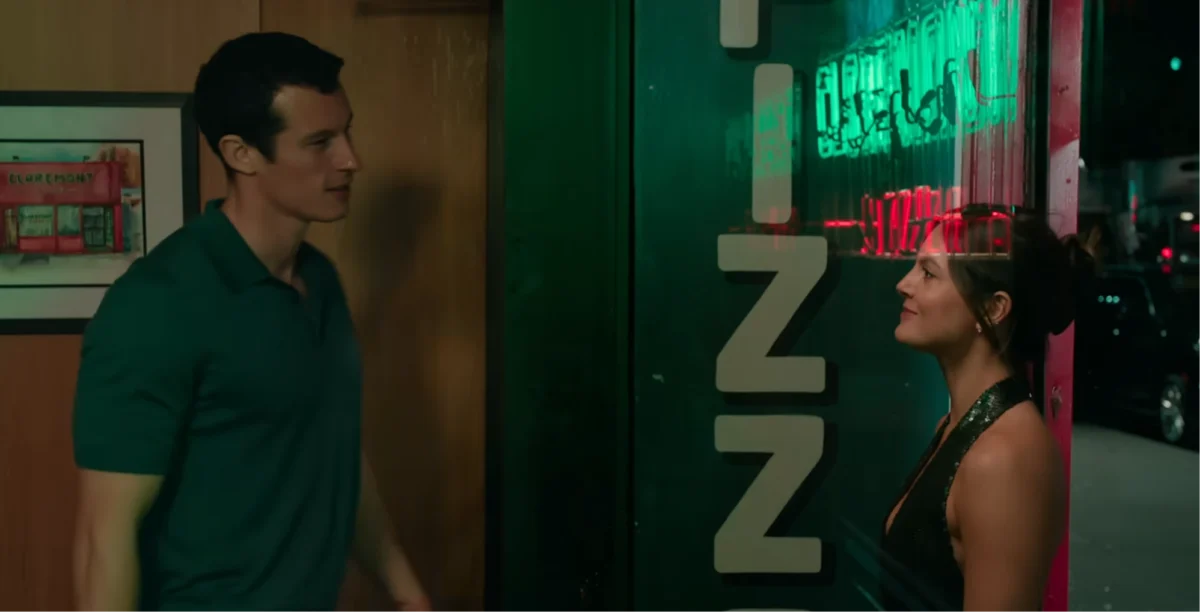
Main Facts: A film titled One Night Only has recently garnered significant attention following the release of its trailer, which initially presents as a conventional romantic comedy. However, a deeper look reveals a chilling dystopian premise: the story unfolds in a future United States where a repressive, authoritarian regime legally restricts sexual activity to a single designated night each year. This unexpected twist from a seemingly "breezy, bland trailer" into a stark commentary on state control over personal liberties has sparked considerable discussion.
Supporting Data: The Vanity Fair piece by Hillary Busis, cited in the original article, provides a critical exploration of the film’s complex and often contradictory narrative. Busis describes the movie as a "sexual hydra," where answers to one question only beget more confounding queries. Key ambiguities highlighted include whether the "no-sex law" exclusively targets heterosexual individuals, the definition of "sexual activity" (e.g., "handsies"), and the obscure "weird science and made-up tech" employed for enforcement. The trailer’s initial deception, presenting a lighthearted rom-com façade over a deeply unsettling premise, itself functions as a commentary on how oppressive systems can be normalized or subtly introduced.
Implications: One Night Only, despite its apparent narrative inconsistencies, taps into profound contemporary anxieties surrounding governmental overreach, bodily autonomy, and the erosion of personal freedoms. The emergence of such a narrative reflects a global discourse on reproductive rights, LGBTQ+ rights, and the increasing surveillance capabilities of states. Dystopian fiction often serves as a societal warning, extrapolating current trends to their extreme conclusions. By framing a fundamental human right—sexual expression—as a state-controlled privilege, the film forces audiences to confront the potential slippery slope of authoritarianism and its insidious methods of control. The recommendation to "read about" the movie rather than watch it suggests that the discussion and analysis of such themes might be more valuable than the direct consumption of a potentially flawed or disturbing portrayal, highlighting the power of critical engagement with media.
The Curious Case of the Stolen Cheese: A Glimpse into Global Food Crime
Main Facts: An astonishing incident involving the theft of twenty-two tons of premium British cheese destined for the renowned Neal’s Yard shop has captured the attention of both food enthusiasts and crime investigators. The incident, as reported in a Longreads piece by Olivia Potts, occurred on October 14, 2024, when the massive shipment was collected as scheduled, only for both the cheese and the supposed buyer to vanish without a trace. This audacious heist is not an isolated event but rather indicative of a broader, international problem of "cheese crime."
Chronology: According to Potts’ detailed account, three dairies meticulously prepared and delivered the enormous quantity of specialty British cheese. The collection was seemingly routine on the designated date of October 14, 2024. However, the subsequent disappearance of the entire consignment, valued at a substantial sum and representing immense labor from small, heritage producers, marked a significant breach in the food supply chain. The lack of any trace of the cheese or the individual who collected it suggests a well-coordinated operation.
Supporting Data: The Longreads article emphasizes that cheese crime, while sounding almost comical, is a serious and widespread issue, particularly across Europe where high-value, artisanal cheeses are produced. Instances of large-scale theft, often involving entire truckloads of cheese, have been documented in countries like Italy (Parmesan, Provolone), France (Comté, Roquefort), and the Netherlands (Gouda). These crimes are rarely spontaneous acts; they often involve organized criminal networks exploiting vulnerabilities in logistics, transportation, and warehousing. The motivation is purely economic: high-quality cheeses command significant prices on black markets, offering a lucrative, albeit illicit, trade. The piece highlights the devastating impact on "small, heritage producers" who bear the brunt of financial losses and often lack the resources to recover.
Official Responses & Implications: Law enforcement agencies across Europe have acknowledged the growing problem of food theft, including cheese. Efforts have been made to increase surveillance on transport routes and at storage facilities, and to foster better cooperation between producers, distributors, and police. However, the sheer volume and value of the goods, coupled with sophisticated criminal methods, continue to pose significant challenges. The broader implications of cheese crime extend beyond immediate financial losses. It exposes systemic vulnerabilities in the global food chain, raising questions about security protocols, traceability, and the protection of specialized agricultural industries. It also underscores how even seemingly niche markets can become targets for organized crime, ultimately impacting consumer prices and the viability of traditional food production methods.
The Autumnal Deluge: Navigating the Fall Book Season
Main Facts: The publishing industry is bracing for an exceptionally dense fall season, with September and October 2024 poised to deliver an overwhelming number of new book releases. This annual phenomenon, where publishers strategically release their most anticipated titles ahead of the holiday shopping season, promises a veritable feast for readers but also presents a formidable challenge for those attempting to "keep up" with the latest literary offerings.
Supporting Data: As highlighted in the original article, September 8th alone is slated to see the release of numerous highly anticipated works, including Premee Mohamed’s Wickhills, Garth Nix’s Massif, Frances Hardinge’s Traitors’ Nest, Megan Giddings’ Black Arts, and Sarah Maria Griffin’s Strange is the Light. October 13th is predicted to be even more "book-laden," signaling a concentrated period of literary output. This pattern reflects strategic planning by publishing houses to maximize visibility and sales during a crucial retail window. The diversity of genres, from speculative fiction to fantasy and literary fiction, indicates a robust and varied market. The article’s author also lists personal "catch-up" reads, such as S.L. Huang’s The Language of Liars, Sunyi Dean’s The Girl With a Thousand Faces, Cameron Reed’s What We Are Seeking, and H.G. Parry’s The Witch Below the Dreaming Wood, emphasizing the continuous flow of compelling literature.
Implications: The concentrated release schedule of fall books has several implications for both the industry and readers. For publishers, it’s a high-stakes period dictating annual performance and setting trends. For authors, it’s a competitive landscape requiring significant marketing efforts. For readers, it can be both exhilarating and daunting. The sheer volume can lead to "reader overwhelm," making it difficult to choose or even discover titles amidst the noise. However, it also signifies a vibrant literary culture, offering a wealth of narratives and ideas. The act of "catching up" on summer reads before the fall rush becomes a ritual, a way to clear the mental palate and prepare for the onslaught of new stories. This anticipation underscores the enduring appeal of books as a primary source of entertainment, enlightenment, and escape.
Community, Discomfort, and Care: A Call for Radical Acceptance
Main Facts: SFF author Micaiah Johnson’s essay, titled "My Favorite Thing: The Cat That Hates Me + That One SFF Author Who Hates Everyone (Thoughts on Exile)," offers a profound and timely meditation on the nature of community, the distinction between discomfort and genuine threat, and the imperative of care, even for those we find difficult. The essay, lauded for its thoughtful exploration, moves beyond anecdotal observations to deliver a powerful argument for reconsidering how societies define and manage acceptance and exclusion.
Supporting Data: Johnson masterfully weaves together seemingly disparate topics—personal experiences with an aloof cat, reflections on controversial authors, and the broader concept of exile—to construct a cohesive philosophical argument. Her core thesis, articulated in the powerful statement, "By pathologizing those we dislike, we give ourselves license to exile them," challenges conventional notions of community boundaries. Johnson argues that true community is not merely a collection of agreeable individuals but a space that grapples with discomfort and difference. The essay implicitly critiques "cancel culture" and other forms of social ostracization, urging a more nuanced approach to human interaction. She expands this concept from literary communities to broader societal structures, noting how cities often seek to remove "unsightly" individuals, a sentiment that can scale up to national policies concerning immigration and social marginalization. The poignant closing instruction, "There are cats you will never want to pet. Feed them anyway," serves as a powerful metaphor for extending basic care and humanity even to those who elicit aversion or discomfort.
Implications: Johnson’s essay carries significant implications for contemporary social discourse, particularly in an increasingly polarized world. It challenges individuals and communities to reflect on their own biases and the ease with which they might dismiss or "exile" those who don’t conform to preferred norms. The piece advocates for a radical form of acceptance and care, emphasizing that fundamental human dignity should not be conditional on likeability or agreement. Its relevance extends to discussions about social justice, mental health, and the formation of inclusive spaces, from online forums to physical neighborhoods and national policies. The essay suggests that genuine strength in a community lies not in homogeneity, but in its capacity to navigate and accommodate difference, fostering a more resilient and empathetic society.
Conclusion: Navigating the Crossroads of Summer’s End
As August fades into September, the diverse narratives unfolding around us—from dystopian thrillers to international crime, and from literary anticipation to deep philosophical essays—serve as potent reminders of the multifaceted world we inhabit. The "August blues" are not just a personal mood but a collective echo, a call to examine our relationship with time, societal control, global vulnerabilities, cultural consumption, and the fundamental tenets of community.
The recommended actions to "hug your friends, call your reps, and if you’re going outside in a haze of smoky air, wear a mask!" transcend personal advice, evolving into a broader imperative for engagement. They underscore the interconnectedness of individual well-being with civic responsibility, environmental consciousness, and social solidarity. As we transition into a new season, these insights offer not just a snapshot of current concerns, but a roadmap for navigating the complexities of modern life with greater awareness, critical thought, and an unwavering commitment to humanistic values. The journey from summer’s close to autumn’s embrace is thus transformed from a mere seasonal shift into a period rich with opportunities for reflection, growth, and engaged citizenship.