Emma Steinkraus: Weaving History, Gender, and the Natural World into Vibrant Canvases
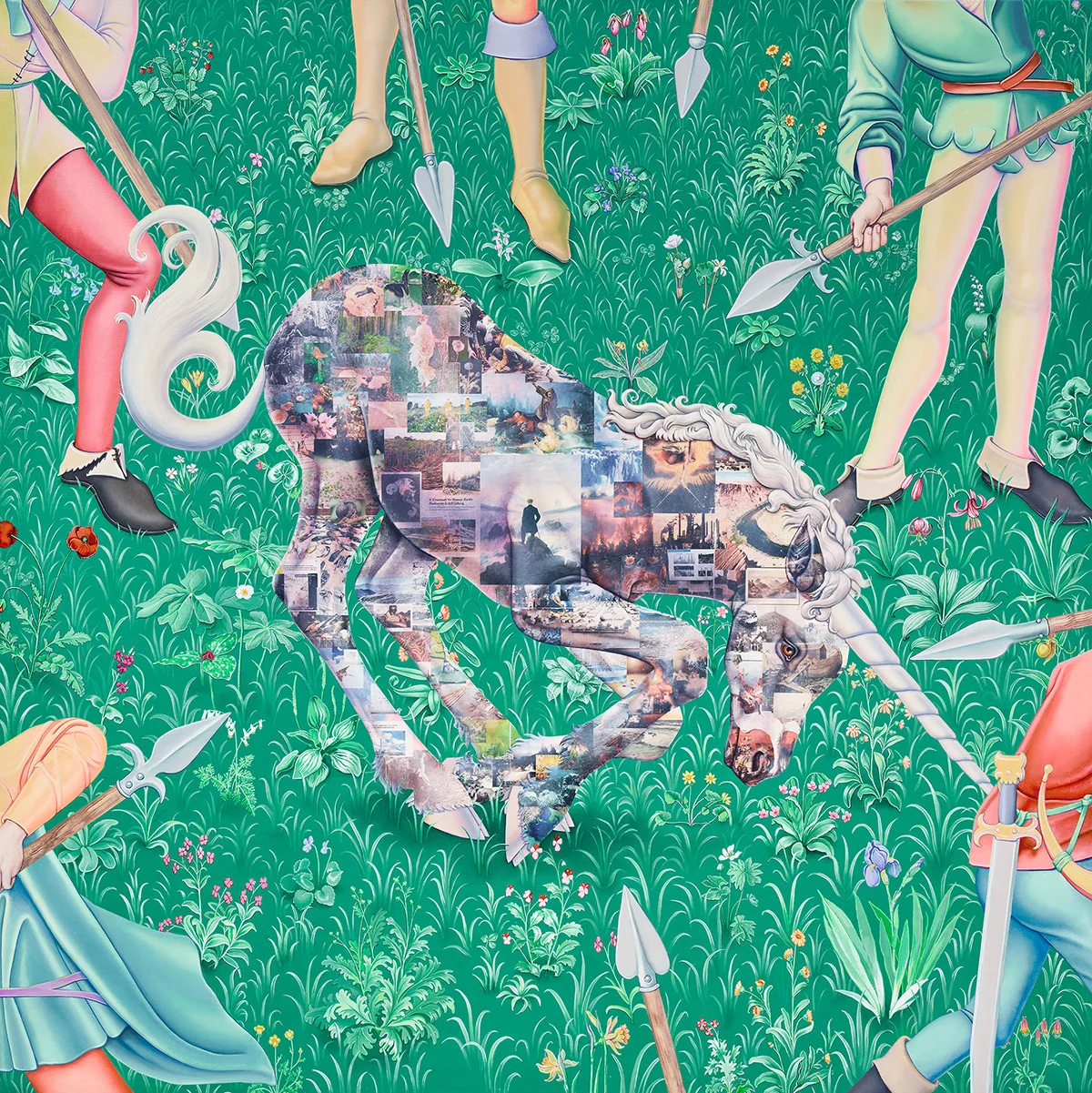
Lexington, VA – In the quiet, verdant landscape of Lexington, Virginia, emerges an artistic voice that resonates with a profound understanding of art’s enduring legacy and its capacity to speak to contemporary concerns. Emma Steinkraus, a painter whose work is currently captivating audiences at Plato gallery in New York, is forging a distinctive path by meticulously excavating art history, transforming its rich archives into a vibrant dialogue between the past and the present. Her canvases are not mere reproductions or pastiches; they are dynamic interpretations, imbued with a fresh perspective that interrogates themes of gender, the environment, and the very essence of perception.
Steinkraus’s artistic practice is rooted in a deep and scholarly engagement with art history. Far from viewing it as a static collection of relics, she sees it as a fertile ground for discovery and reinvention. This approach allows her to establish visual connections with a diverse range of artistic traditions, from the meticulous detail and spiritual depth of the Northern Renaissance and the Pre-Raphaelite Brotherhood to the bold explorations of contemporary luminaries like Haley Josephs and Njideka Akunyili Crosby. The result is a body of work that is both intellectually stimulating and visually arresting, a testament to her technical prowess and her imaginative spirit.
A Living Archive: Excavating Art History
Steinkraus’s engagement with art history is not superficial. She delves into the canon, unearthing forgotten narratives and re-contextualizing established motifs. This process is akin to an archaeological dig, where each discovery informs the next layer of meaning. Her paintings often feature figures and compositions that echo historical masterpieces, but they are never slavishly copied. Instead, Steinkraus imbues them with a contemporary sensibility, subtly altering details, shifting perspectives, and injecting her own unique visual language. This creates a fascinating tension between familiarity and novelty, inviting viewers to engage with the historical sources on a deeper, more personal level.
The Northern Renaissance, with its emphasis on precise rendering, symbolic imagery, and a profound connection to the natural world, provides a rich wellspring for Steinkraus. Artists like Jan van Eyck and Albrecht Dürer, known for their meticulous attention to detail and their exploration of religious and allegorical themes, offer a foundational framework for her technical discipline. Similarly, the Pre-Raphaelites, with their romanticized depictions of medieval subjects, their lush landscapes, and their exploration of themes like love, loss, and spirituality, resonate with Steinkraus’s own aesthetic sensibilities. She draws upon their evocative color palettes and their ability to imbue scenes with a sense of timeless mystery.
However, Steinkraus is not content to remain solely within the confines of historical art. Her practice is a testament to the ongoing evolution of artistic discourse. She actively engages with the work of contemporary painters, recognizing the threads that connect them to the past and the innovations they bring to the present. Her appreciation for artists like Haley Josephs, whose vibrant and often playful explorations of figuration and identity, and Njideka Akunyili Crosby, whose layered and deeply personal narratives that bridge Nigerian and American experiences, demonstrates her commitment to understanding and contributing to the contemporary art landscape. This conscious dialogue with both historical masters and living artists allows Steinkraus’s work to occupy a unique temporal space, bridging centuries of artistic inquiry.
A Dialogue Between Past and Present
The essence of Steinkraus’s artistic project lies in this very dialogue between past and present. Her paintings act as conduits, facilitating a conversation between the artistic achievements of bygone eras and the pressing realities of our current world. This is not a nostalgic longing for a romanticized past, but rather a sophisticated understanding of how historical artistic forms and themes can illuminate contemporary issues.
Her choice of subjects often reflects this historical consciousness. She might render figures in poses that recall Renaissance portraits, but their attire or their surroundings might be subtly anachronistic, placing them firmly in the 21st century. This juxtaposition creates a sense of temporal fluidity, blurring the lines between then and now. The viewer is encouraged to consider how the concerns and aesthetics of the past continue to inform our present-day experiences and how contemporary issues might have echoes in historical artistic expressions.
Examining Gender and the More-Than-Human World
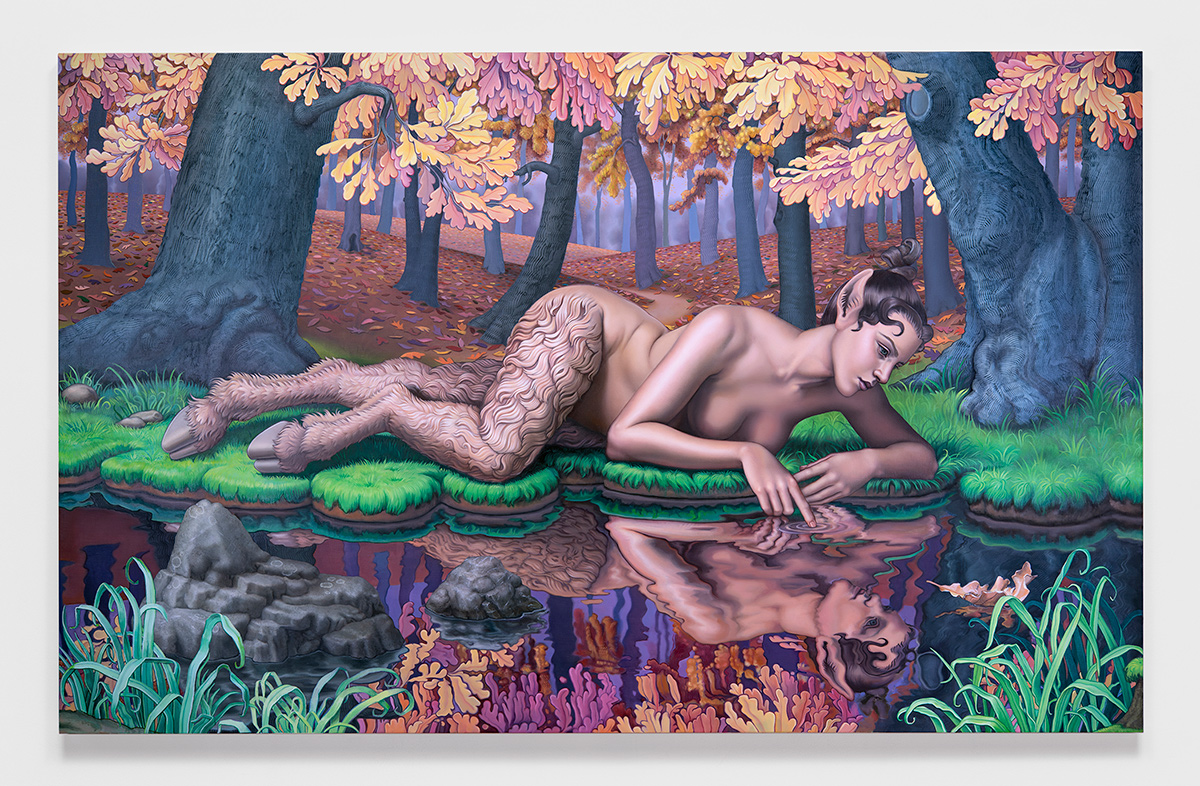
Beyond her engagement with art history, Steinkraus’s work is increasingly focused on critical examinations of gender and the complex relationship between humanity and the natural world. These themes are not treated as separate entities but are intricately woven into the fabric of her paintings, often through the same technical rigor and dreamy color palette that defines her historical explorations.
Her approach to gender is nuanced and multifaceted. She often depicts figures that challenge traditional archetypes, exploring the fluidity of identity and the multifaceted nature of human experience. By drawing on historical representations of femininity and masculinity, she can both acknowledge and subvert societal expectations, inviting viewers to question established norms and consider alternative perspectives. The act of reinterpreting historical imagery through a contemporary lens of gender awareness allows her to offer a critique of historical power structures and to envision more inclusive futures.
Furthermore, Steinkraus’s paintings possess a profound connection to the "more-than-human" world – the intricate web of life that extends beyond human dominion. Her landscapes are often lush and evocative, imbued with a sense of organic vitality. Flora and fauna are not merely decorative elements but are presented as integral components of the visual narrative, often suggesting a spiritual or symbolic connection to the human figures within them. This engagement with nature can be seen as a response to contemporary anxieties surrounding environmental degradation and a call for a more harmonious coexistence with the natural world. The dreamlike quality of her color palette – often characterized by luminous hues and subtle gradations – further enhances this sense of wonder and imbues her depictions of nature with an almost otherworldly beauty.
"Pastime" Exhibition at Plato Gallery: A Current Manifestation
Currently, the public has an opportunity to witness the compelling evolution of Emma Steinkraus’s artistic vision through her participation in the group exhibition, "Pastime," at Plato gallery in New York. This exhibition, running until August 25th, serves as a vital platform for showcasing Steinkraus’s recent works and situating them within a broader artistic discourse. The title "Pastime" itself suggests a nuanced engagement with leisure, leisure activities, and perhaps even the concept of time itself. It is within this context that Steinkraus’s explorations of history, gender, and nature can be further appreciated.
The gallery setting in New York, a global epicenter of contemporary art, provides a significant backdrop for Steinkraus’s work. Her ability to hold her own amidst a curated selection of artists, and to engage with a discerning New York audience, speaks volumes about the maturity and relevance of her artistic voice. "Pastime" offers a chance for art enthusiasts and critics to directly experience the intricate layering of historical references, the subtle explorations of identity, and the breathtaking beauty of her painterly technique. The exhibition serves as a tangible testament to her ongoing commitment to pushing the boundaries of her practice and to contributing meaningfully to the contemporary art conversation.
The Artist’s Journey: From Inspiration to Exhibition
While the article provides a glimpse into Steinkraus’s current exhibition, understanding the genesis of her artistic journey offers further insight into the depth of her work. Born and raised in a region steeped in history, her connection to art history likely began early. The academic rigor required to mine art history as a "living archive" suggests a dedicated and studious approach to her craft. This is often fostered through formal art education, where students are encouraged to study masters, understand stylistic developments, and engage in critical analysis.
Steinkraus’s specific choice to draw inspiration from such diverse sources – the meticulously rendered details of the Northern Renaissance, the romantic narratives of the Pre-Raphaelites, and the contemporary boldness of Josephs and Akunyili Crosby – indicates a deliberate and thoughtful selection process. It’s not simply about aesthetic preference, but about identifying specific historical and contemporary artistic strategies that can be synthesized to express her unique vision. This suggests a period of intense study, experimentation, and self-discovery.

The "dreamy color palette" she employs is a crucial element in her distinctive style. This is not an accidental application of paint, but a carefully considered choice that evokes emotion, atmosphere, and a sense of transcendence. The ability to achieve such a palette requires a deep understanding of color theory, pigment properties, and layering techniques. It speaks to years of dedicated practice in the studio, honing her technical skills to achieve the desired visual effects.
The transition from studio practice to exhibition is a significant step for any artist. Participating in a group exhibition like "Pastime" at Plato gallery signifies recognition within the art world. Such exhibitions often come about through curatorial invitations, submissions to open calls, or networking within the artistic community. For Steinkraus, this exhibition represents a crucial opportunity to share her recent body of work with a wider audience, to receive critical feedback, and to potentially foster new connections and opportunities. The fact that the exhibition runs until August 25th indicates a substantial commitment from the gallery, suggesting confidence in the quality and impact of the art on display.
Supporting Data and Artistic Context
To further contextualize Steinkraus’s work, it’s important to consider the broader trends within contemporary art that her practice engages with. The resurgence of interest in figurative painting, the ongoing dialogue between historical styles and contemporary concerns, and the increasing emphasis on themes of identity, gender, and the environment are all prominent movements in the art world today. Steinkraus’s work aligns with these trends, demonstrating her awareness of and contribution to these critical conversations.
The "more-than-human world" is a concept gaining traction in academic and artistic circles, reflecting a growing recognition of the interconnectedness of all living beings and the urgent need for environmental stewardship. Steinkraus’s incorporation of natural elements into her work, imbued with a sense of spirituality and significance, places her within this important discourse.
The influence of artists like Njideka Akunyili Crosby is particularly noteworthy. Crosby’s work often explores themes of diasporic identity, cultural hybridity, and the complexities of belonging. Her ability to weave personal narratives with broader social and political commentary through a unique visual language of layering and collage resonates with Steinkraus’s own approach to engaging with history and identity. Similarly, Haley Josephs’ vibrant and often provocative explorations of queer identity and desire offer a contemporary counterpoint to Steinkraus’s more historical engagements with figuration.
The very act of “excavating” art history can be seen as a response to a perceived oversaturation of purely conceptual or abstract art. Steinkraus’s commitment to traditional painting techniques, combined with her innovative conceptual framework, offers a compelling alternative and a refreshing return to the power of the painted image.
Official Responses and Critical Reception
While the provided text does not include explicit official responses or critical reviews, the inclusion of Steinkraus in a group exhibition at Plato gallery in New York suggests a level of professional validation. Galleries like Plato are typically curated by professionals who assess artists based on the quality of their work, their artistic vision, and their potential to resonate with contemporary audiences. The fact that her work is being exhibited implies that curators and gallery directors have recognized its merit and its ability to contribute to the ongoing dialogue within the art world.
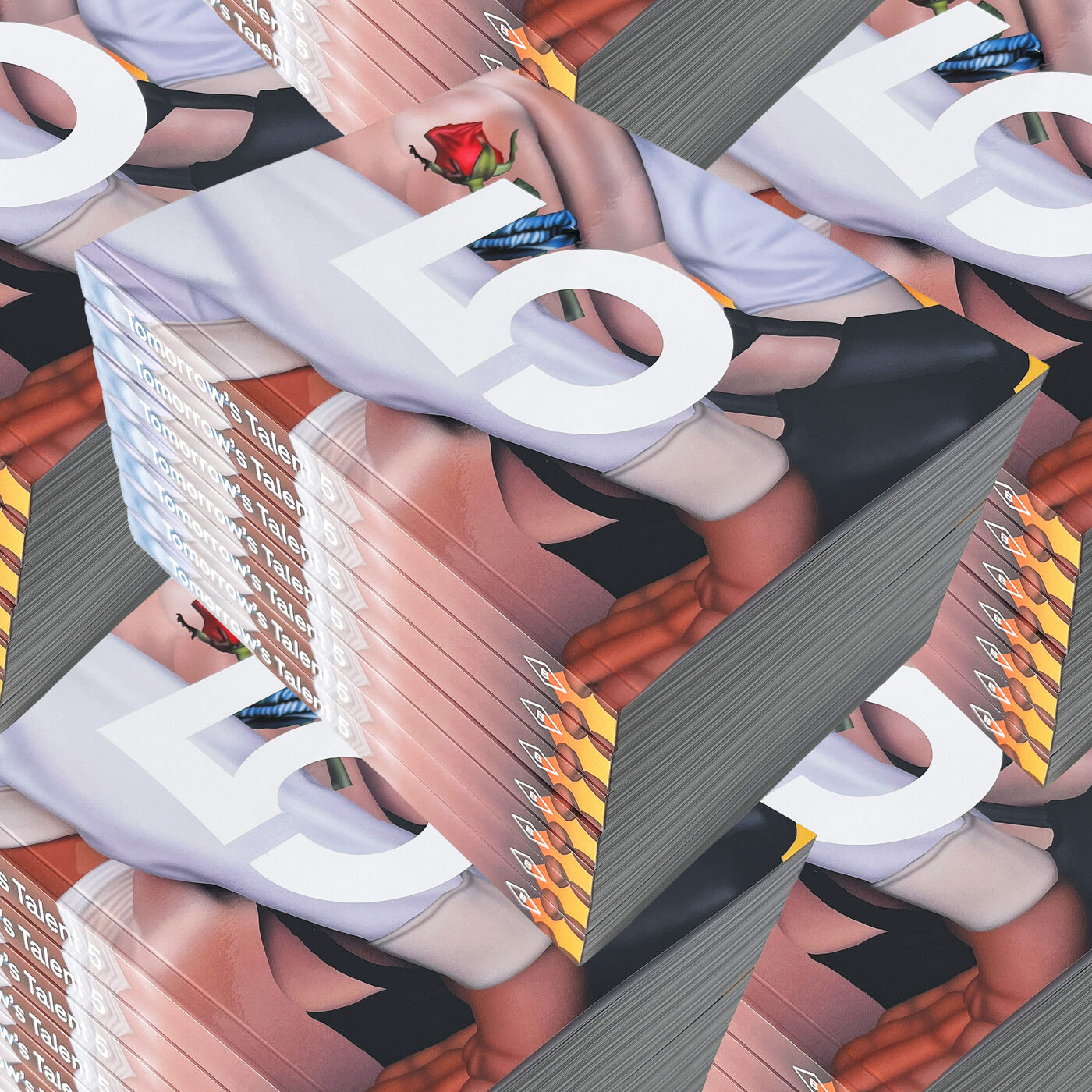
The description of her work as possessing "technical rigour and a dreamy colour palette" points towards positive qualitative assessments. These are the terms that art critics and curators often use to describe accomplished and compelling artwork. The comparison to established contemporary artists like Josephs and Akunyili Crosby further indicates that her work is being placed within a relevant and respected artistic context.
A comprehensive critical reception would typically involve reviews from art publications, essays by art historians, and discussions within academic circles. The potential for such engagement is amplified by her participation in a New York-based exhibition, which garners more attention from national and international art press.
Implications and Future Directions
Emma Steinkraus’s artistic practice holds significant implications for how we understand the relationship between art history, contemporary life, and our place within the natural world. Her ability to synthesize diverse historical influences with pressing contemporary concerns suggests a forward-thinking approach to art-making that is both intellectually stimulating and emotionally resonant.
The continued exploration of gender within her work, particularly through the lens of historical representation, has the potential to challenge viewers’ perceptions and contribute to ongoing conversations about identity and representation. As societal understandings of gender continue to evolve, Steinkraus’s nuanced approach will likely become even more relevant.
Furthermore, her deep engagement with the "more-than-human world" positions her as an artist addressing crucial ecological and philosophical questions of our time. In an era of climate crisis and increasing awareness of our impact on the planet, artists who can foster a sense of connection and respect for the natural world are invaluable. Her "dreamy color palette" and evocative landscapes offer a powerful means of inspiring contemplation and perhaps even a renewed appreciation for the beauty and fragility of our planet.
The success of her current exhibition at Plato gallery will likely lead to further opportunities for Steinkraus, potentially including solo exhibitions, commissions, and a broader engagement with international art institutions. Her trajectory suggests an artist who is not only deeply skilled but also possesses a clear and compelling artistic vision, poised to make a significant and lasting contribution to the field of contemporary art. Her work serves as a powerful reminder that the past is not a closed book, but a living source of inspiration that can inform and enrich our understanding of the present and our hopes for the future.