John Crowley, Visionary Author Who Blended Genres and Enchanted Readers, Dies at 83
New York, NY – August 2026 – John Crowley, the celebrated and enigmatic author whose profound, genre-defying narratives captivated generations of readers and garnered widespread critical acclaim, has passed away at the age of 83. Crowley, often lauded as one of the most brilliant literary minds of his era, leaves behind an extraordinary body of work that seamlessly wove together elements of fantasy, science fiction, historical fiction, and mainstream literary prose, challenging conventional boundaries and enriching the landscape of modern literature. His passing marks the end of an era for many who considered him a guiding light in the art of storytelling.
Born in 1942, Crowley’s career spanned over five decades, during which he published more than a dozen novels, numerous short stories, and essays, earning prestigious accolades including the World Fantasy Award. His work was characterized by an intricate erudition, an elegant and graceful prose style, and an almost elegiac meditation on the beauty, fragility, and inherent mystery of human existence within a complex, often fallen world. He was widely recognized for his ability to craft narratives that were at once intellectually rigorous and deeply moving, leaving an indelible mark on the hearts and minds of his devoted readership.
A Life Dedicated to Storytelling: Main Facts
John Crowley’s journey as a writer began long before his published debut, shaped by a diverse upbringing and an early fascination with the moving image. Born in the coastal state of Maine, his formative years were spent across various American landscapes, including Vermont, Kentucky, and Indiana. This geographical fluidity may have contributed to the expansive and often nomadic spirit found within his later works. He pursued higher education at the University of Indiana, after which he ventured to New York City, initially drawn by aspirations in the film industry. While he did indeed lend his talents to numerous documentary film scripts, it quickly became evident that his true and most profound calling lay in the realm of prose.
His entry into the literary world was heralded by the publication of his first novel, The Deep, in 1975. This debut immediately showcased his unique voice and willingness to transcend easy categorization. What might have appeared on the surface as a straightforward fantasy novel—a conflict between "Reds" and "Blacks"—unfurled into something far more complex and unexpected: a science fiction narrative reimagining England’s historical Wars of the Roses on an alien planet, imbued with a dark beauty and profound mystery that hinted at the literary marvels to come.
Over the ensuing decades, Crowley’s output remained consistently inventive and high-quality. He penned more than twelve novels, including the monumental four-book series Aegypt, a work of immense ambition that explored themes of alchemy, history, and the hidden currents beneath reality. Beyond his longer forms, Crowley also distinguished himself as a master of the short story, with over two dozen published tales and a substantial collection of essays further cementing his reputation as a versatile and insightful literary figure. His commitment to the craft extended to academia, where he served as a revered Professor of Creative Writing at Yale University starting in 1993, influencing a new generation of writers with his wisdom and unique perspective. Crowley is survived by his wife, Laurie Block, herself a noted documentary filmmaker, whose artistic partnership mirrored his own deep engagement with narrative and historical truth.
Chronology of a Master’s Career
John Crowley’s literary career is a testament to sustained creativity and a relentless pursuit of unique narrative challenges.
Early Life and Formative Years (1942-1970s):
Born in Prescott, Maine, in 1942, Crowley’s early life was marked by frequent relocation, providing him with a rich tapestry of American experience. His academic journey led him to the University of Indiana, where he honed his intellectual curiosities. Upon graduating, his initial professional ambitions steered him towards New York’s burgeoning independent film scene. While he contributed significantly to documentary filmmaking as a scriptwriter, these experiences likely served as a crucible for his storytelling instincts, teaching him economy, structure, and the power of visual narrative, all of which would later manifest in his prose.
The Genesis of a Literary Voice (1975-1981):
- 1975: The Deep – Crowley’s debut novel immediately established him as a writer unafraid to blend genres. Published during a period when speculative fiction was beginning to gain broader critical attention, The Deep stood out for its intellectual depth and lyrical prose, hinting at the sophisticated narratives that would become his hallmark.
- 1979: Engine Summer – His third novel, Engine Summer, solidified his reputation. Set in a post-collapse future, it is a poignant bildungsroman exploring themes of identity, love, and memory in an arcadian, yet melancholic, world. It resonated deeply with readers and critics for its bittersweet beauty and philosophical undertones.
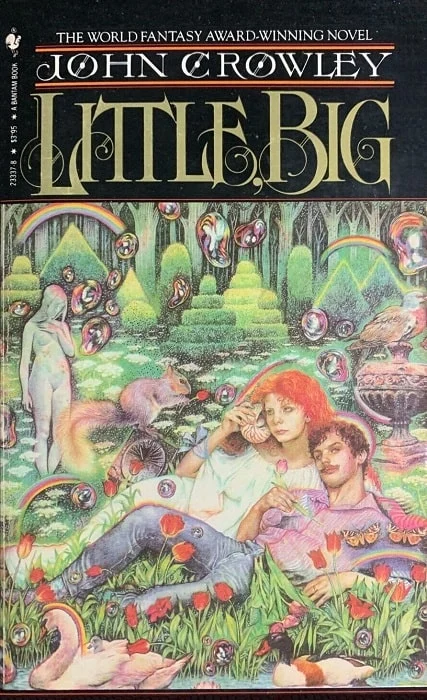
- 1981: Little, Big – This novel was the turning point that propelled Crowley into wider literary recognition. A sprawling, intricate fantasy about fairies, a mysterious country house, the history of New York, and the complex relationships between men and women, Little, Big became an instant classic. It earned the prestigious World Fantasy Award for Best Novel and garnered effusive praise from literary luminaries such as Harold Bloom, who called it his favorite romance, and Thomas Disch, who declared it "the best fantasy novel ever. Period." Its publication cemented Crowley’s status as a major voice capable of elevating speculative fiction to high art.
Ambitious Projects and Academic Engagement (1987-2007):
- 1987-2007: The Aegypt Cycle – Crowley embarked on his most ambitious project, the four-volume alchemical tetralogy, Aegypt (comprising Aegypt, Love & Sleep, Daemonomania, and Endless Things). This series, which spanned two decades to complete, delved into profound historical, philosophical, and mystical themes, exploring the nature of history, belief, and the occult. Its intricate structure and deep erudition demanded patience and rewarded close reading, further demonstrating Crowley’s commitment to challenging narrative forms.
- 1993: Yale University Appointment – Beginning in 1993, Crowley accepted a professorship in Creative Writing at Yale University. This role allowed him to share his extensive knowledge and unique perspective on storytelling with aspiring writers, further enriching the literary community. His presence in academia underscored the literary gravitas of his work, bridging the perceived gap between genre and mainstream literature.
Continued Innovation and Later Works (2002-Present):
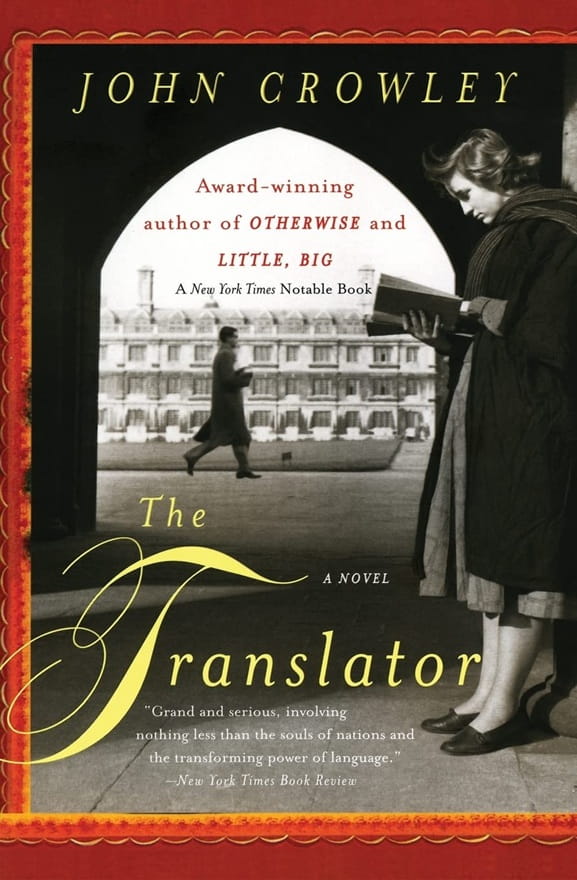
- 2002: The Translator – This novel showcased Crowley’s versatility, exploring the relationship between a college student and a visiting Russian poet during the Cuban Missile Crisis. It was a masterful exploration of Cold War tensions, the complexities of translation, and the cultural landscape of the American Midwest, infused with his characteristic mystery and bittersweet poignancy.
- 2017: Ka: Dar Oakley in the Ruin of Ymr – A late-career triumph, Ka told the epic story of an immortal crow’s interaction with humanity over millennia. This novel exemplified Crowley’s enduring fascination with myth, nature, and the passage of time, earning widespread critical acclaim for its imaginative scope and lyrical beauty.
- Last Novel: Flint & Mirror – His final published novel, Flint & Mirror, was an historical fantasy set in Elizabethan Ireland, continuing his exploration of magical realism intertwined with historical narratives. It was hailed as another "lovely and haunting" addition to his distinguished oeuvre, proving his creative powers remained undiminished.
Throughout his career, Crowley also produced a significant body of short fiction, including acclaimed novellas like "Great Work of Time" and "The Girlhood of Shakespeare’s Heroines," and short stories such as "Snow," "Her Bounty to the Dead," and "Gone." These shorter works displayed the same elegance, depth, and thematic richness as his novels, earning him multiple awards and nominations. His literary journey was one of continuous exploration, always pushing the boundaries of what fiction could achieve.
Supporting Data: A Literary Alchemist
John Crowley’s oeuvre is truly remarkable not just for its volume but for its profound stylistic and thematic consistency amidst astonishing variation. His unique approach effectively dissolved the artificial barriers between literary genres, demonstrating that profound truths could be explored within the frameworks of science fiction, fantasy, and historical narrative as effectively as in traditional literary fiction.
Genre Transcendence: Crowley was a literary alchemist, transforming disparate elements into something entirely new. The Deep, for instance, deftly reinterprets historical conflict through a science fiction lens, while Little, Big marries the ethereal world of fairies with the mundane realities of American family life and urban history. Later works like Lord Byron’s Novel: The Evening Land and The Chemical Wedding by Christian Rosencreutz further exemplified his audacious genre-bending, blurring the lines between fiction, biography, and esoteric texts. This refusal to be confined by labels was a defining characteristic, making his work accessible yet challenging to readers across the literary spectrum.
Signature Themes and Stylistic Hallmarks: Common to virtually everything Crowley wrote was a pervasive sense of mystery and power. His narratives often hinted at hidden realities, secret histories, and the ineffable forces that shape human destiny. This was invariably conveyed through elegant and very graceful prose—a hallmark of his writing. His sentences were meticulously crafted, imbued with a lyrical quality that made even the most complex ideas resonate with clarity and beauty.
A recurring theme was an almost elegiac view of the beauty and fragility of human life in this fallen world. His characters often grappled with loss, the passage of time, and the impermanence of existence, yet always with an underlying appreciation for the transient wonders of being alive. Whether exploring a post-apocalyptic future in Engine Summer, the intricate history of a magical family in Little, Big, or the millennia-spanning observations of an immortal crow in Ka, Crowley imbued his stories with a deep sense of wonder, tempered by a poignant awareness of sorrow and change.
Critical Acclaim and Influence: The praise from figures like Harold Bloom and Thomas Disch for Little, Big was not an isolated incident but indicative of the high esteem in which Crowley was held by the wider literary community. Critics consistently lauded his originality, his intellectual rigor, and his unparalleled prose. His ability to evoke deep emotional responses, as noted by many readers, was a testament to his profound understanding of the human condition. His work has influenced countless writers who have sought to emulate his unique blend of intellectual depth and narrative enchantment, cementing his place as a seminal figure in contemporary literature. His novellas, such as "Great Work of Time," which explores time travel and alternate history with philosophical depth, and "The Girlhood of Shakespeare’s Heroines," a work of mainstream literary fiction, further demonstrate his expansive talent and refusal to be pigeonholed.
Official Responses: A Grieving Literary World
The news of John Crowley’s passing has been met with profound sadness and an outpouring of tributes from across the literary world. Colleagues, critics, publishers, and generations of devoted readers have taken to various platforms to express their admiration for his singular genius and the enduring impact of his work.
The speculative fiction community, in particular, mourns the loss of a writer who not only elevated their genres but also consistently pushed their boundaries. Many authors have cited Crowley as a significant influence, praising his courage to experiment and his unwavering commitment to literary excellence. Fellow writers remembered him not just for his extraordinary talent but also for his generosity and intellectual curiosity.
From his long tenure as a Professor of Creative Writing at Yale University, many former students and faculty colleagues have shared anecdotes reflecting on his insightful mentorship and the intellectual environment he fostered. He was revered for his ability to inspire and challenge aspiring writers, instilling in them a deep respect for language and the craft of storytelling.
Publishers and literary agents who had the privilege of working with Crowley have highlighted his meticulous attention to detail, his profound artistic integrity, and his collaborative spirit. They acknowledged the challenges of publishing works that defied easy categorization but celebrated his unwavering vision, which ultimately led to the creation of timeless literary masterpieces. The consensus among those who knew him professionally is that Crowley was a writer of rare brilliance, whose contributions to literature are incalculable.
Implications: An Everlasting Legacy
John Crowley’s death leaves a significant void in the literary landscape, yet his legacy is poised to resonate for generations to come. The implications of his extraordinary career are multifaceted and far-reaching:
Redefining Genre Boundaries: Crowley’s most profound legacy may be his role in dismantling the arbitrary walls between "genre" and "literary" fiction. He demonstrated conclusively that narratives involving magic, alternate histories, or speculative futures could possess the same intellectual rigor, emotional depth, and stylistic beauty as any work of mainstream literature. His work serves as a powerful testament to the universality of human experience, regardless of the fantastical or scientific trappings in which it is presented. This will continue to inspire writers to explore ambitious themes without fear of categorization.
Enduring Influence on Storytelling: His masterful prose, intricate world-building, and profound philosophical inquiries will remain a benchmark for aspiring authors. Crowley taught by example that the most effective stories are those that delve deeply into the human condition, exploring themes of memory, identity, love, loss, and the eternal search for meaning. His novels and short stories will be studied for their narrative innovation, character development, and lyrical command of language.
Renewed Appreciation and Discovery: The passing of a revered author often sparks a renewed interest in their complete works. It is highly probable that Crowley’s extensive backlist will experience a resurgence in readership, allowing new generations to discover the magic and wisdom contained within his pages. Scholars and critics will undoubtedly undertake further studies of his oeuvre, cementing his place in the literary canon and exploring the subtle nuances and interconnectedness of his narratives.
A Voice for the Ineffable: In an increasingly pragmatic world, Crowley’s work stood as a powerful reminder of the enduring power of mystery, wonder, and the things that lie just beyond our immediate comprehension. He encouraged readers to look deeper, to question surface realities, and to find beauty in the fleeting and the profound. His "elegiac view of the beauty and fragility of human life" resonates more strongly than ever, offering solace and perspective in turbulent times.
As the literary community reflects on the remarkable life and career of John Crowley, there is a collective understanding that his stories, like the "angel" assuring a "saint" at the close of Engine Summer, will indeed be remembered "ever after." His words will continue to enchant, provoke, and move readers, ensuring that his unique vision endures as a vital part of our shared cultural heritage. The final lines of Engine Summer now serve as a poignant elegy not just for its character, but for the author himself: "Ever after. I promise. Now close your eyes." John Crowley has closed his eyes, but his stories remain, shimmering with eternal life.