The Unseen Artistry: Why Ozzy Osbourne’s Vintage Wisdom Resonates in the Age of AI
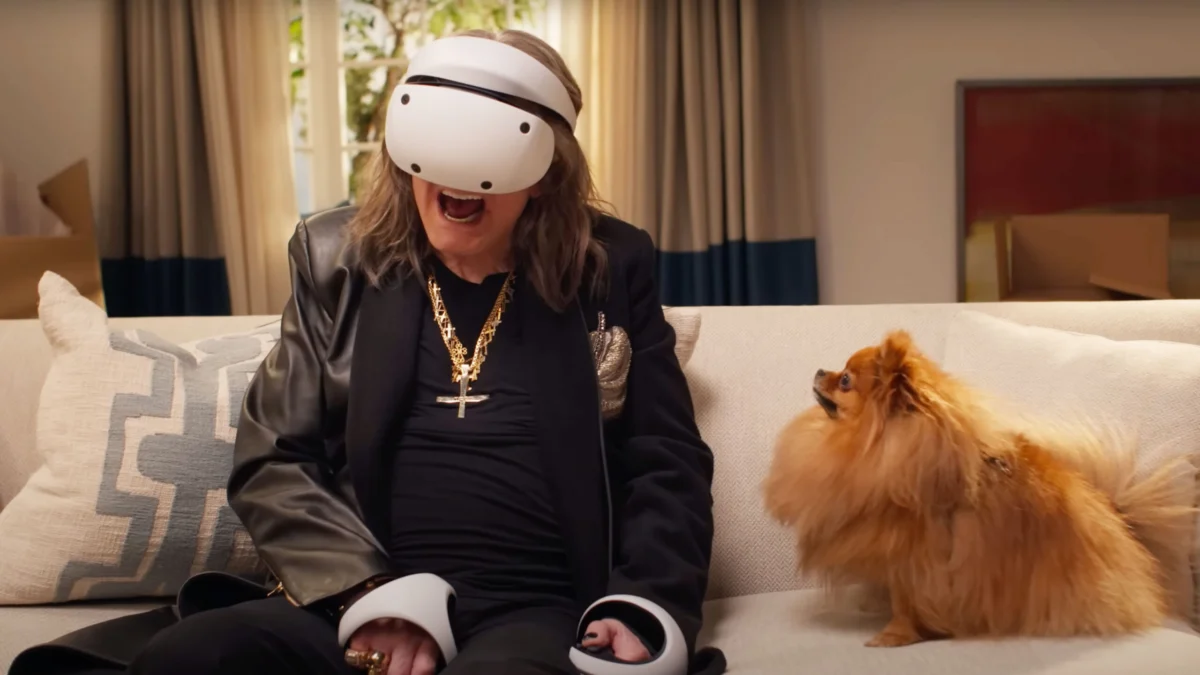
The iconic Prince of Darkness, known for his groundbreaking contributions to heavy metal, offered a profound insight into the nature of creativity decades ago that remains remarkably prescient today. As artificial intelligence rapidly reshapes creative industries, Ozzy Osbourne’s reflections on the inherent beauty of imperfection in analog music production serve as a vital reminder of what we risk losing in the pursuit of digital perfection.
On the anniversary of Ozzy Osbourne’s passing, a seemingly simple observation from a 2011 interview with The Guardian has taken on a profound significance for artists, musicians, writers, and designers grappling with the seismic shifts brought about by artificial intelligence. Osbourne, a figure synonymous with raw energy and groundbreaking sonic landscapes, lamented the sterile precision of modern recording techniques, stating, "Rock music is not meant to be perfect… [Guitarist] Randy Rhoads loved hearing his fingers slide up and down the strings. Nowadays everyone irons the fucking air, it’s all about technology."
This candid admission, born from the analog era of music creation, speaks volumes in an era where AI can generate technically flawless outputs at an unprecedented speed and scale. While AI offers undeniable advantages in terms of efficiency and idea generation, the core of Osbourne’s sentiment points to a critical truth: true human creativity often flourishes not in the absence of flaws, but in their embrace. The subtle imperfections, the physical processes, the very human touch – these are the elements that imbue art with character, soul, and enduring resonance.
The Analog Heartbeat: A Look Back at Osbourne’s Creative Philosophy
Ozzy Osbourne’s career, spanning over five decades, is a testament to the power of raw, unadulterated expression. From the primal screams of Black Sabbath to his expansive solo work, his music has always been characterized by a visceral energy that transcends mere technical proficiency. His 2011 interview with The Guardian offered a rare glimpse into his perspective on the craft of music-making, drawing a stark contrast between the organic, often messy, process of analog recording and the polished, digitized perfection of contemporary production.
"Rock music is not meant to be perfect," Osbourne declared. His specific mention of his legendary guitarist Randy Rhoads, who relished the audible nuances of his playing, highlights a key aspect of analog recording: the capture of performance in its most authentic form. The subtle squeak of fingers on fretboard, the faint breath before a vocal entry, the natural decay of a guitar note – these were not seen as errors to be erased, but as integral parts of the sonic tapestry, adding a human warmth and dynamism that is often lost in the digital realm.
Osbourne’s critique of modern production, "Nowadays everyone irons the fucking air, it’s all about technology," is a pointed observation on the tendency to over-process and sterilize audio. The phrase "ironing the air" vividly captures the idea of smoothing out every possible imperfection, creating a soundscape that is technically pristine but emotionally sterile. This pursuit of digital perfection, while efficient, risks stripping away the very elements that make art relatable and impactful.
The AI Revolution: A Double-Edged Sword for Creatives
The rapid proliferation of artificial intelligence has ushered in a new era for creative industries. AI tools can now generate text, images, music, and code with remarkable sophistication, offering unparalleled opportunities for innovation and efficiency. For artists and creators, AI presents a tantalizing prospect: the ability to bypass time-consuming tasks, explore a vast spectrum of ideas at lightning speed, and achieve levels of technical polish previously unimaginable.
AI-powered software can assist with everything from brainstorming initial concepts to refining final outputs. Graphic designers can leverage AI to generate multiple design variations in minutes, writers can use it to overcome writer’s block or draft preliminary content, and musicians can explore new melodic and harmonic possibilities. The sheer volume of output and the reduction in manual labor are undeniable benefits, promising to democratize creativity and accelerate the pace of innovation.
However, as Osbourne’s words suggest, this technological leap forward comes with inherent risks. The very "perfection" that AI can deliver often comes at the cost of human character. When every element is automatically smoothed, polished, and optimized, the unique fingerprints of the creator can be erased. The happy accidents, the intuitive leaps, the subtle emotional nuances that arise from the artist’s lived experience and personal struggle can be diluted or entirely absent.
The danger lies in a potential homogenization of creative output. If AI becomes the primary engine for idea generation and refinement, there’s a risk that art will begin to resemble itself, losing the distinctiveness that makes individual artists and their work memorable. The "ironed air" that Osbourne decried could become the norm, leaving audiences yearning for the raw, authentic voices that once defined creative expression.
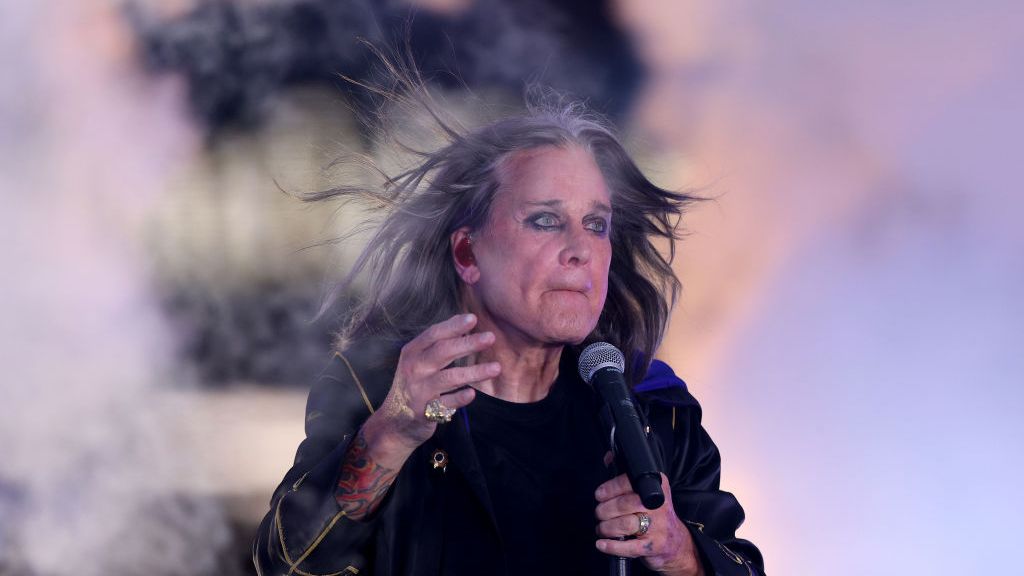
Learning from the Past: The Enduring Value of Human Imperfection
The takeaway from Osbourne’s perspective is clear: while AI can be a powerful tool, it should not become a substitute for human intuition, experimentation, and the embrace of imperfection. Creatives are increasingly finding themselves in a delicate balancing act, harnessing the power of AI while consciously preserving the human element that gives their work its soul.
This is not to dismiss the utility of AI. For many, it represents an invaluable assistant, augmenting their capabilities and freeing them to focus on higher-level creative decisions. The key lies in mindful application. Instead of blindly automating every step of the creative process, artists are being urged to consider where human intervention is not only desirable but essential.
Consider the musician who uses AI to generate chord progressions but then imbues those progressions with their own unique phrasing and emotional delivery. Or the writer who employs an AI to brainstorm plot points but then crafts the narrative with their distinct voice and perspective. In these scenarios, AI acts as a catalyst, not a replacement. The "breathing room" for human texture and friction remains paramount.
The challenge for many is to consciously resist the siren song of effortless perfection. As AI becomes more integrated into creative workflows, there’s a risk of developing a dependence that dulls our own creative faculties. This is why mindful engagement with technology is crucial. It requires a deliberate effort to step back, to engage with the messiness of creation, and to appreciate the unique contributions that only human hands and minds can offer.
The Divide Within: Navigating the AI Landscape
The integration of AI into creative fields has not been without controversy. Discussions among creatives often reveal a spectrum of opinions, from enthusiastic adoption to cautious skepticism. Some see AI as the inevitable future, a tool that will revolutionize their craft. Others worry about job displacement, the devaluation of human skill, and the potential for AI to dilute the artistic process.
This divide is understandable, reflecting the profound implications of AI on industries that have long been defined by human talent and ingenuity. The very nature of creativity is being questioned, forcing a re-evaluation of what it means to be an artist in the 21st century.
The anecdotes shared by AI enthusiasts themselves often highlight this internal struggle. Many admit to needing to consciously pull themselves back from full automation, to re-engage their own skills and wrestle with ideas. This self-awareness is a crucial step in ensuring that AI serves as a collaborator rather than a usurper. It underscores the importance of fostering environments where critical thinking and human intuition are actively encouraged, even in the face of overwhelming technological advancement.
The Enduring Power of the Human Touch: A Call for Conscious Creativity
Ozzy Osbourne’s seemingly simple observation about the imperfections in rock music offers a profound lesson for today’s creatives. In a world increasingly dominated by the sterile perfection of AI, the value of human texture, friction, and the embrace of flaws becomes ever more pronounced.
The physical act of creation, the subtle nuances of performance, the intuitive leaps born from experience – these are the elements that imbue art with its power to move, to connect, and to endure. While AI can offer efficiency and technical brilliance, it cannot replicate the unique imprint of the human spirit.
As we continue to navigate the evolving landscape of AI in creative industries, it is essential to remember Osbourne’s wisdom. Let us harness the power of these new tools, but let us do so with a mindful awareness of what makes human creativity truly exceptional. Let us champion the "ironing of the air" with a healthy dose of human grit, allowing the beautiful imperfections to shine through, ensuring that art remains not just technically proficient, but profoundly, undeniably human. The legacy of artists like Ozzy Osbourne reminds us that sometimes, the most powerful statements are made not in flawless execution, but in the raw, honest expression of the human experience.