The AI Paradox: Exhaustion, Ethical Drift, and the Enduring Spark of Human Creativity in Silicon Valley
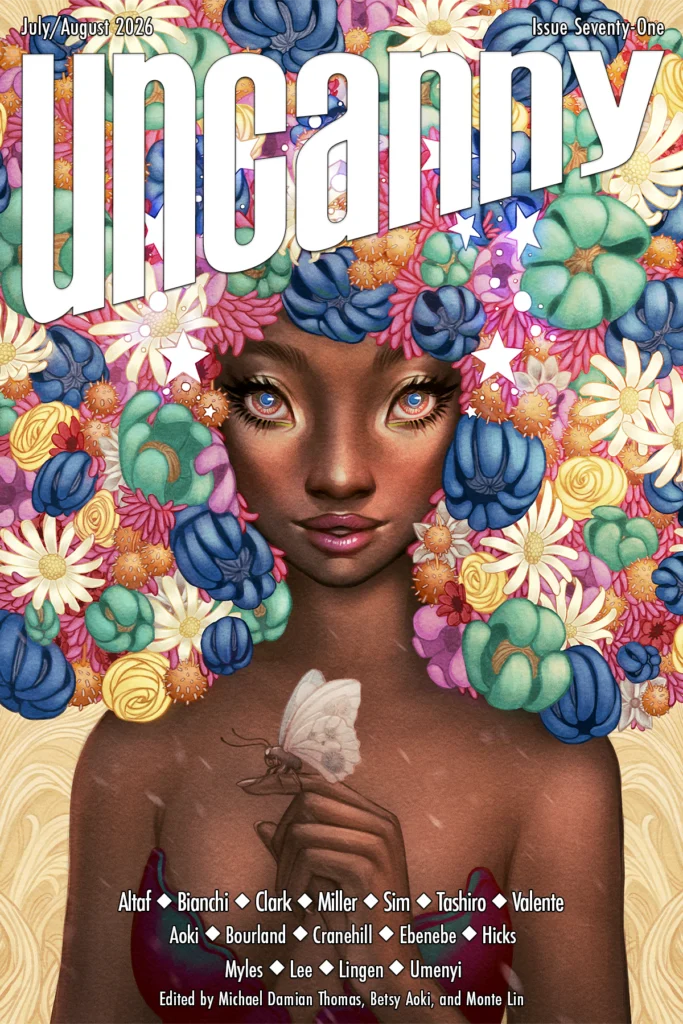
April 2026, Silicon Valley – In a landscape increasingly shaped, if not outright dominated, by artificial intelligence, a veteran tech professional finds herself at a profound crossroads. Despite the considerable financial benefits derived from the booming AI sector – a sector she helped build and navigate for nearly a decade – she describes a pervasive sense of exhaustion and disillusionment. This sentiment, starkly articulated in a recent refusal to pen a follow-up essay on AI for Uncanny Magazine, underscores a growing unease within the very heart of the technological empire.
"AI is an especially difficult topic for me to write about these days," she communicated to the editors in October 2024, declining an invitation to revisit her June 2023 essay, "Not a Zero-Sum Game: AI vs. Art." Her reasoning was clear and candid: "My sentiments around the subject have trended in a decidedly negative direction." This confession offers a rare glimpse into the complex emotional and ethical landscape faced by those operating at the vanguard of the AI revolution, a perspective often obscured by the industry’s relentless optimism and growth narratives.
The Relentless March of AI: A Silicon Valley Perspective
By April 2026, the omnipresence of AI has transcended mere innovation; it has become an inescapable fact of daily life, particularly within the gilded cage of Silicon Valley. The author’s personal experience serves as a microcosm of this pervasive integration, painting a vivid picture of a world where technology is both a convenience and a creeping encroachment.
Her mornings often begin with a robot-driven car, an emblem of futuristic efficiency that, ironically, mispronounces her name, highlighting an uncanny valley of impersonal interaction. At the office, the act of swiping a badge feels less like entry and more like disappearing "into the belly of the beast," a metaphorical descent into the mechanical heart of an industry that never truly stops.
The "great AI push" is not a distant concept; it’s an intimate, insistent presence. It infiltrates personal digital spaces, from "your Pinterest feed, infecting your Spotify, splashed across your search results," to "that annoying new feature in your app." This aggressive integration is not without consequence. The author observes a broader industry trend marked by "layoffs there, boycott this, uninstall that," hinting at a tumultuous period of adaptation and resistance. The internal environment of tech companies mirrors this external pressure, with "agents and skills" dominating coworker conversations and AI-driven features becoming half of the Integrated Development Environment (IDE) she uses daily.
The professional landscape is similarly warped. She recounts a video call where a candidate "laboriously retype[d] the output from a chatbot they’re using to cheat their way through the interview," a stark illustration of AI’s disruptive influence on traditional evaluation processes. Debugging an outage, she encounters a colleague who, rather than offering direct assistance, suggests, "Have you tried asking an LLM?" Her terse, unresponded-to reply – "LLMs aren’t part of my workflow" – underscores a growing chasm between those who embrace AI as a primary tool and those who, for various reasons, resist its wholesale adoption.
This resistance is not born of ignorance. The author holds a master’s degree in AI from nearly eight years prior, yet confesses that "almost everything I knew back then is obsolete." The rapid pace of development has rendered foundational knowledge irrelevant, creating a dynamic where "the how no longer compels me." She observes that understanding the machine’s algorithms offers no immunity. AI’s pervasive nature ensures that "they will still be forced upon you from every direction; you cannot opt out, unless you’re happy to surrender every modern convenience for the sake of increasingly impractical ideals." This statement articulates a critical dilemma: the choice between active participation in an AI-driven world and a retreat to a more analog, yet increasingly inconvenient, existence.
A Dream Forged in Fear: The Author’s Journey into Tech
The author’s journey into the tech industry, a path now fraught with such complex emotions, began not out of an inherent love for coding, but from a more fundamental human drive: fear. At seventeen, her decision to major in computer science was pragmatic, almost a strategic maneuver. It felt "transgressive and feminist to become an engineer, the first in my family," a sense of pioneering that offered a powerful counter-narrative to her initial motivations.
Her primary fear was poverty. "I was afraid of being poor, of having to move back in with parents who could barely support my siblings, of being crushed to death by a more stressful, sink-or-swim career like law or medicine." This vulnerability led her to embrace the promise of the tech industry, touted by classmates as "the only surefire way out of the lower middle class." It offered not just financial security, but "safety and prestige: a modern, egalitarian career path where my skills would pave the way, not my connections."
For the most part, the industry delivered on these promises. Her tech career provided substantial financial stability and flexibility, enabling her to navigate significant personal challenges. When her younger brother was diagnosed with "a rare and aggressive childhood cancer in 2019," she leveraged her position to take "paid time off every month to fly home for his inpatient chemo treatments." Beyond this, she contributed significantly to family expenses, "help[ing] foot the bill for family surgeries, car repairs, and funerals." The flexible hours and the ability to "largely able to leave my work at the office" afforded her the invaluable time to pursue creative endeavors, leading to the publication of two books.
Yet, beneath this veneer of success and security, a "seed of unease" grew. She felt "a gulf opening between me and the rest of the world," a divide not just of wealth, but of responsibility. "More than numbers in my savings account, it was a gulf in responsibility; I always had the privilege of looking away." This candid admission reveals the moral burden that can accompany immense privilege, particularly when that privilege is intertwined with a technological force whose ethical implications are still unfolding.
The AI Bubble: Economic Boom or Looming Bust?
The current AI boom is not just a technological phenomenon; it’s a profound economic one, paying mortgages and inflating retirement accounts for countless individuals within the tech sector. The author acknowledges her direct financial dependency on this bubble, stating, "The AI bubble is paying my mortgage. It’s inflating my retirement accounts." The stakes are incredibly high for her and her peers: "If the bubble pops, I’ll be fucked for a long time, and so will most of my friends."
This shared vulnerability creates a peculiar paradox. Despite the personal financial security the AI bubble provides, there’s a deeply unsettling undercurrent. "But I sort of secretly hope it does," she confesses, immediately followed by the chilling admission, "I’m afraid of what happens if it doesn’t." This encapsulates the profound moral and existential dilemma facing many within the industry. The relentless, pervasive nature of AI, coupled with its often-unforeseen societal impacts, generates a deep-seated anxiety about the future if this technological expansion continues unchecked. The fear of an unpopped bubble is a fear of a future where human agency, creativity, and perhaps even identity are irrevocably diminished by algorithmic dominance.
Economists and industry analysts frequently debate the sustainability of such rapid growth, drawing parallels to historical speculative bubbles like the dot-com era. While the underlying technology of AI holds genuine transformative potential, the rapid influx of capital, the often-unclear pathways to profitability for many AI ventures, and the speculative fervor surrounding nascent technologies raise legitimate concerns about market overvaluation. Should this bubble burst, the economic fallout would extend far beyond individual portfolios, potentially impacting the wider tech ecosystem, job markets, and investment in future innovation. The author’s internal conflict thus reflects a broader, unspoken tension within the industry itself.
Echoes of Humanity: Finding Solace in Student Creativity
Amidst this technological maelstrom, the author finds an unexpected bastion of humanity and hope in an annual ritual: judging her old high school’s student writing contest. This tradition, steeped in personal nostalgia – her father still proudly displays her first-place certificates from junior and senior year – has taken on new significance in the AI-saturated world of 2026.
Each winter, the invitation arrives, and each year she accepts, dedicating herself to the careful, twice-over reading of each submission. This year, however, an additional, telling layer of scrutiny was applied. "It occurred to me to comb them for spelling and grammar mistakes, as well as typical constructions that LLMs overuse in prose." The relief that followed this meticulous examination was palpable: "I was relieved to come away with zero suspicions that any student had written a submission using AI."
What she found instead were "real stories placed into my care: raw, flawed, honest, imaginative, sometimes even quite good." These narratives offered a stark contrast to the algorithmic perfection and predictable patterns of AI-generated text. One particularly poignant piece, "barely a page long, but it was about ChatGPT, a sort of dry requiem for an adolescence absorbed and warped by the machine," resonated deeply. It prompted her to reflect on her own childhood anxieties and how an AI, had one existed then, might have responded. Another story delved into "guardian angels and suicide," revealing the profound struggles of a generation grappling with an increasingly complex world. "The kids are not okay, but they’re trying. Just like I did."
In these unpolished, authentic voices, the author discovered a vital counterpoint to the relentless, dehumanizing march of AI. The students’ willingness to grapple with their realities, to express their fears, hopes, and observations in their own words, affirmed the enduring power of human creativity and expression. It served as a potent reminder that despite the pervasive influence of machines, the human spirit continues to seek meaning, connection, and self-expression through the unique act of storytelling. This annual contest became not just a nostalgic pastime, but a vital act of grounding, a reaffirmation of the irreplaceable value of human art in a world teetering on the edge of algorithmic saturation.
Navigating the Brink: Resistance and Resilience in an AI-Dominated World
"It is April 2026 and I am exhausted," the author reiterates, underscoring the profound weariness that underpins her observations. This exhaustion is not merely physical; it is an existential fatigue stemming from the struggle to "stand on principle" in a world where those principles feel increasingly elusive. "Living in the tech capital of the world feels like science fiction, but there’s no story. There are no heroes. Or maybe I just can’t see them because I’m part of the Empire." This reflection speaks to the moral ambiguity of working within a system one increasingly distrusts, blurring the lines between participant and complicit agent.
Her identity, too, is in flux, "warps by the day." Things that once mattered deeply now seem insignificant, while others have "amassed unexpected significance." This sense of disorientation leads to a poignant question: "I don’t know what’s aging faster: me, or the world I live in. I don’t know which of us is closer to the brink, or what the brink will look like when we get there." It’s a testament to the accelerated pace of change and its impact on individual sense of self and purpose.
Despite the pervasive exhaustion and a hint of nihilism, a defiant spirit emerges. "This is the only world I know," she states, implying that retreat is not an option. Instead, the response is one of active, if messy, resistance. "So we go on. Exhausted, jaded, maybe a bit nihilistic, but clinging to what is human. What is good." This clinging manifests in tangible ways: "The harder execs and investors push AI down my throat, the more I spit back. I lean into the bizarre, the grotesque."
This visceral reaction finds expression in her embrace of subcultures and raw artistic forms. "I’m learning to metal scream. I go to live shows that shake my bones and I know there is still something to this humanity thing, buried under the noise. We just have to carve our way there. It might get messy." It’s a deliberate rejection of the polished, sterile, and predictable outputs of algorithms, a search for the authentic, chaotic energy that defines human experience. This active pursuit of "the bizarre, the grotesque" and the visceral nature of live music stands in direct opposition to the homogenization threatened by AI’s widespread adoption.
The ultimate act of defiance, however, lies in her role as a judge for the writing contest. Picking a winner, she feels a profound connection to the students. "I want to shake all of their hands, these kids who have never known a different world and choose to write in their own words anyway, but I have no idea what I’d say to them. They deserve something intelligent, incisive, encouraging." Her desire to equip them for the challenges ahead is evident: "They need a sword placed in each of their hands, or at the very least a shield." In a world increasingly dominated by powerful, unseen algorithms, the most potent tool she can offer, the most enduring symbol of human agency, is humble yet profound. "Best I can do is a pen."
Conclusion: A Future Forged by Human Hands
The personal narrative of this Silicon Valley professional serves as a powerful testament to the complex and often contradictory realities of living and working at the frontier of artificial intelligence. It highlights the profound tension between technological advancement and human values, between economic prosperity and ethical unease. Her journey from hopeful engineer to disillusioned yet defiant participant reflects a broader societal struggle to define the boundaries of AI, to harness its potential without sacrificing the essence of what it means to be human.
The relentless march of AI, while promising efficiency and innovation, also threatens to homogenize experience, automate creativity, and erode individual agency. Yet, amidst the pervasive digital noise, the raw, flawed, and honest expressions of human creativity, particularly from the younger generation, offer a glimmer of hope. These acts of creation, performed with nothing more than a pen and an imagination, stand as powerful reminders of humanity’s enduring capacity to articulate, to question, and to connect.
As the world continues to hurtle towards an increasingly AI-driven future, the challenge lies not in halting progress, but in cultivating a conscious resistance – a commitment to nurturing the human spirit, embracing its imperfections, and defending the spaces where genuine, unmediated expression can flourish. The struggle may be messy, the path uncertain, but the imperative to "cling to what is human. What is good" remains paramount. The future, it seems, will not be merely coded, but carved out by the enduring power of human hands, armed with nothing more formidable than a pen.