Found Family at the End of the World: A Retrospective on Rachel Pollack’s Radical Doom Patrol
The history of transgender women in the comic book industry is long and storied, yet when the lens is narrowed specifically to the "Big Two" (DC and Marvel) superhero pantheon, that history becomes significantly more sparse. For decades, the contributions of trans creators were often relegated to the fringes or obscured by the heteronormative standards of the time. This context makes Rachel Pollack’s run on Doom Patrol, which began in 1993 and concluded in 1995, not merely a curious footnote, but an improbable and foundational pillar of queer comics history.
Pollack, who passed away in April 2023, was a polymath of the speculative arts. While her tenure at DC Comics—including runs on New Gods and Time Breakers—is cherished by aficionados, she is perhaps more widely recognized as a titan of fantasy literature and Tarot scholarship. A winner of the World Fantasy Award for her novel Godmother Night and a nominee for the Nebula and Arthur C. Clarke awards, Pollack brought a level of intellectual and mystical rigor to the medium that few of her contemporaries could match. Her seminal work, Seventy-Eight Degrees of Wisdom, remains a cornerstone of Tarot theory. When she took the reins of Doom Patrol from the legendary Grant Morrison, she didn’t just maintain the status quo; she transmuted the title into a deeply empathetic, unapologetically queer exploration of identity and mysticism.
Main Facts: A Paradigm Shift in Superhero Storytelling
Rachel Pollack’s Doom Patrol (issues #64–87) represents a pivotal moment in the transition of DC’s "weirdest" team from the absurdist experimentation of the late 1980s to the grounded, emotionally resonant "Found Family" narratives that would eventually define the Vertigo imprint.
The core significance of Pollack’s run lies in three primary areas:
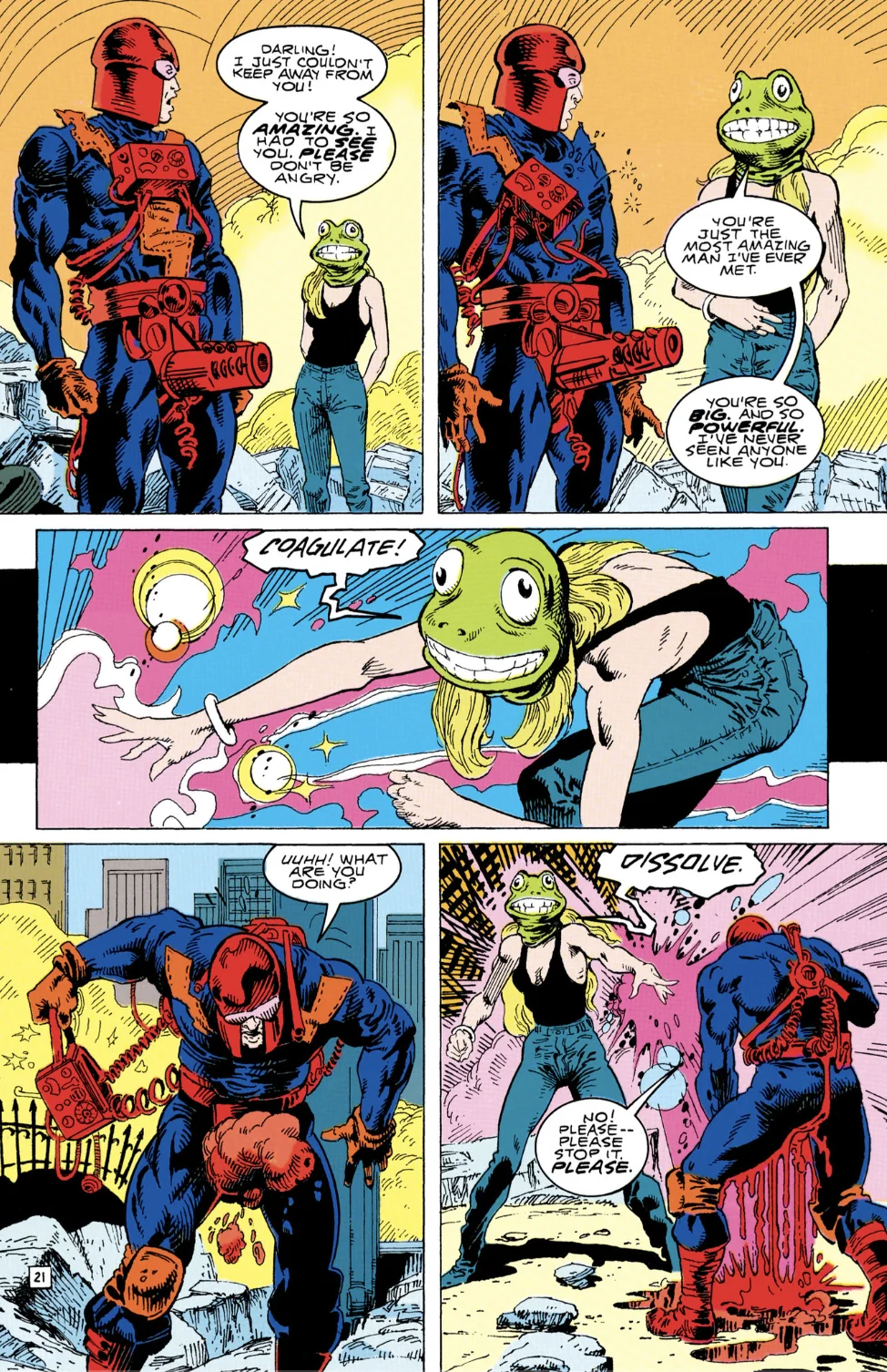
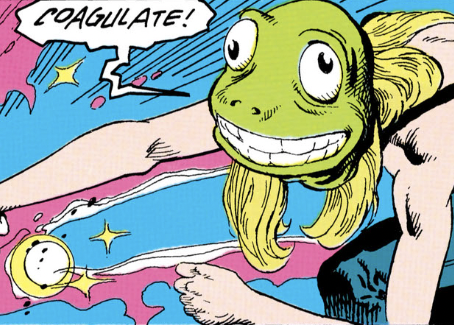
- Groundbreaking Representation: Pollack introduced Kate Goodwin, also known as Coagula, the first transgender superhero in DC’s history. Kate was not a background character or a tragic victim; she was a former sex worker, a talented hacker, and a powerful hero who challenged the internal prejudices of the team.
- Thematic Depth: Shifting away from the detached, metaphysical abstractions of the previous era, Pollack focused on the interiority of her characters. She explored trauma, body dysmorphia, and the complexities of queer community-building against a backdrop of cosmic horror.
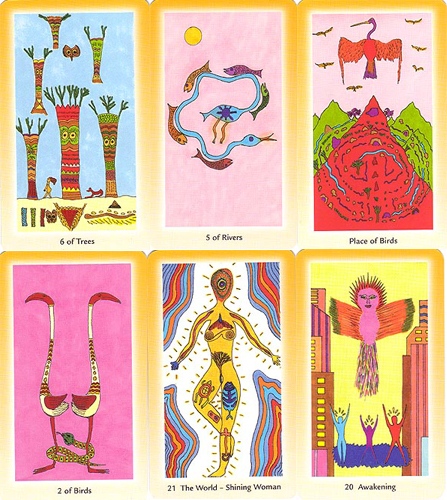
- Integration of Real-World Mysticism: Drawing from her expertise in the Kabbalah and Tarot, Pollack infused the narrative with genuine occult traditions, moving beyond the "pseudo-magic" often found in capes-and-tights comics.
Chronology: From the Silver Age to the Pollack Era
To understand the weight of Pollack’s contribution, one must trace the lineage of the Doom Patrol. The team debuted in 1963’s My Greatest Adventure #80, created by writers Bob Haney and Arnold Drake, and artist Bruno Premiani. Unlike the Justice League, the Doom Patrol consisted of "freaks" whose powers were the result of horrific accidents. Characters like Robotman (Cliff Steele), a brain trapped in a metal shell, and Negative Man (Larry Trainor), a radioactive pilot, were defined by their alienation from humanity.
The Morrison Catalyst
In the late 1980s, Scottish writer Grant Morrison revitalized the title, leaning into the "freak" aspect by introducing surrealist villains and high-concept existentialism. Morrison’s run (1989–1992) introduced characters like Danny the Street (a sentient, cross-dressing street) and Rebis (an intersex, alchemical fusion of Larry Trainor and Eleanor Poole). While Morrison’s work was brilliant and intellectually daring, it often prioritized grand conceptual devices over the emotional stability of its cast.

The Pollack Transition (1993)
When Pollack took over with issue #64, she inherited a team in flux. Her first move was a symbolic shift in geography. She moved the cast from the high-concept chaos of their previous headquarters to a quiet village in Rhinebeck, New York. This choice grounded the fantastical characters in a tangible community.
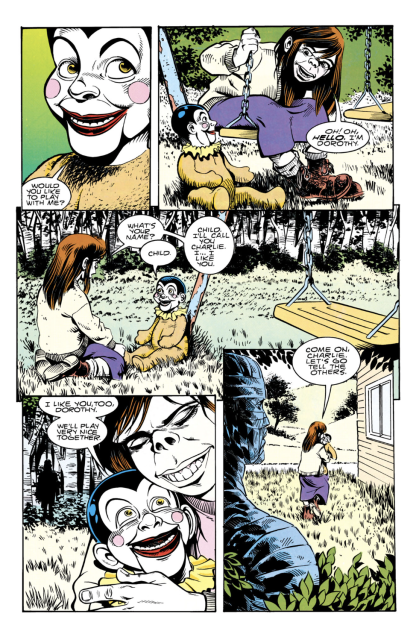
Under Pollack’s pen, the focus shifted from "What is the nature of reality?" to "How do we live in a reality that hates us?" This transition allowed for a more nuanced exploration of characters like Dorothy Spinner, a girl with facial disfigurements and the power to bring imaginary friends to life. While Morrison used Dorothy as a catalyst for plot, Pollack treated her as a developing adolescent struggling with the burden of her own trauma.
Supporting Data: The Four Pillars of Pollack’s Run
Pollack’s narrative was structured through four major story arcs, each serving as a thematic counterpoint to the tropes established by her predecessors.
1. The Master Cleaner and Fatal Order
The first major antagonist, the Master Cleaner, served as the antithesis to Morrison’s Mr. Nobody. While Morrison’s villains championed chaos (The Brotherhood of Dada), the Master Cleaner was a cosmic zealot of order. He sought to "clean" the universe by reducing everything to its linguistic definition—effectively killing the soul of the world to ensure its tidiness. This arc served as a potent allegory for queer-phobic erasure and the danger of rigid categorization.
2. The Introduction of Coagula
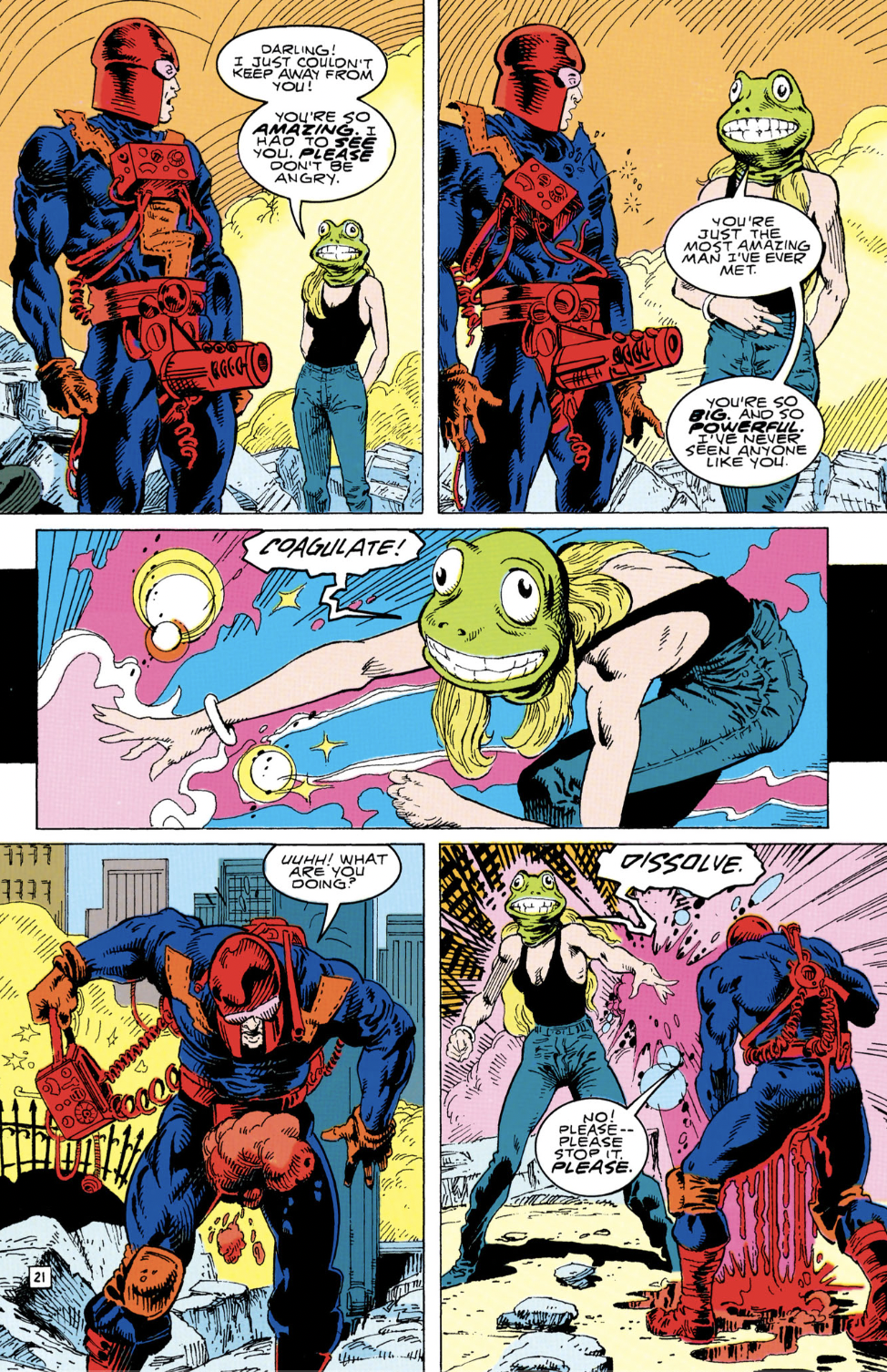
Issue #70 introduced Kate Goodwin (Coagula). Kate’s origin was revolutionary: she gained her powers—the ability to melt and coagulate matter—after an encounter with Rebis. Pollack used Kate to address the "incel" culture of the time through the villain Codpiece, a man who weaponized his insecurities about his anatomy. Kate’s presence forced the Doom Patrol to confront their own internal biases, particularly the Chief (Niles Caulder), whose paternalistic and often abusive leadership style clashed with Kate’s autonomy.
3. The Fox and the Crow: Emotional Realism
Collaborating with artist Linda Medley—the first woman to draw the title—Pollack crafted "The Fox and the Crow." This arc reimagined a cosmic battle as a messy, human "breakup" between ancient deities. By centering the conflict in a small town and involving an army of senior citizens and wild children, Pollack highlighted the "human stakes" of the supernatural. This story deepened the bond between Cliff Steele and Kate, as they discussed their shared experiences with body dysmorphia and the feeling of being "wrong" in one’s own skin.
4. The Tiresias War and Kabbalistic Magic
The final arcs, including "The Tiresias War," saw Pollack utilize her deep knowledge of the Kabbalah and Greek mythology. She introduced the Tiresiae, a race of omnigendered beings, to combat the "Builders" (a fascist military-industrial take on the Tower of Babel). The climax involved a "sex-magic" ritual where Cliff and Kate melded their spirits to "queer" the language of reality, effectively saving the world through an act of radical intimacy.
Official Responses and Publication History
Despite the critical acclaim from niche circles and the historical importance of the work, DC Comics’ treatment of Pollack’s run was, for decades, characterized by neglect.
- The Erasure Period: While Grant Morrison’s Doom Patrol was kept in constant print through various trade paperbacks and omnibuses, Pollack’s run remained uncollected for nearly 30 years. Fans and scholars frequently pointed to this as a "quiet erasure" of a trans creator’s contribution, especially given that Pollack’s work was the direct continuation of the Morrison era.
- The 2022 Omnibus: In a significant reversal, DC published the Doom Patrol by Rachel Pollack Omnibus in October 2022. This 1,000-page hardcover finally gave the run the prestige format it deserved. Pollack was able to see this collection released before her passing in 2023.
- The DC Finest Collection: Following the success of the Omnibus, DC announced that a more accessible "DC Finest" paperback edition of the complete run is scheduled for release on October 20 (2024/2025). This move signals a formal reintegration of Pollack’s work into the core DC canon.
Implications: The Legacy of Radical Empathy
The implications of Rachel Pollack’s Doom Patrol extend far beyond the panels of 1990s comics. She pioneered a specific type of "emotional experimentalism" that paved the way for modern writers like Gerard Way (who revitalized Doom Patrol under the Young Animal imprint) and modern trans creators in the industry.
Pollack proved that a superhero comic could be "weird" without being cold. By infusing the series with her personal practice of Tarot and the Kabbalah, she elevated the "freak" archetype of the Doom Patrol into a sacred status. Her characters weren’t just victims of accidents; they were practitioners of a new kind of social magic based on "found family."
In an era where transgender rights and representation are at the forefront of the cultural zeitgeist, Pollack’s work stands as a testament to the power of self-definition. She didn’t just write a trans character; she wrote a world where the "marginalized" were the only ones capable of saving reality from its own rigid definitions. As the industry moves forward, the "Found Family at the End of the World" remains a vital blueprint for how to tell stories that are both cosmic in scale and deeply, achingly human.