Unveiling the Lost World of Enchantment: Ioan P. Couliano’s "Eros and Magic in the Renaissance"
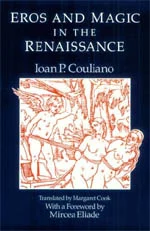
In an intellectual landscape often dominated by triumphalist narratives of scientific progress, the late Romanian historian of religions, Ioan P. Couliano, offers a profoundly challenging counter-narrative. His seminal work, Eros and Magic in the Renaissance, stands as a monumental achievement, meticulously dissecting the intricate relationship between imagination, desire, and the very fabric of reality in the early modern period. Far from being a mere historical curiosity, Couliano’s research compels a radical re-evaluation of our modern worldview, exposing the often-unacknowledged "mythology" underpinning contemporary science and psychology.
At its core, the book posits that the prevailing modern dismissal of imagination and desire as purely subjective phenomena, devoid of any real-world efficacy, is a relatively recent and, arguably, ill-considered aberration. The Renaissance, Couliano demonstrates, held a vastly different, more nuanced perspective, one where these internal human faculties were understood as potent forces capable of shaping and interacting with the external world. This shift, from an enchanted, animistic cosmos to a mechanistic, disenchanted universe, is not, as commonly believed, a straightforward victory of reason over superstition, but rather a complex interplay of cultural, religious, and philosophical forces.
Couliano’s unique background as both a rigorous scholar—having worked extensively with the renowned Mircea Eliade—and, reputedly, a practitioner of magic, lends his analysis an unparalleled depth and vitality. His work is academically robust yet informed by perspectives rarely considered within conventional scholarship, offering fresh insights into a pivotal era that continues to resonate in our present.
Main Facts: A Paradigm Shift in Understanding Renaissance Thought
Eros and Magic in the Renaissance primarily functions as a comprehensive historical sketch, meticulously tracing the intellectual and cultural currents that led from the flourishing of magic, animism, and sophisticated psychological understanding in the Renaissance to the emergence of the flat, mechanistic worldview that characterized the post-Renaissance era. Couliano argues that the conventional narrative of the Scientific Revolution, often presented as a linear progression towards objective truth, overlooks a critical cultural and philosophical battle.
The central thesis revolves around the Renaissance understanding of two key concepts: vis phantastica (the power of imagination) and eros (desire). Unlike today, where these are relegated to the realm of personal experience, Renaissance thinkers believed they possessed a tangible, even magical, capacity to influence the material world. This belief formed the bedrock of Renaissance magic, which was not seen as supernatural intervention but as a sophisticated art of manipulating subtle cosmic forces through human faculties.
Couliano’s work challenges the notion that the mechanistic worldview triumphed solely due to its inherent rationality or empirical superiority. Instead, he demonstrates that its ascendancy was significantly propelled by its congruence with the puritanical sentiments of the Protestant Reformation. This movement, far from being a liberalizing force, acted as an ultraconservative impulse within Christianity, seeking to strip away the last vestiges of animism that had survived under the more lenient auspices of the medieval church. Consequently, any enchanted view of the world, including the sophisticated magical systems of the Renaissance, became suspect.
The book ultimately reveals that the debate was not a simple contest between reason and unreason, but rather a clash between "two different and incompatible ways of perceiving and experiencing the world, two different mythologies, two different sets of premises." The triumph of mechanism was, therefore, a cultural and ideological victory as much as, if not more than, a scientific one. Couliano further provocatively suggests that the "magic" of the Renaissance did not disappear but merely went underground, re-emerging in secularized forms that define our contemporary landscape, such as psychology, marketing, advertising, and personal development.
Chronology: Tracing the Evolution of Consciousness from Renaissance to Modernity
The journey Couliano undertakes is a chronological and conceptual one, mapping the intellectual terrain that defined the Renaissance and its subsequent undoing by the forces of the Reformation and nascent mechanism.
The Renaissance Bloom: Imagination as a Force of Reality
The Renaissance, a period of profound cultural, artistic, and intellectual rebirth spanning roughly the 14th to the 17th centuries, was characterized by a fervent rediscovery of classical texts and a renewed interest in human potential. This era saw the emergence of a unique philosophical syncretism, blending Neoplatonism, Hermeticism, Cabala, and various magical traditions. Central to this intellectual ferment was the belief in an animated, living cosmos, permeated by subtle forces and correspondences that humans could perceive and interact with.
Marsilio Ficino (1433–1499): A towering figure in Florentine Neoplatonism, Ficino translated Plato and the Hermetic Corpus, breathing new life into ancient wisdom. In works like De vita libri tres (Three Books on Life), he explored the influence of celestial bodies on human health and temperament, proposing a form of "natural magic." For Ficino, the human soul, being connected to the divine and the cosmic, could, through imagination, music, and specific talismans, attract and channel benevolent astral influences. His concept of spiritus—a subtle, ethereal medium linking body and soul, and the individual to the cosmos—was crucial for understanding how internal states could affect external reality. This spiritus was highly susceptible to the imagination and desires, making them potent tools for shaping one’s destiny.
Pico della Mirandola (1463–1494): A younger contemporary of Ficino, Pico epitomized the Renaissance ideal of human dignity and intellectual ambition. His Oration on the Dignity of Man famously declared humanity’s unique position in the cosmos, capable of ascending to divine heights or descending to bestial lows through free will. Pico’s syncretic approach sought to reconcile diverse philosophical and religious traditions, including Cabala, which he saw as a form of "natural magic" rooted in ancient Hebrew wisdom. He believed that the human imagination, when purified and aligned with divine names and symbols, could exert a profound influence on the world, effectively commanding celestial and demonic forces. His vision highlighted the active, creative role of humanity in the cosmic order, far removed from a passive, mechanistic view.
Giordano Bruno (1548–1600): Perhaps the most radical and tragic figure explored by Couliano, Bruno was a Dominican friar, philosopher, mathematician, and cosmologist who was eventually burned at the stake for heresy. Bruno extended the Renaissance understanding of imagination and desire into a full-fledged magical cosmology. He envisioned an infinite universe teeming with life, where everything was interconnected through a universal soul. For Bruno, magic was not merely an art but a profound science of manipulating these cosmic bonds. Couliano positions Bruno’s magnificent treatise, On Bonding in a General Sense (De vinculis in genere), as a cornerstone of his analysis. In this work, Bruno details the myriad ways in which things, ideas, and people are "bonded" together by natural affinities, passions, and above all, desire (eros). He explored how a magician, by understanding these bonds and skillfully employing imagination and rhetoric, could influence individuals and even societies. This was not about supernatural intervention but about leveraging the inherent, albeit subtle, forces of the cosmos through an enlightened understanding of its structure and human psychology. Bruno’s system was a sophisticated psychology of influence, a precursor to modern concepts of persuasion and subconscious manipulation, deeply rooted in an enchanted worldview.
The Reformation’s Shadow: Stripping the Sacred from the World
Against this vibrant backdrop of an enchanted cosmos, the Protestant Reformation emerged as a profoundly transformative, and in Couliano’s view, ultraconservative, movement. Initiated by Martin Luther in 1517, the Reformation sought to purify Christianity, rejecting what it perceived as medieval accretions and superstitions.
Couliano argues that far from fostering a liberalizing spirit, the Reformation’s fundamentalist zeal led to a systematic stripping away of the "last vestiges of animism that had surreptitiously survived under the comparatively lax auspices of the medieval church." The medieval Catholic Church, despite its official denunciations of certain magical practices, had a more porous relationship with the supernatural, allowing for practices like veneration of saints, relics, and exorcisms, which implicitly acknowledged a world where spiritual forces directly interacted with the material.
The Reformers, driven by a desire for a direct, unmediated relationship with God and a strict adherence to biblical literalism, viewed anything that smacked of "idolatry" or "superstition" with extreme suspicion. This included the elaborate magical systems of the Renaissance. The emphasis shifted from a sacramental, embodied spirituality that saw God’s presence in the world to a more transcendental, disembodied piety where the divine was separate from the material. This theological shift cast a long shadow over any "enchanted view of the world," fostering an environment where belief in active, immanent spiritual forces, or the efficacy of human imagination in shaping reality, became increasingly untenable and even dangerous. The world was being systematically disenchanted to make way for a purer, more austere faith.
Supporting Data: The Clash of Worldviews and the Rise of Mechanism
The intellectual landscape of the post-Reformation era witnessed a profound divergence in how the world was understood, leading to a direct confrontation between two fundamentally different scientific and philosophical paradigms.
Two Paths of Science: Natural Magicians vs. Proto-Mechanists
During this transitional period, science itself was bifurcated into two distinct, often antagonistic, camps:
"Natural Magicians": This school of thought, exemplified by figures like Paracelsus (1493/94–1541), believed that the cosmos was an interconnected web of hidden sympathies and antipathies. Paracelsus, a revolutionary physician and alchemist, rejected traditional Galenic medicine in favor of a holistic approach that emphasized the vital forces within nature and the human body. He saw disease as a disharmony of these forces and sought cures through specific "signatures" in plants and minerals, believing that "like cures like." For natural magicians, the world was alive, imbued with spirit (anima mundi), and knowledge involved uncovering these hidden connections through observation, intuition, and active experimentation. Their "science" was deeply experiential and qualitative, seeing the world as a dynamic, living organism rather than an inert machine. They aimed to cooperate with nature, not merely to dissect it.
"Proto-Mechanists": On the other hand, a burgeoning group of thinkers began to advocate for a worldview that saw the universe as an essentially giant, intricate machine. This perspective, which would later culminate in the philosophies of Descartes and the physics of Newton, held that the world was devoid of inherent will, spirit, or consciousness. These qualities, if they existed at all, were strictly confined to the human mind (in a dualistic separation from the body) and a remote, transcendent Christian spirit world. The proto-mechanists sought to understand the world through quantitative analysis, mathematical principles, and the reduction of complex phenomena to their constituent parts and their predictable interactions. Matter was inert, passive, and acted upon by external forces, not possessing any internal agency. This laid the groundwork for a universe that could be entirely explained by physical laws, without recourse to magical or animistic explanations.
The "Victory" of Mechanism: A Cultural, Not Purely Rational, Conquest
Couliano’s most provocative and perhaps most crucial argument is his reinterpretation of how the mechanistic worldview came to dominate. The conventional narrative often presents this as an inevitable triumph of reason, empirical evidence, and objective methodology over superstition, dogma, and irrational belief. However, Couliano meticulously deconstructs this triumphalist idea, demonstrating that the mechanistic worldview won the debate not because it was inherently "better" or more "rational" in an absolute sense, but because it was more "congruous with the puritanical sentiments of the period."
The "debate," as Couliano frames it, was not a clear-cut battle between reason and unreason. Rather, it was a clash between "two different and incompatible ways of perceiving and experiencing the world, two different mythologies, two different sets of premises." The animistic, enchanted worldview, with its emphasis on interconnectedness, subtle forces, and the efficacy of imagination and desire, found itself increasingly out of step with the emerging cultural and religious zeitgeist. The puritanical aversion to anything that might hint at human agency in the spiritual realm, or a blurring of the lines between the material and the divine, favored a strict separation. A mechanistic universe, devoid of inherent spirit, provided a clean slate for a transcendent God and a human soul distinct from a soulless world.
Thus, the triumph of mechanism was not solely a testament to its scientific superiority but also a reflection of deep-seated cultural preferences and ideological alignments. It offered a worldview that aligned with the Reformation’s disenchantment of the world, providing a philosophical framework for a universe where God was distant, man was separate, and the material world was inert matter to be exploited and controlled. This perspective profoundly reshapes our understanding of the Scientific Revolution, presenting it not as a purely intellectual progression, but as a complex socio-cultural transformation with profound philosophical consequences.
Official Responses and Enduring Legacies
Couliano’s work, though often overlooked in mainstream historical narratives, has garnered significant attention within specific academic circles, particularly among historians of religions, intellectual historians, and scholars of esotericism.
Couliano’s Academic Standing and Influence
Ioan P. Couliano’s intellectual lineage is deeply rooted in the tradition of phenomenology of religion, primarily through his extensive collaboration with Mircea Eliade (1907–1986). Eliade, a towering figure in the study of myth, ritual, and the sacred, provided Couliano with a robust theoretical framework for understanding human engagement with the divine and the construction of meaning across cultures. Eliade’s concepts of the "sacred" and "profane," and his insistence on the enduring power of myth in human experience, clearly inform Couliano’s argument that the mechanistic worldview is itself a "mythology."
Couliano’s ability to combine rigorous academic research—drawing on vast primary sources in multiple languages—with a willingness to explore perspectives usually deemed outside the purview of conventional scholarship (such as the actual practices and philosophies of magic) is what gives his work its "great freshness and vitality." This interdisciplinary approach allows him to bridge gaps between seemingly disparate fields, offering a more holistic and less reductive understanding of historical phenomena. His tragic assassination in 1991 cut short a brilliant career, but his legacy, particularly through Eros and Magic in the Renaissance, continues to provoke and inspire scholars to challenge conventional wisdom.
Magic’s Metamorphosis: From Arcane Art to Modern Discipline
One of the most compelling and controversial aspects of Couliano’s thesis is his assertion that magic did not vanish but merely went "underground," reappearing in secularized guises in the modern world. This claim challenges the very notion of a clear break between a "superstitious" past and a "rational" present.
Psychology: Couliano suggests that modern psychology, particularly its emphasis on the power of belief, suggestion, and the unconscious mind, is a direct descendant of Renaissance magic. The Renaissance concept of vis phantastica, the active power of imagination to influence both internal states and external reality, finds echoes in therapeutic techniques like visualization, positive affirmations, and cognitive behavioral therapy. The manipulation of archetypes and symbols in Jungian psychology, or the understanding of the subconscious drives in Freudian theory, can be seen as secularized explorations of the human psyche’s magical capacities, once understood as direct interaction with cosmic forces.
Marketing and Advertising: These industries, Couliano argues, are perhaps the most direct modern manifestations of the principles outlined by figures like Giordano Bruno in On Bonding. Their entire purpose is to create desire (eros), manipulate perception (vis phantastica), and forge "bonds" between consumers and products or brands. Through sophisticated psychological techniques, persuasive imagery, and carefully crafted narratives, marketing and advertising cultivate needs, shape preferences, and influence behavior on a mass scale. They tap into the human imagination and emotional landscape to create perceived value and desirability, effectively casting a spell of consumption.
Personal Development: The vast and booming industry of personal development, with its focus on self-improvement, manifestation, goal-setting, and positive thinking, also bears the indelible mark of this transformed magic. Techniques like "manifesting your desires," "visualizing success," and the "law of attraction" directly echo the Renaissance belief in the power of focused intention and imagination to shape one’s reality. While stripped of their explicit cosmic or demonic dimensions, these practices operate on the premise that internal states can profoundly influence external outcomes, a core tenet of Renaissance magical philosophy.
By drawing these connections, Couliano forces us to reconsider the boundaries between what we label as "science," "superstition," and "culture." He suggests that the human need for meaning, influence, and connection, once expressed through explicit magical systems, now finds outlets in more palatable, secularized forms that nonetheless operate on similar psychological principles.
Implications: Re-evaluating Our Modern Worldview
The profound insights offered by Eros and Magic in the Renaissance extend far beyond a mere historical account. They compel a critical self-reflection on the very foundations of our contemporary understanding of reality, science, and human nature.
Challenging the Modern Dichotomy of Subjectivity and Objectivity
Couliano’s work fundamentally challenges the deeply entrenched modern dichotomy between subjective experience (imagination, desire, emotion) and objective reality (the measurable, external world). If, as he demonstrates, a highly sophisticated intellectual tradition once understood these internal faculties as potent forces capable of shaping external reality, what does it mean for us to dismiss them as "purely subjective" and therefore inconsequential in the grand scheme of things? This question forces us to confront the potential limitations and blind spots of a worldview that systematically marginalizes inner experience in favor of an exclusively external, materialist perspective. It raises the possibility that in our pursuit of objectivity, we may have inadvertently severed crucial connections to a more holistic understanding of existence.
A More Nuanced Understanding of Science and Belief
By exposing the historical and cultural contingencies that led to the triumph of the mechanistic worldview, Couliano encourages a more nuanced and less dogmatic understanding of science itself. He argues that even the most "objective" scientific paradigms are not value-neutral or universally rational but operate within a larger "mythology" or a specific set of historically conditioned premises. This perspective does not invalidate scientific inquiry but rather calls for a greater awareness of its own historical and philosophical underpinnings. It suggests that scientific progress is not a monolithic, inevitable march towards a singular truth, but a dynamic, evolving process shaped by cultural values, ideological biases, and the prevailing "mythologies" of a given era. This fosters a more humble, self-aware, and ultimately more robust approach to knowledge, acknowledging that what we perceive as "truth" is often framed by the questions we are conditioned to ask and the lenses through which we are conditioned to see.
The Enduring Power of the Enchanted Perspective
Ultimately, Eros and Magic in the Renaissance is not merely a lament for a lost golden age of magic. Instead, it offers a powerful lens through which to understand the enduring human desire for meaning, influence, and connection in a world that often feels disenchanted. Couliano’s work suggests that the "enchanted view" of the world, far from being dead, has merely transformed and persists, often unrecognized, in the very fabric of our modern lives. Whether in the subtle manipulations of marketing, the therapeutic power of belief, or the individual’s quest for self-actualization, the echoes of Renaissance vis phantastica and eros continue to resonate.
Reading Couliano’s masterpiece is an intellectually transformative experience. It compels us to question deeply held assumptions about history, science, and human nature, inviting us to see magic not as a quaint relic of a superstitious past, but as a perennial human endeavor to shape reality, one that continues to evolve and manifest in surprising ways. It is a reminder that the world we inhabit, and the way we understand it, is far more complex, contested, and deeply interwoven with belief and imagination than we often dare to admit.