The P-51 Mustang: The Long-Range Liberator of World War II Skies
A Legend Forged in Conflict
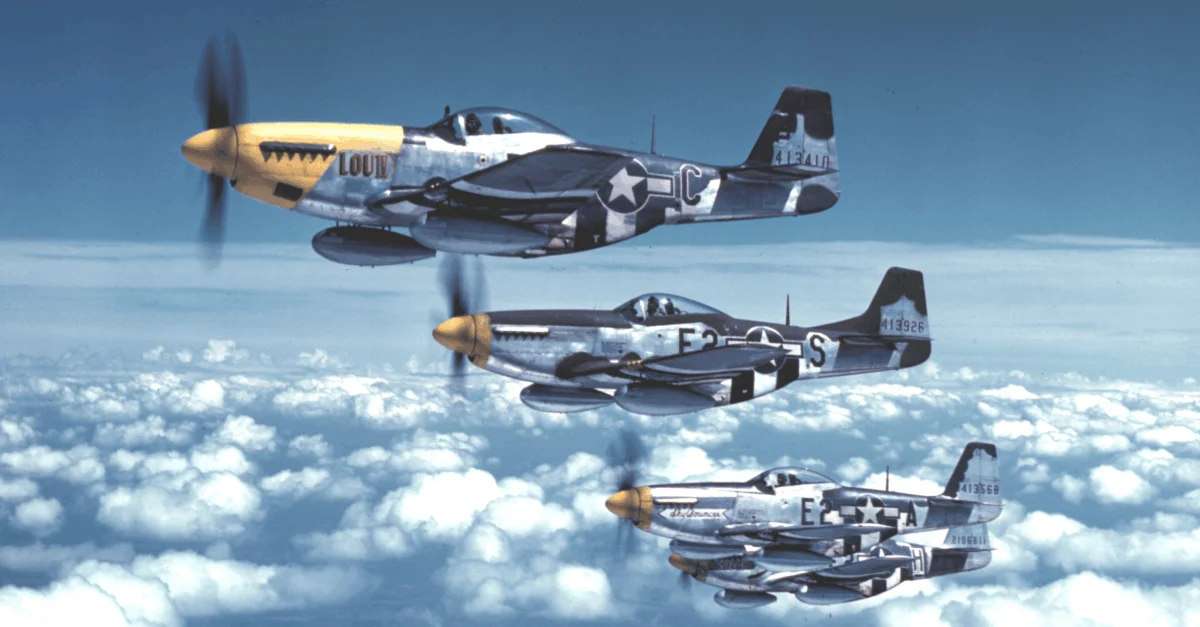
The North American P-51 Mustang stands as one of the most iconic and pivotal aircraft in military history, a testament to rapid innovation under wartime pressure. Widely acclaimed as arguably the most effective piston-engined fighter of the Second World War (1939-45), this single-seater aircraft was a multi-role marvel, adept at reconnaissance, interceptor missions, fighter-bomber operations, and, most crucially, long-range bomber escort. Its exceptional performance and adaptability ensured its deployment across most theatres of the war from 1944 onwards, cementing its legendary status. The Mustang’s operational life extended beyond WWII, notably seeing significant action during the Korean War (1950-53), underscoring its enduring design and utility.
The Mustang’s advent marked a turning point in the air war, particularly over Europe. Before its widespread deployment, Allied bomber formations suffered devastating losses at the hands of German Luftwaffe fighters, as existing escort aircraft lacked the range to accompany bombers deep into enemy territory. The P-51, with its unprecedented range and formidable combat capabilities, transformed the strategic bombing campaign, effectively neutralizing the Luftwaffe threat and paving the way for Allied air superiority. Its sleek lines, powerful engine, and devastating firepower made it a formidable adversary, forever altering the dynamics of aerial combat.
Genesis of an Icon: From British Urgency to American Ingenuity
Rapid Development Under Wartime Pressure
The genesis of the P-51 Mustang is a remarkable story of urgent collaboration and engineering prowess. In April 1940, with much of Europe already under the shadow of Nazi Germany and the Battle of Britain looming, the British Purchasing Commission approached North American Aviation (NAA) with an urgent request. The Royal Air Force (RAF) desperately needed more fighter aircraft, and North American was asked to license-build Curtiss P-40 Warhawks for them. However, NAA president James H. "Dutch" Kindelberger countered with a bold proposal: his company could design and build a completely new, superior fighter in the same timeframe it would take to set up P-40 production.
The British, impressed by NAA’s track record and desperate for advanced aircraft, agreed. The brief was audacious: a prototype was required in just four months. Led by chief designer Raymond Rice and engineer Edgar Schmued, the NAA team worked with incredible speed. They meticulously studied the performance characteristics of contemporary fighters, incorporating lessons learned from early wartime experiences. Their design, initially designated NA-73X, was revolutionary, particularly in its use of a laminar flow wing. This advanced airfoil, with its thickest point set further back than conventional wings, significantly reduced drag, promising exceptional speed.
Despite a slight delay due to engine procurement, the first NA-73X prototype made its maiden flight on October 26, 1940, a mere 120 days after the contract was signed. This was an astonishing feat of engineering and manufacturing. The aircraft was initially powered by an Allison V-1710-F3R liquid-cooled engine, producing an impressive 1,100 horsepower (820 kW). Early flight tests revealed a highly maneuverable aircraft, particularly at low altitudes, with a promising top speed. However, a critical flaw soon emerged: the Allison engine’s performance degraded significantly at higher altitudes, especially above 12,000 feet (3,660 m), a severe handicap for a fighter expected to operate in the high-altitude combat zones of Europe. Nevertheless, the first production Mustangs, designated Mustang Mark I by the British, began to be delivered to the RAF in November 1941.
Early Adoption and Evolving Specifications
The initial agreement between NAA and the British Purchasing Commission included a proviso that two aircraft be made available to the United States Army Air Forces (USAAF) for evaluation. These two fighters, designated XP-51, underwent some design changes, most notably the incorporation of self-sealing fuel tanks for increased combat survivability. Following these evaluations, an additional 150 planes were ordered, with 93 of these subsequently transferred to Britain under the vital Lend-Lease agreement. The remaining Mustangs were integrated into the USAAF, signaling the beginning of their American service.
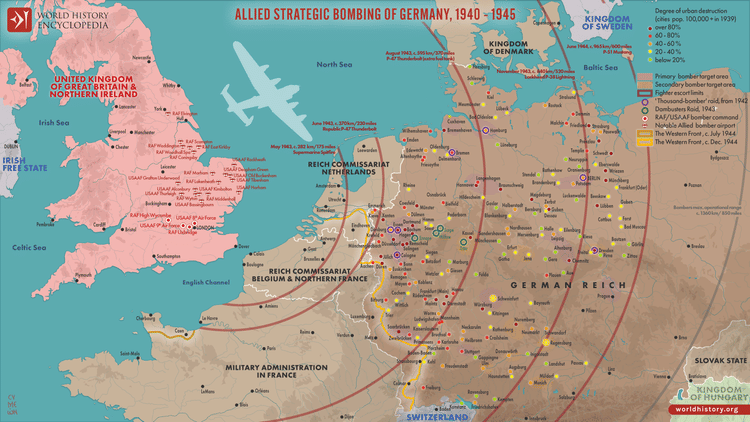
In its early roles, the Mustang demonstrated remarkable versatility. The RAF first deployed Mustang Mark I planes for tactical reconnaissance missions from April 1942. These aircraft were fitted with a camera behind the pilot, proving invaluable for gathering intelligence over occupied Europe. Throughout 1942, 23 RAF Mustang squadrons, comprising over 600 aircraft, actively participated in reconnaissance, identifying strategic targets like factories, transport hubs, and dams crucial for the Allied bombing of Germany. The USAAF also initially used the Mustang for reconnaissance, deploying camera-equipped aircraft in the North Africa Campaign.
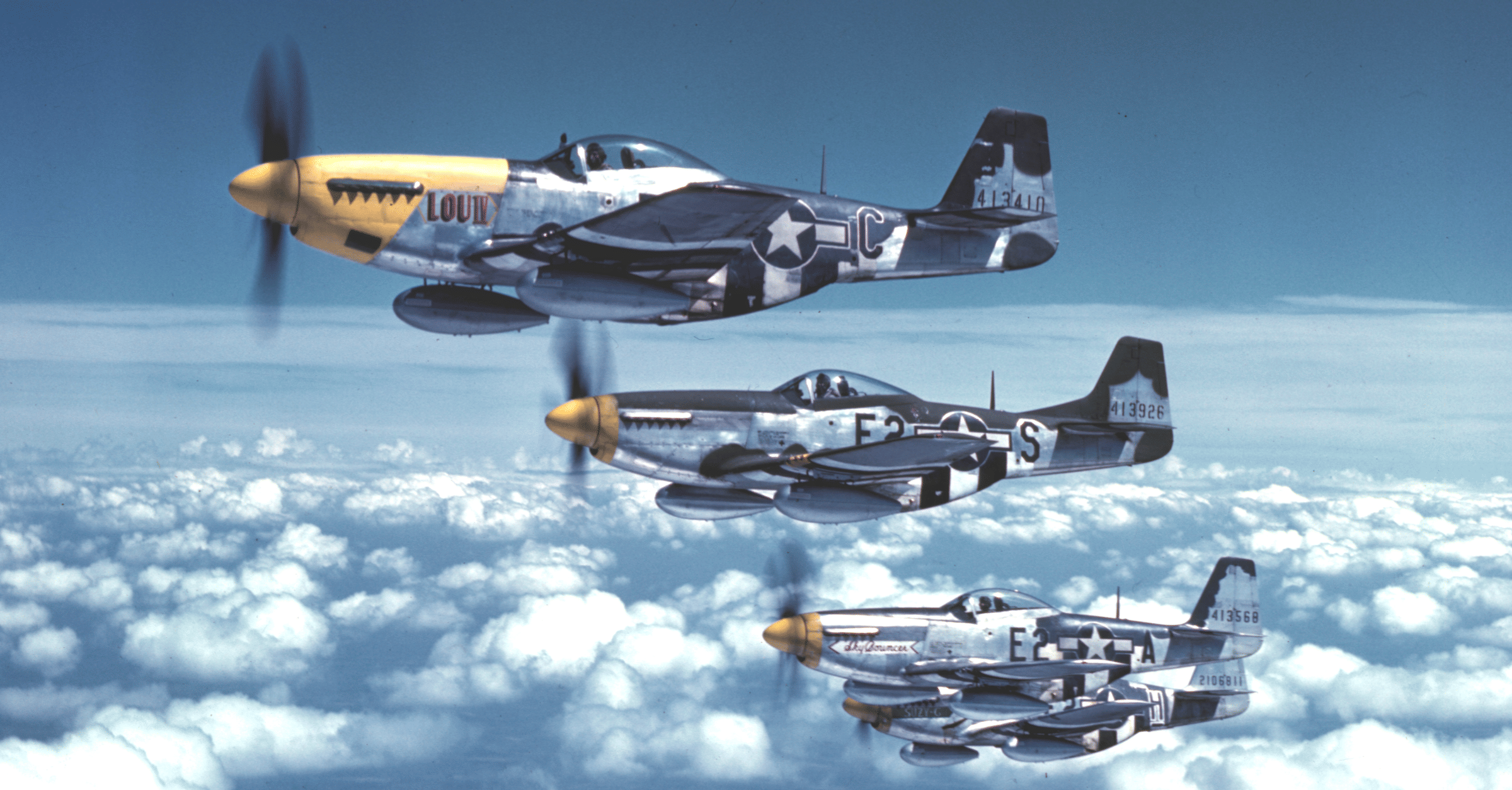
The initial armament of the British-destined Mustangs consisted of eight machine guns: four .50-inch (12.7 mm) Browning M2 machine guns and four .30-inch (7.62 mm) machine guns, making the aircraft highly effective for ground attacks. However, some Lend-Lease Mustangs received a significant armament upgrade, replacing the eight machine guns with four powerful 20mm Hispano cannons, enhancing their destructive capability against both ground and air targets. These early Mustangs, despite their high-altitude limitations, proved their worth in roles where low-to-medium altitude performance was paramount, such as ground attack and tactical reconnaissance.
The Transformative Power of the Merlin Engine
Overcoming Altitude Limitations
The critical turning point in the Mustang’s development, which transformed it from a good low-altitude fighter into a truly exceptional high-altitude interceptor, came with the adoption of the Rolls-Royce Merlin engine. The Allison engine’s high-altitude performance deficit was a persistent problem, severely limiting the Mustang’s potential in air-to-air combat over Europe, where much of the fighting occurred above 15,000 feet.
The idea to re-engine the Mustang with a Merlin came from British test pilot Ronald Harker in April 1942. He had flown both the Mustang and the Supermarine Spitfire, which was powered by the Merlin. Harker immediately recognized the potential of combining the Mustang’s advanced airframe with the Merlin’s superior high-altitude performance. The Merlin V-12 engine, particularly its later variants, featured a two-speed, two-stage supercharger, a sophisticated system that maintained engine power output at much higher altitudes than the single-stage Allison.
The RAF quickly acted on Harker’s suggestion, testing Mustangs with Merlin engines. The results were spectacular. The Merlin-powered Mustang, designated Mustang Mark X, demonstrated vastly improved performance, particularly above 15,000 feet. The USAAF, recognizing this profound enhancement, followed suit, replacing their Allison engines with license-built Packard V-1650 Merlin engines. This decision necessitated the establishment of a new production plant in Dallas, Texas, to supplement the existing facility in Inglewood, California, to meet the burgeoning demand for the new engine. The "marriage" of the American airframe and the British engine was a stroke of genius, transforming the Mustang into "a new and highly effective fighter – the finest piston-engined fighter of the war," as aviation historian R. Neillands noted.
With the Packard-Merlin engine, both RAF and USAAF Mustangs could now perform exceptionally well up to 30,000 feet (9,144 m) and beyond, reaching a top speed of 487 mph (784 km/h) in later P-51D variants. This newfound high-altitude capability was not just an incremental improvement; it was a fundamental shift that unlocked the Mustang’s full potential, enabling it to operate effectively in the strategic bomber escort role that would define its legacy.
Design Refinements and Pilot Comfort
As with most combat aircraft during the war, the Mustang underwent continuous evolution and improvement. These refinements were crucial to maintaining its edge in an ever-changing combat environment. The fuselage was strengthened to withstand greater stresses, while rivets were meticulously smoothed down to create a more aerodynamic surface, further reducing drag and increasing speed. Aileron designs were improved, enhancing maneuverability and roll rate, critical in dogfights. The gun-loading mechanism was simplified, significantly reducing the incidence of jamming, ensuring pilots could rely on their armament in critical moments.
One persistent ergonomic challenge was the pilot’s rearward visibility, a common issue in early fighter designs. This was initially addressed by replacing the side-opening cockpit canopy with a sliding hood, offering a less obstructed view. The most significant improvement came with the P-51D version, which introduced the iconic "bubble canopy." This teardrop-shaped plexiglass enclosure provided an unparalleled 360-degree view, giving pilots a crucial advantage in combat awareness, allowing them to spot enemy aircraft from any angle.
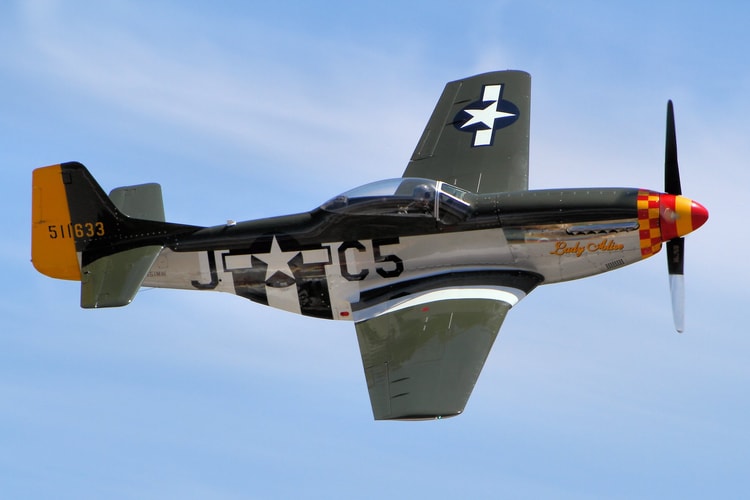
Further design innovations included the use of lighter materials, such as plastic components, and a rethinking of the basic internal structure. These efforts significantly reduced the weight of later Mustangs (by approximately 40% compared to earlier models), contributing to their impressive speed and agility. Beyond performance, pilot comfort was also a consideration. While debates raged about whether the P-51 Mustang was superior to the Supermarine Spitfire, pilots who flew both often noted the Spitfire’s superior maneuverability but universally praised the Mustang for its speed, extended range, and, significantly for long-duration missions, a much more comfortable and roomier cockpit. This attention to pilot well-being was a subtle but important factor in the Mustang’s operational success.
The Long Arm of Allied Air Power: Mustang as Bomber Escort
Solving the "Bomber Gap"
The P-51 Mustang’s most profound impact on World War II was its role as a long-range escort fighter, a mission that directly addressed the "bomber gap" that plagued Allied strategic bombing efforts. The USAAF, committed to daylight precision bombing raids over Germany, faced devastating losses. Without fighter escorts capable of accompanying them deep into enemy territory, the slow-flying, heavily laden B-17 Flying Fortresses and B-24 Liberators were highly vulnerable to relentless attacks from formidable German fighters like the Messerschmitt Bf 109 and Focke-Wulf Fw 190. The RAF had learned this harsh lesson earlier in the war, transitioning largely to night bombing, but the USAAF was determined to continue daylight operations, despite the staggering casualties.
Existing American fighters, such as the P-38 Lightning and the P-47 Thunderbolt, while capable, simply lacked the operational range to provide protection for the entire duration of the long-distance missions to targets like Berlin, Schweinfurt, or Regensburg. Bomber crews called their escorts "little friends," but these friends often had to turn back long before the bombers reached their most dangerous zones, leaving them exposed.
The Merlin-powered Mustang, however, changed everything. From late 1943, Mustangs were equipped with extra disposable fuel tanks, typically two 55-gallon (208-liter) external tanks, which could be jettisoned after use. Further fuel capacity was added within the wings and an auxiliary tank located behind the cockpit. These modifications dramatically extended the Mustang’s operational range to over 2,000 miles (3,350 km), enabling it to escort Allied bombers all the way to their targets deep inside Germany and back. As R. Neillands pointed out, the P-51D, the most common version, "had a range of 950 miles and could fly to Berlin and back" (225). This was a revolutionary capability that no other Allied fighter possessed.
Dominance in the Skies
The arrival of the Mustang in large numbers through 1944 fundamentally altered the balance of power in the air war over Europe. With their "little friends" now able to provide continuous protection, bomber crews experienced a massive boost in morale. More importantly, bomber losses plummeted. The Mustangs not only defended the bombers but also actively engaged and decimated the Luftwaffe. Their superior speed, rate of climb, and high-altitude performance often outmatched contemporary German fighters. The P-51 consistently proved itself more effective in the long-range escort role than other Allied fighters like the P-38 Lightning, which, while capable, could not match the Mustang’s overall performance envelope for sustained high-altitude combat.
The impact on the Luftwaffe was devastating. German fighter pilots, who had previously preyed on unescorted bombers with relative impunity, now faced a tenacious and highly capable adversary that could match them in performance and outlast them in range. The continuous attrition inflicted by Mustangs led to a critical shortage of experienced German pilots and serviceable aircraft. The tide of the air war undeniably turned in the Allies’ favor, directly attributable to the Mustang’s decisive presence.
Beyond their primary escort duty, Mustangs often engaged in opportunistic ground attacks on their return flights. With ammunition left after protecting bombers, pilots would dive to attack targets of opportunity such as canal boats, trains, trucks, and staff cars, further disrupting enemy logistics and infrastructure. This secondary role added to their versatility and destructive potential, ensuring that every mission contributed to the Allied war effort.
Pacific Theatre and Beyond Europe
The Mustang’s long-range capabilities were equally crucial in the vast expanses of the Pacific War against Japan. Here, the distances involved in bombing campaigns were even greater than in Europe. When the US secured the strategically vital island of Iwo Jima in March 1945, Mustangs were able to fly from its newly constructed airfields to escort B-29 Superfortress bombers on their devastating raids against the Japanese mainland.
The presence of Mustang escorts dramatically improved the effectiveness and safety of B-29 missions. Not only did they protect the bombers from Japanese interceptors, but their very presence allowed the B-29s to fly in much looser, more tactically flexible, and therefore safer formations, rather than tightly packed defensive boxes. This flexibility reduced the bombers’ vulnerability to anti-aircraft fire and enemy fighters, contributing significantly to bringing B-29 losses well below the 5% figure commanders considered acceptable. Mustang dive bombers were also deployed to directly attack ground targets in Japan, further contributing to the relentless pressure on the Japanese war machine.
Mustangs operated in virtually every major theatre of the war in 1944 and 1945. In total, approximately 14,800 Mustangs were built during the conflict. The National Museum of the United States Air Force officially credits the Mustang with destroying "4,950 enemy aircraft in the air, more than any other USAAF fighter in Europe," a testament to its unparalleled combat effectiveness.
Technical Prowess: Specifications and Variants
Key Performance Indicators
The P-51 Mustang’s success was rooted in a combination of advanced aerodynamics, powerful propulsion, and robust armament. While specifications varied slightly between different models and modifications, the P-51D, the most prevalent variant, serves as a benchmark for its capabilities.
- Dimensions:
- Wingspan: Approximately 37 feet (11.2 m)
- Length: 32 feet 3 inches (9.83 m)
- Height: 13 feet 8 inches (4.17 m)
- Wing Area: 235 square feet (21.8 square meters)
- Weight:
- Empty Weight: Approximately 7,650 lbs (3,470 kg)
- Loaded Weight: Approximately 9,200 lbs (4,175 kg)
- Maximum Takeoff Weight: Approximately 12,100 lbs (5,490 kg) with external stores.
- Performance:
- Engine: Packard V-1650-7 (a license-built Rolls-Royce Merlin V-12 liquid-cooled piston engine), typically rated at 1,490 horsepower (1,110 kW) at 3,000 rpm for takeoff.
- Maximum Speed: 437 mph (703 km/h) at 25,000 feet (7,600 m) with internal fuel, increasing to 487 mph (784 km/h) at optimal altitudes with combat settings.
- Range: Typical combat range was 950 miles (1,530 km). With external drop tanks, its ferry range extended to over 2,000 miles (3,350 km), enabling round trips to distant targets.
- Service Ceiling: 41,900 feet (12,770 m).
- Rate of Climb: Approximately 3,200 feet per minute (16.3 m/s).
Armament Evolution
The Mustang’s firepower also evolved to meet changing combat requirements:
- Early Variants (e.g., Mustang I): Typically armed with eight machine guns – four .50-inch (12.7 mm) Browning M2 machine guns mounted in the wings and four .30-inch (7.62 mm) machine guns, also wing-mounted. This configuration was effective for ground strafing and initial air combat.
- Lend-Lease Variants (e.g., Mustang IA): Some models destined for the RAF under Lend-Lease were fitted with four 20mm Hispano cannons, offering heavier hitting power against armored targets and enemy aircraft.
- Later Variants (e.g., P-51D): The definitive P-51D was armed with six .50-caliber M2 Browning machine guns, three mounted in each wing. This concentrated firepower was incredibly effective against enemy fighters and offered substantial ground attack capabilities. Each gun was fed by a generous supply of ammunition, ensuring sustained firing during engagements.
- External Stores: For bombing and rocket attacks, the Mustang could be adapted to carry external ordnance. It could be fitted with two underwing pylons, capable of carrying two 1,000-lb (454-kg) bombs, transforming it into a potent fighter-bomber. Alternatively, these pylons could carry six or ten HVAR (High-Velocity Aircraft Rocket) rockets, adding significant anti-armor and ground suppression capabilities. The versatility of its armament allowed the Mustang to seamlessly transition between air superiority, ground attack, and escort roles.
A Lasting Legacy: Post-War Service and Enduring Iconography
From Warbird to Cold War Veteran
The P-51 Mustang’s operational life did not end with the surrender of Japan in 1945. Its robust design, proven performance, and sheer numbers ensured its continued service with air forces around the globe. Following the conflict, limited production continued in Australia, where a licensed factory established in 1944 produced the Commonwealth Aircraft Corporation (CAC) Mustang. Beyond the primary belligerents, Mustangs were supplied to numerous other air services, including those of China, South Africa, the Netherlands, Canada, New Zealand, and Israel, among others, many of whom used them well into the 1950s.
In the United States, Mustangs continued to see service with the US Air Reserves and the Air National Guard, where they were redesignated F-51s following the establishment of the United States Air Force in 1947. Although the advent of jet aircraft like the F-86 Sabre signaled the end of the piston-engined fighter’s dominance, a significant number of F-51s saw active service during the Korean War (1950-53). Their long-range capabilities, heavy armament, and ability to carry substantial payloads made them invaluable for ground attack, close air support, and forward air control missions, particularly in the early stages of the war before jet superiority was fully established. The F-51’s reliability and loitering capability proved crucial in the rugged Korean terrain.
The Mustang’s operational career stretched remarkably long for a WWII-era design. The very last operational Mustangs were flown in the early 1980s by the Fuerza Aérea Dominicana (Dominican Air Force), a testament to the aircraft’s exceptional design and the resourcefulness of its operators.
An Unforgettable Chapter in Aviation History
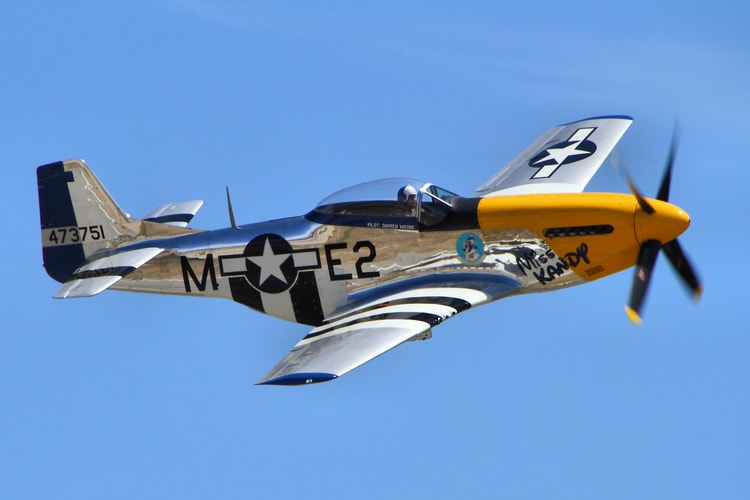
The P-51 Mustang’s legacy extends far beyond its operational service. It remains an enduring icon of World War II air power, revered by aviation enthusiasts, historians, and the public alike. Its sleek profile, often adorned with distinctive checkerboard noses or vibrant colors of fighter groups, is instantly recognizable. The National Museum of the United States Air Force succinctly summarizes its combat impact: "by the end of the war, Mustangs had destroyed 4,950 enemy aircraft in the air, more than any other USAAF fighter in Europe." This statistic alone underscores its unparalleled contribution to Allied victory.
The Mustang is celebrated not just for its technical prowess but also for its profound psychological impact. For Allied bomber crews, the sight of their "little friends" arriving to escort them deep into hostile territory was a profound relief and morale booster. For Luftwaffe pilots, the appearance of the Mustang signaled a dangerous and often decisive encounter, contributing to the ultimate collapse of German air superiority.
Today, numerous P-51 Mustangs are meticulously restored and maintained as cherished warbirds, regularly gracing airshows around the world. Their powerful roar and graceful aerobatics continue to captivate audiences, serving as a living memorial to the ingenuity of its designers, the bravery of the pilots who flew it, and its indelible mark on military aviation. The P-51 Mustang stands as a symbol of innovation, adaptability, and the pivotal role air power played in shaping the course of the 20th century.