The State of the Graphic Medium: A Comprehensive Report on SDCC 2026
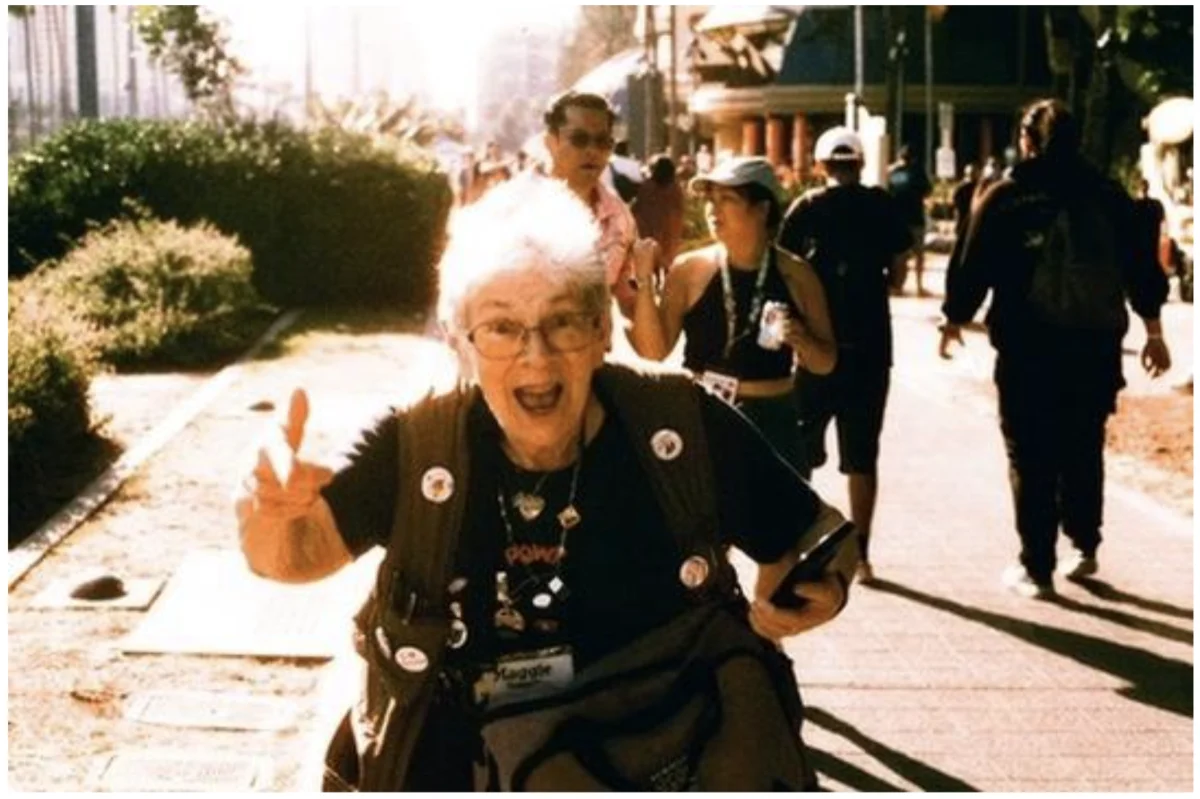
The 2026 San Diego Comic-Con (SDCC) will likely be remembered as a pivotal moment of transition for the American comic book industry. Held from July 22 to July 26, the convention served as a battleground between two competing philosophies: the high-stakes, manufactured scarcity of the "speculator market" and a burgeoning renaissance of creator-owned, formally experimental storytelling.
While the event was marked by a significant security breach regarding the industry’s most prestigious honors—the Eisner Awards—it also highlighted a shift in power dynamics among the "Big Two" publishers and a surprising surge in the archival and indie sectors.
Chronology of an Industry in Flux
Preview Night: The Speculator Shadow
The convention opened on Wednesday, July 22, with a palpable tension surrounding the "Absolute Universe," DC Comics’ latest initiative. At local retailers like Now or Never Comics and within the convention hall itself, the primary topic of conversation was the "speculator bubble."
Industry veterans and retailers engaged in heated debates regarding the sustainability of the current market. The "Absolute Batman" phenomenon, while driving record sales, has sparked fears of a "second dark age" reminiscent of the 1990s. Critics argue that the market has become an insular micro-economy where a small group of collectors trade high-value variants back and forth, creating a manufactured sense of demand that may eventually collapse, leaving retailers with unsellable inventory.
The Eisner Leak and Digital Transparency
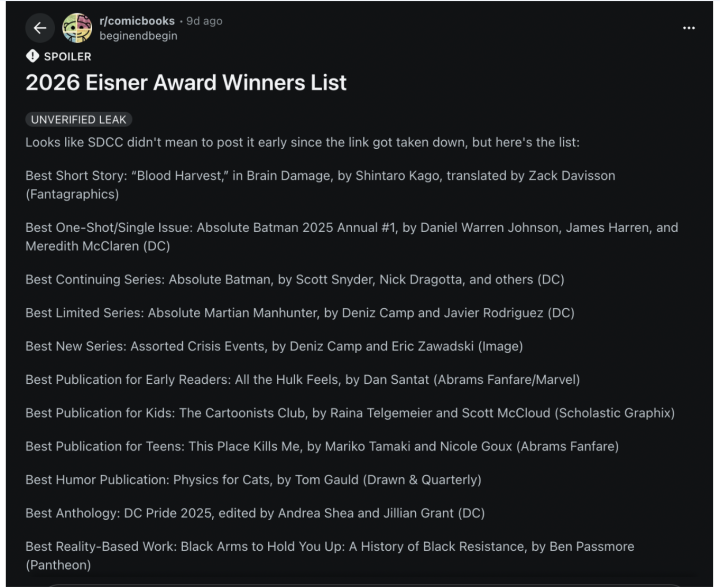
By Thursday, the convention was rocked by a major administrative error. A marketing assistant or web coder accidentally published the full list of 2026 Eisner Award winners to the official SDCC website nearly 36 hours before the scheduled ceremony. The list was immediately mirrored on social media platforms like Reddit, labeled as an "unverified leak."
Despite the breach, the Eisner Committee opted to proceed without a formal reset or acknowledgment of the leak until the ceremony itself. This incident raised significant questions about the digital security of industry institutions and the difficulty of maintaining "awards-show magic" in an era of instant information.
The Awards Ceremony: A Sweep for the Avant-Garde
Friday night’s Eisner Awards, hosted by Phil LaMarr and Tom Lennon, were defined by the dominance of writer Deniz Camp and artist Javier Rodriguez. The duo’s work on Absolute Martian Manhunter and Assorted Crisis Events swept multiple categories, signaling a rare moment where critical darlings and mainstream superhero titles converged.
However, the night was not without controversy. The win for Scott Snyder and Nick Dragotta’s Absolute Batman in the "Best Continuing Series" category was met with a divided response. While commercially successful, some critics within the professional circle characterized the series as a "narrative failure" and a "hype machine" designed for speculators rather than readers.
Supporting Data: Key Award Outcomes and Industry Recognition
The 2026 awards cycle highlighted several burgeoning trends in the medium:
- The Rise of Deniz Camp: Camp took home Best Writer for his work across DC, Marvel, and Image. His victory for Assorted Crisis Events (Best New Series) and Absolute Martian Manhunter (Best Limited Series) marks him as the preeminent voice of the 2020s.
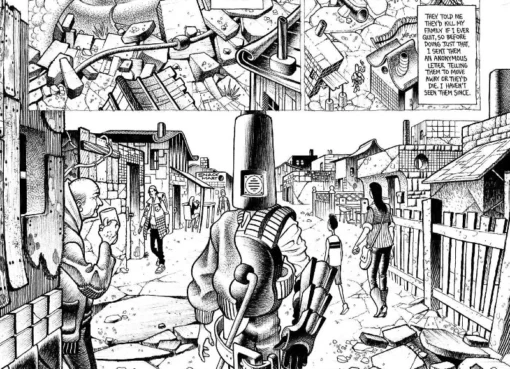
- Formal Experimentation: Javier Rodriguez won Best Penciller/Inker and Best Cover Artist. His work on Absolute Martian Manhunter was cited by peers as some of the most formally experimental cartooning in the history of the genre, pushing the boundaries of layout and visual language.
- Indie Resilience: Drawn & Quarterly (D&Q) saw unprecedented foot traffic, driven largely by their acquisition of the Moomin license. The sight of an indie publisher being "swarmed" by merch-seeking fans—a phenomenon usually reserved for Funko or Marvel—suggests a broadening of the "fandom" demographic.
- Archival Excellence: The Best Archival Project (Strips) was awarded to the George Herriman Library: Krazy & Ignatz 1928-1930. This win underscored the industry’s continued commitment to preserving the history of the medium in high-quality, large-scale formats.
Official Responses and Institutional Advocacy
The 2026 convention also saw a renewed focus on the legal and professional protections of creators.
The CBLDF and the "New Comics Code"
During a panel led by Jeff Trexler of the Comic Book Legal Defense Fund (CBLDF), industry leaders discussed repurposing the concept of a "Comics Code." Unlike the restrictive censorship of the 1950s, this new proposed code would function as a "Creator’s Bill of Rights."
Building on the foundations laid in the late 1980s by figures like Scott McCloud and Steve Bissette, the proposed framework focuses on:
- The right to full ownership of what one fully creates.
- The right to prompt payment of all agreed-upon fees and royalties.
- The right to control the continuity and integrity of one’s work.
Denis Kitchen, a co-founder of the CBLDF, expressed optimism that the industry is finally moving away from the "defeatist" attitude of the past regarding creator ownership, even as corporate consolidation continues.
Trans Representation in Writing
The Bill Finger Award for Excellence in Comic Book Writing was awarded to Jenny Blake Isabella. As the first trans woman to receive the honor, Isabella’s acceptance speech was a highlight of the convention, emphasizing the importance of self-acceptance and the role of the Metrohealth Gender Clinic in her journey. Her win, alongside the Best Anthology win for DC Pride 2025, signaled a shift in the industry’s willingness to celebrate diverse narratives at the highest level.
Implications for the Future of the Industry
The events of SDCC 2026 suggest three major takeaways for the immediate future of the comics market:
1. The Speculator Bubble vs. Narrative Quality
The tension between the success of Absolute Batman and the critical acclaim of Absolute Martian Manhunter illustrates a growing rift. The industry is currently sustained by a "speculator fervor" that prioritizes variant covers and "first appearances" over narrative depth. If this bubble pops, the industry will rely on the "prestige" creators like Camp and Rodriguez to maintain the medium’s cultural relevance.
2. The Return of the "Archival Impulse"
There is a significant and growing market for the preservation of comics history. From the George Herriman Library to the grassroots efforts of editors like Tom Devlin (who recently reconstructed missing John Stanley Little Lulu roughs with the help of Columbia University), the "archival impulse" is stronger than ever. This suggests that as the digital age progresses, the physical book as a historical artifact is becoming more valuable to the core fan base.
3. The Decentralization of Publishing
The success of Jeff Smith (publishing Tuki via Kickstarter) and the Eisner wins for webcomics like Tiger, Tiger (Petra Erika Nordlund) demonstrate that the "Big Three" (Marvel, DC, Image) no longer hold a monopoly on talent or visibility. Independent hosting and crowdfunding are becoming viable, long-term career paths for "A-list" creators who wish to avoid the editorial whims of corporate giants.
4. Political and Social Engagement
The 2026 con was notably more political than previous years. From Deniz Camp accepting his Best Writer award while wearing a keffiyeh to Ben Passmore’s win for Black Arms to Hold You Up: A History of Black Resistance, creators are increasingly using the SDCC platform to address global issues. This indicates that the "escapism" of comics is being replaced by a more direct engagement with contemporary reality.
Conclusion
San Diego Comic-Con 2026 was a study in contradictions. It was an event plagued by logistical errors and shadowed by cynical market tactics, yet it was also a celebration of the most avant-garde and inclusive work the medium has ever produced. As the industry looks toward 2027, the primary challenge will be balancing the "ape-brained" demands of the speculator market with the "virtuosic" needs of the art form. For now, the medium remains vibrant, messy, and—most importantly—essential.