SPFBO Nears Semifinal Climax: Three More Titles Depart in Sixth Round of Cuts
As the highly anticipated Self-Published Fantasy Blog-Off (SPFBO) approaches its penultimate stage, the competition has announced its "Sixth Fall," seeing three more titles eliminated. This latest round of cuts leaves just one final elimination post before the esteemed panel turns its full attention to the four semi-finalists, marking a critical juncture in the annual contest.
The SPFBO, a prestigious competition founded by renowned fantasy author Mark Lawrence, is designed to shine a spotlight on the vibrant and ever-growing world of self-published fantasy. Now in its eleventh iteration, the contest has become a crucial platform for independent authors, offering unparalleled exposure and the chance to be crowned the year’s best self-published fantasy novel.
The Journey Through SPFBO: A Rigorous Gauntlet
The SPFBO journey is a marathon, not a sprint, for the hundreds of authors who bravely submit their work each year. Beginning with an initial pool of 300 books, each assigned to one of ten participating fantasy blogs, the competition unfolds in distinct phases. The blogs meticulously read and review their assigned entries, gradually narrowing down their selection through a series of "cut posts" – non-ranking announcements of books that, for various subjective reasons, will not advance.
This "Sixth Fall" represents one of the final steps in this arduous culling process. The Fantasy-Faction judging team, a dedicated panel of avid readers and critics, has been diligently sifting through a diverse array of submissions, each offering a unique take on the fantasy genre. Their work involves not just reading, but careful analysis, discussion, and ultimately, the difficult decision of which narratives resonate most strongly.
It’s a process steeped in subjectivity, a point the organizers consistently emphasize. There is no "worst to best" ranking in these cut posts; rather, books are evaluated based on how well they connect with the individual tastes and critical lenses of the judges. This transparency underscores the personal nature of reading and encourages readers to explore even the eliminated titles, as one person’s "cut" could be another’s next favorite read.
The courage required for authors to put their work forward for such scrutiny cannot be overstated. Each submission represents countless hours of writing, editing, and self-publishing effort. The SPFBO team extends a sincere thank you to every author, acknowledging the vulnerability inherent in sharing one’s creative vision with the world, especially in a competitive setting.
Readers eager to follow the competition’s progression can find comprehensive updates on the official SPFBO website, hosted by Mark Lawrence. For those new to the contest, an introductory guide is also available, detailing its structure and significance within the fantasy community.
Sixth Fall: Dissecting the Departures
This latest round of cuts sees three books bid farewell to the competition, each receiving thoughtful, if ultimately critical, feedback from the Fantasy-Faction judges. These detailed assessments offer valuable insights for authors and readers alike, highlighting both strengths and areas for refinement in the self-published fantasy landscape.
Leave No Dragon Stone Unturned by Alexa Grave
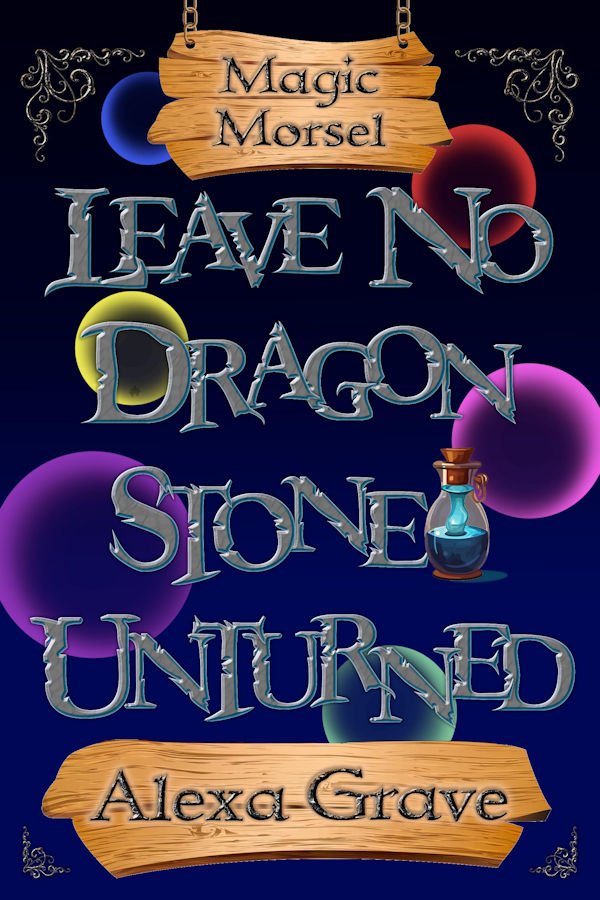
Synopsis: The story introduces Lila, a half-elf tech mage who owns the "Magic Morsel," a neutral ground in the Triopolis area for humans, fae, elves, and other magical beings. Still grieving her grandmother, Lila is determined to uphold her establishment’s reputation for peace. Her resolve is tested when Ash, a captivating half-elf, enters her bar with a mysterious item that calls to her. A deal goes awry, obligating Lila to hunt down a stolen object, a quest that leads her to the perilous Ruins – a forbidden city cloaked in wild magic, where she risks her sanity amidst crumbling structures and chaotic lightning.
Judges’ Verdict: A Tale of Two Tastes
Leave No Dragon Stone Unturned garnered a fairly consistent initial reception from the judging team: it was perceived as fun, light, and easy to read. The concept of Lila, a likeable protagonist running a magical restaurant, coupled with an inventive blend of tech and magic, charmed many early on. Judges appreciated the breezy pacing, which facilitated quick reading, and several expressed genuine curiosity about the world-building and enjoyed the quirky humor woven throughout the narrative.

However, a significant element sharply divided opinion: the persistent focus on the protagonist Lila’s libido and romantic interests. Judge Kerry articulated this point clearly: while appreciating Lila’s self-assuredness, her talent for inventing gadgets, and her business acumen, the constant internal monologues about her attraction to her client became a deterrent. Kerry highlighted specific instances, such as a friend packing "sexy underwear" for a trip to dangerous ruins and a description of Lila’s wet t-shirt accentuating her curves, as moments that disrupted the narrative flow and shifted the book’s focus. For Kerry, a reader who prefers less "spice" in her fantasy, this aspect overshadowed what could have been an otherwise engaging story.
Julia echoed this sentiment, describing the book as a "quick, fun, light urban fantasy that doesn’t take itself too seriously." She praised Lila’s enjoyable character when not preoccupied with romance, noting the warmth in her relationships with staff and the inventive tech-magic ideas. However, she also identified "holes you could drive a canister of petrol through" in the plot and questioned some character choices. The "sexual tension [being] persistent and front and centre" was the primary factor in determining reader enjoyment.
Narrative Nuances and Character Depth:
Beyond the romantic element, a few judges also found the supporting characters somewhat underdeveloped. One particular criticism highlighted a jarring shift in a villain’s portrayal, moving from an "ice queen" archetype to a "reality TV caricature," which detracted from the narrative’s credibility for some.
Final Assessment:
Ultimately, Leave No Dragon Stone Unturned is positioned as a book that delivers precisely what it promises for its target audience. Readers who revel in light romantasy, complete with humor, "spice," and a unique magic system, will likely find it highly appealing. For those who prefer their urban fantasy narratives less preoccupied with the protagonist’s love life, the charming story and inventive world-building are still present, but may require a degree of patience to fully appreciate through the lens of its pervasive romantic tension. It’s comfort food fantasy for a specific palate, offering a cheerful, fast-paced escape.
The Crimson Court by Brendan Noble
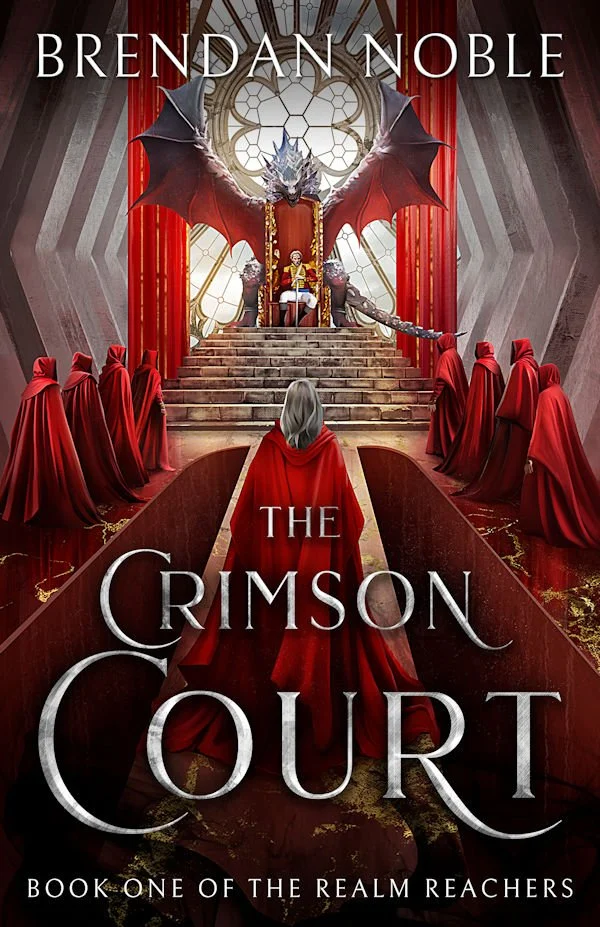
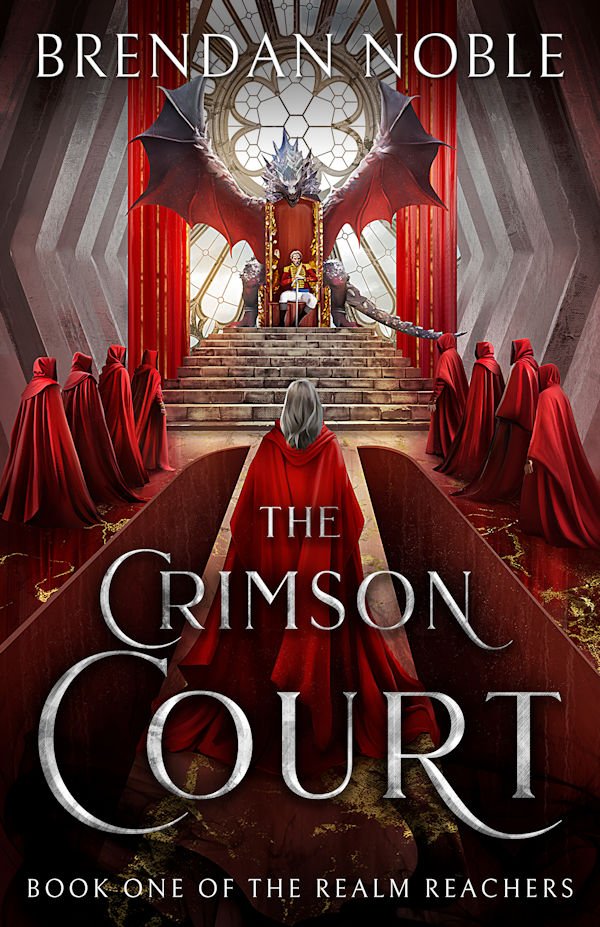
Synopsis: Kasia Niezik, the ambitious matriarch of a fallen house, has sworn vengeance against the enigmatic Crimson Court, responsible for her father’s assassination. These adversaries are near-immortal, wielding ancient spirits that once brought civilization to its knees. However, Kasia is a Reacher, capable of drawing power from the realm of Death – a power that makes her their worst nightmare. To confront her deceitful foes, she must first locate them. Her journey takes her to the capital, where she seeks allies among spirit hunters, princesses, and thieves. Yet, in this world of political intrigue, everyone harbors a hidden agenda, and the widest smiles often conceal the sharpest daggers.
Judges’ Verdict: Initial Promise, Pacing Pitfalls
The Crimson Court initially captivated the Fantasy-Faction team, demonstrating considerable promise in its opening chapters. The world-building emerged as a clear strength, with its distinctive Russian and Siberian-inspired setting, a compelling magical plague, intricate political scheming, and an inventive magic system centered around "Reachers" drawing power from fifteen different realms. Several judges expressed genuine excitement early on, with some even identifying it as potential competition material.
However, the book’s considerable length – over 700 pages – gradually became a significant hurdle. While the pacing held up for roughly the first half, judges noted a decline in narrative momentum thereafter, with the writing beginning to feel long-winded and the story losing its initial grip. One judge also pointed out instances of clunky prose, where character details felt forced into sentences rather than organically integrated.
The characters proved to be the most consistent weak point. Despite the rich and immersive world surrounding them, several judges found the cast to be flat. Their motivations, while stated, often failed to translate into felt emotional responses on the page, making it difficult for readers to deeply connect with their journeys.
Julia’s review highlighted the novel’s many positives, including its inventive gaslamp world, engaging setup, and refreshingly inclusive cast. She praised the normalizing touch with which LGBTQIA+ themes and diverse character traits (like a character using they/them pronouns or having a mechanical leg) were woven into the narrative, making the world feel quietly progressive without making a didactic point of it. However, she found the characters leaned towards being "readable and role-defined" rather than deeply discovered, with emotional beats often written for immediate impact rather than slow, resonant build-up. While she finished the book, she admitted to frequent drifting, suggesting the audiobook format likely aided her completion more than the page alone would have.
Stacey’s Perspective and Overall Potential:
Judge Stacey Markle, who had previously experienced The Crimson Court via audiobook, offered the most positive overall assessment. She lauded the immersive world and appreciated how the multiple points of view eventually converged, creating a cohesive narrative. Even Stacey, however, acknowledged that the book could have benefited from some trimming.
Final Assessment:
The Crimson Court is a work of genuine ambition, possessing many of the right ingredients for a compelling fantasy epic. Its strong foundational concepts and innovative world-building are undeniable. However, the execution ultimately suffered from issues related to pacing, length, and character depth. A tighter editorial hand, focused on refining the prose and streamlining the narrative, could elevate this promising story to match the strength of its underlying ideas, making it a compelling read for those who prioritize intricate world-building and are prepared for a lengthy journey.
Remnant by K. R. Solberg and C. R. Jacobson
Synopsis: The shocking assassination of an immortal ignites a manhunt, drawing a master of shadows into the quest for the killer. Jon Therman, a former slave now leading a family of sunrock smugglers, inadvertently stumbles into this pursuit. His sole desire is to live an unnoticed life, far from the world’s corruption. But when an immortal threatens his children, Jon is compelled to retaliate. Meanwhile, his daughter, Ella, defies her fellow smugglers to rescue a friend from a ritual sacrifice. Adding to the complexity, jaded spy Shane zem’Arta searches for his missing commander, his orders clashing with Ella’s rescue mission and Jon’s protective instincts. These old friends find themselves on a perilous adventure, as smugglers, rogues, and lords must unite against a powerful cult of immortals. The question remains: can these fragile factions overcome their mistrust to survive a burgeoning war, or will they fall divided?
Judges’ Verdict: An Uphill Battle for Engagement
Remnant proved to be a challenging read for the entire Fantasy-Faction team. The opening chapter, with its dramatic hook involving the death of an immortal, initially drew some judges in, offering a glimmer of promise. However, this goodwill proved short-lived.
From the second chapter onward, the narrative introduced an overwhelming number of characters without affording any of them sufficient weight or distinctiveness to make them memorable. As one judge succinctly put it, the characters never evolved beyond "names crossing the page," failing to establish themselves as individuals with whom readers could form a connection or develop an understanding.
The prose emerged as a consistent sticking point. Several judges found it wordy and difficult to follow, often describing events in a flat, sequential manner rather than imbuing them with narrative drive or emotional resonance. The dialogue, too, leaned towards the theatrical without earning its dramatic flair, often feeling stilted or unnatural. Furthermore, the world-building, despite its epic scope, never quite cohered into a clear or navigable structure, leaving readers disoriented and unable to fully orient themselves within the story’s setting.
Collective Experience: A Consensus on Difficulty:
The collective experience of the judging team underscored the difficulties presented by Remnant. Crucially, not a single judge on the team managed to reach the finish line of the book, and enthusiasm waned rapidly even in the early chapters. This widespread inability to complete the novel speaks to significant hurdles in engagement and accessibility for a broad readership.
Target Audience:
While the book proved challenging for the SPFBO panel, it’s acknowledged that there might be a niche audience for Remnant. Dedicated epic fantasy readers who possess a high tolerance for extensive casts, a slow build-up, and a willingness to invest considerable effort in deciphering complex world-building may find elements worth exploring. However, for most, the narrative’s density and character-related issues presented too steep a barrier to entry.
The Road Ahead: Nearing the Semifinals
With these latest cuts, the SPFBO competition intensifies. Only one more elimination post remains, featuring just two books, before the grand reveal of the four semi-finalists. The anticipation among authors, judges, and readers alike is palpable, as the contest moves closer to identifying the standout self-published fantasy novel of the year. Each semi-finalist will receive a dedicated, in-depth review, offering a comprehensive look at their strengths and unique contributions to the genre.
The SPFBO continues to be a testament to the talent and dedication within the self-published fantasy community. While the cuts are a necessary part of the competition, they also serve as a reminder of the subjective nature of reading and the vast array of stories waiting to be discovered. Readers are encouraged to explore the full list of 300 books on Mark Lawrence’s website, as every entry represents an author’s passion and hard work.
A Word of Gratitude and Future Endeavors
The Fantasy-Faction team once again extends its profound gratitude to all the authors who entered SPFBO 11. Your courage and commitment to your craft are truly inspiring.
The dedicated judging panel for this year includes Adawia Asad, Eva Geraghty, Evelyn Grimald “E.G.” Stone, Julia Kitvaria Sarene, Karen Lucia, Kerry Smith, Kit Caelsto, Maureen Neuman, Robert Max Freeman, Sara Rosevear, Sherry Cammer, Stacey Markle, Tianna Twyman, and Yaniv Rosenfeld Cohen. More information about these passionate readers and their individual preferences can be found on the Fantasy-Faction website.
For any queries regarding the contest, Jennie Ivins, the editor, can be reached via DM on Bluesky or Threads. Good luck to all the authors, and happy reading!
Featured image by congerdesign via Pixabay.