From Sketch to Solution: How Fantasketch is Reimagining the Physics-Puzzle Genre
The landscape of independent gaming has long been a fertile ground for "physics-puzzlers"—a genre that task players with using logic and spatial reasoning to manipulate digital environments. However, few titles in recent years have managed to capture the tactile joy of creation as effectively as the upcoming title Fantasketch. Recently showcased at the Hyper Japan event, Fantasketch is a vibrant, hand-drawn odyssey that challenges players to bridge the gap between artistic expression and mechanical problem-solving.
By moving beyond the simplistic "draw-to-win" mechanics popularized (and often misrepresented) by hyper-casual mobile advertisements, Fantasketch introduces a sophisticated layer of resource management and state-based environmental interaction. As it prepares for its eventual release on Steam, the game is positioning itself as a spiritual successor to classics like Crayon Physics Deluxe, while adding a modern, elemental twist to the formula.
Main Facts: The Core Identity of Fantasketch
At its heart, Fantasketch is a 2D puzzle game where the player’s primary tool is a magical brush. Unlike traditional platformers where the character’s movement is the focus, Fantasketch shifts the agency to the player’s ability to manifest objects into the game world.
The Power of the Line
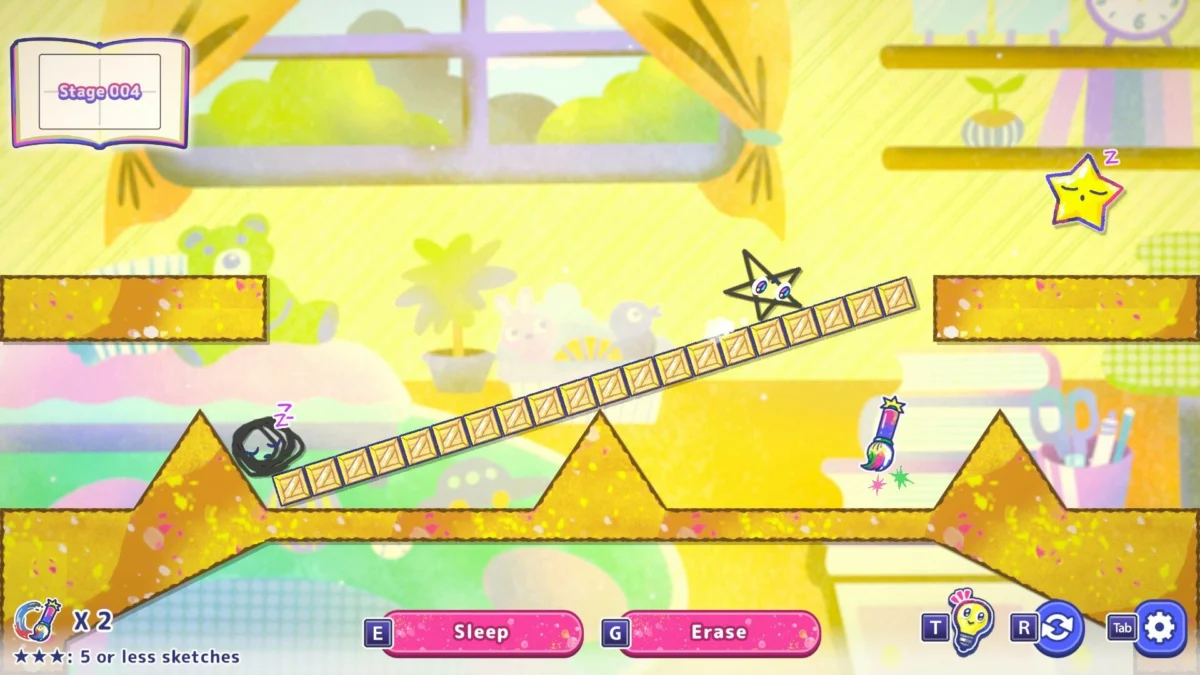
The game begins with a blank or semi-structured canvas representing a level. Players are tasked with drawing shapes—be they simple spheres, complex bridges, or makeshift ramps—to navigate a character or reach a specific goal, often represented by a star. The physics engine treats these drawings as rigid bodies, meaning gravity, friction, and collision play a vital role in whether a solution succeeds or fails.
The "Asleep" vs. "Active" Dynamic
One of the most innovative features of Fantasketch is the distinction between "active" and "asleep" objects. When a player draws a shape, it initially exists as a potential tool. However, the game allows for a strategic "sleeping" mechanic. If a player realizes a shape was drawn incorrectly or is no longer needed in its current form, they can leave it "asleep."
In this dormant state, these shapes serve as static architecture. They can be used as platforms, wedges to hold doors open, or stacked to create makeshift staircases. A key technical nuance involves the timing of these shapes; if timed correctly, "asleep" bodies can stick together, allowing for the construction of complex, multi-part structures that defy the standard limitations of single-stroke drawing.
Resource-Based Creativity
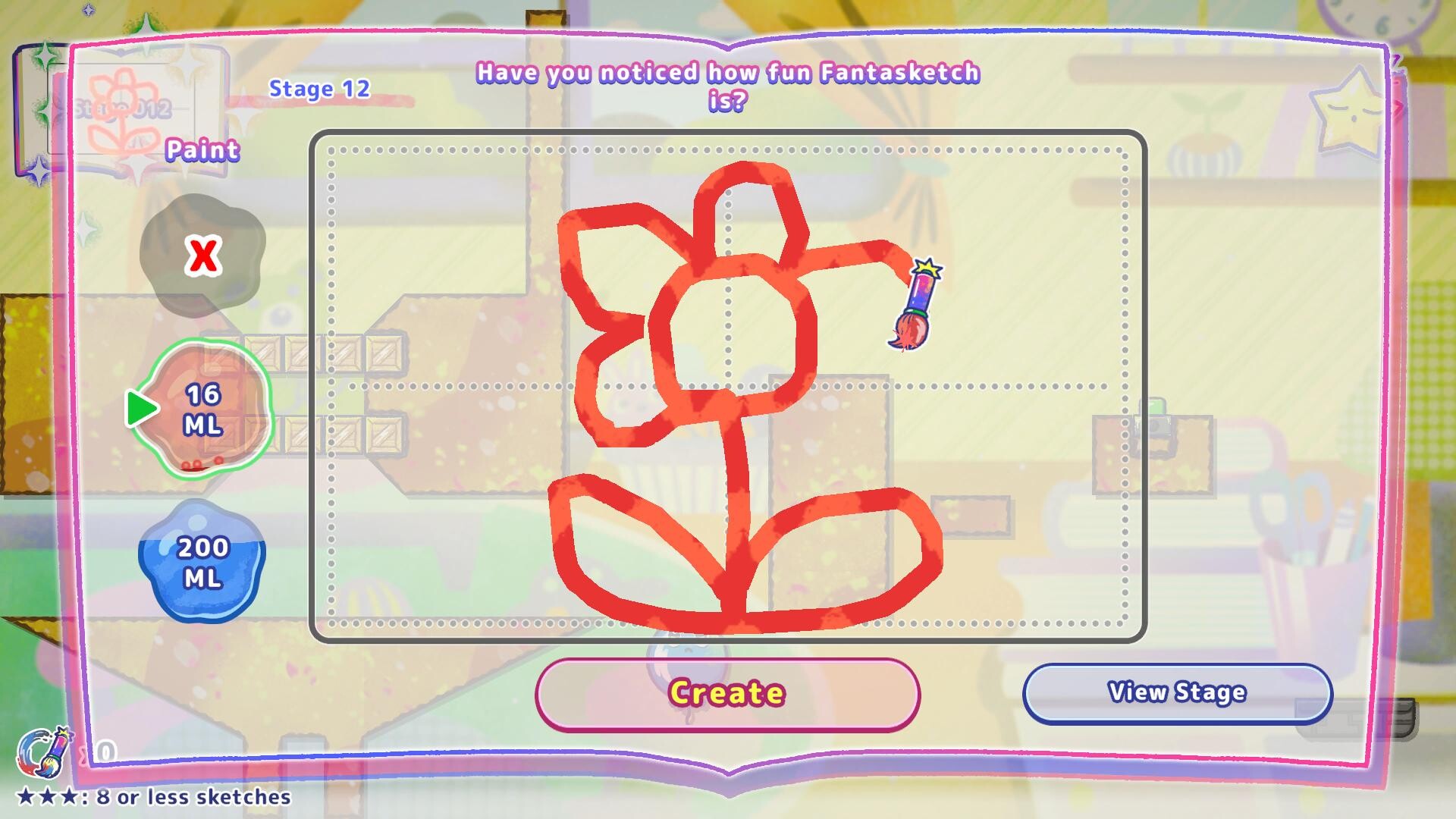
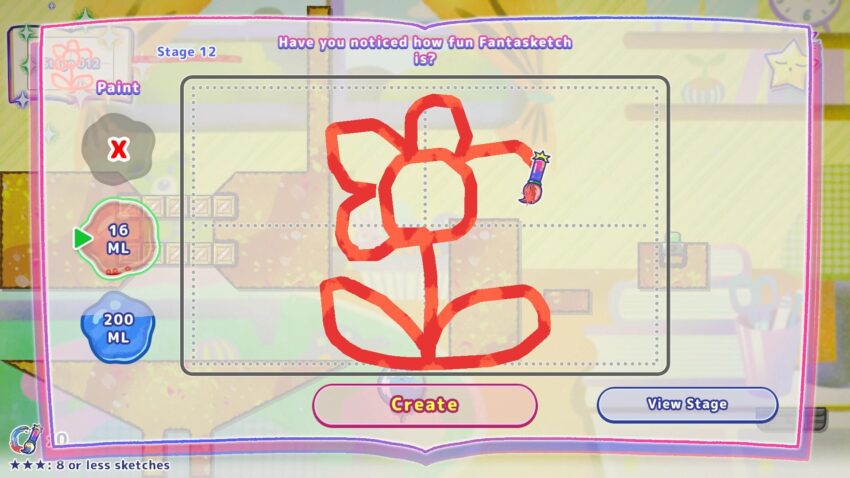
Fantasketch distinguishes itself from "sandbox" drawers by imposing strict limitations on the player. Creativity is not infinite; it is governed by a paint reservoir. Each level provides a specific amount of paint, often divided by color. This turns a simple drawing task into a logistical challenge:
- Quantity Management: If a player uses too much paint to create a massive bridge, they may lack the resources to create the final character needed to reach the goal.
- Color-Coded Abilities: Different colors represent different elemental properties. For instance, red paint imbues a shape with the ability to burn through wooden obstacles.
Chronology: From Concept to the Hyper Japan Debut
The development of Fantasketch follows a trajectory familiar to many successful indie titles, moving from a core mechanical "hook" to a fully realized aesthetic experience.
The Rise of Drawing Puzzles (2008–2015)
To understand the context of Fantasketch, one must look back at the late 2000s. Titles like Crayon Physics Deluxe (2009) and Scribblenauts (2009) proved that there was a massive appetite for games that allowed for emergent solutions. These games relied on the player’s imagination rather than a single "correct" button press. However, as the mobile gaming market exploded, this genre was often diluted into "fake ads"—videos showing simple drawing puzzles that didn’t actually exist in the games being advertised.
Development and Aesthetic Refinement
The developers of Fantasketch sought to reclaim this genre. They moved away from the sterile, vector-based look of many modern puzzle games in favor of a "sketchbook" aesthetic. The goal was to make the game feel like a living journal, where every line drawn by the player felt like an extension of the world’s art style.
The Hyper Japan Milestone (July 2024)
The most significant public milestone for the game occurred at Hyper Japan, the UK’s largest celebration of Japanese culture and gaming. This event served as the premiere for the Fantasketch playable demo. Attendees were given the opportunity to test the early levels, providing the developers with critical feedback on the intuitiveness of the drawing mechanics and the difficulty curve of the elemental puzzles. The positive reception at the event highlighted the game’s "charm"—a quality often cited by players who felt the game offered a level of polish and soul missing from mobile counterparts.
Supporting Data: Mechanics and Level Design
The depth of Fantasketch is best understood through its mechanical data and how it influences player behavior.
Elemental Properties and Puzzle Logic
The "Red Paint" mechanic serves as a primary example of the game’s complexity. When a player draws a red character, it possesses the potential for thermal interaction. However, the game requires the character to be in a specific state—often "asleep"—to trigger the burning effect on surrounding boxes. This forces the player to think two steps ahead:
- Where do I need the fire?
- How do I get the character to that spot and put it to "sleep" before I run out of other resources?
UI and UX Integration
The game’s interface is designed to be unobtrusive yet informative. A counter at the top of the screen tracks the remaining milliliters (or units) of paint. This numerical constraint is the primary driver of the game’s difficulty. Data from early playtests suggests that the most satisfying "Aha!" moments occur when a player manages to solve a level with the very last drop of paint, proving that the resource limits are finely tuned.
Physics Consistency
Unlike many "drawing" games that suffer from "janky" physics—where objects clip through walls or behave unpredictably—Fantasketch utilizes a robust collision matrix. The weight of an object is proportional to its size (the amount of paint used). This means a large, heavy "asleep" block can be used to counterbalance a see-saw puzzle, adding a layer of Newtonian physics to the artistic gameplay.
Official Responses and Developer Philosophy
While the developers have remained focused on production, their presence at Hyper Japan and their communication on Steam offer insight into their design philosophy.
Addressing the "Mobile Clone" Stigma
In various devlogs and community interactions, the team behind Fantasketch has addressed the comparison to mobile puzzle ads. Their response has been to double down on "tactile feedback." They argue that while mobile games often "cheat" by snapping lines to pre-set shapes, Fantasketch respects the player’s actual input. If you draw a wobbly wheel, it will roll like a wobbly wheel. This commitment to "honest physics" is a cornerstone of their brand.
Community Engagement
The decision to launch a Steam wishlist campaign early in the development cycle is a strategic move. By building a community around the demo and the trailer, the developers are gathering data on which mechanics (like the fire paint or the bridge stacking) resonate most with players. They have expressed a commitment to ensuring the game feels "cozy yet challenging," a balance that is difficult to strike in the logic-puzzle genre.
Implications: The Future of Creative Puzzlers
The emergence of Fantasketch carries several implications for the broader gaming industry and the indie development scene.
The "Cozy-Logic" Trend
There is a growing market for "Cozy-Logic" games—titles that provide the mental stimulation of a puzzle game without the high-stress environments of traditional platformers or strategy games. Fantasketch, with its soft colors, charming character designs, and forgiving "reset" mechanics, fits perfectly into this niche. It suggests that players are looking for "digital playgrounds" where failure is simply a step in the creative process.
The Importance of Tangible Mechanics
As AI and procedural generation become more prevalent in game design, Fantasketch moves in the opposite direction by emphasizing the "human touch." Every solution is unique to the player’s hand. This emphasis on individual expression could lead to a resurgence of games that utilize stylus input or high-precision mouse movement, moving away from the "one-button" simplicity that has dominated the last decade of casual gaming.
Steam’s Indie Ecosystem
For Fantasketch, the Steam platform is more than just a storefront; it is a validation of its complexity. By eschewing a mobile-first launch, the developers are signaling that their game has the depth required for a desktop experience. The success of the game will likely depend on how well it leverages Steam features like the Workshop (where players could potentially share custom-drawn levels) or Steam Deck compatibility, which would suit the game’s drawing-based input perfectly.
Conclusion
Fantasketch represents a sophisticated evolution of the drawing-puzzle subgenre. By combining the whimsical joy of a sketchbook with the rigorous demands of a physics simulator, it offers an experience that is both intellectually rewarding and aesthetically pleasing. Its successful showing at Hyper Japan and its growing momentum on Steam suggest that there is a significant audience waiting to pick up the brush.
As the gaming world moves toward increasingly automated experiences, Fantasketch reminds us that sometimes the most satisfying way to solve a problem is to simply draw a way through it. While a formal release date remains unannounced, the title is currently available for wishlisting on Steam, promising a future where every player can be both an artist and an architect.